
Table of Contents
- How TCA Peels Reverse Sun Damage
- TCA Peel Benefits for Sun-Damaged Skin: What to Expect
- How to Prepare Skin for a TCA Peel
- TCA Peel Recovery Timeline: Day by Day
- Post-Peel Skincare Routine for Lasting Results
- Who Is a Good Candidate for a TCA Peel?
- Risks and Side Effects of TCA Peels on Sun-Damaged Skin
- Conclusion: Is a TCA Peel Right for Your Sun Damage?
- Frequently Asked Questions
Last Updated: September 12, 2026
How TCA Peels Reverse Sun Damage
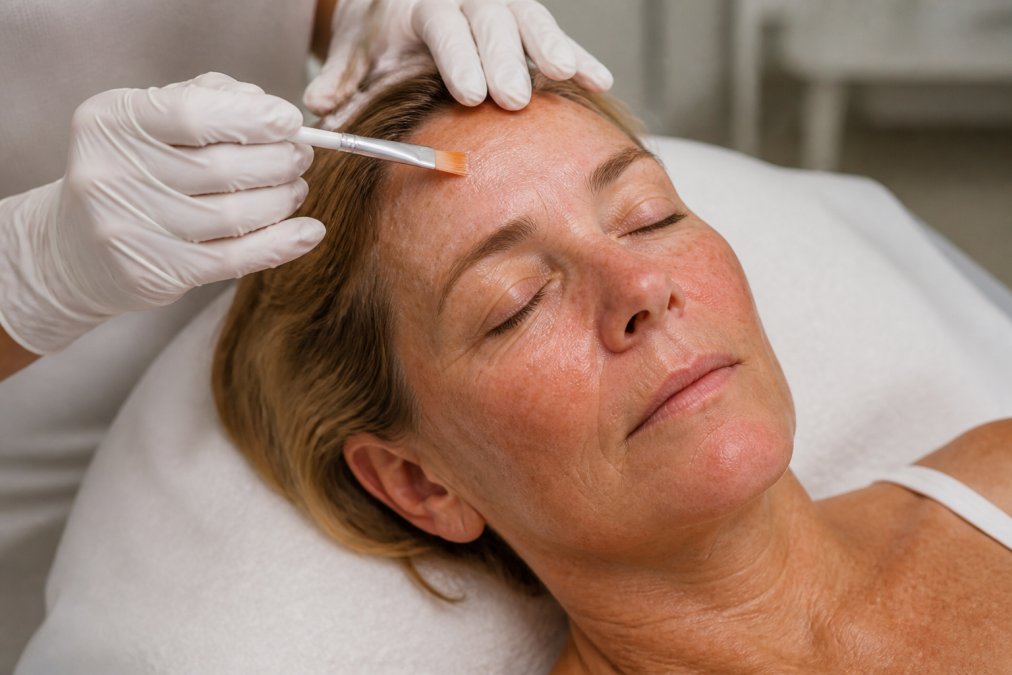
Trichloroacetic acid (TCA) peels remain one of the most reliable dermatological procedures for reversing visible sun damage, and the tca peel benefits for sun damaged skin are well documented in aesthetic practice. This guide from Makeup Artist’s Choice breaks down exactly what TCA does to photoaged skin, who should consider it, and how to recover safely. A TCA peel is a chemical exfoliation treatment that applies trichloroacetic acid to remove damaged outer layers of skin and stimulate fresh cellular turnover beneath. Unlike superficial peels that only touch the epidermis, TCA penetrates into the dermis at higher concentrations. That depth is what separates a light refresh from genuine skin resurfacing.
What Trichloroacetic Acid Does to Photoaged Skin
Years of ultraviolet exposure leave behind more than a tan. Photoaging damages keratinocytes, breaks down collagen production, and produces the brown spots, sunspots, and leathery skin texture that define chronically sun-damaged faces. TCA works by controlled chemical exfoliation: it coagulates proteins in the epidermis, causing the damaged layer to peel away over several days. As the skin barrier rebuilds, new cells arrive with more even pigment distribution and improved texture. The deeper the peel, the more collagen remodeling occurs in the dermis.
Superficial vs. Medium-Depth Peels: Choosing Your Strength
TCA peels are classified by acid concentration. Superficial peels typically use lower concentrations and only reach the epidermis, making them a good starting point for fine lines and mild discoloration. Medium-depth peels use higher concentrations that penetrate to the papillary dermis, which is where real improvement in hyperpigmentation, melasma, and deep sun damage happens.
| Peel Depth | Typical TCA Concentration | Reaches | Best For |
|---|---|---|---|
| Superficial | Low | Epidermis | Mild texture, dullness |
| Medium | Moderate | Papillary dermis | Sunspots, fine lines |
| Deep | High | Reticular dermis | Severe photodamage |
TCA Peel Benefits for Sun-Damaged Skin: What to Expect
The tca peel benefits for photodamaged skin fall into four categories: pigment correction, texture improvement, collagen stimulation, and overall skin rejuvenation. Most people notice significant changes in brown spots and sunspots, which lift away with the peeling skin. Fine lines soften over the following weeks as new collagen forms. Melasma and post-inflammatory hyperpigmentation can respond well to medium-depth peels, though results vary by Fitzpatrick Skin Type and require sun protection discipline afterward. Cosmesis improves gradually rather than overnight, so expect the full result to emerge over four to six weeks.
How to Prepare Skin for a TCA Peel
Pre-peel preparation is crucial for optimal outcomes. Priming the skin for two to four weeks beforehand with a gentle exfoliating acid and a broad-spectrum sunscreen can help even out cellular turnover so the TCA penetrates uniformly instead of pooling in dry patches. Stop retinoids and any active acne treatments several days before your peel, since these thin the skin barrier and raise the risk of uneven peeling. If you have a history of cold sores, consider discussing antiviral prophylaxis with a healthcare professional.
Applying a TCA peel to unprepared skin, especially with active retinoid use, can cause uneven frosting and patchy desquamation that heals with temporary discoloration. Prime first, always.
TCA Peel Recovery Timeline: Day by Day
Recovery follows a predictable pattern, though the intensity depends on peel depth. The table below outlines what most people experience across a typical medium-depth TCA peel.
| Day | What You’ll See | What to Do |
|---|---|---|
| Day 1 | Redness, tightness, mild erythema | Gentle cleanser, bland moisturizer |
| Day 2-3 | Darkening, early flaking begins | Do not pick, keep skin moisturized |
| Day 4-6 | Active desquamation, peeling sheets | Sunscreen, no exfoliants |
| Day 7-10 | Fresh pink skin emerges | Resume gentle hydration |
| Week 2-4 | Texture and tone settle | Start maintenance routine |

Expect downtime of roughly five to seven days for a medium-depth peel, during which you should avoid makeup, strenuous exercise, and direct sun. Avoid peeling the flaking skin manually. Let it shed on its own to reduce the risk of scarring and post-inflammatory hyperpigmentation.
Sleep on a clean pillowcase and change it every night during the peeling phase. Friction and bacteria on a reused case are a frequent cause of irritation flare-ups during recovery.
Post-Peel Skincare Routine for Lasting Results
The weeks after your peel determine how long the results last. A post-peel skincare routine should center on three things: barrier repair, hydration, and sun protection factor discipline. Use a gentle, fragrance-free moisturizer morning and night, and reapply broad-spectrum sunscreen every two hours when outdoors (cancer.gov). Skipping sun protection after a TCA peel is the fastest way to undo your results and trigger new hyperpigmentation. Once the skin barrier has fully recovered, usually around week three, you can reintroduce a mild exfoliating acid once or twice weekly to maintain cellular turnover.
Who Is a Good Candidate for a TCA Peel?
The strongest candidates have fair to medium skin tones, a history of cumulative ultraviolet exposure rather than isolated dark spots, and no active infection, open lesion, or inflammatory flare in the treatment area. Sun-induced texture change, mottled pigmentation, and fine lines respond best. Candidates should also be able to commit to a two-to-four-week priming phase before the peel and a strict sun-protection routine for at least a month afterward, the peel itself is only half the protocol.
Pre-Peel Preparation: The Two-to-Four-Week Priming Phase
Priming is a critical step for at-home peelers, and it significantly influences whether a medium-depth TCA peel heals evenly or leaves patchy discoloration. The goal is to thin the stratum corneum uniformly and suppress melanocyte activity before the acid is applied, so the TCA penetrates at a consistent depth instead of pooling in dry or thickened patches.
A common priming protocol runs two to four weeks and combines three elements:
- A mild exfoliating acid, typically glycolic or salicylic at a low percentage, applied every other night, to normalize cellular turnover.
- A pigment-suppressing agent such as hydroquinone or azelaic acid**, used nightly on areas prone to post-inflammatory hyperpigmentation, especially in darker skin tones.
- Broad-spectrum sunscreen at SPF 30 or higher, reapplied daily, to reduce the baseline melanocyte activity that drives post-peel hyperpigmentation.
Stop retinoids, alpha-hydroxy acid products, and any active acne treatments three to five days before the appointment. These thin the barrier and raise the risk of uneven frosting and patchy desquamation. If you have a history of cold sores, ask your provider about antiviral prophylaxis starting a day or two before the peel.
Applying a TCA peel to unprepared skin, especially while still using a retinoid, can cause uneven frosting and patchy desquamation that heals with temporary discoloration. Prime first, always.
Fitzpatrick Skin Types and Sun Damage
Fitzpatrick Skin Type predicts how skin reacts to a controlled injury, including a chemical peel. Types I through III generally tolerate medium-depth TCA peels with a lower risk of post-inflammatory hyperpigmentation. Types IV through VI may carry a higher risk and often do better with superficial peels, lower acid concentrations, or alternative agents such as mandelic or lactic acid. This is an important factor in peel planning. An experienced professional may adjust concentration, contact time, and priming phase for melanin-rich skin.
Contraindications and Medication Interactions
Certain medications and conditions rule out a TCA peel entirely, and a complete medication review is not optional. The list below covers the most common disqualifiers:
- Isotretinoin (Accutane), wait a minimum of six months after the last dose; the drug thins the skin and impairs healing for months after you stop taking it.
- Active herpes simplex in or near the treatment area, a peel can reactivate the virus and cause scarring; antiviral cover is required if you have a history of cold sores.
- Pregnancy and breastfeeding, defer treatment; the safety of TCA during pregnancy is not established.
- Blood thinners and anticoagulants, including warfarin, apixaban, and daily aspirin, increase bleeding and bruising risk.
- Photosensitizing medications, certain antibiotics (tetracyclines, fluoroquinolones), diuretics, and some acne drugs amplify the skin’s reaction to the acid and to post-peel sun exposure.
- A history of keloid scarring, active eczema, or psoriasis in the treatment area, these raise the risk of abnormal healing.
Always disclose your full medication list, including over-the-counter drugs and supplements, before treatment. If any item on this list applies to you, the right move is to postpone or choose a gentler option rather than push ahead.
Fitzpatrick Skin Type, your current medication list, and whether you completed a proper priming phase matter more than the peel strength you choose. Get all three assessed before booking any medium-depth TCA peel.
Risks and Side Effects of TCA Peels on Sun-Damaged Skin
Every peel carries some risk. It is important to separate the expected healing response from the warning signs that may require professional attention.
Expected Reactions (Not Complications)
These are part of normal healing and do not require intervention:
- Erythema (redness), peaks in the first 48 hours and fades over one to three weeks depending on peel depth.
- Tightness and mild swelling, most pronounced on days two and three.
- Desquamation (peeling), begins around day two to three and continues through day seven to ten for a medium-depth peel.
- Transient itching, common as the barrier rebuilds; a bland moisturizer usually controls it.
Complications to Watch For
These are less common but more serious, and their likelihood climbs with acid concentration and with inadequate pre-peel preparation:
- Post-inflammatory hyperpigmentation (PIH), darkened patches that appear as the fresh skin emerges. This is the most common complication in darker Fitzpatrick Skin Types and is the primary reason priming with a pigment-suppressing agent matters.
- Prolonged erythema, redness lasting beyond three to four weeks can signal a deeper injury than intended.
- Reactivation of herpes simplex, without antiviral cover, a peel can trigger a cold sore outbreak in the treatment area.
- Blistering, severe pain, or signs of infection, warmth, spreading redness, pus, or fever. These warrant immediate professional attention; do not wait for a scheduled follow-up.
- Scarring, rare with properly performed peels but more likely when the skin is picked, when the peel is applied too deeply, or when healing is impaired.
How to Reduce Your Risk
Three habits do most of the work. First, complete the full priming phase, unprepared skin is the leading driver of uneven results. Second, never pick or manually peel flaking skin; let it shed on its own or you risk scarring and PIH. Third, maintain strict sun protection for at least four weeks after the peel, since freshly resurfaced skin is highly vulnerable to new pigment deposition.
Photograph your skin each morning during the first week. A daily photo log can help in monitoring normal healing versus potential complications, and it can provide a clear timeline if professional attention is needed.
If you are on any photosensitizing medication or have a history of cold sores, keloids, or PIH, discuss these with a healthcare professional before proceeding. The right peel for your skin is one that supports clean healing.
Conclusion: Is a TCA Peel Right for Your Sun Damage?
Sun damage accumulates quietly for decades, and reversing it takes more than a moisturizer. A TCA peel, done at the right depth for your skin type and paired with disciplined sun protection, is one of the most effective ways to restore even tone and smoother texture. At Makeup Artist’s Choice, we have supplied professional-grade at-home chemical peels since 1997, including TCA alongside glycolic, lactic, and salicylic options, all made in the USA. Our formulations let you build a customizable routine around your specific skin concerns. Get started with Makeup Artist’s Choice and see how professional-grade skincare can address your sun damage at home.
Frequently Asked Questions
Will a chemical peel get rid of sun damage?
A TCA peel can significantly reduce visible signs of sun damage like brown spots, rough texture, and fine lines by exfoliating the epidermis and triggering collagen production in the dermis. However, it does not erase decades of photodamage in one session. Most people need a series of peels spaced 4 to 6 weeks apart, plus daily sun protection, to see lasting improvement. Results depend on peel depth, skin type, and how consistently you protect your skin afterward.
How long does it take for skin to heal after a TCA peel?
The TCA peel recovery timeline varies by strength. A superficial peel (10-15% TCA) typically causes redness and light flaking for 3 to 5 days. A medium-depth peel (20-35% TCA) involves more noticeable peeling, with skin sloughing off between days 3 and 7 and redness fading over 7 to 14 days. Full healing, including new collagen remodeling, continues for weeks. Always follow aftercare instructions to avoid complications.
Can TCA peels be safely performed at home?
At-home TCA peels should only be used at lower concentrations, typically 10-15%, and only if you follow strict preparation and aftercare protocols. Higher strengths require a dermatologist or licensed professional. Before trying an at-home peel, test on a small area, avoid active ingredients like retinoids for several days, and never layer with other acids. If you have a darker Fitzpatrick skin type or a history of melasma, consider consulting a professional first to avoid post-inflammatory hyperpigmentation.
How many TCA peel sessions are needed to see results for sun damage?
Most people see noticeable improvement after 2 to 3 sessions, but a series of 4 to 6 peels spaced 4 to 6 weeks apart is common for significant sun damage. Superficial peels may require more frequent sessions, while medium-depth peels deliver faster results with longer downtime. Your skin’s cellular turnover and collagen production continue to improve for months after each peel, so consistency and sun protection between sessions are key to maintaining results.
What are the risks of using TCA peels on sun-damaged skin?
Risks include prolonged erythema, post-inflammatory hyperpigmentation (especially in darker skin tones), hypopigmentation, scarring, and infection. Sun-damaged skin may be more sensitive, so a patch test and professional guidance are recommended. Using too high a concentration or peeling too frequently can damage the skin barrier. Always use broad-spectrum sun protection factor 30 or higher after a peel, as new skin is highly vulnerable to ultraviolet damage.
Which peel is best for sun damage?
TCA peels are among the most effective for sun damage because they penetrate the dermis and stimulate collagen. For superficial sunspots and mild photoaging, glycolic or lactic acid peels can help. Medium-depth TCA peels address deeper lines, leathery texture, and stubborn hyperpigmentation. A skincare professional may combine TCA with other agents for enhanced results. The best choice depends on your skin type, downtime tolerance, and the severity of photodamage.
How does a TCA peel improve skin texture and hyperpigmentation?
TCA peels cause controlled chemical exfoliation, removing damaged keratinocytes in the epidermis and prompting new cell turnover. This fades hyperpigmentation like sunspots and melasma while smoothing rough texture. In the dermis, the acid triggers collagen production, which thickens the skin and reduces fine lines. Over time, the skin barrier strengthens, and complexion becomes more even. Consistent use with sun protection prevents new damage and maintains results.