Table of Contents
- Why Sun Protection Matters After a Chemical Peel
- How Long to Avoid Sun After a Chemical Peel
- Best Sunscreen After a Chemical Peel
- Daily Application and Reapplication Schedule
- Protective Clothing and Accessories
- Avoiding Peak Sun Hours and Indoor UV Exposure
- Common Myths About Summer Chemical Peels
- What Happens Without Proper Sun Protection
- Frequently Asked Questions
Last Updated: October 3, 2026
Why Sun Protection Matters After a Chemical Peel
A chemical peel removes the outer layers of skin to reduce wrinkles, acne scars, and discoloration. Your skin is left vulnerable during healing, making sun protection after chemical peels essential. Sun exposure during this critical window causes permanent damage.
Newly treated skin lacks its natural defenses. UV rays penetrate deeper and cause hyperpigmentation, scarring, and undo the peel’s benefits.
Sun protection after chemical peels isn’t optional. It’s the difference between results that last and results that fade into brown spots and uneven tone.
How Long to Avoid Sun After a Chemical Peel
The duration depends on peel depth and your skin’s healing stage. Light peels need different protection than deep ones.
First 48 Hours: Critical Protection Period
The first 48 hours are critical. Your skin is raw and inflamed. Direct sunlight causes permanent hyperpigmentation and can reverse the peel’s effects.
Stay indoors as much as possible. If you must go outside, wear a wide-brimmed hat, long sleeves, and sunglasses. Apply broad-spectrum SPF 30 or higher every two hours, even indoors. The skin barrier is compromised, and even brief sun exposure can cause damage that takes months to fade.
Week One and Beyond
During week one, limit direct sun exposure to 15-30 minutes daily, wear protective clothing and SPF 30+, reapply sunscreen every two hours, and avoid peak sun hours (10 AM-4 PM). From week two onward, most skin tolerates normal sun exposure with consistent daily sunscreen. Newly healed skin remains sensitive for up to three months, so broad-spectrum SPF 30 or higher should become a permanent habit.
Best Sunscreen After a Chemical Peel
Not all sunscreens work the same on healing skin. Ingredient choice and formulation matter far more after a peel than they do for everyday use.
Physical vs. Chemical Sunscreen Ingredients
Physical sunscreens (zinc oxide or titanium dioxide) sit on skin and reflect UV rays, ideal post-peel because they don’t absorb into skin, cause minimal irritation, and work immediately. Chemical sunscreens absorb into skin and can irritate healing skin, so avoid them for the first two weeks. Physical sunscreen is gentler and more effective on compromised skin.
Safe vs. Avoid Ingredients for Post-Peel Skin
Avoid fragrance, alcohol, oxybenzone, avobenzone, octocrylene, salicylic acid, glycolic acid, retinol, and nanoparticles of zinc oxide or titanium dioxide during the first two weeks. These ingredients irritate healing skin or penetrate too deeply. Use fragrance-free, alcohol-free products with non-nano physical blockers only.
Safe ingredients to look for:
- Non-nano zinc oxide or titanium dioxide, The safest physical blockers.
- Glycerin or hyaluronic acid, Hydrating humectants that support barrier repair.
- Centella asiatica (cica), Calms inflammation and supports healing.
- Allantoin, Soothing and promotes skin repair.
- Ceramides, Strengthen the skin barrier during recovery.
Sunscreen Compatibility with Post-Peel Moisturizers
Heavy moisturizers trap heat and sweat under physical sunscreen, causing pilling, irritation, and uneven protection. The solution:
Apply a lightweight hydrating serum or gel-based moisturizer first, wait 5-10 minutes for it to absorb, then apply a quarter-sized amount of sunscreen. Press gently rather than rubbing. If sunscreen pills, your moisturizer is too heavy, switch to a lighter formula.
Product texture guide:
- Best moisturizer textures post-peel: Hydrating serums, gel creams, lightweight lotions, or water-based moisturizers.
- Avoid: Thick creams, butters, oils, or ointments until at least week three.
- Best sunscreen textures post-peel: Lightweight lotions, gels, or fluid formulations. Avoid heavy creams or stick sunscreens.
Daily Application and Reapplication Schedule
Apply a quarter-sized amount of sunscreen every morning, spreading evenly across all exposed skin. Reapply every two hours if outdoors, or once at midday and before bed if indoors. Consistency beats perfection: SPF 30 reapplied every two hours outperforms SPF 50 applied once.
Protective Clothing and Accessories
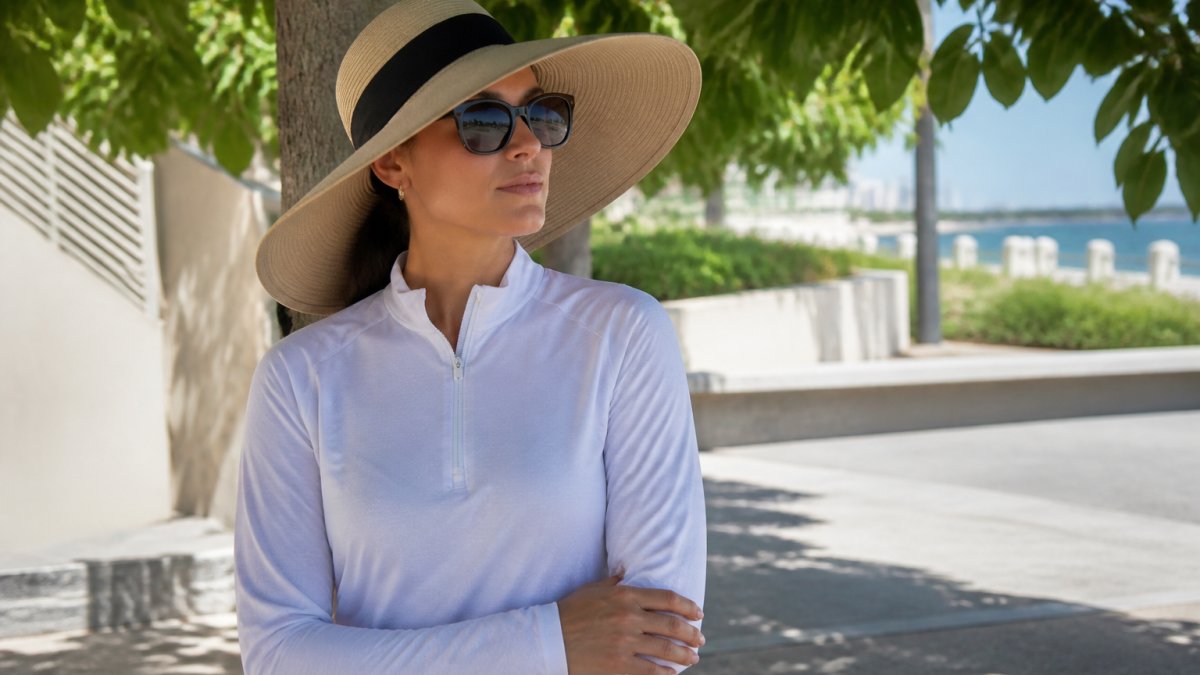
Integrating high-coverage sun protective clothing into your daily wardrobe ensures that sensitive, post-peel skin remains shielded from incidental exposure even when you are near the water.
Invest in a wide-brimmed hat (at least 3 inches all around), UPF 50+ long-sleeved clothing, and UV-blocking sunglasses. These are medical-grade protection, not optional accessories. During the first two weeks post-peel, treat them like daily medication. Five minutes to put on beats five months to fade hyperpigmentation.
Avoiding Peak Sun Hours and Indoor UV Exposure
Peak Sun Hours and Outdoor Planning
The sun’s UV intensity peaks between 10 AM and 4 PM (the EPA). During this window, UV rays are strongest and travel most directly through the atmosphere.
If you must be outdoors during peak hours:
- Seek shade whenever possible
- Wear full protective clothing
- Apply sunscreen every hour
- Consider rescheduling outdoor activities to early morning or late afternoon
Plan your first week post-peel around this schedule. Run errands before 10 AM or after 4 PM. Attend indoor appointments during midday. This simple planning prevents most sun damage.
Blue Light and Indoor UV Protection
Here’s what most guides miss: UV rays penetrate windows, and blue light from screens also contributes to photodamage on healing skin.
How UV penetrates indoors:
UV-A rays pass through standard window glass. UV-B rays are mostly blocked by glass, but enough penetrates to cause damage on hypersensitive, post-peel skin.
How blue light affects healing skin:
Blue light (400-500 nanometers wavelength) from screens, LED lighting, and fluorescent bulbs generates reactive oxygen species (free radicals) in skin. On healthy skin, this is manageable.
This matters more than most people realize. Healing skin is 3-5 times more photosensitive than normal skin. Indoor exposure that wouldn’t affect healthy skin can cause lasting discoloration during recovery.
Practical steps for office workers and screen users post-peel:
-
Apply sunscreen indoors, Yes, even if you’re at a desk. Use broad-spectrum SPF 30+ and reapply once at midday. This protects against window UV and provides some blue light defense.
-
Reposition your workspace, Sit away from direct window light, especially during 10 AM-4 PM. If your desk faces a window, move it or close blinds during peak hours.
-
Use window film or UV-blocking curtains, If repositioning isn’t possible, apply UV-blocking window film (blocks 99% of UV-A and UV-B) or use blackout curtains during peak sun hours. This is especially useful if you work near south-facing windows.
-
Take screen breaks every hour, Step away from your desk for 5-10 minutes. This reduces cumulative blue light exposure and gives your eyes a rest.
-
Consider blue light glasses, If you’re sensitive to screen exposure or have a history of photosensitivity, blue light-blocking glasses reduce strain and may help minimize blue light’s inflammatory effects. Look for glasses labeled as blocking 90%+ of blue light (380-500 nm range).
-
Adjust screen brightness, Lower brightness reduces blue light output. Set your screen to 40-50% brightness during the first two weeks post-peel.
-
Use a blue light filter app, Software like f.lux automatically shifts your screen’s color temperature away from blue light in the evening. This is free and easy to implement.
Travel considerations post-peel:
If you have a peel scheduled shortly before a planned vacation or trip, plan carefully:
- Delay the peel if possible, If your trip is within two weeks of your peel date, reschedule the peel for after your return. The first two weeks are critical, and travel disrupts your sun protection routine.
- If you must peel before travel, Inform your dermatologist of your travel plans. They may recommend a lighter peel or adjust your post-peel care protocol.
- Pack sunscreen and protective gear, Bring travel-sized broad-spectrum SPF 30+ (TSA-approved sizes are 3.4 oz or smaller), a wide-brimmed hat, lightweight long sleeves, and UV-blocking sunglasses. Don’t rely on finding these at your destination.
- Choose indoor-heavy itineraries, Plan museum visits, indoor shopping, restaurants, and covered activities during peak sun hours. Save outdoor activities for early morning or late afternoon.
- Stay hydrated, Travel and sun exposure dehydrate healing skin. Drink extra water and use a hydrating moisturizer twice daily.
- Avoid beach and pool trips, Chlorine and saltwater irritate healing skin. Avoid swimming for at least two weeks post-peel, even with sunscreen.
- Reapply sunscreen frequently, Travel, sweating, and activity increase the need for reapplication. Reapply every 1.5-2 hours, or immediately after swimming or sweating.
The bottom line: Healing skin requires protection from both direct sun and indirect indoor UV and blue light exposure. Most people underestimate indoor risk because they can’t see UV rays.
Common Myths About Summer Chemical Peels
Myth: “A little sun exposure helps skin heal faster.”
False. Sun exposure slows healing and causes permanent damage. Healing happens fastest in protected environments.
Myth: “You only need sunscreen on sunny days.”
False. UV rays penetrate clouds. Overcast days still deliver significant UV exposure. Apply sunscreen daily regardless of weather.
Myth: “Higher SPF means you can reapply less often.”
False. SPF only indicates UVB protection strength. All sunscreens need reapplication every two hours. SPF 50 reapplied once doesn’t beat SPF 30 reapplied every two hours.
Myth: “Tanning beds are safer than sun exposure post-peel.”
False. Tanning beds emit concentrated UV radiation. They’re worse than direct sun. Avoid them for at least three months after any peel.
Myth: “Once the redness fades, sun protection is optional.”
False. Visible redness fades in days. Healing continues for weeks. Sun protection remains critical even when skin looks normal.
What Happens Without Proper Sun Protection
Skip sun protection after a chemical peel, and you’ll face consequences that last months or years.
Hyperpigmentation develops within days of sun exposure. Dark patches appear where the peel worked hardest.
Uneven skin tone emerges as some areas tan while others don’t. The peel’s benefits disappear under patchy discoloration.
Scarring risk increases significantly. Sun exposure during healing can deepen scars instead of improving them.
Sunburn on freshly peeled skin is intensely painful. Healing skin lacks the protective melanin of normal skin. Even brief sun exposure causes severe burns.
Premature aging accelerates. UV damage breaks down collagen and elastin.
The math is simple: one week of proper sun protection prevents months of damage.
Your peel’s success depends on what you do after the treatment, not just the treatment itself.
Proper sun protection after a chemical peel is the foundation of lasting results.
Frequently Asked Questions
How long do I need to avoid direct sun exposure after a chemical peel?
Avoid direct sun exposure for at least 48 hours after your chemical peel, when your skin is most vulnerable. During this critical window, your skin barrier is compromised and UV rays can cause severe burning, hyperpigmentation, and permanent damage to newly treated skin. After the first two days, you can gradually resume outdoor activities, but strict sun protection with SPF 30 or higher broad-spectrum sunscreen is essential for at least one to two weeks, depending on the peel strength. Consult your skincare provider for specific timing based on your peel type.
What is the best sunscreen to use after a chemical peel?
Physical sunscreens containing zinc oxide or titanium dioxide are generally preferred after a chemical peel because they sit on top of the skin and create an immediate barrier without absorbing into freshly treated, sensitive skin. Look for broad-spectrum SPF 30 or higher formulas that are fragrance-free and formulated for sensitive skin. Ensure your sunscreen is compatible with your post-peel moisturizer, apply moisturizer first, wait for it to dry completely, then apply sunscreen. Avoid chemical sunscreens with oxybenzone or avobenzone immediately after peeling, as these can irritate newly exfoliated skin.
Can I wear a hat instead of sunscreen after a chemical peel?
A wide-brimmed hat is an excellent protective accessory and should be part of your sun protection strategy, but it should not replace sunscreen entirely. Hats protect your face, scalp, and neck from direct sun, but UV rays reflect off surfaces like water, sand, and concrete, reaching areas the hat doesn’t cover. For complete protection, combine a wide-brimmed hat with SPF 30 or higher broad-spectrum sunscreen on all exposed skin. Protective clothing like long-sleeved UPF-rated shirts and sunglasses also add layers of defense during the healing process.
What happens if I get sun exposure during the chemical peel healing process?
Sun exposure during healing can cause severe sunburn, permanent hyperpigmentation, post-inflammatory hyperpigmentation, and damage to your skin barrier when it’s most vulnerable. UV rays can also interfere with the healing process itself, extending recovery time and reducing the effectiveness of your peel. In worst cases, unprotected sun exposure during healing can lead to scarring, uneven skin tone, and long-term photodamage that undoes the benefits of your chemical peel treatment. This is why dermatologist-recommended protocols emphasize strict sun avoidance and daily SPF 30 or higher application for the first one to two weeks post-peel.