Table of Contents
- Understanding Post-Inflammatory Hyperpigmentation and Dark Marks
- Aloe Vera for Pigmentation: Evidence and Application
- Turmeric for Dark Spots: How This Ancient Remedy Works
- How Long Does PIH Take to Fade: Realistic Timelines and Progress Tracking
- Mandelic Acid Toner for Dark Spots: A Gentle Chemical Approach
- Other Natural Ingredients and Complementary Strategies
- Building Your Routine: Safety, Patch Testing, and What to Avoid
- Frequently Asked Questions
Last Updated: October 21, 2026
Understanding Post-Inflammatory Hyperpigmentation and Dark Marks
Post-inflammatory hyperpigmentation (PIH) is the darkening of skin that occurs after inflammation heals. It happens when your skin produces excess melanin in response to injury, acne, or irritation.
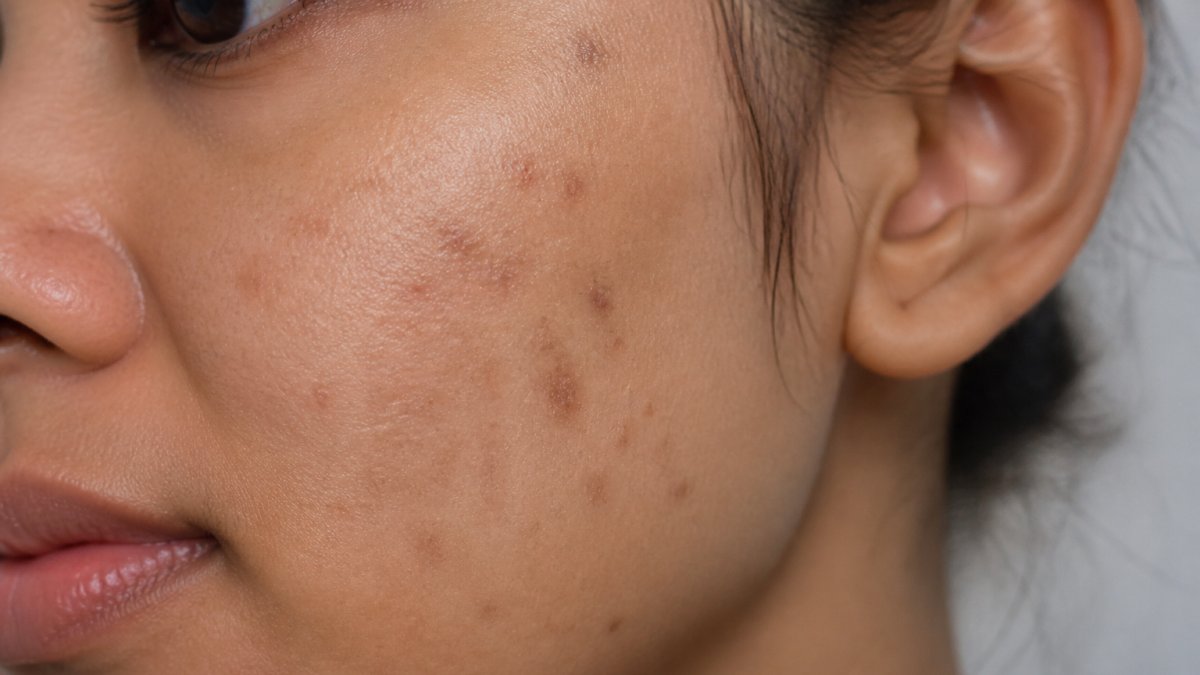
This is where many people get frustrated. They treat the acne, the inflammation clears, and then they’re left with dark marks that refuse to budge. The marks feel permanent, but they’re not.
How PIH Differs From Other Types of Hyperpigmentation
PIH is not the same as melasma or sun damage, even though all three create darker patches on skin.
Melasma develops from hormonal changes, sun exposure, or genetic predisposition. It typically appears on the face in symmetric patterns and is notoriously stubborn.
Sun damage (photodamage) results from cumulative UV exposure over years.
Post-inflammatory hyperpigmentation, by contrast, follows a specific inflammatory event. Acne, eczema flares, laser treatments, chemical peels, or even aggressive scratching can trigger it.
This distinction matters because PIH responds well to treatments that support skin healing and melanin breakdown.
Aloe Vera for Pigmentation: Evidence and Application
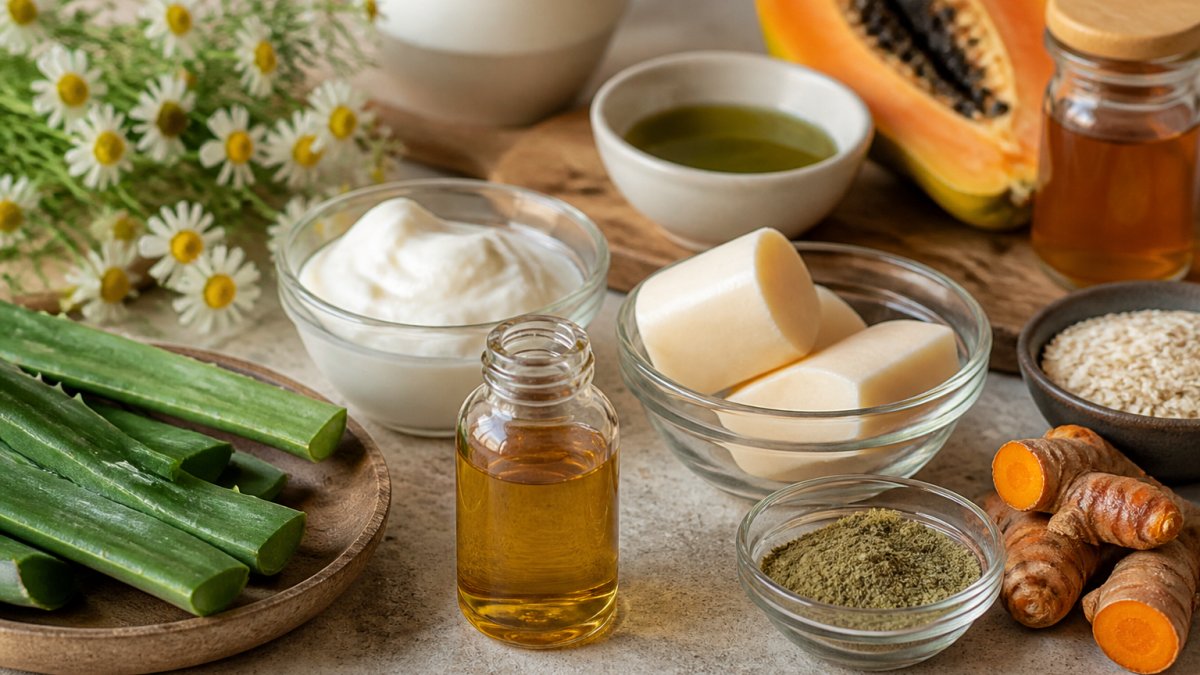
Aloe vera is one of the most commonly recommended natural remedies for post-inflammatory hyperpigmentation, but the evidence behind it is more modest than the internet suggests. Understanding what aloe can and cannot do, and how to use it safely, prevents wasted months and irritation that can worsen PIH.
What the Evidence Actually Shows
Aloe vera gel contains polysaccharides, glycoproteins, and antioxidants that support wound healing and soothe inflammation (Pharmacological Update Properties of Aloe Vera and its Major Active Constituents). Laboratory studies show aloe compounds may inhibit tyrosinase, the enzyme that drives melanin production. However, human clinical evidence specifically for fading PIH is limited.
This does not mean aloe is useless for PIH. It means aloe is best understood as a supportive ingredient, soothing active inflammation and supporting the skin barrier, rather than a standalone pigment fader.
How to Use Aloe Vera Safely
- Choose pure aloe gel with minimal additives; many commercial gels contain alcohol, fragrance, or dyes that irritate skin and can trigger new inflammation
- Patch test on your inner forearm for 24-48 hours before applying to the face
- Apply a thin layer to affected areas after cleansing; leave on for 10-15 minutes or use as a leave-on moisturizing layer
- Use 1-2 times daily; consistency matters more than quantity
- Store pure gel in the refrigerator and discard if it changes color or smell
Risks and Trade-Offs
Aloe is generally well tolerated, but allergic contact dermatitis to aloe is documented and can cause redness, itching, and, ironically, new post-inflammatory hyperpigmentation. If you have sensitive skin or a history of plant allergies, patch testing is non-negotiable.
Aloe will not fade PIH on its own within weeks. Expect gradual, supportive improvement over months when combined with sun protection and other evidence-backed ingredients. If you see no change after 8-12 weeks of consistent use, aloe is not the limiting factor, your routine likely needs a proven brightening active.
Refrigerate pure aloe gel and use within 1-2 weeks. Homemade aloe that sits at room temperature can grow bacteria and cause infections on compromised skin.
Turmeric for Dark Spots: How This Ancient Remedy Works
Turmeric has a long history in traditional medicine, and curcumin, its primary active compound, has well-documented anti-inflammatory and antioxidant properties in laboratory research. For post-inflammatory hyperpigmentation, the logic is appealing: reduce inflammation, and you reduce the signal that drives excess melanin production. But the gap between laboratory promise and real-world results on skin is wider than most DIY guides admit.
The Mechanism and Its Limits
Curcumin inhibits several inflammatory pathways, including COX-2 and NF-kB, which are involved in the skin’s response to injury. In theory, calming this response could limit the melanin surge that follows acne or irritation. However, curcumin has notoriously poor bioavailability, it is poorly absorbed through the skin and rapidly metabolized.
Human clinical evidence for turmeric specifically fading PIH is sparse. What exists is mostly small studies on turmeric’s effect on general skin tone or wound healing, not controlled trials on post-acne dark marks.
How to Apply Turmeric Without Making Things Worse
- Mix a small amount of turmeric powder with plain yogurt (for lactic acid) or honey (for humectant and antimicrobial properties) to form a paste
- Apply only to affected areas, avoiding the eye area and broken skin
- Leave on for 10-15 minutes, no longer
- Rinse thoroughly with cool water; use a gentle cleanser if yellow residue remains
- Use 2-3 times weekly, not daily
The Real Risks: Staining, Irritation, and Photosensitivity
Turmeric can temporarily stain skin yellow, especially on lighter skin tones, and the stain can persist for days. More importantly, frequent or prolonged application can irritate skin, and irritation triggers new inflammation, the exact opposite of what PIH needs.
There is also a lesser-known risk: turmeric may increase photosensitivity in some individuals, making sun exposure more damaging. Since UV exposure darkens existing PIH, this is a meaningful trade-off. Always apply broad-spectrum SPF 30+ during the day when using turmeric, and avoid sun exposure immediately after application.
A Realistic Role for Turmeric
Turmeric is best used as an occasional supportive treatment, not a daily staple. If you enjoy the ritual and your skin tolerates it, 2-3 weekly applications alongside a consistent SPF and a proven brightening ingredient (like licorice root or mandelic acid) is reasonable. If you see irritation, staining, or no improvement after 8 weeks, discontinue. The anti-inflammatory theory is sound, but the practical delivery, kitchen paste on skin, rarely delivers the concentrated, stable curcumin that laboratory studies use.
Never apply turmeric to freshly picked or irritated skin, and do not combine it with strong exfoliants on the same day. The combination of mechanical irritation and turmeric’s staining can create new marks that take months to fade.
How Long Does PIH Take to Fade: Realistic Timelines and Progress Tracking
This is the question everyone asks, and the answer depends on skin tone, severity, and your treatment approach.
For mild PIH, natural remedies and consistent sun protection can show visible improvement in 3-6 months. Darker marks may take 6-12 months.
For moderate to severe PIH, especially on deeper skin tones, the timeline extends to 12-18 months or longer.
Track your progress by taking photos:
- Take a baseline photo in consistent lighting
- Photograph the same area weekly or biweekly
- Use the same time of day and lighting conditions
- Compare photos month-to-month, not week-to-week
You’ll notice fading happens in phases. The marks may look the same for weeks, then suddenly appear noticeably lighter. This is normal. Melanin doesn’t fade linearly, it breaks down in clusters.
Expecting results faster than your skin can deliver leads to overtreatment. Combining too many actives, applying treatments too frequently, or using products that are too strong can trigger new inflammation and actually delay healing.
Mandelic Acid Toner for Dark Spots: A Gentle Chemical Approach
Mandelic acid is an alpha-hydroxy acid (AHA) derived from almonds.
For PIH, mandelic acid works by gently exfoliating the top layers of skin and supporting melanin breakdown. It’s particularly effective when combined with natural remedies.
How to use mandelic acid toner:
- Start with 1-2 applications per week
- Apply to clean, dry skin using a cotton pad
- Follow with a hydrating toner or moisturizer
- Always use SPF 30+ during the day
- Gradually increase frequency to 3-4 times weekly as skin adapts
Mandelic acid is forgiving compared to stronger peels. Most people tolerate it well, though mild redness or dryness can occur initially. This is temporary and typically subsides within a week.
Mandelic acid is strong enough to accelerate fading but gentle enough for at-home use without professional supervision.
Other Natural Ingredients and Complementary Strategies
Green Tea, Licorice Root, and Plant Extracts
Green tea contains polyphenols with antioxidant and anti-inflammatory properties.
Licorice root extract has been studied for its ability to inhibit tyrosinase, an enzyme involved in melanin production.
Rosehip oil is rich in vitamin A and vitamin C, both of which support collagen production and skin renewal.
Mulberry extract has natural compounds that may slow melanin production. It’s often found in Asian skincare products designed for brightening.
These ingredients work best in combination.
Sun Protection and PIH Prevention
This is non-negotiable: UV exposure darkens existing PIH marks and can trigger new hyperpigmentation. SPF 30 minimum, applied daily, is essential.
Prevention strategies:
- Apply broad-spectrum SPF 30+ every morning
- Reapply every 2 hours if outdoors
- Wear protective clothing, hats, and sunglasses
- Avoid peak sun hours (10 a.m. to 4 p.m.) when possible
- Use mineral sunscreen if chemical formulas irritate your skin
Many people skip sunscreen while treating PIH, then wonder why the marks aren’t fading. Sun exposure can actually reverse months of progress in weeks. Think of SPF as part of your treatment, not optional skincare.
PIH prevention is easier than treatment. Protecting skin from the original inflammation, whether that’s treating acne promptly, using gentle products, or avoiding unnecessary irritation, stops PIH before it starts.
Building Your Routine: Safety, Patch Testing, and What to Avoid
A safe PIH routine starts simple and builds gradually.
Patch test everything:
- Apply a small amount to your inner arm or behind your ear
- Wait 24 hours and observe for redness, itching, or irritation
- If no reaction occurs, apply to a small area of the affected skin
- Wait another 24-48 hours before full-face application
This takes patience, but it prevents the frustration of a bad reaction derailing your entire routine.
What to avoid:
- Don’t combine strong actives (mandelic acid + vitamin C + retinol) in the same routine
- Don’t use multiple exfoliants on the same day
- Don’t apply treatments to freshly irritated or compromised skin
- Don’t expect overnight results, consistency over months matters more than intensity
- Don’t skip moisturizer or SPF to “let skin breathe”
A sustainable routine looks like this:
| Time of Day | Product Type | Example |
|---|---|---|
| Morning | Gentle cleanser | Lukewarm water + mild cleanser |
| Morning | Brightening ingredient | Green tea rinse or licorice product |
| Morning | Moisturizer | Hydrating lotion |
| Morning | SPF | Broad-spectrum SPF 30+ |
| Evening | Gentle cleanser | Mild cleanser |
| Evening | Exfoliant (2-3x weekly) | Mandelic acid toner or turmeric paste |
| Evening | Moisturizer | Richer night cream |
| Evening | Optional | Rosehip oil or aloe vera |
Start with this foundation. After 4-6 weeks, if your skin tolerates it well, you can add one additional active ingredient.
Post-inflammatory hyperpigmentation is frustrating, but it’s also one of the most treatable forms of hyperpigmentation.
The key is consistency, sun protection, and realistic timelines. Most people see meaningful fading within 6-12 months using a combination approach.
Frequently Asked Questions
Can natural remedies actually fade post-inflammatory hyperpigmentation?
Natural remedies can help reduce the appearance of post-inflammatory hyperpigmentation over time, though results vary by ingredient, skin tone, and severity. Ingredients like vitamin C, licorice extract, aloe vera, and turmeric have shown promise in reducing melanin production and inflammation. However, natural remedies typically work more gradually than prescription treatments like hydroquinone or professional procedures. Consistency over weeks to months is essential, and combining multiple approaches (sun protection, gentle exfoliation, targeted ingredients) often produces better results than any single remedy alone.
How long does post-inflammatory hyperpigmentation take to fade naturally?
Post-inflammatory hyperpigmentation typically fades gradually over 3 to 12 months, depending on skin tone, the severity of inflammation, and how actively you treat it. Darker skin tones often experience longer fading timelines because they produce more melanin. Using targeted natural ingredients and sun protection can accelerate fading, while untreated PIH may persist longer. Tracking progress with photos every 4 weeks helps you assess whether your routine is working and adjust as needed.
Is aloe vera actually effective for fading dark spots from acne?
Aloe vera can support skin healing and may help reduce the appearance of dark spots, particularly when used consistently. It contains compounds that reduce inflammation and support skin barrier function, both of which are important for managing post-inflammatory hyperpigmentation. However, aloe vera works best as part of a broader routine that includes sun protection and complementary brightening ingredients. For best results, use pure aloe gel or products with high aloe concentration, and patch test first to ensure your skin tolerates it well.
What should I do if natural remedies aren’t fading my post-inflammatory hyperpigmentation?
If natural remedies haven’t produced visible results after 3 to 4 months of consistent use, consider consulting a dermatologist. Professional options include prescription-strength treatments, chemical peels with professional-grade acids, or laser therapies designed specifically for hyperpigmentation. Professional-grade chemical peels, such as those using mandelic acid or glycolic acid, can be an option. A dermatologist can also assess whether your dark marks are actually post-inflammatory hyperpigmentation or a different type of discoloration requiring a different approach.