
Last Updated: November 2, 2026
Quick Summary
Over-exfoliated skin shows redness, burning, tightness, flaking and sometimes extra breakouts. To fix it, stop all exfoliants and retinoids, then use a gentle fragrance-free routine with moisturizer and daily sunscreen for at least one to two weeks.
- Stop all exfoliants, including acids, scrubs, cleansing brushes and retinoids, until skin feels calm.
- Use a fragrance-free, non-foaming cleanser and moisturize while skin is still damp.
- Wear a broad-spectrum SPF 30 or higher every morning, even indoors near windows.
- Mild cases often settle within days to a week; moderate cases can take two to four weeks.
- Restart with one mild product once a week for two to four weeks before increasing frequency.
Table of Contents
- What Over-Exfoliated Skin Looks Like and Feels Like
- Over-Exfoliated Skin vs. Purging: How to Tell the Difference
- Step 1: Stop All Exfoliants and Assess the Damage
- Step 2: Rebuild the Skin Barrier With a Gentle Recovery Routine
- How Long Over-Exfoliated Skin Takes to Heal and Signs of Recovery
- Restarting Exfoliation Safely and When to Seek Medical Care
- Frequently Asked Questions
What Over-Exfoliated Skin Looks Like and Feels Like
Over-exfoliated skin is skin that has been stripped of its protective outer layer too often or too hard. This most often happens to people who layer a strong acid on top of a scrub, or who peel every night hoping for faster results. The skin does not look “clean.” It looks raw, reactive, and uncomfortable.
Signs usually show up in three clusters. Each one can appear alone or together.
Redness, irritation and burning
Healthy skin can handle a little pinkness after a peel. Over-exfoliated skin stays red for days. Touch it and it may sting, and cleansers or water can feel hot. Many people notice the burn gets worse after applying products they used without any problem before.
Dryness, flaking and tightness
Skin that has lost its barrier cannot hold water well. The result is tightness, especially after washing, and fine flakes that look like dry patches rather than the larger peeling you see after a deliberate peel. Moisturizer may feel like it sits on top of the skin instead of soaking in.
Breakouts, shine and increased sensitivity
It sounds backwards, but stripped skin can make oil and breakouts worse. The skin produces extra oil to compensate, which can look shiny or waxy. Small pimples may appear in places that were calm before. Many people also find that products they used for years now cause stinging or itching.
Over-Exfoliated Skin vs. Purging: How to Tell the Difference
Purging and over-exfoliation can look alike, and mixing them up leads to the wrong fix. Purging happens when a new active ingredient speeds up cell turnover and pushes existing congestion to the surface. It usually appears in the areas where you already break out, lasts a few weeks, and fades as the skin adjusts.
Over-exfoliation is different. It tends to cause burning, stinging, and redness that spread beyond your usual breakout zones. It often starts within days of increasing an exfoliant, and it does not improve on its own while you keep using the same products.
A simple test helps. If the skin feels hot, tight, or painful, treat it as over-exfoliation and stop the actives. If the bumps are the only issue and the skin feels calm, you are more likely purging.
Step 1: Stop All Exfoliants and Assess the Damage
The first fix is the hardest: stop everything that exfoliates. That includes chemical peels, acids such as glycolic, lactic, salicylic, and mandelic, retinoids, scrubs, and cleansing brushes. Pause them all, even the ones you think are gentle.
Then check how bad the damage is:
- Mild: Some redness and dryness, no stinging with gentle products
- Moderate: Burning, tightness, and flaking that last several days
- Severe: Open skin, blistering, swelling, or pain that keeps getting worse
Write down what you used in the last two weeks. This helps you spot the cause and helps a professional if you need one.
Step 2: Rebuild the Skin Barrier With a Gentle Recovery Routine
A damaged barrier loses water fast and lets irritants in, so the goal of the recovery phase is not to treat anything, it is to stop interfering and give the skin what it needs to rebuild its outer layer. A short, simple routine is usually gentler than a stack of repair products, because every extra step is another chance to sting or sensitize skin that is already reactive.
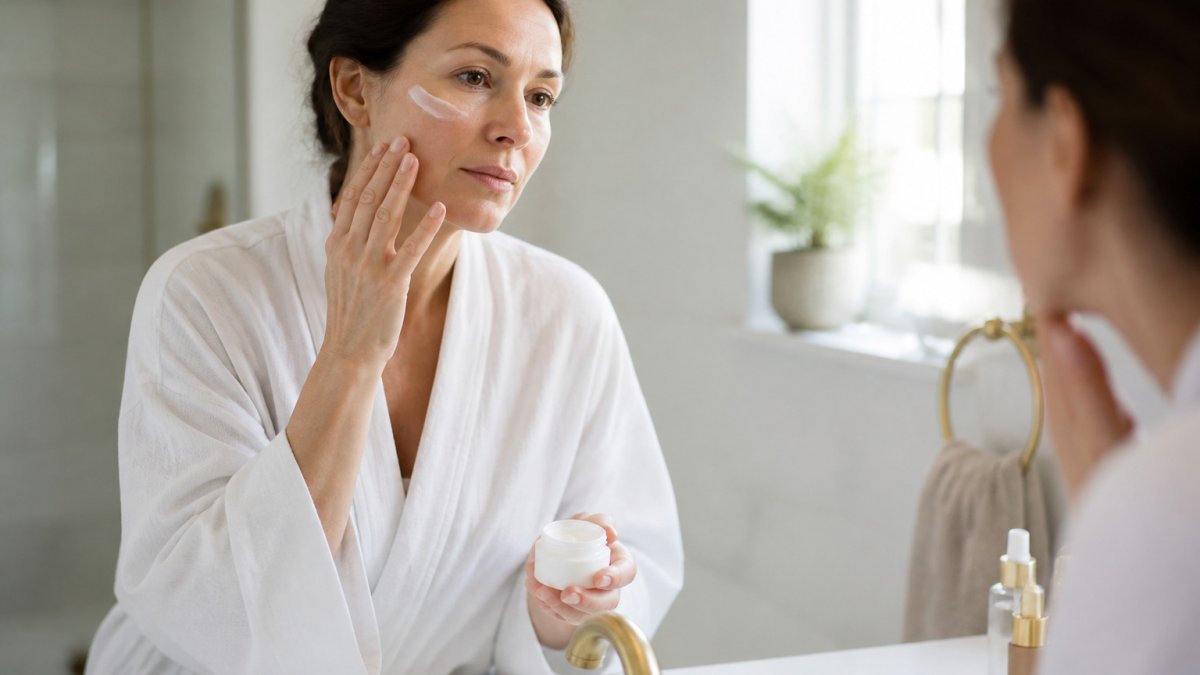
Keep the routine to a simple morning and evening pattern, and hold it steady for at least one to two weeks before changing anything.
Morning
- Rinse or cleanse gently. If skin is very reactive, lukewarm water alone is enough. Otherwise use a fragrance-free, non-foaming cleanser. Avoid hot water, washcloths, and anything labeled with exfoliating acids, enzymes, or physical beads. Pat dry with a clean towel instead of rubbing.
- Moisturize while damp. Apply a fragrance-free moisturizer within about a minute of patting dry, while skin still holds some water. Look for barrier-supporting ingredients such as ceramides, squalane, glycerin, panthenol, or colloidal oatmeal.
- Protect with sunscreen. Use a broad-spectrum SPF 30 or higher every morning, even indoors near windows. Healing skin is more prone to irritation and post-inflammatory darkening, and sun exposure slows recovery. Mineral filters (zinc oxide or titanium dioxide) tend to sting less on compromised skin than chemical filters.
Evening
- Cleanse only if needed. If you did not wear sunscreen or heavy products, a water rinse may be enough. Otherwise use the same gentle cleanser. Skip double cleansing, cleansing oils with fragrance, and cleansing brushes.
- Moisturize generously. Apply the same fragrance-free moisturizer, and add a second thin layer on tight or flaky areas. If a product stings, burning is a signal to stop it, not to push through.
- Skip everything else. No toners, essences, serums with vitamin C, retinol, niacinamide at high percentages, essential oils, or fragrance. These are not inherently bad, they are simply too much for skin that is currently reactive.
What to pause until skin is calm
- All chemical exfoliants: glycolic, lactic, mandelic, salicylic, and any blend or peel pad
- Retinoids, including over-the-counter retinol and prescription tretinoin
- Physical scrubs, cleansing brushes, and exfoliating mitts
- High-percentage vitamin C, strong essential oils, and fragranced products
- Face masks other than a plain, fragrance-free hydrating mask
What can help
- A thin layer of plain petrolatum or a ceramide cream on the driest, most irritated patches overnight
- Colloidal oatmeal or panthenol in a fragrance-free moisturizer to calm itching
- A humidifier in dry indoor air, which reduces water loss from skin
Watch out: If a product burns or stings when you apply it, stop using it during recovery even if it is marketed for sensitive skin, stinging is a reaction, not a sign it is working.
The recovery routine is simple, and the table below lists the core steps and what to avoid while the skin heals.
| Step | What to do | Timing |
|---|---|---|
| Morning cleanse | Lukewarm water or fragrance-free, non-foaming cleanser | Every morning |
| Moisturize | Fragrance-free moisturizer while damp | Within about a minute of patting dry |
| Sunscreen | Broad-spectrum SPF 30 or higher | Every morning |
| Evening moisturize | Fragrance-free moisturizer, second layer on tight areas | Every evening |
| Pause exfoliants | Chemical exfoliants, retinoids, scrubs, brushes | Until skin is calm |
| Hold routine | Keep the same simple routine steady | At least one to two weeks |
How Long Over-Exfoliated Skin Takes to Heal and Signs of Recovery
Mild over-exfoliation often settles within a few days to about a week once you stop the actives. Moderate cases can take two to four weeks. Individual timelines vary with skin type, the products used, and how long the damage went on.
Good signs of healing include:
- Stinging goes away with normal products
- Tightness fades after moisturizing
- Redness fades from the center outward
- Your skin feels comfortable to touch again
Post-inflammatory marks can linger longer, especially on deeper skin tones. Be patient, and keep up sun protection so the marks do not darken.
Restarting Exfoliation Safely and When to Seek Medical Care
Most guides stop at “don’t over-exfoliate.” The harder question is how to come back without repeating the mistake, and when symptoms are serious enough to need a professional rather than a gentler routine.
Restarting exfoliation safely
Do not restart until skin has been comfortable for at least one to two weeks, no stinging with normal products, no tightness after moisturizing, and no visible flaking. When you do restart, treat it as a reintroduction, not a return to your old routine.
- Pick one product. Choose the mildest exfoliant you have, typically a low-percentage lactic or mandelic acid, or a gentle salicylic product if you are acne-prone, and use only that. Do not combine acids, scrubs, retinoids, or devices.
- Patch test first. Apply to a small area such as the jawline or inner forearm and wait 24 to 48 hours. Redness, burning, or itching means the product is still too much for now.
- Start at once a week. Apply at night, follow with a fragrance-free moisturizer, and use sunscreen the next morning. Stay at once a week for two to four weeks before increasing.
- Increase slowly. Move to twice a week only if skin stays calm at once a week. Two to three times a week is a common frequency for most people; daily use of strong acids is a frequent starting point for over-exfoliation.
- Watch for warning signs. If redness, stinging, or tightness returns, stop again and wait longer before the next attempt. Repeated reactions mean the product or frequency is wrong for your skin.
Watch out: Do not restart exfoliation and a retinoid at the same time, if a reaction appears, you will not know which product caused it.
When to seek medical care
Home care is appropriate for mild to moderate redness, dryness, and stinging that improve within a week or two of stopping actives. Some signs need a professional assessment instead:
- Blistering, open sores, oozing, or skin that looks infected (pus, spreading warmth, fever)
- Pain or burning that gets worse rather than better after about a week of gentle care
- Swelling of the face, eyelids, or lips
- A rash that spreads well beyond the area you treated
- Symptoms that keep returning every time you restart exfoliation
- Severe itching or hives, which may point to an allergic reaction rather than simple irritation
A dermatologist can assess the skin, rule out other conditions such as allergic contact dermatitis, rosacea, or eczema, and recommend a safe plan. If you are unsure whether your symptoms come from over-exfoliation or something else, get a professional opinion before you restart any active.
Frequently Asked Questions
What is the fastest way to heal over-exfoliated skin?
The fastest path is to stop every exfoliant, including scrubs, cleansing devices, retinoids and acids, and simplify your routine to a gentle cleanser, a fragrance-free moisturizer and a broad-spectrum sunscreen. Keep your skin cool and avoid hot water. Ceramide- and squalane-based moisturizers help support barrier repair. Most mild cases start to feel calmer within several days, but full recovery of the barrier can take a few weeks. If redness, swelling, pain or signs of infection develop, or symptoms worsen instead of improving, consult a dermatologist rather than adding more products.
How can you tell if your skin is over-exfoliated?
Common signs include persistent redness, stinging or burning when you apply products, tightness after washing, dryness and flaking, small breakouts, a shiny or waxy look, and sudden sensitivity to products you previously tolerated. If these symptoms appear within a day or two of increasing your exfoliation, over-exfoliation is the likely cause. Symptoms that last beyond a few weeks after you stop exfoliating, or that include spreading rash, blistering or swelling, should be assessed by a healthcare provider.
How long does it take for over-exfoliation to heal?
Mild over-exfoliation often improves within a few days once you stop all exfoliating products and switch to a simple barrier-supporting routine. Redness and stinging usually settle first, followed by dryness and flaking. Restoring a fully healthy barrier and resolving any post-inflammatory discoloration can take several weeks. Healing time depends on how severe the irritation was, how long you kept exfoliating, and your skin type. Sun protection during recovery helps prevent darker marks from lingering.
How can you tell the difference between purging and over-exfoliation?
Purging usually appears in areas where you normally break out, shows up as small pimples that clear faster over time, and follows the start of a new active ingredient such as a retinoid or acid. Over-exfoliation tends to cause redness, stinging, tightness and dryness across the face, sometimes with new breakouts, and symptoms worsen with continued use of exfoliants. If your skin feels raw or burns, stop the active and recover before deciding whether it is purging.