Last Updated: September 22, 2026
Common Side Effects and Risks of Chemical Peels
Chemical peel downsides extend beyond mild redness and require careful consideration.
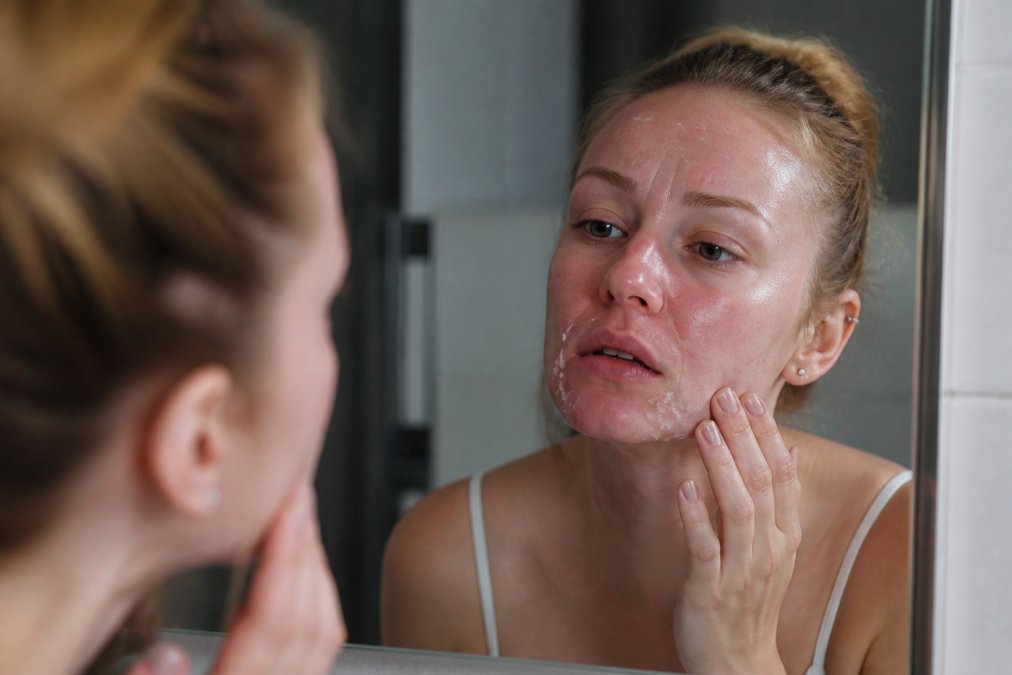
Superficial peels cause mild irritation for hours; medium and deep peels trigger weeks of erythema, swelling, crusting, and blistering (the American Academy of Dermatology).
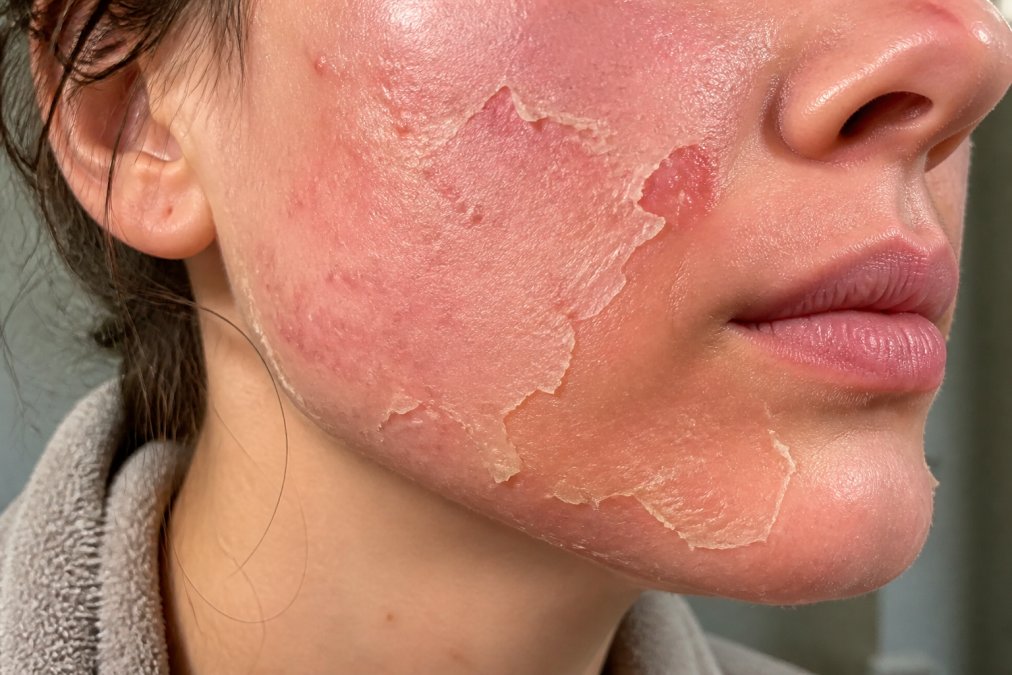
Post-inflammatory hyperpigmentation affects darker skin tones with patches persisting months; infection and scarring are rarer but severe risks.
Allergic reactions to peel ingredients like trichloroacetic acid, phenol, or glycolic acid can occur, causing severe swelling, blistering, or systemic reactions. Patch testing before full application is non-negotiable if you have sensitive skin or a history of reactions.
::: Understanding these chemical sensitivities often reveals broader patterns regarding the common causes of skin irritation that can arise from even seemingly gentle topical formulations.
Chemical Peel Recovery Timeline and What to Expect
Recovery timelines vary by depth: superficial peels need 1-3 days, medium peels 5-7 days, deep peels 2-3 weeks.
Expect stinging immediately, crusting by day 2-3, heavy peeling days 5-10, and full barrier restoration in 3-4 weeks.
During healing, pause retinoids and active ingredients, use gentle cleansing, and avoid picking at peeling skin.
Many people underestimate the "social downtime" of chemical peels. Even if healing is progressing normally, visible crusting and peeling make it difficult to appear in public or on video calls. Plan your peel timing around your schedule, not just the clinical recovery window.
Contraindications for Chemical Peels and Who Should Avoid Them
Active skin infections, open wounds, severe dermatitis, and isotretinoin use (wait six months post-discontinuation) are contraindications.
Chemical peel downsides demand respect. At Makeup Artist’s Choice, we’ve formulated professional-grade peels since 1997 with customizable acid treatments. Understanding your skin type, peel depth, and recovery capacity prevents complications. Shop our chemical peel collection for guidance tailored to your skin’s needs.