Table of Contents
- Why Layering Order Matters After a Chemical Peel
- Your 7-Day Chemical Peel Aftercare Routine
- The Correct Order to Layer Skincare Products
- When to Resume Retinol After a Chemical Peel
- Sun Protection After a Chemical Peel
- What to Avoid While Your Skin Is Healing
- Conclusion
- Frequently Asked Questions
Last Updated: September 16, 2026
Why Layering Order Matters After a Chemical Peel
How to layer chemical peel skincare after treatment is the single most important skill in your recovery window, and most people get it wrong by treating their normal routine as a starting point. Your skin barrier has been deliberately compromised. The stratum corneum, the outermost layer of the epidermis, is thinner, more permeable, and far more vulnerable to irritation, inflammation, and transepidermal water loss than it was before your peel.
After a chemical peel, the order you apply products matters as much as which products you choose. Thin, watery formulas go first; occlusive, protective ones go last. Reversing that order traps actives against compromised skin.
Your 7-Day Chemical Peel Aftercare Routine
A chemical peel aftercare routine follows a predictable seven-day arc: cleanse and protect, hydrate and repair, then reintroduce targeted treatments. Each phase has a different goal, and rushing to the next one is the most common reason people experience unnecessary irritation.
| Phase | Days | Primary Goal | Products to Use |
|---|---|---|---|
| Cleanse and protect | 1-2 | Prevent irritation and infection | Gentle cleanser, moisturizer, sunscreen |
| Hydrate and repair | 3-5 | Rebuild the skin barrier | Ceramides, hyaluronic acid, peptides |
| Reintroduce actives | 6-7 | Restore targeted treatment | Retinoids, exfoliating acids, antioxidants |
Days 1-2: Gentle Cleanse and Protect
Your only job in the first 48 hours is to avoid making things worse. Use a pH-balanced, fragrance-free cleanser with lukewarm water, then apply a bland moisturizer while skin is still damp. Skip anything with active ingredients, including vitamin C, retinoids, and exfoliating acids.
Days 3-5: Hydrate and Support Barrier Repair
Barrier repair becomes the priority once the initial inflammation subsides. Look for ceramides, hyaluronic acid, peptides, and soothing agents like niacinamide or panthenol. These ingredients support the healing process without introducing new irritation.
Pulling or picking at peeling skin can cause post-inflammatory hyperpigmentation and prolong downtime. Let it shed on its own, even if it takes several days longer than you’d like.
Days 6-7: Reintroduce Targeted Treatments
Most people can begin reintroducing one active ingredient at a time by day six, but only if redness and sensitivity have resolved. Start with the mildest option, such as a low-strength antioxidant serum, and wait two to three days before adding anything else.
The Correct Order to Layer Skincare Products
The correct order to layer skincare products after a chemical peel follows texture, not brand or preference: thinnest to thickest. This ensures lighter formulas absorb properly and heavier ones seal everything in without blocking the products underneath. Most guides stop there. The part they skip is that texture order only works if the ingredients you’re stacking are compatible with each other, and during peel recovery, some pairings that are fine on healthy skin become irritants on a compromised barrier.
The Application Sequence
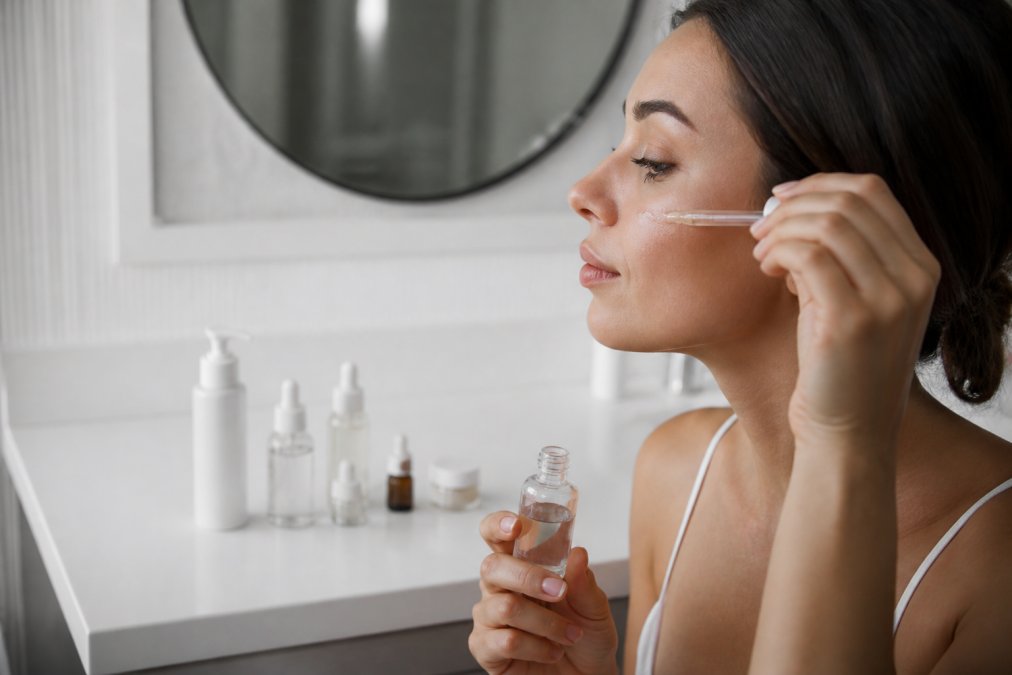
Apply your products in this sequence:
- Cleanser (pH-balanced, fragrance-free)
- Toner or essence (only if alcohol-free and hydrating)
- Hyaluronic acid serum (to damp skin)
- Peptide or antioxidant serum
- Moisturizer (ceramide-based)
- Facial oil (if used, applied after moisturizer)
- Sunscreen (morning only, always last)
Layering order by texture is one of the angles most guides skip entirely. If you apply a thick cream before a watery serum, the serum sits on top and never reaches the skin. During peel recovery, that wasted step costs you hydration you genuinely need.
Ingredient Interaction Matrix
Texture order tells you when to apply. This tells you what to combine. On a healing barrier, the wrong pairing can undo days of progress.
| Layer Together (Safe) | Why It Works | Separate or Avoid | Why It’s a Problem |
|---|---|---|---|
| Hyaluronic acid + ceramides | HA pulls water in; ceramides lock it into the barrier | Vitamin C + retinoids | Both are irritating; stacking them multiplies the risk on compromised skin |
| Niacinamide + peptides | Both are soothing and support barrier proteins | Exfoliating acids + retinoids | Over-exfoliation and barrier stripping |
| Panthenol + occlusive balm | Panthenol calms; the balm seals moisture in | Benzoyl peroxide + anything hydrating | BP is drying and can cancel out repair steps |
| Antioxidant serum + moisturizer | The moisturizer buffers the active | Fragrance + any active | Fragrance is a common trigger for post-peel stinging |
AM vs. PM: Two Different Layering Jobs
Your morning and evening routines are not the same sequence with the lights off. They have different goals.
Morning (protect):
- Rinse with lukewarm water or a gentle cleanser
- Hyaluronic acid serum to damp skin
- Ceramide moisturizer
- Mineral sunscreen (SPF 30+, always last)
Evening (repair):
- Gentle cleanser
- Hydrating toner or essence (alcohol-free)
- Peptide or soothing serum
- Ceramide moisturizer
- Occlusive balm on tight or flaking areas
If you’re unsure whether a product belongs in your AM or PM routine, ask what it’s protecting against. UV protection goes in the morning. Barrier repair goes at night. Anything that does neither can wait until your skin has fully recovered.
When to Resume Retinol After a Chemical Peel
When to resume retinol after chemical peel treatment depends on how your skin responds, not the calendar. A reasonable rule is to wait at least seven days and only reintroduce retinol once redness, stinging, and peeling have fully stopped. But “seven days” is a floor, not a finish line, many people need ten to fourteen days, and rushing it is how a good peel turns into a two-week setback.
The Reintroduction Schedule
Retinoids accelerate cell turnover, which is exactly what you don’t want while the barrier is still rebuilding. When you do bring it back, do it in stages:
- Week 1 back: One night only, at half your previous strength or a pea-sized amount of your usual product. Buffer it by applying moisturizer first, then retinol, then moisturizer again (the “sandwich” method).
- Week 2 back: If no stinging, flaking, or redness the morning after, move to two non-consecutive nights.
- Week 3 back: Three nights per week if skin stays calm.
- Week 4+: Return to your normal frequency, but keep buffering if your skin still feels reactive.
How to Patch Test Before You Commit
Patch testing post-peel is a gap most guides ignore, and it matters most with actives like retinol. Before applying anything to your full face, test it on a small area behind your ear or along your jawline for 24 hours. Skin that tolerated a product before your peel may not tolerate it during recovery, the barrier is thinner and more permeable, so a concentration that was fine two weeks ago can now sting.
For retinol specifically, a two-step test works well:
- Apply a small amount to your jawline. Wait 24 hours. If there’s no reaction, proceed.
- Apply to half your face only, at the reduced strength. Wait 48 hours. If that half stays calm, you’re clear to treat the full face on your next scheduled night.
What to Do If You React
Never layer retinol with exfoliating acids, vitamin C, or benzoyl peroxide during the reintroduction phase. Each of those combinations multiplies irritation risk on a barrier that is still recovering, and the damage can take longer to resolve than the original peel downtime.
If you’re unsure whether your skin is ready, waiting an extra week costs you nothing. Restarting too early can cost you the results you just paid for.
Sun Protection After a Chemical Peel
Sun protection after chemical peel treatment is non-negotiable, because the procedure leaves skin photosensitive for weeks. A broad-spectrum sunscreen with a sun protection factor of 30 or higher is the minimum, and it needs to be reapplied every two hours outdoors (the American Academy of Dermatology).
If your skin stings when you apply sunscreen, switch to a mineral formula. Chemical filters often cause stinging on freshly peeled skin even when the product is labeled for sensitive skin.
What to Avoid While Your Skin Is Healing
Avoiding the wrong ingredients matters as much as choosing the right ones. The FDA maintains consumer information on cosmetic ingredient safety if you want to check specific actives, but the short list of what to skip during recovery is well established.
- Retinoids and prescription tretinoin
- Glycolic acid, salicylic acid, and other chemical exfoliants
- Physical exfoliation, including scrubs and cleansing brushes
- Fragrance, essential oils, and drying alcohols
- Non-comedogenic claims don’t matter here; irritation potential does
- Hot water, saunas, and steam rooms
Conclusion
The seven-day window after a chemical peel is where results are won or lost, and chemical peel skincare layering order is the variable most people overlook. Get the sequence right, resist the urge to rush back to actives, and protect your skin from the sun without exception.
Frequently Asked Questions
What should I put on my skin immediately after a chemical peel?
For the first 24-48 hours, stick to a minimal routine. Use a gentle, pH-balanced cleanser with lukewarm water, then apply a fragrance-free moisturizer packed with ceramides or hyaluronic acid to support the skin barrier. Finish with a mineral sunscreen if you go outdoors. Avoid any products with active ingredients like retinoids, glycolic acid, or salicylic acid until your skin has fully healed.
How many days after a chemical peel can I use active ingredients like retinol?
Most dermatologist-recommended guidance suggests waiting at least 7 days before reintroducing retinoids. Your skin needs time to complete its healing process and restore the barrier. Start with a low-strength retinol every third night and watch for signs of irritation like erythema or stinging. If your skin tolerates it well, gradually increase frequency. If peeling or sensitivity returns, stop and wait a few more days.
Is it safe to use hyaluronic acid after a chemical peel?
Yes, hyaluronic acid is one of the best ingredients to use after a peel. It draws water into the skin and helps reduce transepidermal water loss without irritating compromised skin. Apply it to damp skin, then seal it with a moisturizer containing ceramides or peptides. This combination supports barrier repair and keeps the healing process on track. Avoid combining it with exfoliating acids during the first week.
What helps a chemical peel heal faster?
Consistent hydration and sun protection are the two biggest factors. Use a gentle cleanser, layer a hyaluronic acid serum under a ceramide-rich moisturizer, and apply mineral sunscreen every morning. Avoid picking or peeling flaking skin, which can cause scarring or post-inflammatory hyperpigmentation. Staying out of direct sun and skipping harsh exfoliants, retinoids, and fragranced products will also speed up recovery.