Table of Contents
- Can Sensitive Skin Handle At-Home Chemical Peels?
- Why Skin Reacts: Understanding Your Skin Barrier
- The Safest Acids: Mandelic Acid Peel for Sensitive Skin
- How to Patch Test Chemical Peel Products Correctly
- Recognizing Signs of Chemical Burn from Peel Use
- Post-Peel Skincare Routine for Sensitive Skin
- When to Skip At-Home Peels and See a Dermatologist
- The Verdict: Choosing a Safe Peel for Your Sensitive Skin
- Frequently Asked Questions
Last Updated: September 4, 2026
Chemical exfoliation is the controlled removal of dead skin cells using acids, and it is one of the most effective ways to improve skin texture and tone. The question of whether an at-home chemical peel is safe for sensitive skin is one we hear constantly at Makeup Artist’s Choice, and the honest answer is nuanced. It can be safe, but only under strict conditions regarding the acid type, its concentration, and your skin’s current state. This guide breaks down exactly how to evaluate your skin, choose a product, and perform a peel without damaging your moisture barrier.
The most important insight up front is that sensitivity is not a single condition. It can mean reactivity, dryness, or a compromised barrier, and each requires a different approach. Before you buy any product, you need to understand what your skin can tolerate, which we will help you determine below. We will cover the safest acid categories, a proper patch test protocol, and exactly what to do if something goes wrong.
Can Sensitive Skin Handle At-Home Chemical Peels?
Sensitive skin can handle at-home chemical peels, provided you select the correct acid, use a low concentration, and follow a strict preparation protocol. The key distinction is between skin that is naturally reactive and skin that is currently irritated or inflamed. If you have active eczema, rosacea flare-ups, or psoriasis, you should not use a chemical peel until the condition is under control.
For those with mild sensitivity, the approach is about choosing the right molecule size. Larger acid molecules penetrate the skin more slowly, which reduces the risk of irritation. A common mistake is starting with a strong acid like glycolic acid at a high percentage, which can lead to erythema, burning, and peeling for days. Instead, you want to start with a gentler option and a lower concentration to allow the stratum corneum to build tolerance over time.
Do not use an at-home peel if you have open wounds, sunburn, or active breakouts that are infected. Applying acid to compromised skin can cause severe inflammation and lead to post-inflammatory hyperpigmentation, which is much harder to treat than the original concern.
Why Skin Reacts: Understanding Your Skin Barrier
Your skin barrier, also known as the moisture barrier, is the outermost layer of the epidermis that protects against water loss and environmental irritants. When this barrier is weakened, acids penetrate faster and deeper than intended, which triggers a burning sensation and prolonged redness. Most reactions from at-home peels are not caused by the acid itself but by a barrier that was already compromised before application.
The stratum corneum acts as a rate-limiting membrane. If it is healthy, it slows acid penetration. If it is stripped from over-exfoliation or harsh cleansers, the acid reaches the dermal layers too quickly. This is why the same product can be gentle on one person and cause a chemical burn on another. The product is not the variable; the barrier condition is.
A simple test is to wash your face with lukewarm water and wait 10 minutes without applying any products. If your skin feels tight, itchy, or looks blotchy, your barrier needs repair before you consider a peel. Focus on ceramide-rich moisturizers and gentle cleansing for at least two weeks before attempting any chemical exfoliation.
The Safest Acids: Mandelic Acid Peel for Sensitive Skin
The best option for reactive skin is a mandelic acid peel for sensitive skin, as mandelic acid has the largest molecular size of the common alpha-hydroxy acids. This larger structure means it diffuses into the skin more slowly than glycolic or lactic acid, producing a gentler exfoliating effect with a much lower risk of irritation. It is derived from bitter almonds and is particularly suited for those prone to redness.
A mandelic acid peel for sensitive skin can address uneven tone, mild textural issues, and post-inflammatory hyperpigmentation without the downtime associated with stronger acids. It also has inherent antibacterial properties, which makes it useful for acne-prone and inflamed skin. For a first-time user, a concentration around 10% is a reasonable starting point, though you should always verify the specific product instructions.
Below is a summary of how common acids compare for sensitive skin:
| Acid Type | Molecular Size | Relative Penetration | Best For |
|---|---|---|---|
| Mandelic Acid | Large | Slow and gentle | Sensitive, reactive, hyperpigmentation |
| Lactic Acid | Medium | Moderate | Dry skin, mild textural issues |
| Glycolic Acid | Small | Fast and deep | Tolerant skin, fine lines |
| Salicylic Acid | Small | Oil-soluble | Acne-prone, oily skin |
If you are new to acid peels, look for a formulation that you can neutralize easily with water. Professional-grade products from Makeup Artist’s Choice are designed with this in mind, but you must always read the specific instructions for your chosen concentration before applying.
How to Patch Test Chemical Peel Products Correctly
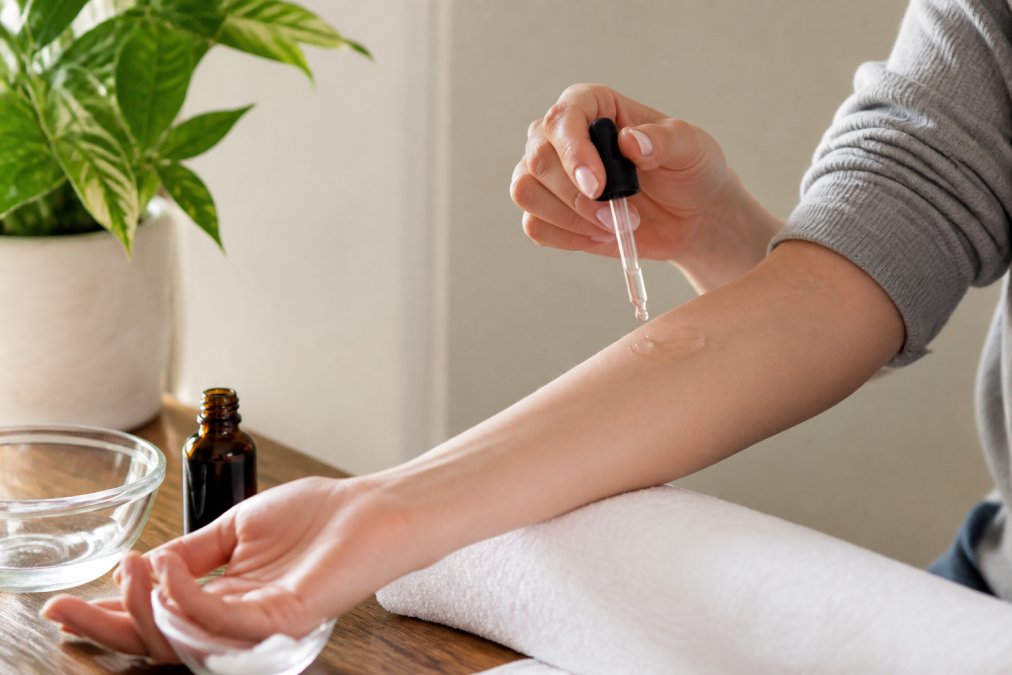
A patch test is the only reliable way to predict how your skin will react to a new acid product, and it takes five days to complete properly. Many people skip this step or do it incorrectly by testing on their jawline where the skin is thicker and less reactive. The correct location is the inner forearm, just below the elbow, or the area just behind the ear, as these areas are more representative of facial sensitivity.
Follow these steps to perform the test correctly:
- Clean a small area on your inner forearm with a gentle cleanser and pat dry.
- Apply a small drop of the peel solution to the area using a cotton swab. Do not rub it in.
- Leave the product on for the exact duration specified in the instructions for a full-face application.
- Rinse the area thoroughly with cool water and pat dry.
- Monitor the site for 48 to 72 hours. Watch for signs of redness, swelling, itching, or a burning sensation that persists beyond a few minutes.
If you experience any strong reaction during the test window, do not use the product on your face. If there is no reaction, the product is likely safe for a full application, but you should still start with the lowest concentration available. This process is not optional; it is the primary safeguard against a chemical burn from a product you cannot tolerate.
Recognizing Signs of Chemical Burn from Peel Use
A chemical burn from a peel is distinct from a normal exfoliating reaction, and the difference is usually in the intensity and duration of symptoms. Normal peeling involves flaking that begins two to three days after treatment and resolves within a few days. A chemical burn involves immediate, intense stinging, deep redness, and the formation of blisters or raw patches within hours.
Signs of chemical burn from peel use include severe burning that does not subside after neutralization, visible skin blanching or a white frosted appearance, and swelling. If you notice these signs, you must neutralize the acid immediately with cool water and a gentle中和 agent if your product instructions require one. Do not attempt to scrub the acid off, as this will worsen the injury.
After neutralizing, apply a thick layer of a soothing ointment like plain petroleum jelly to protect the area. Avoid all other active ingredients, including vitamin C, retinoids, and other exfoliants. If the pain is severe, or if the affected area is large or on the face, you should seek medical attention promptly. The American Academy of Dermatology advises that persistent pain or blistering warrants professional evaluation to prevent scarring.
Post-Peel Skincare Routine for Sensitive Skin
The days following a peel are more important than the peel itself for sensitive skin, as the new skin is vulnerable and needs protection. For the first 24 hours, wash with lukewarm water only and avoid any friction from towels or cleansing brushes. Your goal is to minimize inflammation and allow the skin to begin its repair process.
A post-peel skincare routine for sensitive skin should focus on three pillars: hydration, barrier repair, and sun protection. For the first three days, use only a gentle cleanser, a hydrating serum with ingredients like hyaluronic acid, and a rich moisturizer. You may notice some flaking starting on day two or three; do not pick at it. Allow the dead skin to shed naturally.
Starting on day four, you can reintroduce a bland moisturizer with ceramides to support the skin barrier. You must also apply a broad-spectrum sunscreen with SPF 30 or higher every morning, as your skin is now highly susceptible to sun damage and hyperpigmentation. The FDA guidelines on sunscreen labeling clarify that broad-spectrum products protect against both UVA and UVB rays, which is essential during this recovery window.
The recovery timeline is predictable: redness for 1-2 days, flaking from day 2-4, and full barrier recovery typically taking 5-7 days. If your skin is still inflamed or painful after day three, you likely used too high a concentration and should allow your barrier to heal completely before attempting any future treatment.
When to Skip At-Home Peels and See a Dermatologist
You should skip at-home peels entirely if you have a diagnosed skin condition like active rosacea, eczema, or psoriasis, as these conditions involve a compromised barrier that acids will aggravate. Similarly, if you are taking prescription topical treatments like tretinoin or undergoing procedures like laser therapy, your skin is too fragile for additional chemical exfoliation. Combining these treatments without professional supervision can lead to significant irritation.
A dermatologist is the right call if you have deep acne scars, melasma, or severe hyperpigmentation that has not responded to over-the-counter products. These conditions often require higher concentrations of acids or different treatment modalities that are only safe in a clinical setting. A professional can also assess your skin type and determine the underlying cause of your sensitivity, which is essential for a long-term treatment plan.
There are also specific contraindications for at-home peels. If you are pregnant, some acids like salicylic acid at high concentrations are not recommended. If you have a history of cold sores, a peel can trigger an outbreak, and your doctor may prescribe an antiviral to take preventively. When in doubt, a consultation is a small cost compared to the potential for a permanent scar from a chemical burn. You can find a board-certified dermatologist through the American Academy of Dermatology’s finder tool.
The Verdict: Choosing a Safe Peel for Your Sensitive Skin
An at-home chemical peel is safe for sensitive skin only when you respect the principles of low concentration, slow penetration, and a healthy barrier. The verdict is not a blanket yes or no; it is a conditional yes based on your specific skin condition and your willingness to follow a conservative protocol. Start with mandelic acid, patch test rigorously, and never increase strength until your skin has shown it can tolerate the previous level without issue.
Makeup Artist’s Choice has formulated professional-grade at-home chemical peels since 1997, offering a range of acids including glycolic, lactic, salicylic, and TCA, as well as gentler options suitable for reactive skin. Our products are made in the USA and designed for customizable routines, allowing you to address concerns like acne, aging, and texture at your own pace. The key is to choose a strength that matches your experience level and to follow the aftercare instructions precisely.
For those with hyperpigmentation or uneven tone, consistent use of a gentle peel over several months will yield visible improvement, but it requires patience. The most effective approach is a slow, steady cycle of exfoliation and barrier repair, not aggressive treatment. If you are unsure which concentration is right for you, our team can help you build a routine that respects your skin’s limits.
Frequently Asked Questions
What is the safest chemical peel acid for sensitive skin?
Mandelic acid is often the safest choice for sensitive skin due to its larger molecular size, which slows penetration and reduces irritation risk. Lactic acid is another gentle option. Both are milder than glycolic or salicylic acid. Always start with the lowest concentration available and perform a patch test 24-48 hours before applying the peel to your face.
How can I tell if my skin is too sensitive for a chemical peel?
If you have active eczema, psoriasis, rosacea flare-ups, or open wounds, skip the peel. Signs of a compromised skin barrier include persistent stinging, burning, or redness from your regular moisturizer. Do a patch test on your jawline or inner arm. If you see significant redness, swelling, or itching at the test site, your skin is too reactive right now.
What should I do if I suspect a chemical burn from a peel?
Rinse the area with cool water immediately for several minutes to stop the acid’s action. Do not scrub. Apply a thick, fragrance-free moisturizer or plain petroleum jelly to soothe the area. If you see blistering, severe pain, or weeping skin, contact a dermatologist right away. These are the clearest signs of a chemical burn.
How often can I use a gentle at-home peel on sensitive skin?
Start by using a gentle mandelic or lactic acid peel no more than once every 7 to 10 days. Your skin needs time to rebuild its moisture barrier between sessions. If you experience tightness or flaking beyond the expected mild exfoliation, extend the interval to two weeks. Consistency at a low frequency is safer than aggressive use.
Choosing the right at-home chemical peel for sensitive skin comes down to understanding your barrier, selecting the correct acid, and respecting the recovery process. The risk of damage is real, but it is manageable with proper education and conservative product selection. Get started with Makeup Artist’s Choice and explore our range of professional-grade peels and supportive skincare to find the safe, effective solution your skin has been waiting for.
This article was written using GrandRanker