Table of Contents
- What Acne Hyperpigmentation Actually Is (and Why It Lingers)
- The Ingredients That Actually Fade Acne Hyperpigmentation
- Mandelic Acid Toner: A Gentler Entry Point for Sensitive Skin
- How to Layer Ingredients Safely (and What Not to Mix)
- Skincare Routine for Hyperpigmentation: A Step-by-Step Plan
- How Long Does Hyperpigmentation Take to Fade?
- When to See a Dermatologist Instead
- Conclusion
Last Updated: August 25, 2026
What Acne Hyperpigmentation Actually Is (and Why It Lingers)
Acne hyperpigmentation is the discoloration left behind after an acne lesion heals, caused by excess melanin production triggered by inflammation in the skin. It is not a scar in the structural sense. No collagen has been damaged. The skin’s surface is flat. But the color can persist for months, and for deeper skin tones, sometimes longer than a year without targeted treatment.
This distinction matters because it changes your entire treatment approach. Many people waste time and money on products designed for atrophic scarring (the pitted kind) when what they actually have is a pigmentation issue that responds well to the right topical ingredients and consistent sun protection. Makeup Artist’s Choice has worked with individuals navigating this confusion since 1997, and it remains one of the most common misunderstandings in at-home skincare.
The mechanism is straightforward: when the epidermis and upper dermis experience inflammation from an acne lesion, melanocytes (the cells responsible for pigment) go into overdrive. They deposit melanin unevenly, leaving a dark spot that outlasts the original breakout by weeks or months. The deeper the inflammation, the more stubborn the pigmentation.
Post-Inflammatory Hyperpigmentation vs. True Acne Scars
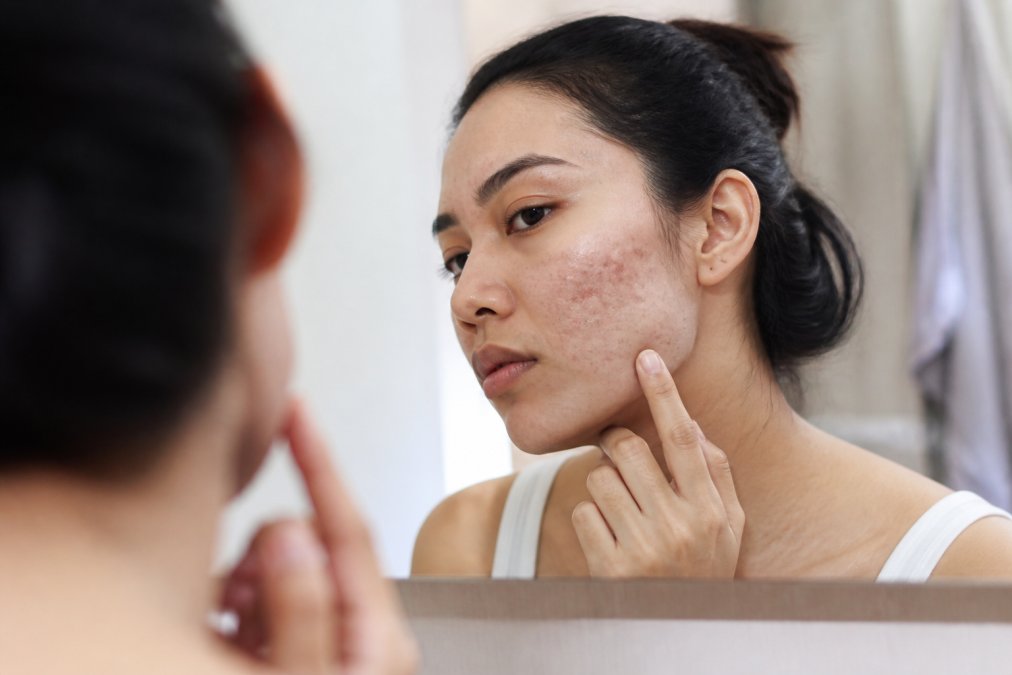
Post-inflammatory hyperpigmentation (PIH) is a flat, discolored patch with no texture change, while true acne scars involve physical changes to the skin’s structure, such as depressed or raised tissue. PIH responds to topical treatments and time. Structural scars often require clinical interventions like microneedling, laser therapy, or chemical peels at higher concentrations.
Run a finger across the dark spot. If the surface is smooth, you are dealing with PIH. If there is a depression or raised ridge, that is scarring. Most people have both, which is why a layered approach to treatment makes sense.
The Psychological Weight of Dark Spots
The impact of PIH goes well beyond aesthetics. Many people with persistent dark spots report avoiding social situations, wearing heavy coverage makeup daily, and feeling that their skin looks perpetually unwell even during periods of clear skin. This is worth acknowledging directly: the frustration is real, and it is not vanity. Consistent, realistic treatment plans help not just the skin, but the confidence that comes with seeing actual progress.
The Ingredients That Actually Fade Acne Hyperpigmentation
The skincare market offers no shortage of products claiming to brighten and even skin tone. Most of them contain variations of the same core ingredients. Knowing which ones have genuine evidence behind them, and how to use them safely, is what separates real progress from wasted effort.
Alpha Hydroxy Acids: Glycolic and Lactic Acid
Glycolic acid and lactic acid are alpha hydroxy acids (AHAs) that accelerate skin cell turnover by dissolving the bonds between dead skin cells on the surface of the epidermis. This exfoliation process gradually brings fresher, more evenly pigmented skin to the surface. According to American Academy of Dermatology guidance on chemical exfoliants, AHAs are among the most studied topical agents for improving uneven skin tone.
Glycolic acid has the smallest molecular weight of the AHAs, which means it penetrates more deeply and tends to produce faster results. Lactic acid is larger, gentler, and better suited to sensitive skin types. Both increase photosensitivity, so sunscreen is non-negotiable when using either.
For at-home use, lower concentrations used consistently outperform high-concentration treatments used sporadically. Patience is the actual active ingredient here.
Salicylic Acid for Active Acne and Residual Pigmentation
Salicylic acid is a beta hydroxy acid (BHA) that works differently from AHAs: it is oil-soluble, which means it penetrates into the pore lining rather than just working on the surface. This makes it particularly useful for anyone dealing with both active acne and residual pigmentation at the same time.
By clearing congestion and reducing inflammation at the source, salicylic acid addresses the cause of new PIH while mild exfoliation helps fade existing spots. It is one of the few ingredients that pulls double duty in a hyperpigmentation routine.
Retinoids and Vitamin C
Retinoids (vitamin A derivatives) increase skin cell turnover at a deeper level than AHAs, and they also inhibit melanin production directly. This dual action makes them among the most effective long-term tools for fading acne hyperpigmentation. The trade-off is a longer adjustment period: expect dryness, peeling, and potential purging during the first four to eight weeks.
Vitamin C works differently. As an antioxidant, it interrupts the enzymatic process that produces melanin, and it also protects against UV-induced pigmentation. It pairs well with retinoids when used at separate times of day (vitamin C in the morning, retinoids at night). As noted by National Institutes of Health research on topical vitamin C, topical ascorbic acid has demonstrated measurable effects on skin pigmentation in multiple clinical studies.
Mandelic Acid Toner: A Gentler Entry Point for Sensitive Skin
Mandelic acid is an AHA derived from bitter almonds with a larger molecular structure than glycolic acid. Because it absorbs more slowly into the skin, it causes significantly less irritation, making it an excellent starting point for people with sensitive skin or those new to chemical exfoliation. treating hyperpigmentation safely.
A mandelic acid toner used consistently can improve skin cell turnover, reduce the appearance of dark spots, and help with mild congestion, all without the redness or stinging that glycolic acid sometimes causes. This makes it a practical bridge ingredient: effective enough to produce visible results, gentle enough to use without disrupting the skin barrier.
For people who have tried glycolic acid and found it too aggressive, or who are dealing with PIH on skin that also tends toward sensitivity, a mandelic acid toner is worth prioritizing over stronger options. Makeup Artist’s Choice offers a mandelic acid toner formulated for exactly this use case, as part of a broader range of acid-based treatments made in the USA.
Start with mandelic acid two to three nights per week before building to daily use. This allows the skin barrier to adapt without triggering reactive redness or over-exfoliation.
How to Layer Ingredients Safely (and What Not to Mix)
This is the part most guides skip, and it is where people get into trouble. Combining the wrong actives does not just reduce effectiveness; it can compromise the skin barrier, trigger breakouts, and worsen the pigmentation you are trying to fade.
Here is what works together and what does not:
Safe combinations:
- Vitamin C (morning) + broad-spectrum sunscreen (morning)
- AHA or BHA toner (evening) + hydrating serum + moisturizer
- Retinoid (evening, 2-3x per week) + fragrance-free moisturizer
Combinations to avoid:
- AHAs/BHAs and retinoids in the same application (too much exfoliation, barrier disruption)
- Vitamin C and AHAs at the same time (pH conflict reduces effectiveness of both)
- Benzoyl peroxide and retinoids together (benzoyl peroxide oxidizes retinoids, rendering them less effective)
Patch testing before introducing any new active is not optional. Apply a small amount to the inner arm or behind the ear for 24 to 48 hours before applying to the face. This is especially important for acids and retinoids, where a reaction on a large area of the face is far harder to manage than one on a small test patch.
Layering multiple exfoliating acids in the same routine is one of the most common mistakes people make. More acids do not mean faster fading. They mean a damaged skin barrier, increased inflammation, and potentially darker PIH from the irritation itself.
Skincare Routine for Hyperpigmentation: A Step-by-Step Plan
A well-structured skincare routine for hyperpigmentation does not need to be complicated. Consistency with a focused set of ingredients outperforms a 10-step routine every time.
Morning Routine
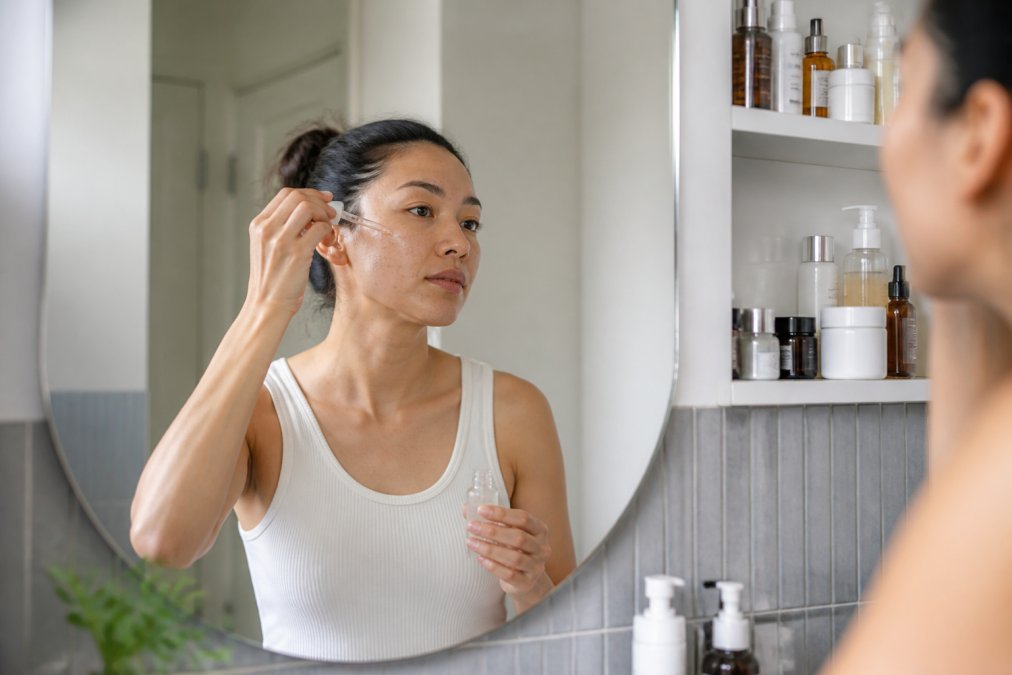
- Gentle cleanser – Remove overnight products without stripping the skin barrier.
- Vitamin C serum – Apply to dry skin. Allow 60 seconds to absorb before the next step.
- Hydrating serum (optional) – Hyaluronic acid or niacinamide supports hydration and helps calm inflammation.
- Moisturizer – Seal in hydration and support barrier function.
- Broad-spectrum SPF 30 or higher – This is the single most important step in any hyperpigmentation routine. UV exposure directly stimulates melanin production, which means unprotected skin will continue darkening even as your actives work to fade existing spots.
Evening Routine
- Oil or balm cleanser (if wearing SPF or makeup) followed by a gentle foaming cleanser.
- Chemical exfoliant – AHA (glycolic or lactic acid) or BHA (salicylic acid) toner, 3-5 nights per week. Not every night, especially when starting out.
- Retinoid (on non-exfoliant nights) – Apply a pea-sized amount to dry skin. Alternate with your exfoliant rather than layering them.
- Moisturizer – Especially important on retinoid nights to buffer dryness.
Budget-Friendly vs. Professional-Grade Options
The honest reality is that budget and professional-grade routines use the same core ingredients. The difference lies in concentration, formulation quality, and the inclusion of supporting compounds that improve stability and absorption.
| Routine Tier | Key Ingredients | Best For | Typical Commitment |
|---|---|---|---|
| Budget-friendly | Low-concentration AHA/BHA, basic vitamin C | Mild PIH, new to actives | 6-12 months |
| Mid-range | Stabilized vitamin C, mandelic or glycolic toner | Moderate PIH, consistent routine | 3-6 months |
| Professional-grade at-home | Higher-concentration acid peels, retinoids, layered actives | Persistent PIH, faster results | 2-4 months |
Professional-grade at-home chemical peels, like those offered by Makeup Artist’s Choice, sit in that third tier. They use higher concentrations of glycolic, lactic, salicylic, and other acids than most over-the-counter products, which is why they can produce visible results when used correctly.
How Long Does Hyperpigmentation Take to Fade?
Acne hyperpigmentation that sits in the epidermis (surface layer) typically fades within three to six months with consistent treatment and daily sun protection. Deeper pigmentation that has reached the dermis takes considerably longer, often six to twelve months or more, and may require clinical treatments to fully resolve.
Several factors affect the timeline:
- Skin tone: Deeper skin tones produce more melanin and are more prone to PIH, which also tends to be more persistent. Ingredients like niacinamide and azelaic acid are particularly well-tolerated and effective for melanin-rich skin.
- Sun exposure: Unprotected UV exposure is the single biggest factor that extends fading time. A broad-spectrum sunscreen with SPF 30 or higher, worn daily, is not optional.
- Consistency: Skipping treatments extends timelines significantly. A routine used five days a week produces better results than a more aggressive one used sporadically.
- Active acne: New breakouts create new PIH. Clearing active acne is as important as treating existing spots.
As documented in research published in the Journal of Clinical and Aesthetic Dermatology, topical treatments for PIH show the most measurable improvement between months two and four of consistent use, with continued improvement through month six.
Sun protection is not a supplement to your hyperpigmentation routine. It is the foundation. Every day you skip SPF, you undo a portion of what your actives are working to achieve.
When to See a Dermatologist Instead
Most cases of post-inflammatory hyperpigmentation respond to consistent at-home treatment. But there are situations where a dermatologist visit is the right call, not a last resort.
Seek professional evaluation if:
- Dark spots have not improved after six months of consistent topical treatment with appropriate ingredients
- Pigmentation is deepening or spreading rather than fading
- You are unsure whether you are dealing with PIH, melasma, or another pigmentation disorder (melasma, in particular, requires a different treatment approach and can be worsened by some standard PIH treatments)
- You have significant active acne that is not responding to over-the-counter salicylic acid or benzoyl peroxide
- You are interested in clinical treatments such as chemical peels at higher concentrations, microneedling, or laser therapy
A dermatologist can also confirm whether what you are seeing is truly PIH or a different condition entirely. Conditions like melasma can look similar but have distinct triggers (hormonal fluctuation, UV exposure) and respond differently to treatment. Getting the diagnosis right saves months of misdirected effort.
For those dealing with persistent hyperpigmentation who are not yet ready for a clinical appointment, professional-grade at-home chemical peels can bridge the gap. The American Academy of Dermatology’s patient resources on hyperpigmentation offer a solid reference point for understanding when topical treatment is sufficient and when clinical intervention is warranted.
Persistent acne hyperpigmentation is one of the more frustrating skin concerns to treat, not because the solutions are complicated, but because they require time and discipline that most routines cannot sustain. The right combination of chemical exfoliation, targeted brightening ingredients, and daily sun protection will fade most PIH. The question is whether your current routine has the right ingredients at the right concentrations. Makeup Artist’s Choice has specialized in professional-grade acid treatments since 1997, offering glycolic, lactic, salicylic, and mandelic acid formulations made in the USA. Shop the full range to find the right treatment for your skin’s specific needs.
=== FAQ ANSWERS (audit these too, same rules) ===
[1] Q: How long does it take for acne hyperpigmentation to fade?
A: Mild post-inflammatory hyperpigmentation can fade in 3 to 6 months with consistent use of exfoliating acids and daily broad-spectrum sunscreen. Deeper pigmentation that has reached the dermis takes longer, often 6 to 12 months or more. Skin tone, sun exposure habits, and product consistency all affect the timeline. Skipping sunscreen even a few days per week can reset progress significantly, so daily SPF application is non-negotiable throughout treatment.
[2] Q: What is the best ingredient for fading acne dark spots?
A: No single ingredient wins across all skin types. Glycolic acid accelerates skin cell turnover and is well-studied for fading dark spots. Salicylic acid works inside pores to prevent new acne lesions that cause pigmentation. Mandelic acid is a gentler option for sensitive or deeper skin tones. Retinoids speed up epidermal renewal over time. Vitamin C inhibits melanin production. Most people see the best results combining two complementary ingredients rather than relying on one alone.
[3] Q: Can chemical peels help with acne hyperpigmentation at home?
A: Yes. At-home chemical peels using glycolic acid, lactic acid, salicylic acid, or mandelic acid can meaningfully reduce acne hyperpigmentation by accelerating exfoliation and skin cell turnover. Professional-grade formulations can deliver visible results. Patch testing before your first application is essential to protect your skin barrier. Starting at a lower concentration and increasing gradually reduces the risk of irritation, redness, or photosensitivity reactions.
[4] Q: What is the difference between acne scars and hyperpigmentation?
A: Acne hyperpigmentation, also called post-inflammatory hyperpigmentation (PIH), is a flat discoloration left after an acne lesion heals. It is a pigment issue, not a structural one. True acne scars involve changes to the skin’s texture, indentations (atrophic scars) or raised tissue (hypertrophic scars) caused by collagen damage in the dermis. PIH responds well to topical acids and sunscreen. Textural scars typically require clinical treatments such as microneedling, chemical peels at higher strengths, or laser therapy.
Frequently Asked Questions
How long does it take for acne hyperpigmentation to fade?
Mild post-inflammatory hyperpigmentation can fade in 3 to 6 months with consistent use of exfoliating acids and daily broad-spectrum sunscreen. Deeper pigmentation that has reached the dermis takes longer, often 6 to 12 months or more. Skin tone, sun exposure habits, and product consistency all affect the timeline. Skipping sunscreen even a few days per week can reset progress significantly, so daily SPF application is non-negotiable throughout treatment.
What is the best ingredient for fading acne dark spots?
No single ingredient wins across all skin types. Glycolic acid accelerates skin cell turnover and is well-studied for fading dark spots. Salicylic acid works inside pores to prevent new acne lesions that cause pigmentation. Mandelic acid is a gentler option for sensitive or deeper skin tones. Retinoids speed up epidermal renewal over time. Vitamin C inhibits melanin production. Most people see the best results combining two complementary ingredients rather than relying on one alone.
Can chemical peels help with acne hyperpigmentation at home?
Yes. At-home chemical peels using glycolic acid, lactic acid, salicylic acid, or mandelic acid can meaningfully reduce acne hyperpigmentation by accelerating exfoliation and skin cell turnover. Professional-grade formulations can deliver visible results. Patch testing before your first application is essential to protect your skin barrier. Starting at a lower concentration and increasing gradually reduces the risk of irritation, redness, or photosensitivity reactions.
What is the difference between acne scars and hyperpigmentation?
Acne hyperpigmentation, also called post-inflammatory hyperpigmentation (PIH), is a flat discoloration left after an acne lesion heals. It is a pigment issue, not a structural one. True acne scars involve changes to the skin's texture, indentations (atrophic scars) or raised tissue (hypertrophic scars) caused by collagen damage in the dermis. PIH responds well to topical acids and sunscreen. Textural scars typically require clinical treatments such as microneedling, chemical peels at higher strengths, or laser therapy.
This article was written using GrandRanker