Table of Contents
- What a Salicylic Acid Peel Actually Does to Acne-Prone Skin
- Choosing the Right Concentration for At-Home Use
- At-Home Chemical Peel Safety Tips Before You Start
- How to Apply a Salicylic Acid Peel at Home: Step-by-Step
- How to Neutralize a Salicylic Acid Peel Correctly
- Salicylic Acid Peel Recovery Time and Post-Peel Care
- Who Should Avoid Salicylic Acid Peels
- Conclusion
Last Updated: August 25, 2026
What a Salicylic Acid Peel Actually Does to Acne-Prone Skin
A salicylic acid peel is a chemical exfoliant treatment that uses beta hydroxy acid (BHA) to dissolve the bonds between dead skin cells, clear pore congestion, and reduce active acne vulgaris at the source. At Makeup Artist’s Choice, we’ve formulated salicylic peels specifically for acne-prone skin since 1997.
Salicylic acid is lipid-soluble, meaning it penetrates through sebum directly into the follicle where acne originates, a defining advantage over water-soluble exfoliants. Once inside the pore, it acts as a keratolytic agent, breaking down the keratin proteins that cause dead skin cells to clump and form comedones. It also has a mild comedolytic effect, preventing new comedones from forming. Regular use accelerates cell turnover, helping fade post-inflammatory hyperpigmentation over time.
Why BHA Works Where Other Exfoliants Fall Short
Alpha hydroxy acids (AHAs) like glycolic and lactic acid are water-soluble and exfoliate the surface effectively, but cannot penetrate through sebum into the follicle. Salicylic acid’s lipid-solubility closes that gap, it’s the only chemical exfoliant that can reach inside a clogged pore, dissolve trapped sebum and debris, and reduce sebum production over repeated use. For persistent acne unresponsive to surface-level treatments, this distinction changes outcomes.
Choosing the Right Concentration for At-Home Use
Concentration is the variable most people get wrong. For at-home use, salicylic acid peels typically range from 10% to 30%. Lower concentrations (10-20%) suit first-time users, sensitive skin types, and those new to chemical exfoliants. Concentrations of 20-30% are suited to experienced users with oily, resilient skin who have established tolerance.
The pH level matters as much as concentration. A well-formulated salicylic peel operates at pH 1.5-3.5, where the acid is in its active, free-acid form and can effectively penetrate skin. A product with higher pH may list high concentration but deliver significantly less exfoliation.
| Concentration | Best For | Experience Level |
|---|---|---|
| 10-15% | First-time users, sensitive or dry skin | Beginner |
| 15-20% | Established acne-prone skin with some peel experience | Intermediate |
| 20-30% | Oily, resilient skin; experienced peel users | Advanced |
Start at the lower end of your appropriate range and work up only after your skin tolerates several sessions without adverse reaction.
At-Home Chemical Peel Safety Tips Before You Start
The biggest mistake people make is skipping preparation entirely. Two steps protect you from adverse reactions.
Patch Testing Protocol: The Step Most People Skip
Patch testing is non-negotiable before your first salicylic acid peel. Apply a small amount to a discreet area like the inner forearm or behind the ear for the same duration you plan to use on your face. Wait 24-48 hours and observe.
Mild redness that resolves within hours is normal. Prolonged erythema, itching, blistering, or significant swelling indicates your skin is not tolerating this product at this concentration. Do not proceed with a full facial application if you see these signs.
Never apply a salicylic acid peel over broken skin, active cold sores, or areas with open lesions. This can cause severe irritation and significantly increase infection or scarring risk.
Ingredient Interactions to Avoid
Certain active ingredients should not be used in the days surrounding a salicylic acid peel:
- Retinoids (retinol, tretinoin): Discontinue 3-5 days before and after your peel. Combining them dramatically increases irritation.
- Other chemical exfoliants (AHAs, benzoyl peroxide): Using multiple exfoliating actives stacks the exfoliation load your skin cannot recover from quickly.
- Physical scrubs: Mechanical exfoliation before a chemical peel removes the protective layer your skin needs during treatment.
- Vitamin C (ascorbic acid): Can interact unpredictably with acid treatments and increase sensitivity.
According to American Academy of Dermatology guidance on chemical peels, patients using prescription retinoids should consult their dermatologist before attempting any at-home acid peel.
How to Apply a Salicylic Acid Peel at Home: Step-by-Step
Correct application technique determines whether you get results or a reaction.
What You’ll Need:
- Your salicylic acid peel solution
- A gentle, non-exfoliating cleanser
- A fan brush or cotton rounds for application
- A timer
- Neutralizing solution (baking soda mixed with water, or a dedicated neutralizer)
- A gentle moisturizer
Step 1: Cleanse thoroughly [Time: 2-3 minutes]
Wash your face with a gentle cleanser containing no exfoliating ingredients. Pat dry completely. Residual moisture dilutes the peel and creates uneven absorption.
Step 2: Dry your skin fully [Time: 5-10 minutes]
Wait until your skin is completely dry before applying the peel. Damp skin accelerates acid penetration and increases over-exfoliation risk.
Step 3: Apply the peel solution [Time: 1-2 minutes]
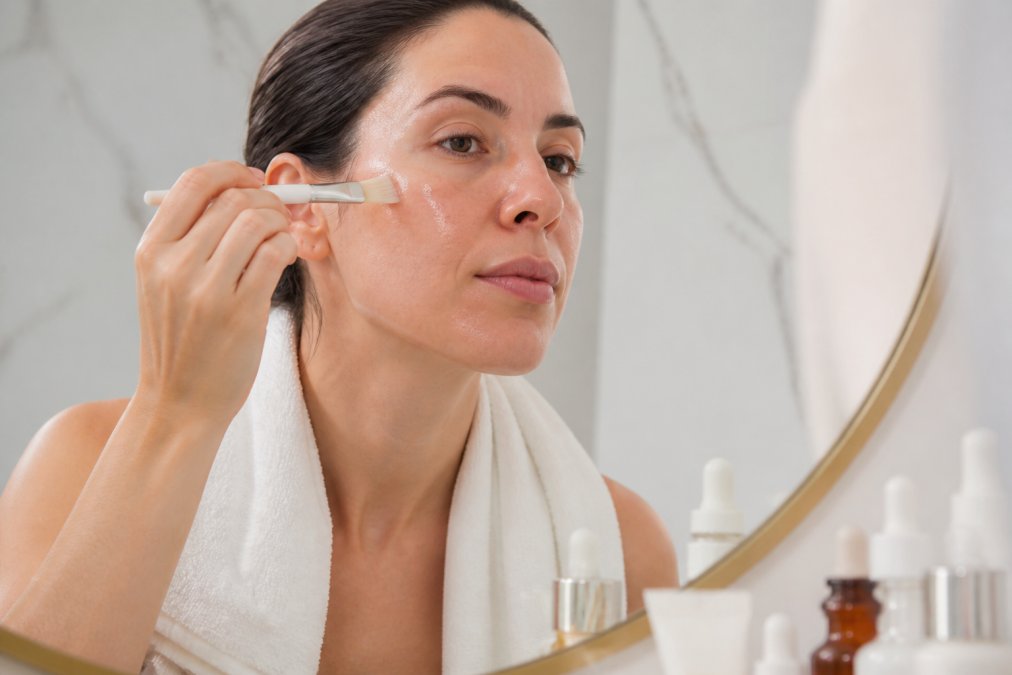
Using a fan brush or folded cotton round, apply the peel in thin, even strokes. Work systematically: forehead, cheeks, nose, and chin. Avoid the eye area, nostrils, and lips.
Step 4: Set your timer immediately
For first-time users, begin with 1-2 minutes. Experienced users can work up to 3-5 minutes based on tolerance.
Step 5: Monitor for frosting or intense burning
Mild tingling is expected. Frosting (white patches) or intense burning means the peel is working too aggressively. Neutralize immediately if either occurs. repair skin barrier.
Step 6: Neutralize and rinse
Apply your neutralizing solution, wait 30 seconds, then rinse thoroughly with cool water.
Apply a thin layer of petroleum jelly or barrier cream around the nostrils, corners of the mouth, and under the eyes before applying the peel. These thinner-skinned areas absorb acid faster and are prone to over-exfoliation.
How to Neutralize a Salicylic Acid Peel Correctly
Knowing how to neutralize a salicylic acid peel is as important as application itself. The standard neutralizing solution is one teaspoon of baking soda dissolved in one cup of water. Apply it to the skin with a cotton round, let it sit for 30 seconds, and rinse thoroughly with cool water. This raises the pH at the skin surface and halts the acid’s activity.
Rinse with cool water, not hot. Heat increases blood flow and can intensify post-peel sensitivity. After rinsing, pat dry gently without rubbing.
Do not use a toner, active serum, or any product with acids or exfoliating ingredients immediately after neutralization. Your skin needs a recovery period before handling additional actives.
Salicylic Acid Peel Recovery Time and Post-Peel Care
Salicylic acid peel recovery time is typically 3-7 days, depending on concentration used and baseline skin sensitivity. At lower concentrations (10-15%), many experience minimal visible peeling with redness resolving within 24-48 hours. At higher concentrations, more significant flaking and dryness are normal through day 5-6.
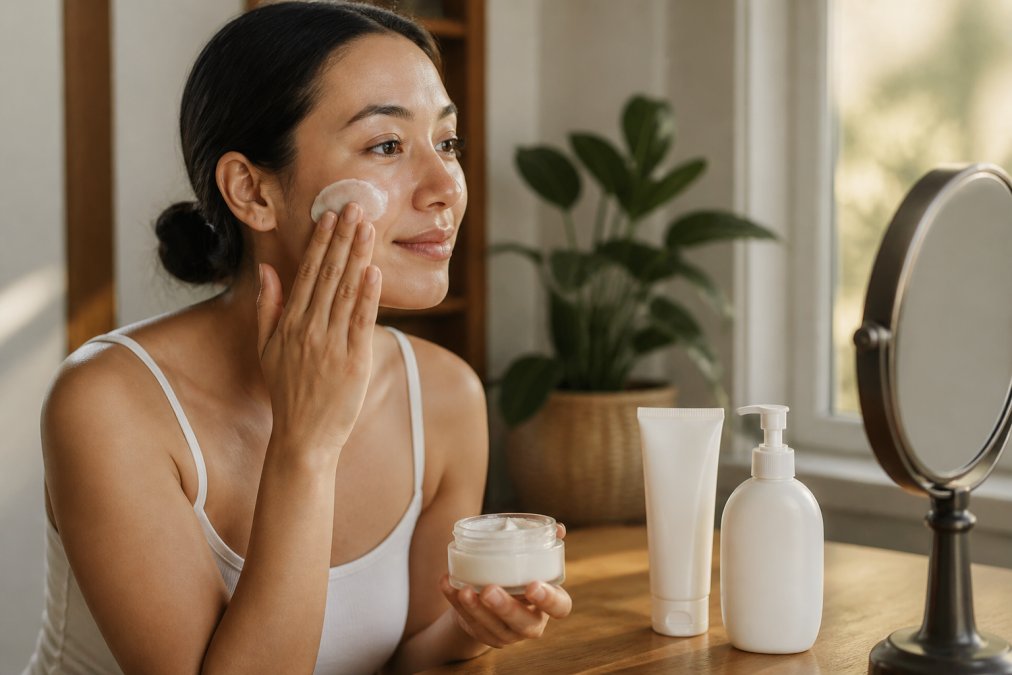
Your skin barrier is temporarily compromised during recovery. Every decision should support barrier repair, not challenge it.
- Cleanse with a gentle, fragrance-free cleanser only
- Apply a fragrance-free, non-comedogenic moisturizer morning and night
- Use broad-spectrum sunscreen with SPF 30+ every morning without exception
- Avoid all exfoliating actives for at least 5-7 days
- Do not pick at peeling skin; let it shed naturally
Sun sensitivity is significantly elevated after a salicylic acid peel. The FDA guidance on sunscreen use after chemical peels recommends broad-spectrum SPF 30+ applied daily and reapplied every two hours when outdoors. Skipping sunscreen during recovery is the fastest way to develop new post-inflammatory hyperpigmentation.
Skin Barrier Repair After a Peel
Skin barrier repair is the priority in the first 72 hours after a salicylic acid peel. The barrier, composed of lipids, proteins, and water, is temporarily disrupted by the acid. Supporting it actively shortens recovery time and reduces prolonged erythema or sensitivity.
Ingredients that support barrier repair include ceramides, niacinamide, panthenol, and hyaluronic acid. Avoid fragrance, essential oils, or alcohol during this window, as these further disrupt barrier function on sensitized skin.
Think of post-peel skincare in two phases:
- Phase 1 (days 1-3): Cleanse, apply a ceramide-rich moisturizer, apply sunscreen. Nothing else.
- Phase 2 (days 4-7): Introduce niacinamide or gentle hyaluronic acid serum if skin feels stable. Continue avoiding all exfoliating actives.
The most common reason people have a poor experience with a salicylic acid peel is inadequate post-peel care, not the peel itself. Treating recovery as seriously as application makes the difference between results and regret.
Troubleshooting Adverse Reactions
Most adverse reactions fall into three categories with clear responses.
Prolonged redness (beyond 48 hours): Apply a cool compress and ceramide-heavy moisturizer. Avoid all actives until redness resolves. If accompanied by swelling or heat, consult a dermatologist.
Excessive peeling or raw skin: Do not accelerate shedding. Apply a thick, occlusive moisturizer and let skin shed naturally. Forcing it removes skin that isn’t ready, risking scarring.
New breakouts post-peel: A small purging response in the first two weeks is normal as salicylic acid brings congestion to the surface. If breakouts persist beyond three weeks or are significantly worse than baseline, reduce peel frequency or concentration.
According to National Institutes of Health research on salicylic acid dermatological use, salicylic acid is generally well-tolerated in concentrations up to 30% for topical use, but individual responses vary based on skin type, barrier integrity, and prior sensitization.
Who Should Avoid Salicylic Acid Peels
Salicylic acid peels are not appropriate for everyone. Certain contraindications are absolute.
Do not use a salicylic acid peel if you:
- Are pregnant or breastfeeding (salicylates are absorbed transdermally and carry risk)
- Are currently using isotretinoin or have used it within the past 6-12 months
- Have an active skin infection, cold sore, or open wound in the treatment area
- Have a known aspirin allergy (salicylic acid is structurally related to aspirin)
- Have been diagnosed with rosacea, eczema, or psoriasis in the treatment area
- Have had recent facial surgery, laser resurfacing, or waxing within the past two weeks
People with darker skin tones should approach higher-concentration peels with additional caution. Post-inflammatory hyperpigmentation is a real risk when chemical exfoliants cause more irritation than skin can recover from cleanly. Starting at a lower concentration and building gradually is the right approach for Fitzpatrick skin types IV-VI.
| Contraindication | Risk | Recommended Action |
|---|---|---|
| Pregnancy / breastfeeding | Transdermal salicylate absorption | Avoid entirely |
| Aspirin allergy | Cross-reactivity | Avoid entirely |
| Active isotretinoin use | Extreme barrier fragility | Medical clearance required |
| Rosacea / eczema | Severe irritation, flare risk | Consult dermatologist |
| Recent laser or surgery | Compromised healing skin | Wait minimum 4-6 weeks |
For anyone uncertain about whether a salicylic acid peel is appropriate for their specific situation, the American Academy of Dermatology’s find-a-dermatologist tool can help you locate a board-certified dermatologist for a pre-treatment consultation.
Persistent acne that hasn’t responded to basic topical treatments often needs a more targeted approach at the pore level, which is exactly where a salicylic acid peel delivers. Makeup Artist’s Choice has been formulating professional-grade BHA peels since 1997, with options across concentration levels suited to first-time users and experienced peel enthusiasts alike. All formulations are made in the USA and designed to be used safely at home with the right preparation and aftercare protocol. Shop the Makeup Artist’s Choice salicylic acid peel range and get the professional-grade results that persistent acne actually requires.
Frequently Asked Questions
Is a salicylic acid peel good for acne?
Yes. Salicylic acid is a beta hydroxy acid (BHA) that is lipid-soluble, meaning it penetrates into the pore lining rather than just working on the skin surface. This makes it particularly effective for acne vulgaris because it dissolves the sebum and dead skin cells that cause pore congestion. Regular use also has a comedolytic effect, preventing new comedones from forming. For persistent acne, a salicylic acid peel offers a deeper level of exfoliation than daily topical treatments alone.
How often should you do a salicylic acid peel at home?
For most acne-prone skin types, once every two to four weeks is appropriate. Starting less frequently, such as once a month, lets you assess how your skin responds before increasing frequency. Peeling too often disrupts the skin barrier and can trigger rebound sebum production, making acne worse. Always wait until any redness, flaking, or sensitivity from the previous session has fully resolved before your next application.
What happens if you leave salicylic acid on for too long?
Leaving a salicylic acid peel on beyond the recommended application time significantly raises the risk of erythema, prolonged peeling, and skin barrier damage. At higher concentrations, excessive contact time can cause frosting, a visible whitening of the skin that signals the epidermis is being compromised. If you experience intense burning, stinging, or see frosting, neutralize the peel immediately with a baking soda and water solution and rinse thoroughly with cool water.
How long does salicylic acid peel recovery time take?
Salicylic acid peel recovery time varies by concentration and skin sensitivity. At lower home-use concentrations of 10-20%, most people see light flaking for two to four days with redness resolving within 24 hours. Higher concentrations can extend visible peeling to five to seven days. Avoiding active exfoliants, wearing broad-spectrum sunscreen daily, and focusing on barrier-repair moisturizers shortens recovery and reduces the risk of post-inflammatory hyperpigmentation.
This article was written using GrandRanker