Table of Contents
- What Are Chemical Peels and How They Work on Aging Skin
- Top Acid Peels for Mature Skin
- How to Use At-Home Chemical Peels Safely
- Chemical Peel Recovery Time and Post-Peel Care
- Frequency of Use for Mature Skin Results
- Addressing Menopause-Specific Skin Changes
- Frequently Asked Questions
Last Updated: September 3, 2026
What Are Chemical Peels and How They Work on Aging Skin
Chemical peels use acids to dissolve bonds between dead skin cells, triggering controlled exfoliation and stimulating cell turnover. This removes accumulated sun damage, age spots, and fine lines while encouraging deeper layers to produce fresh collagen and improve elasticity.
Different acids work at different depths. Alpha hydroxy acids (AHAs) like glycolic and lactic acid work primarily on the skin’s surface, ideal for texture refinement and hyperpigmentation. Beta hydroxy acids (BHAs) like salicylic acid penetrate oil-based pores and work better for congestion and post-inflammatory hyperpigmentation. Polyhydroxy acids (PHAs) offer a gentler alternative with larger molecular structures, suitable for sensitive, aging skin.
For mature skin, chemical peels increase dermal thickness, improve skin barrier integrity, and accelerate resurfacing, results topical serums cannot achieve. The key is choosing the right acid concentration and pH balance for your skin’s tolerance and concerns.
At Makeup Artist’s Choice, we’ve formulated professional-grade acid peels since 1997 designed specifically for at-home use.
Chemical peels work by accelerating cell turnover and stimulating collagen production, but the acid type, concentration, and pH determine which skin concerns they address and how much downtime to expect.
Top Acid Peels for Mature Skin
Choosing the right acid peel depends on your primary concern: fine lines and loss of elasticity, hyperpigmentation and uneven tone, sensitivity and barrier repair, or textural issues from sun damage.
Glycolic Acid Peels for Fine Lines and Wrinkles
Glycolic acid is the gold standard for fine lines and wrinkles because it has the smallest molecular weight of all AHAs, allowing efficient penetration and strong collagen stimulation. For mature skin, glycolic peels at 30-70% concentration deliver visible improvements in elasticity and radiance within 4-6 weeks of consistent use (peer-reviewed research).
Glycolic acid dissolves the intercellular cement holding dead skin cells together while triggering fibroblast activity in the dermis, signaling the body to produce new collagen and elastin. This makes it particularly effective for crepey skin and loss of firmness.
Makeup Artist’s Choice offers glycolic acid peels with optimized pH balance for safety and efficacy.
Important: glycolic acid increases sun sensitivity significantly. Broad-spectrum SPF 30 or higher is non-negotiable during the day after a peel to prevent transepidermal water loss and post-inflammatory hyperpigmentation (the American Academy of Dermatology).
Start with a lower concentration (20-30%) and shorter contact time (3-5 minutes) if you’re new to glycolic peels. Tolerance builds quickly, and you can graduate to stronger formulations after 2-3 applications without irritation.
Lactic Acid Peels for Skin Barrier Repair
Lactic acid is ideal if your mature skin feels compromised, reactive, or prone to irritation. Its larger molecular weight means slower, gentler penetration, making it perfect for sensitive, aging skin needing barrier repair alongside exfoliation.
Lactic acid is also a humectant, drawing moisture into the skin while exfoliating. This dual action addresses dryness and loss of barrier integrity common in aging skin, while stimulating natural hyaluronic acid production for improved cellular hydration.
For mature skin struggling with dehydration, reactive sensitivity, or compromised barrier function, lactic acid peels at 40-50% concentration deliver gentle resurfacing without aggressive irritation (peer-reviewed research). The exfoliation addresses fine lines and uneven texture with less downtime and lower post-inflammatory hyperpigmentation risk.
Many practitioners recommend lactic acid as the entry point for mature skin new to chemical peels.
Mandelic Acid Toner for Sensitive, Aging Skin
Mandelic acid is an AHA with a larger molecular structure than glycolic acid, making it the gentlest hydroxy acid option. For mature skin that’s reactive, prone to rosacea, or recovering from aggressive treatments, mandelic acid offers effective exfoliation with minimal irritation risk.
The larger molecular size means slower, controlled penetration, resulting in less redness, irritation, and barrier damage risk. Despite its gentleness, mandelic acid still stimulates collagen production and addresses fine lines, uneven texture, and mild hyperpigmentation.
Mandelic acid toners can be used 3-4 times weekly without compromising barrier integrity, making them excellent for long-term anti-aging results without aggressive downtime.
Mature skin that’s sensitive, reactive, or recovering from aggressive treatments. Also ideal for those with deeper skin tones concerned about post-inflammatory hyperpigmentation risk.
Salicylic Acid for Texture and Post-Inflammatory Hyperpigmentation
Salicylic acid is a BHA that penetrates oil-based structures. While associated with acne treatment, it’s effective for mature skin dealing with textural roughness, enlarged pores, and post-inflammatory hyperpigmentation from previous breakouts or sun damage.
For mature skin, salicylic acid at 1-2% concentration addresses texture without aggressive irritation. It’s particularly useful for combination skin in midlife, targeting congestion and texture in oily areas while remaining gentle on delicate facial skin.
Salicylic acid reduces post-inflammatory hyperpigmentation by promoting even cell turnover and reducing inflammation that perpetuates discoloration.
How to Use At-Home Chemical Peels Safely
Professional-grade at-home chemical peels deliver salon-quality results, but safety depends entirely on proper preparation, application technique, and post-peel care.
Patch Testing and Skin Irritation Threshold
Before applying any chemical peel to your full face, always perform a patch test on a small, inconspicuous area: the inner arm, behind the ear, or a small section of the jawline. Apply the peel at the recommended concentration and contact time, then wait 24-48 hours to observe your skin’s response.
This step is essential, especially for mature skin with unknown sensitivity. Look for excessive redness, swelling, blistering, or prolonged irritation. Mild redness that fades within 2-3 hours is normal; anything beyond signals you should use a lower concentration or shorter contact time.
Keep detailed records of your patch test results: acid type, concentration, contact time, and skin response. This baseline helps you make informed decisions about future peels.
If your patch test causes blistering, severe swelling, or irritation lasting more than 4 hours, do NOT proceed with a full-face application. Try a lower concentration or different acid type instead. Ignoring warning signs can result in chemical burns and permanent skin damage.
pH Balance and Neutralization
The pH of your chemical peel solution is critical to safety and efficacy. Professional-grade peels are formulated with precise pH balance, typically between 2.0 and 3.5, to ensure controlled exfoliation without chemical burns.
When your contact time is complete, neutralization stops the acid’s action and prevents ongoing damage to deeper skin layers. Most professional peels require a neutralizing solution, typically a base like sodium bicarbonate or a pre-formulated neutralizer. Never skip this step or assume your skin will naturally neutralize the acid.
Apply the neutralizer thoroughly and evenly using the same technique as the peel. Allow it to dry completely before rinsing with cool water. Follow the specific instructions for your peel product.
Application Technique for Even Exfoliation
Uneven application causes uneven results: some areas over-exfoliate while others under-exfoliate, creating patchy texture and irritation.
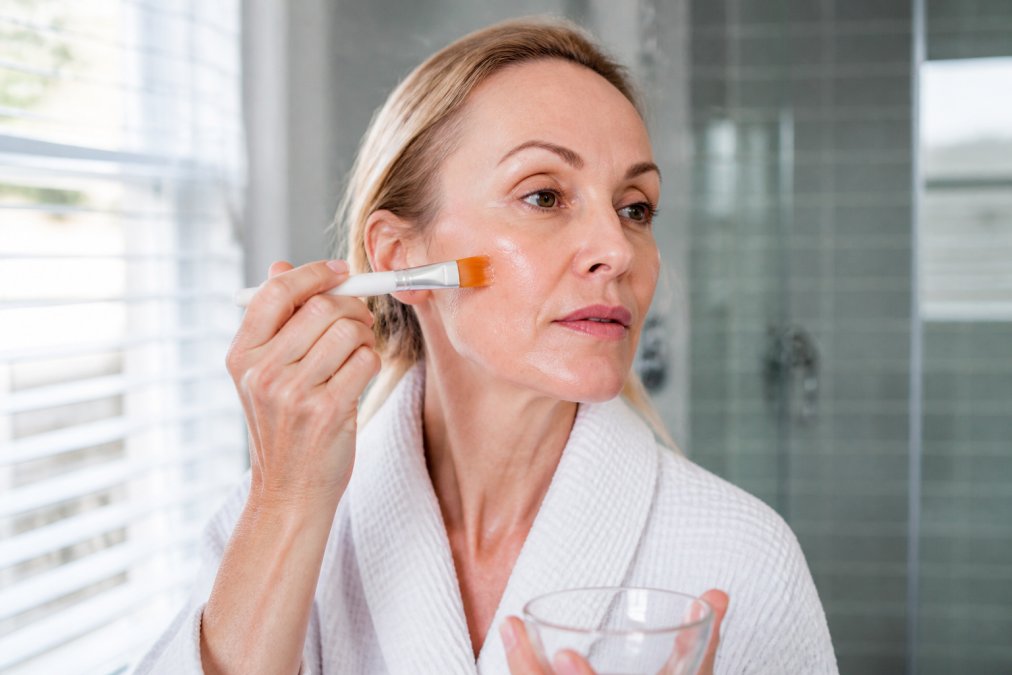
Start with completely clean, dry skin. Use a clean brush, applicator, or fingertips to apply the peel in thin, even layers. Work systematically: forehead, cheeks, nose, chin, then neck if appropriate. Avoid the eye area, lips, and any areas with active irritation or open wounds.
Apply the peel evenly and quickly, faster coverage ensures more uniform results. Once applied, set a timer for your recommended contact time. More time does not equal better results; it increases irritation and barrier damage risk.
Chemical Peel Recovery Time and Post-Peel Care
Recovery time and downtime expectations vary based on peel strength, acid type, and your skin’s sensitivity.
Downtime Expectations by Peel Strength
Light peels (glycolic or lactic acid at 20-30% concentration, 3-5 minute contact time) produce minimal downtime: mild redness fading within 2-4 hours, slight flaking for 2-3 days, and a subtle glow within 24-48 hours. Most people return to normal activities immediately with essential sun protection.
Medium peels (glycolic or lactic acid at 40-60% concentration, 7-10 minute contact time) cause more noticeable redness lasting 4-8 hours, visible flaking for 5-7 days, and temporary texture changes. Plan for 3-5 days of noticeable peeling.
Strong peels (glycolic acid at 70%+ concentration or TCA peels) produce significant downtime: pronounced redness lasting 12-24 hours, intense flaking for 7-10 days, and possible temporary hyperpigmentation or hypopigmentation. Plan for a full week of visible recovery.
Makeup Artist’s Choice formulations deliver results with manageable downtime.
Protecting Your Skin Barrier During Healing
Your skin barrier is temporarily compromised after a chemical peel, with increased transepidermal water loss, reduced lipid content, and heightened sensitivity to irritants.
For 24-48 hours after your peel, use only gentle, fragrance-free products. Avoid actives like retinoids, vitamin C, niacinamide, or additional acids. Instead, focus on hydration and barrier repair: use a hydrating toner or essence followed by a ceramide-rich moisturizer. Ceramides are essential lipids that restore barrier integrity.
Sun protection is absolutely non-negotiable. Use broad-spectrum SPF 30 or higher daily for at least one week after your peel. UV exposure increases inflammation, irritation risk, and post-inflammatory hyperpigmentation.
Avoid hot water, harsh cleansers, vigorous rubbing, and activities that increase heat or sweating for 24-48 hours. Stick to lukewarm water, gentle patting motions, and minimal product layering until your skin feels fully recovered.
Post-peel care is as important as the peel itself. A compromised barrier heals faster with hydration, ceramides, and sun protection. Skipping these steps increases irritation, hyperpigmentation, and infection risk.
Frequency of Use for Mature Skin Results
How often you can safely use chemical peels depends on acid type, concentration, and your skin’s tolerance. The goal is consistency without compromise.
Light glycolic or lactic acid peels can typically be used weekly once your skin builds tolerance. Many mature skin users see optimal results with weekly applications over 6-8 weeks, then transition to maintenance peels every 2-4 weeks.
Medium-strength peels should be spaced 10-14 days apart to allow full barrier recovery. Most practitioners recommend medium peels every 2-3 weeks for 8-12 weeks, then monthly maintenance.
Strong peels require 3-4 week spacing minimum. Most people use strong peels 2-4 times yearly. Cumulative results compound over time, but rushing frequency causes more harm than benefit.
Mandelic acid toners can be used 3-4 times weekly without barrier compromise, allowing rapid results in fine lines and texture refinement.
Listen to your skin. If you notice increasing sensitivity, persistent redness, barrier damage, or irritation, reduce frequency immediately. Your skin’s tolerance may fluctuate with hormonal changes, stress, or seasonal factors.
Addressing Menopause-Specific Skin Changes
Menopause triggers profound shifts in skin physiology. Declining estrogen reduces sebum production, collagen synthesis, and skin barrier lipid content simultaneously, creating dehydrated, thin, fragile skin prone to irritation and sensitivity.
Chemical peels can address menopause-specific changes, but require modification. The same concentration that worked pre-menopause may now cause excessive irritation. Many women need to drop one peel strength level and reduce frequency compared to their pre-menopausal routine.
Lactic acid becomes particularly valuable during menopause because its humectant properties address dehydration from estrogen decline. Pairing lactic acid peels with barrier-repair products containing ceramides, hyaluronic acid, and soothing agents like centella asiatica accelerates recovery and prevents irritation.
Post-peel care becomes even more critical. Menopausal skin benefits from extended barrier protection: longer use of ceramide-rich moisturizers, consistent broad-spectrum SPF, and temporary avoidance of additional actives. Some women find spacing peels further apart, every 14-21 days instead of weekly, yields better results.
Consider also that menopause brings hormonal fluctuations affecting skin sensitivity. A peel that feels fine one week may cause unexpected irritation the next if hormones shift. Planning peels during more stable hormonal phases improves consistency and reduces irritation surprises.
Chemical peels remain one of the most effective tools for addressing mature skin concerns, but only when you match the acid type and strength to your skin’s actual needs and tolerance. Makeup Artist’s Choice professional-grade peels are formulated with the pH balance and concentration precision required for safe, effective at-home use. Start with a patch test, follow the application and neutralization protocol exactly, and prioritize post-peel barrier care. Results, improved skin elasticity, reduced fine lines, and restored radiance, compound over consistent use. Shop our full range of glycolic, lactic, mandelic, and salicylic acid peels designed specifically for mature skin, and experience salon-quality chemical peel results at home.
Frequently Asked Questions
What is the best acid for mature skin?
Glycolic acid and lactic acid are effective for mature skin because they boost cell turnover and collagen production. Glycolic acid penetrates deeper to address fine lines and wrinkles, while lactic acid supports skin barrier integrity and hydration. For sensitive mature skin, mandelic acid toner offers a slower, more tolerable exfoliation. The best choice depends on your skin sensitivity, specific concerns like hyperpigmentation or crepey skin, and whether you’re using prescription anti-aging topicals that might increase irritation risk.
How often should you use an acid peel on mature skin?
Most mature skin benefits from acid peels every 7-14 days, depending on concentration percentage and your skin’s irritation threshold. Start with weekly applications at lower concentrations, then adjust based on how your skin responds. If you’re using prescription retinoids or other active treatments, space peels further apart to avoid over-exfoliation and transepidermal water loss. Always allow at least 3-5 days between treatments to let your skin barrier fully recover. Listen to your skin, if you experience persistent redness or irritation, extend the interval to every 2-3 weeks.
What is the chemical peel recovery time for mature skin?
Recovery time depends on peel strength. Light peels (glycolic or lactic at 20-30% concentration) cause minimal downtime, slight redness and mild flaking for 2-3 days. Medium-strength peels may require 5-7 days of visible peeling and redness. During recovery, avoid sun exposure without broad-spectrum SPF 30+, use humectant and ceramide-rich products to support skin barrier repair, and skip other actives like retinoids. Most mature skin shows visible radiance and texture refinement within 1-2 weeks as cell turnover accelerates and dermal thickness improves.
Can a chemical peel fade post-inflammatory hyperpigmentation and acne scars?
Chemical peels can significantly improve post-inflammatory hyperpigmentation by accelerating cell turnover and reducing pigment deposits. Glycolic and lactic acids are particularly effective for this concern. However, deep acne scars may require multiple treatments or professional laser resurfacing for full correction. Consistent use of acid peels can noticeably soften scarring and even out skin tone, especially when combined with soothing agents and sun protection. For severe scarring, consult a dermatologist about combining peels with professional treatments.
Is it safe to use chemical peels if I’m taking prescription anti-aging topicals?
Yes, but with careful spacing and monitoring. If you’re using prescription retinoids or hydroquinone, space acid peels at least 3-5 days apart to avoid over-sensitizing your skin barrier. Start with lower peel concentrations and reduce frequency initially. Never use an acid peel on the same day as prescription actives. Monitor for signs of irritation like persistent redness, burning, or flaking. Some dermatologists recommend pausing one treatment during the other’s adjustment phase. Always discuss your skincare routine with your prescribing doctor or dermatologist before adding chemical peels.
This article was written using GrandRanker