Table of Contents
- Why Moisturizing After a TCA Peel Matters
- TCA Peel Recovery Timeline and When to Start Moisturizing
- Ingredients to Avoid After Chemical Peel
- Essential Post-Peel Skincare Routine
- Top Moisturizer Categories for TCA Recovery
- How to Apply Moisturizer Without Irritating Healing Skin
- Signs of Proper Healing vs. Complications
- Frequently Asked Questions
Last Updated: October 1, 2026
Why Moisturizing After a TCA Peel Matters
A TCA peel uses trichloroacetic acid to deeply exfoliate the skin, triggering collagen production and renewal. It compromises your skin barrier temporarily, making moisturizing essential for proper recovery.
A compromised barrier increases water loss and vulnerability to irritation and infection. The right moisturizer replenishes hydration, supports barrier repair, and reduces discomfort during recovery.
The difference between smooth healing and complications comes down to choosing the 7 best moisturizers for TCA peel recovery and mastering application technique. A moisturizer that works for normal skin can slow recovery after a peel; you need formulations designed to support barrier repair without triggering irritation.
TCA Peel Recovery Timeline and When to Start Moisturizing
TCA recovery timeline varies by peel strength.
Identifying Your TCA Peel Strength
Your practitioner should have specified the concentration used. This single variable determines your entire recovery protocol:
- 15% TCA peel (superficial-to-medium depth): Targets the epidermis and upper dermis. Recovery is faster, with visible peeling lasting 5-7 days and barrier repair completing in 10-12 days.
- 20-25% TCA peel (medium depth): Penetrates deeper into the dermis, triggering more significant collagen remodeling. Recovery extends to 14-21 days, with barrier sensitivity lasting longer.
- 30% TCA peel (deep): The strongest standard concentration, reaching mid-dermis. Recovery is 3-4 weeks minimum, with barrier compromise lasting through day 14-21. Moisturizing becomes even more critical because deeper injury means prolonged inflammation.
If you don’t know your concentration, ask your practitioner before you leave.
15% TCA Peel Recovery Timeline
Days 1-2: Immediate Post-Peel Phase. Start moisturizing immediately after the peel.
Days 3-5: Peak Desquamation Phase. Visible peeling intensifies (normal). Moisturize twice daily. Many can introduce light makeup by day 5.
Days 6-10: Transition Phase. Peeling slows, redness fades, and barrier stabilizes. By day 8-10, resume normal skincare with sun protection.
Weeks 2-4: Maturation Phase. Barrier has repaired; continue moisturizing as collagen remodels. Return to regular products by week 2.
20-25% TCA Peel Recovery Timeline
Days 1-3: Intense Inflammatory Phase. Start moisturizing immediately with gentle formulations.
Days 4-10: Extended Desquamation Phase. Peeling is intense and lasts longer than a 15% peel.
Days 11-14: Transition Phase. Peeling slows, redness fades. By day 14, resume other skincare steps; hold active ingredients until day 14-21.
Weeks 3-4: Maturation Phase. Your barrier has largely repaired, but collagen remodeling is still active. Continue moisturizing to support ongoing healing.
30% TCA Peel Recovery Timeline
Days 1-4: Severe Inflammatory Phase. Start moisturizing immediately, every 2-3 hours for first 48 hours. Deep penetration requires aggressive barrier support.
Days 5-14: Prolonged Desquamation Phase. Peeling is extensive and sheet-like. Moisturize 2-3 times daily; occlusive at night is essential.
Days 15-21: Extended Transition Phase. Redness persists longer. By day 21, resume gentle products; hold active ingredients until week 4.
Weeks 4-6: Maturation Phase. Barrier has repaired; collagen remodels beneath surface.
Key Takeaway Across All Strengths
The deeper your peel, the longer your barrier stays compromised.
Ingredients to Avoid After Chemical Peel
Certain ingredients compromise healing and should be avoided during recovery.
Why Ingredient Interactions Matter on Compromised Barrier Skin
After a TCA peel, your stratum corneum is partially or fully removed and your lipid barrier is disrupted.
Active Exfoliants (AHAs, BHAs, Vitamin A, Vitamin C)
Why they’re problematic: The peel already triggered cellular turnover.
Timeline: Avoid all exfoliants for 7-10 days.
Fragrance and Essential Oils
Why they’re problematic: Fragrance compounds penetrate deeper on peeled skin, triggering contact dermatitis. Essential oils are highly concentrated irritants.
Timeline: Avoid all fragrance and essential oils for at least 14 days.
Alcohol Denat (Denatured Alcohol)
Timeline: Avoid alcohol denat for at least 10-14 days.
Sulfates (Sodium Lauryl Sulfate, Sodium Laureth Sulfate)
Why they’re problematic: Sulfates strip natural oils and disrupt the lipid barrier.
Timeline: Avoid sulfate-containing cleansers entirely during recovery (at least 14-21 days). Use gentle, sulfate-free cleansers instead.
Benzoyl Peroxide and Other Acne Treatments
Why they’re problematic: Benzoyl peroxide is overly drying and irritating on peeled skin, triggering contact dermatitis and prolonging erythema.
Timeline: Avoid benzoyl peroxide and acne treatments for at least 10-14 days.
Niacinamide (in High Concentrations)
Why high concentrations are problematic: Niacinamide above 5% causes flushing and sensitivity by increasing histamine release, intensifying erythema.
Timeline: Avoid niacinamide entirely for the first 3-5 days.
Retinoids and Vitamin A Derivatives (Retinol, Retinyl Palmitate, Adapalene)
Why they’re problematic: Retinoids compound exfoliation during early recovery, triggering excessive irritation.
Timeline: Avoid all retinoids for at least 14 days.
Hydroxy Acids (AHAs, BHAs, PHAs)
Why they’re problematic: These chemical exfoliants dissolve bonds between dead skin cells.
Timeline: Avoid all hydroxy acids for 7-10 days.
Vitamin E (Tocopherol) in High Concentrations
Why high concentrations are problematic: Vitamin E above 5% is comedogenic and irritating on compromised skin, potentially triggering contact dermatitis.
Timeline: Avoid high-concentration vitamin E serums for the first week.
Reading Labels and Making Safe Choices
Use bland, fragrance-free moisturizers and gentle cleansers. Check ingredient lists against this guide. Look for products labeled “post-procedure” or “barrier repair.” One wrong product can extend recovery by 5-7 days; reading labels prevents complications.
Essential Post-Peel Skincare Routine
Keep your routine simple; complexity introduces irritation risk. Cleanse with lukewarm water and gentle, fragrance-free cleanser; pat dry. Moisturize damp skin with fingertips using a patting motion. Occlude at night to seal hydration. Protect with physical sunscreen (SPF 30+) after day 3-5. Skip serums, essences, and treatments for one week. Simplicity prevents complications.
Top Moisturizer Categories for TCA Recovery
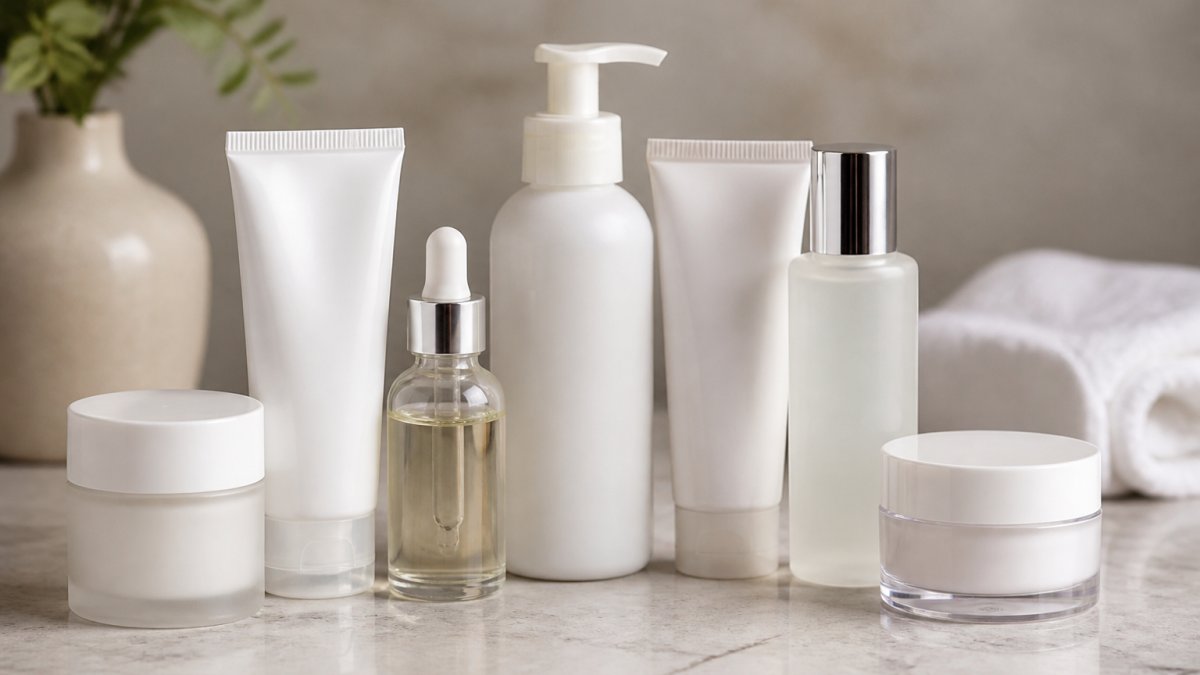
Not all moisturizers are created equal during TCA recovery, which is why identifying the 7 best moisturizers for TCA peel recovery matters for your healing timeline. The best options fall into three categories, each serving a specific healing phase.
Occlusive-Rich Creams for Barrier Repair
Occlusives seal moisture and support barrier repair, especially days 1-7. Look for squalane, ceramides, or petrolatum, they seal existing moisture rather than adding water. Squalane mimics natural sebum and rarely triggers sensitivity. Ceramides (NP, AP, EOP) are barrier components that support re-epithelialization. Use occlusive-rich creams at night; they’re too heavy for daytime.
Humectant-Based Moisturizers for Hydration
Humectants draw water into the epidermis. Hyaluronic acid holds 1000x its weight in water; apply to damp skin. Panthenol (3-5%) reduces inflammation and supports barrier function. Humectant-based moisturizers are lighter and suitable for daytime use from day 5-7 onward.
Soothing and Anti-Inflammatory Options
Cica (centella asiatica) reduces erythema and supports barrier repair from day 1. Allantoin soothes irritation and supports healing. Niacinamide (under 5%) reduces inflammation; introduce day 3-5. Rotate occlusive creams at night with soothing, humectant-based moisturizers during the day.
| Moisturizer Type | Best Use | Key Ingredients | Timing |
|---|---|---|---|
| Occlusive-rich cream | Barrier repair at night | Squalane, ceramides, petrolatum | Days 1-14, nighttime |
| Humectant-based | Daytime hydration | Hyaluronic acid, glycerin, panthenol | Days 3-14, daytime |
| Soothing formula | Inflammation reduction | Cica, allantoin, low-dose niacinamide | Days 1-14, anytime |
How to Apply Moisturizer Without Irritating Healing Skin
Application technique matters as much as product selection. Improper application can trigger inflammation and slow healing.
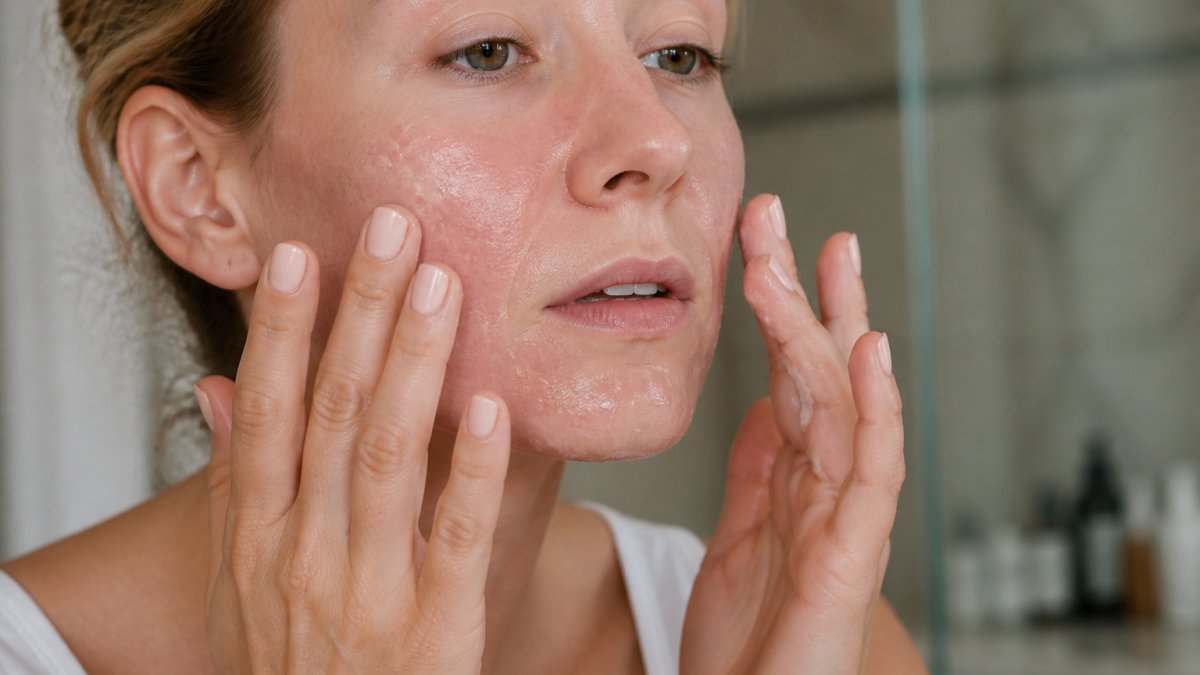
Step 1: Start with damp skin. Cleanse gently with lukewarm water and pat (don’t rub) your skin nearly dry. Leave it slightly damp, this helps moisturizer absorb better and reduces the risk of over-application.
Step 2: Use a minimal amount. A pea-sized amount is usually enough for your entire face. More product doesn’t mean better results, it increases the risk of occlusion and irritation.
Step 3: Apply with fingertips, not hands. Use your ring finger or pinky to apply moisturizer. These fingers exert the least pressure naturally. Avoid your palms, which apply too much pressure to sensitive, healing skin.
Step 4: Pat, never rub. Gently press the moisturizer into your skin using a patting motion. Rubbing or massaging creates friction that irritates peeling skin.
Step 5: Wait before layering. If you’re using multiple products (moisturizer + occlusive, for example), wait 2-3 minutes between layers. This prevents pilling and ensures each product absorbs properly.
Step 6: Avoid sensitive areas. The eye area and lips are especially delicate after a peel. Apply a lighter hand around these zones, or skip them entirely for the first 3-5 days.
Many people rush this process. Taking 60 seconds to apply moisturizer properly prevents irritation that could add days to your recovery.
Signs of Proper Healing vs. Complications
Normal healing signs: Erythema fading over 7-14 days, visible peeling days 4-10, mild tightness improving with moisturizer, slight sensitivity, itching. Warning signs: Severe burning, blistering, excessive swelling after day 3, pus, persistent erythema beyond day 14-21, immediate hyperpigmentation. Most complications stem from inadequate moisturizing or irritating products. A consistent routine prevents 90% of problems. If warning signs appear, stop actives, simplify to gentle cleanser and bland moisturizer, and consult a dermatologist if symptoms persist.
Proper moisturizing transforms TCA peel recovery from uncomfortable to manageable. The right products support barrier repair, reduce inflammation, and help you achieve your skin transformation.
Frequently Asked Questions
When can I start moisturizing after a TCA peel?
Most dermatologists recommend waiting 24-48 hours after a TCA peel before applying any moisturizer, allowing the skin to begin its natural healing process. Once you start, apply a bland, fragrance-free moisturizer gently to damp skin. TCA peels cause deeper epidermal and dermal damage than milder peels, so patience during the initial healing phase is critical. Always follow your specific post-procedure instructions, as timing depends on peel depth and your skin’s response.
What ingredients should I avoid in a moisturizer after a chemical peel?
Avoid fragrance, essential oils, retinoids, vitamin C, AHAs, BHAs, benzoyl peroxide, and strong actives for at least 5-7 days post-peel. These can trigger inflammation and compromise your healing epidermal barrier. Skip products with alcohol, menthol, and other irritants. Instead, focus on bland, hypoallergenic formulas with ceramides, hyaluronic acid, panthenol, and squalane. Non-comedogenic options prevent clogged pores during the peeling process and re-epithelialization phase.
Should I use a heavy cream or light lotion after a TCA peel?
Heavy, occlusive creams are generally better immediately after a TCA peel because they seal in hydration and protect the compromised epidermal barrier from trans-epidermal water loss. Look for rich formulas with squalane, ceramides, and occlusives that support barrier repair. However, if your skin feels congested or you develop milia, switch to a lighter humectant moisturizer with hyaluronic acid and panthenol. Adjust based on your skin’s response during the healing phase.
What helps chemical peels heal faster?
Consistent hydration with bland moisturizers, strict sun protection with physical sunscreen (SPF 30+), and avoiding irritating ingredients accelerate healing. Keep skin desquamation and erythema minimal by maintaining a simple routine with soothing agents like cica and panthenol. Stay hydrated internally, avoid touching or picking at peeling skin, and use occlusive products at night to support re-epithelialization. Dermatologist-approved products formulated for post-procedure care yield the best results during recovery.