Table of Contents
- 1. Clear Active Breakouts With a Salicylic Acid Peel for Acne
- 2. Unclog Pores and Control Excess Oil With Regular Exfoliating Peels
- 3. Fade Post-Acne Dark Spots and Hyperpigmentation With Glycolic Acid Peels
- 4. Use a Chemical Peel for Acne Scars to Smooth Texture and Tone
- 5. Practice At-Home Chemical Peel Safety Before You Start
- 6. Follow a Chemical Peel Aftercare Routine That Protects Your Results
- How Often Should You Use Chemical Peels for Acne?
- When to See a Professional Instead
- Frequently Asked Questions
Last Updated: October 12, 2026
1. Clear Active Breakouts With a Salicylic Acid Peel for Acne
Chemical peels for acne, like a salicylic acid peel, are the most direct way to calm an active breakout.
Here is how we would use it:
- Start with a low-strength salicylic peel, applied once every 10 to 14 days
- Cleanse with a gentle cleanser and let skin dry fully
- Apply an even, thin layer, avoiding the eyes and lips
- Neutralize or rinse per the product instructions
Expect some light flaking for two to three days. Not a full shed.
The most common mistake is stacking this peel with a prescription retinoid in the same week. That is how people end up with a damaged barrier and a week of redness.
At Makeup Artist’s Choice, we have offered salicylic peels since 1997, and the pattern is consistent: lower strength, used consistently, beats a strong peel used once.
2. Unclog Pores and Control Excess Oil With Regular Exfoliating Peels
A chemical peel for acne works on clogged pores by dissolving the bonds between dead skin cells. When those cells shed on schedule, sebum can flow out instead of backing up. The result is fewer blackheads, smaller-looking pores, and less shine through the day.
The key word is regular. A single exfoliating peel does very little. A peel used every two weeks, for three months, changes how the skin behaves.
What to expect from consistent use:
- Fewer clogged pores along the nose and chin
- Less visible excess oil by mid-afternoon
- Smoother skin texture within four to six weeks
- Fewer new blemishes over time
Match the Acid to the Concern, Not the Label
Most guides tell you to pick a peel by strength. That is backwards. The ingredient decides which acne concern it addresses, and strength only decides how fast and how much irritation you accept.
- Salicylic acid is oil-soluble, so it works inside the pore. It suits blackheads, whiteheads, and oily skin with visible congestion.
- Glycolic acid is the smallest alpha-hydroxy acid, so it penetrates quickly and drives turnover. It suits dull texture and post-acne marks more than active oil.
- Lactic acid is a larger molecule that stays closer to the surface. It suits dry, reactive skin that still gets clogged pores.
- Mandelic acid has a larger molecule and slower penetration, which is why some practitioners reach for it on sensitive or deeper skin tones where irritation risk matters.
Suitability still varies by person. Two people with the same oily skin can respond differently to the same acid, which is why a patch test and a slow start matter more than any chart.
Apply your exfoliating peel at night, never before sun exposure. Freshly exfoliated skin is more sun-sensitive, and that sensitivity lasts for days after the peel, not hours.
Do Not Over-Exfoliate
The most common way people wreck this step is frequency, not strength. A common pattern is layering a peel with a daily acid toner, a retinoid, and a physical scrub in the same week.
A safer cadence for superficial peels is every two to four weeks, with at least a few days of nothing active between sessions.
If you have oily skin, a salicylic or glycolic peel fits well. If your skin is dry and reactive, a lactic peel is gentler.
3. Fade Post-Acne Dark Spots and Hyperpigmentation With Glycolic Acid Peels
Glycolic acid peels speed up cell turnover, which helps fade post-acne marks and dark spots over time. These marks are not scars.
A glycolic peel for hyperpigmentation works best as a series, not a one-off. Many people see visible fading after four to six sessions, spaced two to three weeks apart.
Two things matter here:
- Sun protection is not optional. New skin is more prone to darkening. Without daily broad-spectrum SPF 30 or higher, you can undo weeks of progress.
- Darker skin tones need extra care. Post-inflammatory hyperpigmentation is more common and more stubborn in deeper skin tones. Start at a low strength and go slowly.
According to the American Academy of Dermatology on dark spots, post-inflammatory hyperpigmentation often fades with time and consistent treatment, but sun exposure can slow that process and deepen the marks.
If your marks are stubborn after several months, a professional treatment may be the better path. We cover that distinction below.
4. Use a Chemical Peel for Acne Scars to Smooth Texture and Tone
A chemical peel for acne scars can improve texture and tone, but it cannot erase deep, pitted scars. That is the honest limit, and most guides skip it.
What peels can realistically do:
- Soften the edges of shallow, rolling scars
- Even out overall skin texture
- Reduce redness and discoloration around scars
- Make the skin look smoother and more uniform
What peels cannot do:
- Fill in deep pits or indentations
- Replace laser resurfacing or microneedling for severe scarring
- Deliver results in a single session
Medium-depth peels, like a TCA peel, reach deeper than superficial peels and can improve moderate textural scarring. They also carry more downtime, typically several days of peeling and redness. That trade-off is real.
Do not treat a fresh, active breakout with a medium or deep peel. Peeling over inflamed, broken skin raises the risk of infection and scarring. Clear the active acne first, then treat the texture.
For most people, the smart move is a series of superficial peels over several months, paired with a professional assessment for deeper scars.
5. Practice At-Home Chemical Peel Safety Before You Start
At-home chemical peel safety comes down to three things: the right strength, a proper patch test, and honest timing.
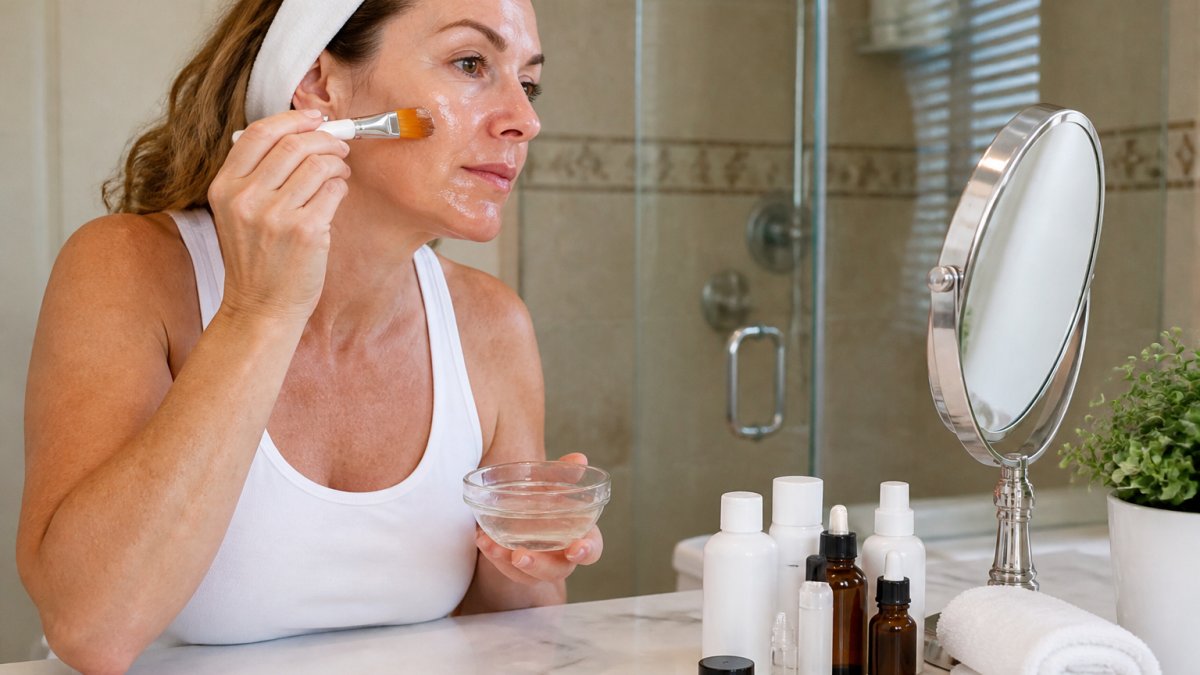
Before your first peel, run through this checklist:
- Patch test on your inner forearm 48 hours ahead
- Confirm your peel strength matches your experience level
- Stop retinol and other actives 3 to 5 days before
- Skip the peel if your skin is sunburned, tanned, or irritated
Start with a superficial peel. Superficial peels use gentle acids at low strengths and carry minimal downtime. Medium and deep peels belong with a professional, especially for a first-timer.
If you take prescription acne medication, check with your provider before any peel.
6. Follow a Chemical Peel Aftercare Routine That Protects Your Results
Chemical peel aftercare decides whether you keep your results or lose them. The peel does the work. Aftercare protects it.
Keep it simple for the first week:
- Cleanse with a gentle, fragrance-free cleanser
- Moisturize twice a day, and more if skin feels tight
- Protect with broad-spectrum SPF 30 or higher, every morning
- Skip retinol, scrubs, and other acids until peeling stops
Picking at flaking skin is the fastest way to cause a scar or a dark mark.
According to the U.S. Food and Drug Administration on sunscreen, regular use of broad-spectrum sunscreen helps prevent sunburn and early skin aging.
Most superficial peels have little to no downtime. You may see light flaking for a few days.
How Often Should You Use Chemical Peels for Acne?
Superficial peels are typically used every two to four weeks. Medium peels are spaced further apart, often every four to six weeks, and need more recovery time between sessions.
The right cadence depends on your skin’s response, not the calendar. If your skin is still red or flaking, wait.
| Peel Type | Typical Frequency | Downtime | Best For |
|---|---|---|---|
| Salicylic (superficial) | Every 2-4 weeks | Minimal | Active breakouts, oily skin |
| Glycolic (superficial) | Every 2-3 weeks | Minimal | Dark spots, dull texture |
| Lactic (superficial) | Every 2-4 weeks | Minimal | Dry, sensitive skin |
| TCA (medium) | Every 4-6 weeks | Several days | Moderate texture, scarring |
Track your progress. Take a photo in the same light every two weeks. Skin changes slowly, and photos show what the mirror misses.
When to See a Professional Instead
At-home peels are an adjunct, not a standalone acne treatment. That distinction is the one most guides skip. A peel can reduce congestion, oil, and surface marks, but it does not address the hormonal and bacterial drivers behind moderate to severe acne. If your breakouts are deep, painful, or leaving marks faster than they fade, a peel alone will not solve it.
Set Realistic Expectations
Peels behave differently depending on what you are treating:
- Active, surface-level breakouts: superficial peels can help clear congestion and calm inflammation over a series of sessions.
- Post-acne dark spots: these often fade with consistent exfoliation and daily sun protection, but the process takes months, not weeks.
- Deep, pitted scars: peels cannot fill indentations. Those sit below what a superficial or medium peel reaches, and laser resurfacing or microneedling is usually the better tool.
A common pattern is that people expect one peel to erase years of marks. It will not. Progress is gradual and cumulative.
Check Your Medications First
This is where at-home peels get risky. Several acne treatments make skin far more sensitive and can turn a mild peel into a chemical burn:
- Prescription retinoids thin the outer skin layer and increase sensitivity. Many practitioners advise stopping them several days before a peel and restarting only after peeling stops.
- Isotretinoin dramatically affects skin healing and sensitivity. Do not plan a peel without clearing it with the prescriber.
- Benzoyl peroxide and over-the-counter retinoids can also compound irritation when stacked with an acid peel.
- Other exfoliating acids in your routine add to the total load, even if each one seems gentle on its own.
Confirm your plan with a clinician or pharmacist before combining any of these with a peel.
Skin Tone and Sensitivity
Post-inflammatory hyperpigmentation is more common and more stubborn in deeper skin tones, and irritation from a peel can itself trigger new dark marks. If you have a deeper skin tone or sensitive skin, start at the lowest strength, extend the time between sessions, and treat any sign of irritation as a stop signal rather than something to push through.
When to Go Professional
See a trained provider for medium or deep peels, for severe or pitted scarring, and for any peel on sensitive or compromised skin. Go professional if you have:
- Deep, pitted acne scars
- A history of cold sores or keloid scarring
- Very sensitive or reactive skin
- Been using prescription acne medication
If your acne is moderate to severe, the more effective path is usually medical evaluation first, with peels used alongside a treatment plan rather than instead of one.
For everything else, a professional-grade at-home peel is a practical option. That is where Makeup Artist’s Choice fits.
You do not need a spa appointment to start. You need the right peel, the right strength, and a plan you can stick with.
Frequently Asked Questions
Can chemical peels help treat acne?
Yes. Chemical peels for acne work by exfoliating dead skin cells, dissolving excess oil, and clearing clogged pores. Salicylic acid peels are especially effective because they penetrate oil-rich pores. Glycolic acid peels speed up cell turnover to prevent new breakouts. Results build over multiple sessions, so expect gradual improvement rather than overnight clearing. Mild purging is common in the first week as existing blockages surface.
Which chemical peel is best for acne-prone skin?
Salicylic acid peels suit oily, blackhead-prone skin because they dissolve sebum inside pores. Glycolic acid peels work well for surface texture and post-acne marks. Jessner peels combine multiple acids for stubborn breakouts but carry more downtime. Start with a superficial peel and a lower strength, then increase gradually. Matching the peel ingredient to your specific acne type matters more than picking the strongest option available.
How often can you use a chemical peel for acne?
Most superficial peels can be repeated every 2 to 4 weeks. Medium peels need 4 to 6 weeks between sessions to allow full recovery. At-home peels should start at a lower frequency, once every 3 to 4 weeks, so your skin adapts. Over-peeling damages the skin barrier and can trigger more breakouts. Track your results and adjust the schedule based on how your skin responds, not a fixed calendar.
What should you avoid after a chemical peel?
Skip retinol, exfoliating scrubs, and other active ingredients for at least 5 to 7 days after a peel. Avoid sun exposure without SPF 30 or higher, since freshly peeled skin burns easily. Do not pick or peel flaking skin, as this can cause scarring and hyperpigmentation. Skip hot showers, saunas, and intense workouts for 48 hours. Use a gentle cleanser and moisturizer until your skin fully recovers.
Acne is stubborn, and no single peel fixes it overnight. What works is a clear routine: the right acid for your concern, a safe starting strength, and aftercare that protects your progress. Makeup Artist’s Choice offers professional-grade salicylic, glycolic, lactic, and TCA peels, all made in the USA, plus personalized routines built around your skin. Get started with Makeup Artist’s Choice and build a peel routine that delivers visible, lasting results.