Table of Contents
- Why Professional Strength Peels Deliver Results at Home
- Professional vs At-Home Chemical Peels: What’s the Real Difference
- Chemical Peel Safety at Home: How to Protect Your Skin Barrier
- How Often to Use a Chemical Peel Without Damaging Skin
- The Ordinary vs Professional Chemical Peels: Strength, Concentration, and Results
- Addressing Common Skin Concerns: Acne, Hyperpigmentation, and Texture
- Realistic Expectations: Timeline and What to Expect After Your First Peel
- Frequently Asked Questions
Last Updated: October 10, 2026
Why Professional Strength Peels Deliver Results at Home
Professional strength peels work at home because they contain higher concentrations of active acids, glycolic, lactic, salicylic, or TCA, than over-the-counter alternatives. At Makeup Artist’s Choice, we’ve spent nearly three decades helping customers achieve salon-quality results without the salon price tag. The key difference isn’t magic: it’s chemistry and concentration. A professional strength peel penetrates deeper into the skin, triggering more significant cell turnover and collagen remodeling in a single treatment than weaker formulations can accomplish in weeks.
The real appeal is speed. Higher acid concentrations simply work faster because they’re doing more work on a biochemical level. The trade-off is that professional strength peels demand more attention to preparation, application, and aftercare. Skip those steps, and you’ll experience irritation instead of results.
Professional vs At-Home Chemical Peels: What’s the Real Difference
The difference between professional and at-home chemical peels comes down to concentration, pH, and who applies them. Professional strength peels sold for home use are stronger than drugstore options but formulated to be safe when you follow instructions carefully.
What separates professional strength peels from weak alternatives is the peel depth. Superficial peels affect only the outermost layer of skin; medium-depth peels penetrate into the dermis, triggering more dramatic collagen remodeling.
A professional strength peel for home use can offer a cost-effective alternative to professional treatments. For someone treating acne, aging, or uneven skin tone consistently, at-home professional strength peels can deliver value over time.
Chemical Peel Safety at Home: How to Protect Your Skin Barrier
Your skin barrier is the outermost layer (stratum corneum) that protects against irritants and moisture loss. Chemical peels deliberately disrupt it to trigger renewal, but only to a controlled depth. The risk of damage comes from overuse, wrong application, combining peels with incompatible products, or ignoring warning signs during treatment.
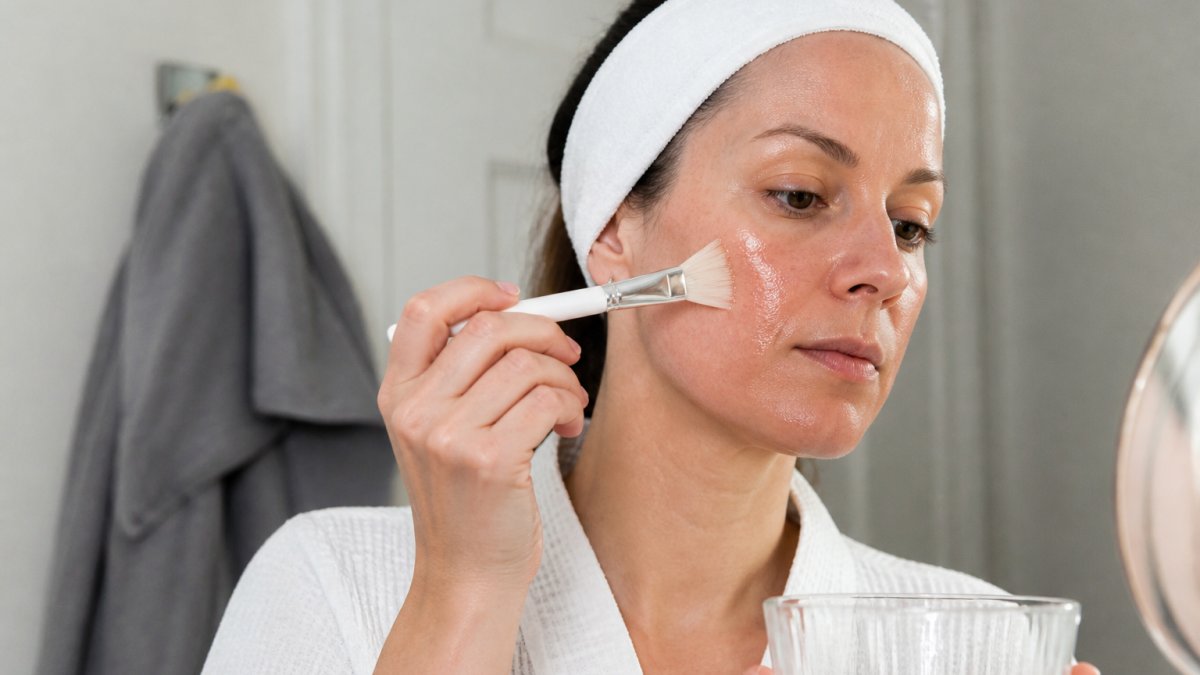
Patch testing is non-negotiable. Apply a small amount to your inner arm or behind your ear, wait 10 minutes, and observe for redness, burning, or itching. This single step prevents the horror stories you’ve read online. Most bad reactions happen when someone skips this step or ignores warning signs during application. If you have a history of sensitive skin, eczema, or rosacea, patch test at least 24 hours before full application.
Avoid combining peels with other exfoliants or irritating actives. Do not use a chemical peel on the same day as:
- Retinoids (retinol, tretinoin, adapalene), both exfoliate and can cause severe irritation when combined
- Other chemical exfoliants (AHAs, BHAs, vitamin C), stacking exfoliants damages the barrier
- Physical exfoliants (scrubs, brushes), mechanical exfoliation plus chemical exfoliation is excessive
- Benzoyl peroxide, can interact unpredictably with some peel formulations
If you use retinoids or other actives regularly, pause them for 3-5 days before and after your peel. Your skin barrier needs recovery time. After your peel, wait at least one week before reintroducing retinoids or other strong actives.
Apply the peel evenly and remove it on schedule. Don’t leave it on longer hoping for better results, that’s how you damage your barrier and risk chemical burns. Use a timer. Most professional strength peels have a specific contact time. When the timer goes off, neutralize immediately with the provided solution or water, depending on the product instructions. Neutralization stops the acid’s action and prevents over-penetration.
Post-peel care is non-negotiable for the first 48 hours. Your skin will be sensitive and compromised. Use only:
- A gentle, fragrance-free cleanser (avoid sulfates)
- A heavy moisturizer or barrier repair cream (look for ceramides, hyaluronic acid, or glycerin)
- Broad-spectrum sunscreen (SPF 30 minimum, SPF 50+ preferred), chemical peels increase sun sensitivity, and UV exposure can cause post-inflammatory hyperpigmentation, especially for darker skin tones
Skip all actives, including retinol, vitamin C, niacinamide, and acids, for at least 48 hours post-peel. Your barrier is healing; additional actives will irritate it further.
Recognize the signs of over-exfoliation and when to stop. Normal peel reactions include redness, mild burning during application, visible peeling 2-5 days later, and temporary dryness. These are expected and resolve within a week. Over-exfoliation or a true adverse reaction includes:
- Severe burning or pain during application that doesn’t subside when you neutralize
- Blistering, welts, or hives appearing during or immediately after the peel
- Persistent redness, swelling, or heat lasting more than 48 hours
- Open wounds, oozing, or signs of infection
- Hyperpigmentation or hypopigmentation (lightening) appearing within days of the peel
- Prolonged sensitivity or barrier dysfunction (tight, flaky, reactive skin lasting weeks)
If you experience any of these, stop using peels immediately and do not schedule another treatment. Apply a gentle moisturizer and avoid all actives. If symptoms persist beyond 3-5 days or worsen, contact a dermatologist. Chemical burns can lead to permanent scarring if not treated promptly.
Know when to seek professional guidance instead of treating at home. If you have:
- Active infections (cold sores, bacterial acne, fungal infections)
- Recent cosmetic procedures (laser, microdermabrasion, injectables) in the past 2 weeks
- Severe cystic acne or open wounds
- A history of keloid scarring or abnormal wound healing
- Pregnancy or breastfeeding (some acids are contraindicated)
- Darker skin tones with a history of post-inflammatory hyperpigmentation
…consult a dermatologist before attempting a professional strength peel at home. A licensed provider can assess your skin, recommend the right strength and frequency, and monitor for complications.
Ignoring redness, burning, or blistering during application can lead to chemical burns and permanent scarring. Stop immediately if you experience severe pain or see signs of burning beyond normal peel sensations. If you develop blisters, welts, or persistent swelling, seek medical care.
How Often to Use a Chemical Peel Without Damaging Skin
Most people can safely use a professional strength peel every 2-4 weeks once their skin adjusts. Beginners should start with every 4 weeks to let their barrier recover fully. Overuse leads to chronic irritation, compromised barrier function, and increased sensitivity, the opposite of what you’re trying to achieve.
Listen to your skin. If you’re still experiencing redness, peeling, or sensitivity a week after your last treatment, wait longer before the next one. Your skin will tell you when it’s ready.
The frequency also depends on your peel strength and skin concern. Match the frequency to the strength and your skin’s response.
The goal is consistency over intensity. One peel every month for a year delivers better results than four peels crammed into one month followed by months off.
The Ordinary vs Professional Chemical Peels: Strength, Concentration, and Results
Understanding what “professional strength” means is essential before buying. The term is not regulated by the FDA, so manufacturers use it loosely. To compare products fairly, you need to evaluate three measurable factors: acid concentration, pH, and neutralization method.
Acid concentration is the percentage of active ingredient in the formula. Higher concentration means faster penetration and more dramatic exfoliation, but also higher irritation risk if misapplied.
pH is equally important as concentration. Glycolic acid is only effective at a pH below 3.5; above that, it cannot penetrate the skin barrier effectively.
Neutralization method affects safety and results. Professional strength peels require a neutralizing agent, either a sodium hydroxide solution, water, or a buffering compound, to stop the acid’s action at the right depth. Always check the product instructions for a specific neutralization step and contact time.
When evaluating a product labeled “professional strength,” look for these specifics on the label or product page: the exact acid type and percentage, the pH (often listed as “optimal pH” or “formulation pH”), and clear neutralization instructions. If a product doesn’t list these, it’s likely not truly professional strength, it’s marketing language applied to a standard exfoliant.
Real-world comparison: A 10% glycolic acid serum at pH 4.0 requires 4-8 weeks of daily use to show visible texture improvement. A 30% glycolic peel at pH 2.5 with a 5-minute contact time shows visible results in 3-7 days. That speed difference is concentration and pH working together, not concentration alone.
For darker skin tones, professional strength matters more strategically. Lower-concentration products are safer for repeated use because they reduce the cumulative irritation that can trigger post-inflammatory hyperpigmentation. A person with deeper skin tones might see better long-term results from a 20% glycolic peel used every 4 weeks than a 40% peel used every 6-8 weeks, because consistency and lower irritation risk outweigh raw strength.
Professional strength peels can include supporting ingredients that reduce irritation and support skin recovery.
Addressing Common Skin Concerns: Acne, Hyperpigmentation, and Texture
Professional strength peels address multiple concerns simultaneously, which is why they’re so effective for complex skin issues.
Acne and clogged pores: Salicylic acid peels work best here because salicylic acid is oil-soluble and penetrates into pores. A professional strength salicylic peel clears congestion faster than topical treatments alone.
Post-inflammatory hyperpigmentation: This is where professional strength peels shine. Glycolic and lactic acid peels accelerate cell turnover, fading dark marks left behind by acne. The effect is gradual but visible. For darker skin tones, start conservatively because the risk of post-peel hyperpigmentation is higher.
Fine lines and skin texture: Repeated peel treatments stimulate collagen production over time. The cumulative effect on fine lines and overall texture can be significant with consistent use. This is the anti-aging benefit most people pursue.
Realistic Expectations: Timeline and What to Expect After Your First Peel
That peeling is normal and necessary, it’s dead skin cells shedding as new skin surfaces. Don’t pick or pull at it. Let it shed naturally.
Redness is also normal. This varies by skin tone, peel strength, and individual sensitivity.
Your skin will look brighter, smoother, and more even-toned. Texture improvements are often more dramatic than color improvements, you’ll notice your skin feels smoother before you see a major change in dark spots or scars.
Real transformation takes time. Set realistic expectations: professional strength peels work, but they work gradually and cumulatively.
Professional strength peels at home offer a practical path to salon-quality skin without the salon cost or downtime. The challenge isn’t whether they work, it’s whether you’ll commit to the preparation, application, and aftercare they require. Makeup Artist’s Choice has formulated professional-grade glycolic, lactic, salicylic, and TCA peels specifically for home use, with detailed guidance to help you avoid the mistakes that lead to irritation. If you’re serious about addressing acne, hyperpigmentation, or texture, professional strength peels deliver measurable results. Start conservatively, follow instructions precisely, and give your skin time to respond. The results speak for themselves.
Frequently Asked Questions
Are professional-strength chemical peels safe to use at home?
Yes, when used correctly. Professional strength peels sold for at-home use are formulated and buffered to be safer than in-office treatments. The key is following application instructions precisely, starting with lower concentrations, performing a patch test first, and using appropriate aftercare including sun protection. If you have sensitive skin, start with lower-strength options and increase gradually. Stop immediately if you experience severe burning, blistering, or signs of chemical burn.
How often can you use a chemical peel at home without damaging your skin?
Frequency depends on peel strength and your skin type. Allow at least 2-3 weeks between treatments if you’re new to chemical exfoliation. Your skin barrier needs time to recover between applications.
Will a professional-strength peel actually fade post-inflammatory hyperpigmentation and acne scars?
Professional-strength peels can improve post-inflammatory hyperpigmentation and shallow acne scarring by promoting cell turnover and collagen remodeling. Results are most visible with consistent use over several months. Glycolic and lactic acids work well for surface discoloration, while salicylic acid targets oily skin and clogged pores. However, deep atrophic scars may require professional laser or microneedling treatments for optimal results.
How do professional-strength peels compare to products like The Ordinary?
Professional-strength peels contain higher acid concentrations and are pH-buffered for controlled exfoliation, delivering faster, more dramatic results than consumer-grade alternatives. The Ordinary and similar brands offer gentler, lower-concentration options suited for daily or frequent use. Professional peels are designed as targeted treatments (weekly or monthly), while lighter exfoliants work as maintenance products. Professional peels can show visible results more quickly than gentler options, which require longer, consistent use.