Last Updated: October 23, 2026
Quick Summary
How to fade dark spots from acne scars depends on whether marks are flat discoloration or textured scars. Flat post-inflammatory hyperpigmentation fades with topical ingredients like retinoids, glycolic acid, azelaic acid, and hydroquinone applied consistently over three to twelve months, paired with daily sunscreen. Textured scars require professional treatments like chemical peels, microneedling, or lasers.
- Retinol and prescription retinoids accelerate cell turnover; start at 0.25% to 0.5% two to three times weekly and increase gradually.
- Glycolic acid at 5% to 10% exfoliates the outer layer; use two to three times weekly for five to ten minutes before rinsing.
- Hydroquinone blocks melanin production; over-the-counter versions contain 2% and show results within four to six weeks when applied twice daily.
- Mild hyperpigmentation fades in three to six months with consistent topical treatment; deeper marks take six to twelve months.
- Sunscreen SPF 30+ daily is non-negotiable; exfoliated skin is more sun-sensitive and sun exposure darkens existing hyperpigmentation.
Table of Contents
- Understanding Dark Marks vs Acne Scars
- Why Acne Leaves Dark Spots and Post-Inflammatory Hyperpigmentation
- Key Ingredients for Post-Acne Hyperpigmentation
- Chemical Exfoliation for Acne Marks: Your Step-by-Step Routine
- How Long Acne Dark Spots Take to Fade
- When to Consider Professional Treatment
- Safety, Irritation, and Common Mistakes to Avoid
- Frequently Asked Questions
Understanding Dark Marks vs Acne Scars
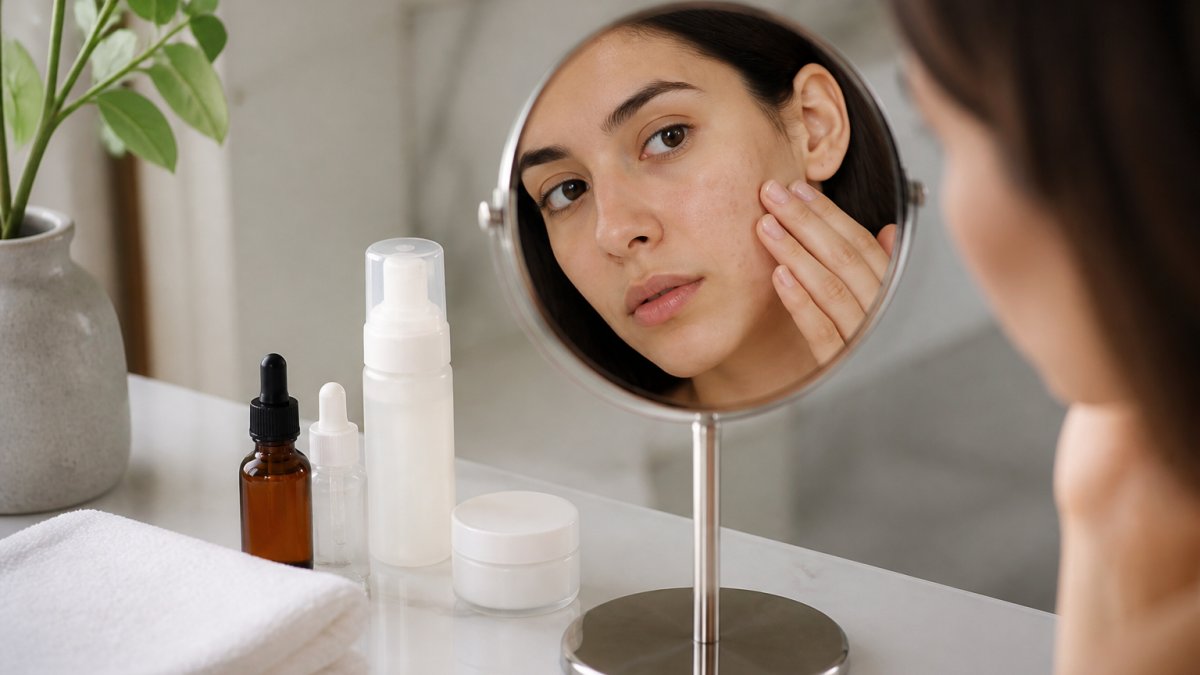
Understanding how to fade dark spots from acne scars starts with knowing that dark spots differ from textured acne scars, and treatments differ too.
Run a finger across the mark: smooth with only color means hyperpigmentation; a depression or raised bump means a structural scar. Many people have both.
Learning how to fade dark spots from acne scars with topicals works well for discoloration, but topicals cannot smooth textured scars, though they even out surrounding skin.
Why Acne Leaves Dark Spots and Post-Inflammatory Hyperpigmentation
Acne inflammation triggers extra melanin production during healing, and this pigment lingers after the breakout clears, leaving darker patches.
PIH is more common and more noticeable in deeper skin tones, though anyone can experience it.
Dark marks fade as skin sheds pigmented cells, typically over three to twelve months depending on depth.
Skin turns over roughly every 28 days, removing some pigmented cells each cycle.
Key Ingredients for Post-Acne Hyperpigmentation
Key ingredients target hyperpigmentation by increasing cell turnover, blocking melanin, or both.
Topical Retinoids and Retinol
Retinoids are vitamin A derivatives that accelerate cell turnover and rank among the most effective ingredients for fading dark spots and improving texture.
Retinol is the gentlest, over-the-counter form; prescription retinoids like tretinoin are stronger and faster but need medical oversight.
Retinoids can cause irritation, redness, and peeling at first.
American Academy of Dermatology guidance on retinoids recommends starting low and building tolerance over weeks.
Alpha Hydroxy Acids and Glycolic Acid
Glycolic acid ranges from 5% to 70%; over-the-counter products contain 5% to 10%, professional treatments go higher. Start low at home to assess tolerance.
Use glycolic acid two to three times weekly on clean, dry skin, leaving it five to ten minutes before rinsing. Increase to daily as tolerated, and pair with hydrating serums and sunscreen.
Journal of Cosmetic Dermatology research on AHA efficacy documents consistent results with glycolic acid for post-acne marks.
Azelaic Acid and Kojic Acid
Azelaic acid speeds cell turnover and inhibits melanin, making it effective for PIH and gentle enough for sensitive skin.
Use azelaic acid once or twice daily; it pairs well with other treatments and rarely irritates. Kojic acid also blocks melanin but is less stable, so choose stabilized products.
Both suit all skin tones and work alongside retinoids.
Hydroquinone and Professional-Strength Options
Hydroquinone is the gold standard for blocking melanin. Over-the-counter versions contain 2%; prescription reaches 4%.
Apply twice daily to affected areas; results appear within four to six weeks. Use for three months, then take a break. Long-term high-concentration use can cause ochronosis (bluish-gray discoloration), so follow medical guidance.
Combination treatments work best. These professional-strength options require a prescription but deliver results in weeks rather than months. FDA information on hydroquinone safety and use provides guidance on appropriate duration and concentration.
These ingredients target hyperpigmentation through different mechanisms and work best at specific concentrations and frequencies.
| Ingredient | Primary Action | Typical Concentration | Frequency |
|---|---|---|---|
| Retinol | Accelerates cell turnover | 0.25% to 0.5% starting | Two to three times weekly |
| Glycolic Acid | Exfoliates outer layer | 5% to 10% over-the-counter | Two to three times weekly |
| Azelaic Acid | Speeds turnover and blocks melanin | Not specified | Once or twice daily |
| Hydroquinone | Blocks melanin production | 2% over-the-counter, 4% prescription | Twice daily for three months |
| Tretinoin | Accelerates cell turnover | Prescription strength | As directed by clinician |
Chemical Exfoliation for Acne Marks: Your Step-by-Step Routine
Building a chemical exfoliant routine requires patience and gradual progression; rushing causes irritation and setbacks.
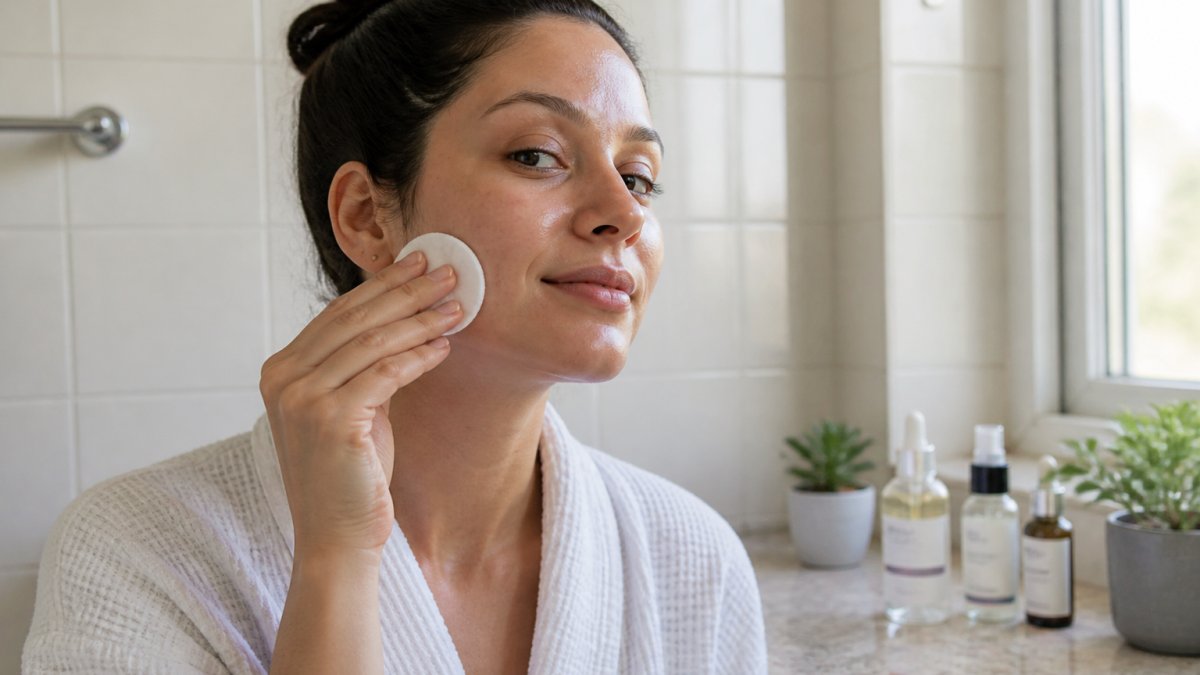
Step 1: Start With a Gentle Cleanser
Begin with a pH-balanced cleanser that doesn’t strip skin. Cleanse morning and night with lukewarm water.
Avoid scrubs and physical exfoliants while using chemical treatments; adding physical exfoliation to chemical causes irritation and barrier damage.
Pat skin dry gently. Don’t rub. Damp skin absorbs active ingredients more readily, which can increase irritation for sensitive people.
Step 2: Introduce Your First Acid Treatment
Choose one acid to start: glycolic acid, azelaic acid, or a low-concentration retinol. Don’t combine multiple actives in week one.
Apply the product to clean, dry skin. Use the amount specified on the label. Wait the recommended contact time, typically five to ten minutes for acids, thirty minutes for retinol.
Start with two applications per week, spaced three days apart. This gives your skin time to recover between treatments.
Step 3: Build Frequency Gradually
After two weeks of twice-weekly applications with no irritation, increase to three times per week. Wait another two weeks before moving to four times weekly.
If redness, burning, or peeling becomes severe, skip a day and return to your previous frequency. Irritation means your barrier is compromised.
Most people reach daily use after four to six weeks of gradual increases. Some skin types do better with four to five times weekly. Listen to your skin.
Step 4: Layer With Hydration and Sun Protection
After your acid treatment, apply a hydrating serum or essence. This replenishes moisture that exfoliation removes.
Follow with a lightweight moisturizer. Chemical exfoliants can leave skin temporarily dehydrated. Proper hydration supports healing and prevents irritation.
Sunscreen is non-negotiable. Exfoliated skin is more sun-sensitive.
Reapply sunscreen every two hours if you’re outdoors. This is the single most important step for fading dark spots faster.
How Long Acne Dark Spots Take to Fade
Timeline depends on several factors: how deep the pigmentation sits, your skin tone, the treatment strength, and consistency.
Mild hyperpigmentation fades in three to six months with consistent topical treatment. Deeper or stubborn marks take six to twelve months. Some very dark spots require professional treatment to fade completely.
Expect visible improvement within four to six weeks if you’re using effective ingredients consistently. The first change is usually a slight lightening of the darkest areas. Full fading takes longer.
Patience matters more than strength. A gentle routine you stick with for six months beats an aggressive routine you abandon after two weeks. Consistency compounds results.
When to Consider Professional Treatment
Topicals plateau for many people, especially with deeper pigmentation or when texture is involved. Professional treatments accelerate fading through mechanisms that at-home products cannot replicate: controlled wounding, higher acid concentrations, and targeted energy delivery. The decision to escalate should be based on what you are treating, how long you have treated it consistently, and your skin tone.
A decision guide: when topicals are enough vs. when to escalate
Use this simple triage before booking a procedure:
- Flat, light-to-medium brown marks, 3-6 months of consistent topical use: stay the course. Most flat PIH responds to retinoids, azelaic acid, and sunscreen within 6-12 months. Escalating too early adds cost and risk without clear benefit.
- Flat marks unchanged after 6 months of a well-tolerated routine: a series of chemical peels is a reasonable next step.
- Mixed flat pigment plus indented or raised texture: topicals will not correct texture. Microneedling or fractional laser addresses texture; pigment may need a separate peel or topical plan.
Chemical peels
In-office peels use higher concentrations and lower pH than retail products, and a clinician controls neutralization and contact time. Common agents for post-acne pigment include glycolic acid, salicylic acid, mandelic acid, and trichloroacetic acid (TCA) at low strengths. Mandelic acid and low-strength salicylic acid are often favored for deeper skin tones because they are gentler and carry lower risk of procedure-induced PIH.
Microneedling
Microneedling creates controlled micro-injuries that trigger collagen remodeling. It is most useful when texture (shallow indented scars) coexists with pigment. For pigment alone, microneedling is less targeted than peels or lasers. A common protocol is 3-4 sessions spaced 4-6 weeks apart. Post-procedure redness and mild swelling typically resolve within a few days. In darker skin tones, microneedling carries a lower risk of PIH than ablative lasers but is not risk-free; aggressive depth or improper technique can still trigger pigment changes.
Laser and light therapy
Laser and light devices target melanin or water in the skin depending on wavelength. For flat PIH, Q-switched and picosecond lasers are often used to break up pigment; for texture, fractional non-ablative lasers are common. The critical caveat: darker skin tones face a higher risk of laser-induced PIH and, rarely, hypopigmentation, because the device can heat surrounding melanin.
Realistic outcome expectations by treatment type
- Superficial peels: gradual lightening over 3-6 months across a series; modest per-session change.
- Medium peels: faster visible change but higher risk of rebound pigment; recovery of 5-7 days of peeling.
- Microneedling: texture improvement over 3-6 months; pigment change is secondary.
Questions to ask before booking
- What is your experience treating my skin tone, and what is your complication rate for PIH?
- Will you do a test spot, and how long before we judge results?
- What is the full plan (number of sessions, spacing, aftercare), and what will I do at home between sessions?
American Academy of Dermatology guidance on treating hyperpigmentation and FDA information on laser and light-based devices are useful starting points for understanding device categories and safety considerations.
Procedures can trigger new hyperpigmentation, especially in deeper skin tones. A test spot and a clinician experienced with your skin type are not optional. If a provider dismisses PIH risk or skips a test spot, consider a second opinion.
At Makeup Artist’s Choice, we offer 50% glycolic acid for hyperpigmentation Archives – Makeup Artist’s Choice and Scars products for at-home use between professional sessions. Professional-grade formulations can support a clinician-guided plan, but they are not a substitute for in-office treatment of deep pigment or texture.
Safety, Irritation, and Common Mistakes to Avoid
Irritation is not a sign of progress. In pigment-prone skin, inflammation itself can deepen discoloration, so the goal is the strongest routine your skin tolerates without barrier disruption. This section gives you a concrete protocol for introducing actives, spotting trouble early, and knowing when to stop or seek care.
The interaction matrix: what plays well together
- Retinoid + azelaic acid: generally compatible; azelaic acid is soothing and can buffer retinoid irritation. Many clinicians recommend azelaic acid in the morning and retinoid at night.
- Retinoid + AHA/BHA: use on alternating nights, not the same night, until tolerance is established. Layering both increases irritation risk without clear added benefit.
- AHA/BHA + vitamin C: separate by time of day (vitamin C in the morning, acid at night) or alternate days. Combining them at high strengths can sting and destabilize the vitamin C formula.
A gradual-introduction protocol
- Patch test any new active on the inner forearm or jawline for 3-5 days before applying to the full face.
- Start with one active at the lowest effective concentration, two nights per week, spaced at least 48 hours apart.
- Hold for two weeks. If no irritation, add a third night; hold another two weeks before a fourth.
- Add a second active only after four weeks of tolerance to the first, and introduce it on alternate nights.
- Buffer if needed: apply moisturizer before the active (the “retinoid sandwich”) to reduce irritation without eliminating efficacy.
Stop-and-assess thresholds
- Mild stinging that fades within 5-10 minutes: expected; continue.
- Redness, tightness, or flaking lasting more than 24 hours: reduce frequency by half and add a barrier moisturizer.
- Burning, raw patches, or stinging with water: stop all actives for 3-5 days; resume at half the previous frequency.
Common mistakes that slow progress
- Chasing strength over consistency. A 5% glycolic acid used nightly for six months outperforms a 30% peel used twice and abandoned.
- Skipping sunscreen. Exfoliated skin is more sun-sensitive; UV exposure darkens existing pigment and can create new marks. Broad-spectrum SPF 30+ daily is the single highest-impact habit.
- Over-exfoliating. More than once-daily acid use, or combining physical scrubs with chemical exfoliants, damages the barrier and can worsen pigmentation.
Pregnancy, breastfeeding, and medication precautions
- Retinoids (retinol, tretinoin, adapalene): avoid during pregnancy and breastfeeding; consult a clinician for alternatives.
- Hydroquinone: generally avoided during pregnancy; discuss with a clinician.
- Salicylic acid: low-strength topical use is often considered acceptable in pregnancy, but high-strength peels should be avoided; confirm with a clinician.
Keep a simple skin diary for the first eight weeks: note what you used, how often, and any reaction. Patterns are easier to spot in writing than in memory, and a diary makes clinician visits more productive.
Slow is fast. Introduce one active at a time, hold each step for two weeks, stop at the first sign of barrier damage, and treat sunscreen as part of treatment, not an optional add-on.
Frequently Asked Questions
Can dark spots from acne scars go away on their own?
Post-inflammatory hyperpigmentation (PIH) often fades naturally over time, typically within 3 to 12 months, depending on skin tone and the severity of the marks. Darker skin tones experience PIH more frequently and it may take longer to resolve. However, active treatment with topical retinoids, alpha hydroxy acids, or azelaic acid speeds up the process significantly. True textural acne scars (indented or raised) do not fade without professional intervention like microneedling or laser therapy.
How long does it take for post-acne dark spots to fade with treatment?
With consistent topical treatment, most people see visible improvement in 4 to 8 weeks, though complete fading may take 3 to 6 months. Chemical exfoliation with glycolic acid or salicylic acid accelerates skin cell turnover, while retinoids and azelaic acid target pigmented skin cells directly. Results depend on the depth of pigmentation, your skin tone, sun protection habits, and the strength of products used. Professional treatments like chemical peels or laser therapy can accelerate results.
What ingredients work best for fading dark spots from acne?
The most effective ingredients for post-acne hyperpigmentation are alpha hydroxy acids (especially glycolic acid), retinoids, azelaic acid, and kojic acid. Glycolic acid exfoliates dead skin cells and promotes turnover; retinol boosts cell renewal; azelaic acid reduces melanin production and inflammation; kojic acid inhibits tyrosinase, the enzyme that creates pigment. Hydroquinone is a prescription-strength option for stubborn marks. Combining these with daily sunscreen (SPF 30+) prevents new pigmentation and protects healing skin.
Is chemical exfoliation safe for sensitive skin or darker skin tones?
Chemical exfoliation is safe for sensitive skin and all skin tones when introduced gradually and at the right strength. Start with a low-concentration acid (5-10% glycolic acid or 2% salicylic acid) once or twice weekly, then increase frequency over 4 to 6 weeks. Darker skin tones are more prone to post-inflammatory hyperpigmentation from irritation, so patch testing and slow introduction are essential. Avoid mixing multiple active acids initially, use a hydrating moisturizer, and apply sunscreen daily. If irritation occurs, reduce frequency or consult a dermatologist.
Fading dark spots from acne requires consistency, the right ingredients, and sun protection. Most people see meaningful results within three to six months of daily topical treatment. Professional options accelerate the timeline when at-home products plateau. Start with a gentle approach, build gradually, and protect your skin from sun exposure. These fundamentals work across all skin types and tones.