
Quick Summary
A vitamin C serum can help fade brown post-acne marks, which are pigment-based post-inflammatory hyperpigmentation. Red marks caused by dilated blood vessels respond less to vitamin C, so identify the mark type first. Use daily broad-spectrum sunscreen, because sun exposure can darken marks again.
- Brown, non-blanching marks are pigment-based and are the main target for vitamin C serum.
- Red marks that blanch under pressure are vascular, so vitamin C is only a supporting step.
- Vitamin C serums should be applied once daily to clean, dry skin, usually in the morning.
- Use broad-spectrum sunscreen every day, because UV exposure can darken marks again.
- Patch test a new serum on a discreet area for three to five days before full use.
Table of Contents
- Post-Acne Marks vs. Acne Scars: Knowing What You Are Treating
- How Vitamin C Serum Works on Post-Acne Marks
- How to Fade Dark Spots From Acne Safely
- Vitamin C vs. Mandelic Acid for Hyperpigmentation
- Choosing a Vitamin C Serum: Concentration, Formula, Stability and Ingredient Pairings
- Patch Testing and Building a Sensitive-Skin Routine With Vitamin C
- How to Layer Vitamin C With Chemical Peels Without Irritation
- Your Next Step: Starting a Low-Irritation Vitamin C Routine
- Frequently Asked Questions
Post-Acne Marks vs. Acne Scars: Knowing What You Are Treating
Last Updated: November 4, 2026
Most people use the phrase “acne scars” for anything left behind after a breakout, but the two are not the same. A post-acne mark is a flat patch of color, usually pink, red, brown or dark, that fades on its own over time. An acne scar is a change in the skin’s texture caused by tissue loss or extra tissue during healing. That distinction matters, because a vitamin C serum for post acne marks works on pigment and redness, not on depressed or raised scars. This guide will help you sort out which one you are dealing with before you spend money on a treatment.
Post-inflammatory hyperpigmentation (PIH) explained
Post-inflammatory hyperpigmentation (PIH) is the darkening of skin that follows inflammation. When a pimple becomes irritated, the skin produces extra melanin as part of its repair process, and the result can linger for weeks or months. American Academy of Dermatology overview of hyperpigmentation
PIH is most noticeable on medium to deep skin tones, where melanin production is more active. Picking or squeezing a blemish tends to make it worse, since the extra trauma triggers more pigment. A key detail most guides skip: PIH is a pigment problem, so it responds to ingredients that interrupt melanin production, including vitamin C, azelaic acid, tranexamic acid and niacinamide. It does not respond to treatments aimed at blood vessels.
Post-inflammatory erythema (PIE) explained
Post-inflammatory erythema (PIE) is the red or pink mark left after a blemish heals. It is not pigment at all. It is caused by dilated capillaries and residual inflammation in the skin, which is why it looks red, purple or pink rather than brown, and why it tends to be more visible on fair skin and under bright or cool light. PIE is common after cystic acne and after any blemish that was squeezed or picked.
This is the distinction most articles blur, and it changes what you should buy. Vitamin C is primarily a pigment and antioxidant ingredient. It is not a vascular treatment. If your marks are red and do not turn brown, a vitamin C serum alone is unlikely to be the fastest route; ingredients and in-office options aimed at redness and vessels are usually more direct. Many people have both PIH and PIE at the same time, which is why a single mark can look brown in the center and red at the edges.
How to tell which mark you have
A simple at-home check: press a clear glass or the edge of a phone screen against the mark and look under good light. PIE tends to blanch, or fade, when pressure is applied because the blood is pushed out of the dilated vessels. PIH does not blanch; the brown color stays. Take a photo in the same lighting once a week, because marks change slowly and memory is unreliable.
| Feature | PIH (pigment) | PIE (vascular redness) |
|---|---|---|
| Typical color | Brown, gray, dark | Pink, red, purple |
| Blanches under pressure | No | Yes |
| More common on | Medium to deep skin tones | Fair skin, but possible on any tone |
| Main driver | Excess melanin | Dilated capillaries and inflammation |
| Vitamin C role | Primary target | Supportive only |
| Realistic timeline | Weeks to months | Weeks to months, often longer |
What this means for your serum choice
If your marks are brown and blanch-negative, a vitamin C serum is a reasonable first active, and you can layer it with sunscreen and a pigment-focused partner such as niacinamide or azelaic acid once your skin is used to it. If your marks are red and blanch-positive, treat vitamin C as a supporting step for antioxidant protection and overall tone rather than the main event, and set expectations accordingly. If a mark is raised, depressed or pitted, it is a scar and needs a different conversation with a dermatologist.
Watch out: a mark that is changing color, bleeding, or not fading after several months is not a typical post-acne mark and should be checked by a dermatologist rather than treated with another serum.
How Vitamin C Serum Works on Post-Acne Marks
Vitamin C serums are used to target the pigment pathway in post-acne marks. Their effects are gradual and depend on formulation, concentration and consistent use.
Melanin production, antioxidants and collagen synthesis
These are complementary effects. The antioxidant benefit protects against further damage, while the pigment-related effect works on marks that already exist.
Does vitamin C actually fade acne marks? What to expect and when
Sun protection is essential during this time, because UV exposure can darken marks again.
Stop if you experience significant irritation.
How to Fade Dark Spots From Acne Safely
A safe approach starts with consistency and restraint. Apply a vitamin C serum to clean, dry skin once daily, usually in the morning under sunscreen. For a more detailed guide, read about how to fade post-inflammatory hyperpigmentation at home.
- Start with a lower concentration and increase only if your skin tolerates it
- Use a broad-spectrum sunscreen every day, even on cloudy days
- Avoid picking at remaining blemishes, which can create new marks
- Give each product several weeks before judging results
Vitamin C vs. Mandelic Acid for Hyperpigmentation
Many people use vitamin C in the morning and a mandelic acid product in the evening, though you should introduce one at a time. Our product on Makeup Artist’s Choice range includes options for both approaches, depending on your routine.
Choosing a Vitamin C Serum: Concentration, Formula, Stability and Ingredient Pairings
When comparing serums, look at four factors: the form of vitamin C, the concentration, the formula and whether the product stays stable. For acne-prone skin, add a fifth: what else is in the bottle and what you plan to layer it with.
Form and concentration
L-ascorbic acid is the most studied form, but it is also the least stable in water-based formulas. You can browse vitamin C serums to compare the options available. Derivatives such as sodium ascorbyl phosphate, magnesium ascorbyl phosphate and ascorbyl glucoside are more stable and gentler, though the evidence for pigment fading is generally stronger for L-ascorbic acid. To see the full range of vitamin C skin care options, explore the complete selection.
Stability and shelf life
Look for opaque or airtight packaging, ideally a pump or a tube rather than a wide-mouth jar, because light and air speed up oxidation. A freshly opened L-ascorbic acid serum is usually pale yellow or nearly clear. As it oxidizes it turns deeper yellow, then orange, then brown, and it loses potency along the way. A strong orange or brown color, a sour or metallic smell, or a change in texture are practical signs to replace the bottle. Store it away from direct sun and heat, and check the period-after-opening symbol on the label.
Ingredient compatibility for acne-prone skin
Most guides warn vaguely against mixing actives. A clearer guide is more useful:
| Pairing | Verdict | Notes |
|---|---|---|
| Vitamin C + broad-spectrum sunscreen | Safe and encouraged | Apply vitamin C first, then sunscreen |
| Vitamin C + niacinamide | Generally safe | Older warnings about mixing are largely outdated; some people still prefer to separate them if they sting |
| Vitamin C + hyaluronic acid | Safe | Good for hydration without added irritation |
| Vitamin C + vitamin E + ferulic acid | Safe | A common stability and antioxidant combination |
| Vitamin C + benzoyl peroxide | Use with care | Can cause stinging and may affect stability; separate them or use one in the morning and one at night |
| Vitamin C + retinoid | Use with care | Common to use vitamin C in the morning and the retinoid at night |
| Vitamin C + strong AHA/BHA in the same step | Avoid at first | Layer on separate days or separate times until tolerated |
| Vitamin C + salicylic acid | Usually fine | Salicylic acid is often well tolerated by acne-prone skin; introduce one at a time |
Matching the formula to your skin
Watch out: adding a new serum, a new exfoliant and a new retinoid in the same week makes it impossible to tell which product caused a breakout or irritation, so introduce one product at a time and give it a few weeks.
Patch Testing and Building a Sensitive-Skin Routine With Vitamin C
Apply a small amount of serum to a discreet area, such as the inner forearm or behind the ear, once a day for three to five days. Watch for stinging, persistent redness or itching.
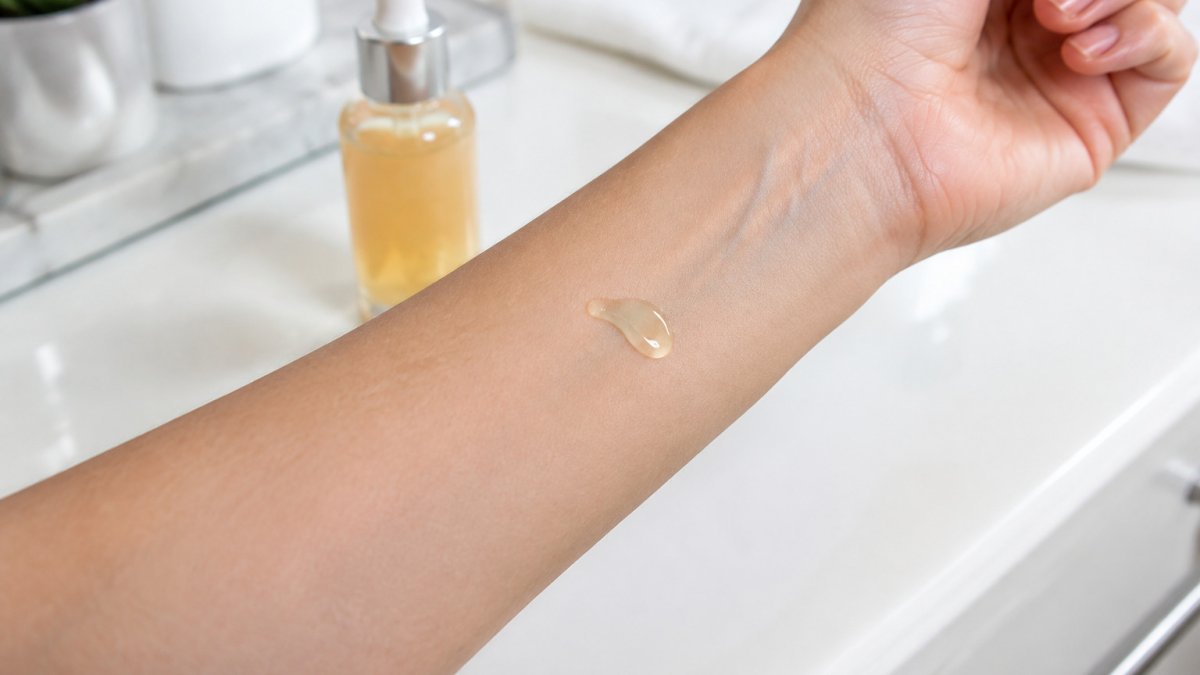
Once the patch test is clear, begin with two or three applications per week and build up gradually. Keep the rest of your routine simple. A gentle cleanser, a moisturizer and daily sunscreen are enough for most people.
How to Layer Vitamin C With Chemical Peels Without Irritation
Many people apply vitamin C on days they do not use a peel, and use peels on a separate schedule. If you do layer them, wait until the skin feels fully dry and calm, and reduce frequency if you notice stinging or peeling.
If your skin is reactive, it is usually better to use one active at a time and let your skin adjust before adding another.
Your Next Step: Starting a Low-Irritation Vitamin C Routine
Track your results with a photo once a week so you can judge progress. If a mark has not changed after several months, or if it looks different from typical post-acne discoloration, consult a dermatologist. Explore the Makeup Artist’s Choice vitamin C collection to find a serum that suits your skin.
Frequently Asked Questions
Does vitamin C serum actually help with post-acne marks?
Deeper or raised scars respond less to topical serums and may need professional treatment.
How long does it take for vitamin C to fade acne marks?
Expect gradual improvement over roughly two to three months of daily use. Fading depends on how old the mark is, how deep the pigment sits, your skin tone and how consistently you apply sunscreen. Fresh marks often lighten faster than marks that have been present for a year or more. If there is no visible change after three months of steady use, the product may not suit your skin or the mark may need a different approach.
Is vitamin C serum safe for sensitive, acne-prone skin?
Stop using it if you notice stinging, persistent redness or itching.
Can I use vitamin C serum every day for hyperpigmentation?
Many people use vitamin C serum daily, usually in the morning under sunscreen, because its antioxidant role is most useful during daytime UV exposure. If your skin reacts, reduce frequency to every other day and rebuild gradually. Avoid layering it with strong exfoliating acids in the same routine until your skin tolerates both well.
Frequently Asked Questions
How long does vitamin C take to fade acne marks?
Most people notice gradual changes after several weeks of daily use, with more visible results over several months. Consistency and sun protection matter more than the strength of any single product.
Can vitamin C remove acne scars?
Vitamin C is mainly aimed at pigment and redness. It is not designed to repair depressed or raised scars, which may need professional treatment.