Last Updated: November 4, 2026
Quick Summary
Serums can modestly improve pitted acne scars by supporting skin turnover and softening texture, but they cannot rebuild lost tissue. Retinoids and exfoliating acids are common starting points, with results taking months. Deep ice-pick scars usually need a professional procedure.
- Serums work on the surface and upper skin layers and cannot restore large volumes of lost tissue.
- Start retinol two nights a week, using a 0.1% to 0.3% strength if your skin is sensitive.
- Introduce one active, hold it for four to six weeks, then add a second.
- Expect gradual change over three to six months of consistent use, with progress tending to plateau.
- Consider a dermatologist for deep ice-pick scars, since procedures are often needed for those.
Table of Contents
- What Deep Pitted Acne Scars Are and How Serums Can Help
- Deep Atrophic Scars vs. Flat Post-Acne Marks
- Key Serum Ingredients for Texture and Cell Turnover
- Choosing Serums by Scar Type, Skin Sensitivity, and Skin Tone
- Mandelic Acid Peel: A Gentler Option for Textured Skin
- How to Use At-Home Chemical Peels Safely Alongside a Serum Routine
- Setting Realistic Expectations and When to See a Dermatologist
- Frequently Asked Questions
What Deep Pitted Acne Scars Are and How Serums Can Help
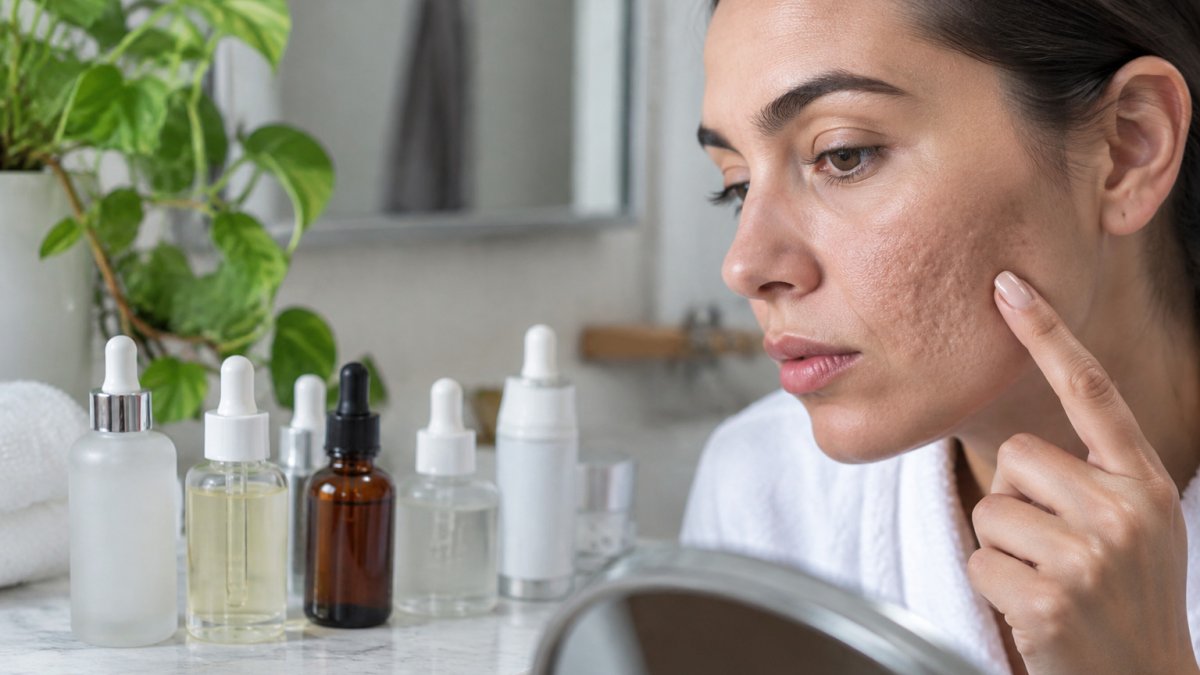
Deep pitted acne scars are depressions in the skin caused by tissue loss during inflammation, and topical serums can improve their appearance only modestly. This guide covers which serum ingredients are worth considering, what realistic results look like, and when a professional should be involved.
Atrophic scars are the most common type of acne scar, and they form when the skin loses collagen during healing. Dermatologists typically describe three main shapes: ice-pick scars (narrow and deep), boxcar scars (wider with defined edges), and rolling scars (broad, shallow dips). Each shape responds differently to treatment.
Serums work on the surface and upper layers of the skin. They can support cell turnover, lighten the look of discoloration, and make texture feel smoother over time. They cannot rebuild large volumes of lost tissue, so expectations matter. Anyone with established deep scars should plan on months of consistent use for modest change, not overnight transformation.
Deep Atrophic Scars vs. Flat Post-Acne Marks
Deep atrophic scars and flat post-acne marks look similar at a glance but need different approaches. Flat marks are post-inflammatory hyperpigmentation, meaning dark spots left behind after a breakout. Pitted scars are a structural change in the skin itself.
Run a simple test: press the area gently and watch how the surface responds. If the mark is flat and only changes color, it is likely pigmentation. If the surface dips or the shadow looks sunken in side light, it is likely a scar.
This distinction matters because serums that brighten pigmentation may do little for a pitted scar. Matching the ingredient to the actual problem saves money and frustration.
Key Serum Ingredients for Texture and Cell Turnover
Several active ingredients are commonly used to address uneven texture and slow skin renewal. Most work best when introduced gradually.
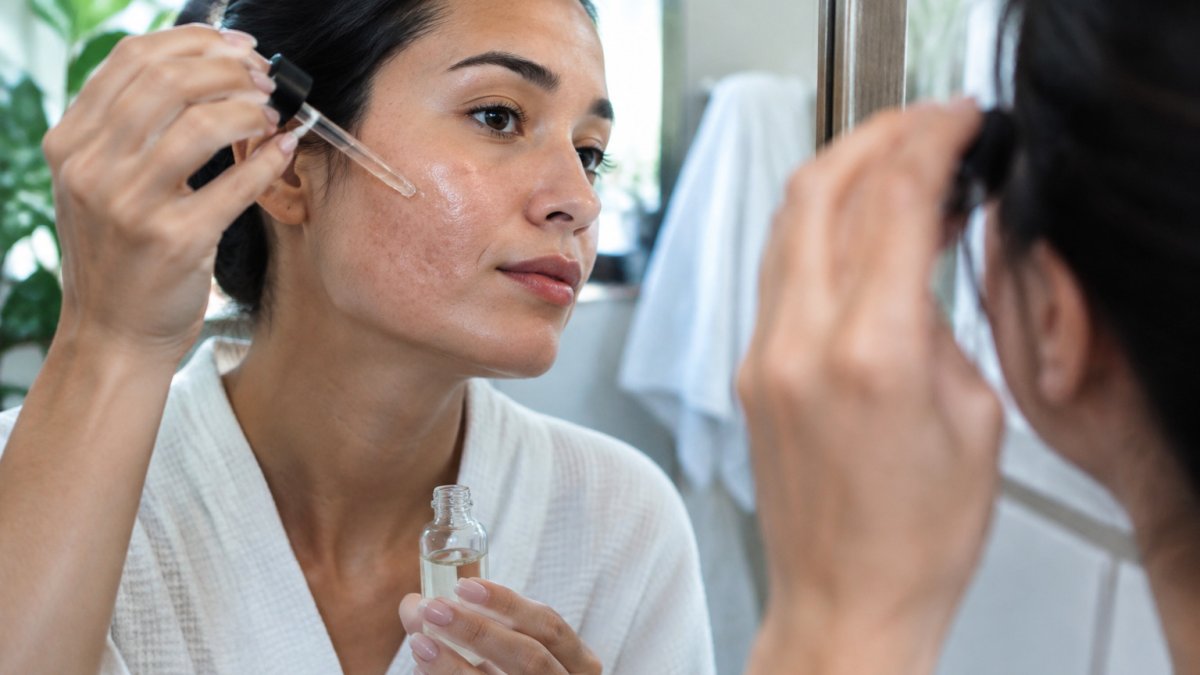
Retinoids and Retinol
Retinoids are among the most studied ingredients for skin texture and cell turnover. Retinol is an over-the-counter form, while prescription retinoids are stronger. Expect dryness and mild irritation in the first weeks, and start two or three nights a week.
Vitamin C, Azelaic Acid, and Exfoliating Acids
Vitamin C serums are widely used for discoloration and post-acne marks, typically in daytime routines because they pair well with sunscreen. Read a closer look at what actually works for vitamin C on post-acne marks. Azelaic acid is often recommended for both redness and pigmentation. Exfoliating acids such as glycolic, lactic, and mandelic acid speed surface turnover. A milder option like mandelic acid is often a sensible starting point for sensitive skin.
Choosing Serums by Scar Type, Skin Sensitivity, and Skin Tone
Pitted scars are not one concern, and a serum that suits a shallow rolling scar may do almost nothing for a narrow ice-pick scar. The table below maps each atrophic scar shape to what topicals can realistically contribute, which ingredients are worth trying, and when to stop expecting a serum to do the work. When a scar’s shape puts it beyond what a serum can change, non-surgical scar treatments may offer another way to address the texture.
| Scar type | What it looks like | What a serum can realistically do | Ingredients worth trying | When to consider a procedure |
|---|---|---|---|---|
| Ice-pick | Narrow, deep, punctate depressions, often on cheeks | Little to no visible fill; may soften surrounding texture and discoloration | Retinol to support turnover; vitamin C or azelaic acid for surrounding marks | Often needs a procedural approach such as punch excision or fractional laser; topicals are supportive only |
| Boxcar | Wider, round or oval depressions with defined vertical edges | Modest smoothing of edges and improved tone; no meaningful volume restoration | Retinoids, glycolic or lactic acid, azelaic acid | Microneedling, subcision, or resurfacing are commonly discussed for established boxcar scars |
| Rolling | Broad, shallow, undulating dips with a tethered look | Best candidate among pitted scars for gradual texture improvement | Retinoids plus exfoliating acids; vitamin C for residual discoloration | Subcision is often raised for tethered rolling scars; topicals can complement, not replace, it |
| Flat post-acne mark (PIE/PIH) | Flat, red or brown discoloration with no surface dip | Good candidate for meaningful improvement | Vitamin C, azelaic acid, niacinamide, gentle acids, daily sunscreen | Not a scar; procedures are usually unnecessary |
Skin sensitivity. If your skin stings, flushes, or reacts to many products, start with a lower-strength retinoid (around 0.1% to 0.3% retinol) two nights a week, or begin with mandelic or lactic acid instead of glycolic. A common pattern is to introduce one active, hold it for four to six weeks, and only then add a second. Watch out: layering a retinoid with an exfoliating acid on the same night is the most common route to a damaged barrier, which sets texture progress back by weeks.
Skin tone. Deeper skin tones are more prone to post-inflammatory hyperpigmentation after irritation, so the goal is steady, low-irritation progress rather than aggressive exfoliation. Gentler acids (mandelic, lactic), a buffered retinoid, and daily broad-spectrum sunscreen with SPF 30 or higher are the backbone. Avoid picking at active breakouts, since that is what creates new marks in the first place. If you are unsure how your skin will respond, a dermatologist can help you sequence actives safely.
Concentration and frequency starting points. A reasonable entry point is retinol two nights a week, vitamin C in the morning, azelaic acid at 10% once daily, and an exfoliating acid once or twice a week, not all at once. Build to tolerance over two to three months rather than following a label’s maximum-use instructions from day one.
Best for: people with shallow rolling or boxcar texture and visible discoloration who want a gradual at-home routine and are willing to commit to months of consistency.
Skip if: you have deep, established ice-pick scars and expect a serum alone to fill them, that is a structural problem, and a professional assessment is the more efficient path.
Mandelic Acid Peel: A Gentler Option for Textured Skin
Mandelic acid has a larger molecule than glycolic acid, so it penetrates more slowly. That makes it a common choice for people whose skin reacts easily. It can help with surface roughness and uneven tone, though results build over several weeks of consistent use. Compare the peel options and product range on the Aging Skin page. For details on how to use a peel at home, see our guide on how to safely apply chemical peels at home.
How to Use At-Home Chemical Peels Safely Alongside a Serum Routine
Patch test any peel 48 hours before full use. Apply to clean, dry skin in a thin layer, follow the product’s timing, and neutralize as directed. Do not combine a peel with a retinoid on the same night. Use sunscreen every morning, since exfoliated skin burns more easily. If you develop persistent stinging, blistering, or peeling beyond what the label describes, stop and reassess. Our guide on how to fix over-exfoliated skin step by step walks through recovery.
A common mistake is treating a peel as a shortcut. Chemical peels work best as one step inside a steady routine, not a single fix.
Setting Realistic Expectations and When to See a Dermatologist
Serums are a texture and tone tool, not a volume-restoration tool. For deep pitted scars, the honest expectation is partial improvement in how the skin looks and feels, smoother edges, less pronounced shadowing, more even color, rather than a visible fill. Most people notice gradual change over three to six months of consistent use, and progress tends to plateau.
That is why the treatment conversation matters. The table below compares common professional options by what they target, typical downtime, and who they tend to suit. Pricing varies by provider, market, and number of sessions, so ask a provider for a written quote.
| Option | What it targets | Typical downtime | How cost is usually structured | Suitability notes |
|---|---|---|---|---|
| Microneedling (with or without radiofrequency) | Collagen remodeling; rolling and boxcar texture | Roughly 1 to 3 days of redness | Priced per session; a series is typical | Broad suitability; caution with active acne or sensitive skin |
| Subcision | Tethered rolling scars | Several days of bruising and swelling | Priced per session or per area | Best for rolling scars with a tethered look; not for ice-pick |
| Chemical peels (medium depth) | Surface texture and pigmentation | A few days of peeling | Priced per session; series common | Good for tone and shallow texture; limited on deep depressions |
| Fractional laser resurfacing | Texture and collagen; boxcar and some rolling scars | About 3 to 7 days of redness and flaking, depending on intensity | Priced per session; series common | Effective but higher risk of pigmentation changes in deeper skin tones |
| Punch excision or punch elevation | Individual ice-pick or boxcar scars | About a week of wound care | Priced per scar or per area | Targeted at specific deep scars rather than the whole face |
How to decide. If your main concern is discoloration and shallow texture, a serum routine plus daily sunscreen is a reasonable first step and the lowest-cost, lowest-downtime option.
When to see a dermatologist sooner. See one if your acne is still active and scarring is worsening, if you have deep ice-pick scars you want addressed, if you have a history of keloids or poor scarring, or if you are in a deeper skin tone and considering resurfacing, pigment risk is the main reason to get professional input before booking.
A practical sequence. Many people do best by stabilizing acne first, then building a gentle serum routine for tone and texture, and only then deciding whether a procedure is worth the downtime and cost. Serums and procedures are not mutually exclusive, topicals support the results of in-office work, but a serum should not be positioned as a substitute for treating a structural scar.
Frequently Asked Questions
What is the best serum for pitted acne scars?
No single serum treats every deep pitted scar, because results depend on scar depth and type. Serums containing retinoids, vitamin C, azelaic acid, or exfoliating acids may improve surface texture and uneven tone over several months of consistent use. For deep ice-pick or boxcar scars, a serum alone rarely changes the underlying depression. Dermatologists often combine topicals with in-office procedures such as fractional laser or microneedling for scars that remain visible after several months of use.
Can topical serums actually fill in deep pitted acne scars?
Topical serums generally cannot fill in deep atrophic scars. They may help improve the appearance of surface irregularities and post-acne discoloration by supporting cell turnover and reducing pigment. Deep, established pitted scars involve lost tissue that typically requires procedures that stimulate collagen or add volume. Setting this expectation early helps you judge whether a serum is working for your specific scars.
How long does it take to see results from acne scar serums?
Most people need to use a serum consistently for at least 8 to 12 weeks before judging results, since skin cell turnover takes about a month and collagen remodeling is slower. Track progress with monthly photos in the same lighting. If no change is visible after three months, reassess the approach with a dermatologist rather than switching products repeatedly.
How to use at-home chemical peels with acne scar serums?
Introduce one new active at a time, and avoid layering a peel on the same night as a retinoid. Patch test on a small area for 24 hours, start with a low-strength formula, and limit peels to the frequency the product directs. Use a broad-spectrum sunscreen daily, since exfoliated skin burns more easily. Stop and seek professional advice if you develop persistent redness, blistering, or burning.
Start with one gentle serum, track your skin for eight weeks, and build from there. Makeup Artist’s Choice has offered professional-grade at-home peels and curated routines since 1997, and our team can help you choose a starting point. Shop our range today to find the right fit for your skin.