Last Updated: November 6, 2026
Quick Summary
Improving skin texture after acne starts with identifying your scar type, since flat marks and textural scars need different care. Repair your skin barrier first, then build a gentle routine with sunscreen and one exfoliant at a time. Deeper scars often need professional treatment, and visible change usually takes four to eight weeks or longer.
- Press gently on a mark: if the skin feels level, it is color rather than structure.
- Repair the skin barrier with a gentle cleanser and ceramide moisturizer before adding actives.
- Introduce one exfoliant two nights a week and wear broad-spectrum sunscreen every morning.
- Most people notice smoother feel within four to eight weeks of steady, gentle care.
- Deep pitted scars often need a dermatologist to discuss procedures such as microneedling or laser.
Table of Contents
- Why Skin Texture Changes After Acne
- How to Identify Your Scar Type and Texture Concern
- How to Repair Skin Barrier After Acne Before Treating Texture
- Step-by-Step: Building a Safe At-Home Routine for Smoother Skin
- How Long Skin Texture Takes to Improve After Acne
- Risks, Downtime and Contraindications for Professional Procedures
- Booking Your Next Step: When to See a Dermatologist
- Frequently Asked Questions
Why Skin Texture Changes After Acne
Many people ask why skin feels bumpy long after the breakouts are gone. Acne does more than leave color behind. Inflammation can disrupt the normal cycle of skin-cell turnover, leaving the surface rough, uneven, or dull.
Skin texture is the feel and appearance of the skin’s surface. When it looks smooth and even, light reflects evenly. For a curated list, see serums that target deep pitted acne scars.
Post-acne marks versus textural scars
Not every mark is a scar. Many people confuse the two, and that confusion leads to the wrong treatment.
- Post-acne marks are flat discolorations, often pink, red, brown, or dark. They fade over time as the skin renews itself.
- Textural scars change the surface itself. They feel like dips or bumps, and they usually need more than time to improve.
Watch out: a dark spot can look like a scar in photos. Press gently on the area. If the skin feels level, you are likely dealing with color, not structure. For a deeper guide, see how to fade dark spots from acne scars.
Atrophic and raised scar types
Acne scars are commonly sorted into two broad groups.
- Atrophic scars are depressions. They include ice-pick, boxcar, and rolling scars.
- Raised scars are hypertrophic or keloid scars that grow above the surface.
Most people with acne scars have atrophic scars, which are the type chemical peels and resurfacing treatments usually target.
How to Identify Your Scar Type and Texture Concern
Before you choose a product, spend a few minutes looking at your skin in natural daylight. Stand near a window and tilt your face slightly from side to side. Photograph the area with your phone’s rear camera in the same light, because a still image often reveals depth and shadow that a mirror hides.
A simple checklist can help sort your concern into a category.
- Flat discoloration (post-acne mark). The skin feels level under your fingertip, but the area is pink, red, brown, or dark. This is pigment, not structure. It usually responds to sun protection, gentle exfoliation, and time.
- Ice-pick scars. Tiny, sharply defined pits, often narrower than a pencil eraser, that look like a deep pore. They are the hardest atrophic type to improve with topicals alone and often need a professional procedure that reaches the deeper dermis.
- Boxcar scars. Round or oval depressions with clearly defined vertical edges, wider than ice-pick scars. They tend to respond to resurfacing and collagen-stimulating treatments more than to creams.
- Rolling scars. Broad, shallow depressions that give the skin a wavy appearance, often tethered to deeper tissue. They are frequently treated with procedures that release the tethering bands beneath the surface.
- Raised scars. Firm bumps that sit above the surrounding skin, sometimes itchy or tender. These are hypertrophic or keloid scars and need a different approach than indented scars; aggressive exfoliation can irritate them.
Matching your concern to a treatment direction
Once you know your category, you can narrow the options.
- Mostly flat discoloration: daily broad-spectrum sunscreen, a gentle AHA or BHA two to three nights a week, and a retinoid if your skin tolerates it.
- Ice-pick and boxcar scars: topicals soften the edges but rarely fill the depression. Fractional laser resurfacing, microneedling with or without radiofrequency, and subsicion are commonly discussed with a dermatologist for these types.
- Rolling scars: procedures that release tethering, such as subcision, are often combined with collagen-stimulating treatments. Creams alone typically produce limited change.
- Raised scars: corticosteroid injections, silicone treatments, and sometimes laser therapy are used under professional guidance. Avoid picking and avoid harsh scrubs on these areas.
- Enlarged pores and general roughness: retinoids, salicylic acid, and professional peels are the usual starting points, with microneedling as a step up.
Skin tone and sensitivity change the plan as much as scar type does. People with deeper skin tones face a higher risk of post-inflammatory hyperpigmentation and procedure-related pigment changes, so a provider may choose gentler settings, pretreat with a pigment-suppressing regimen, or favor certain devices over others. Sensitive or rosacea-prone skin may need a longer barrier-repair phase before any active or procedure.
How to Repair Skin Barrier After Acne Before Treating Texture
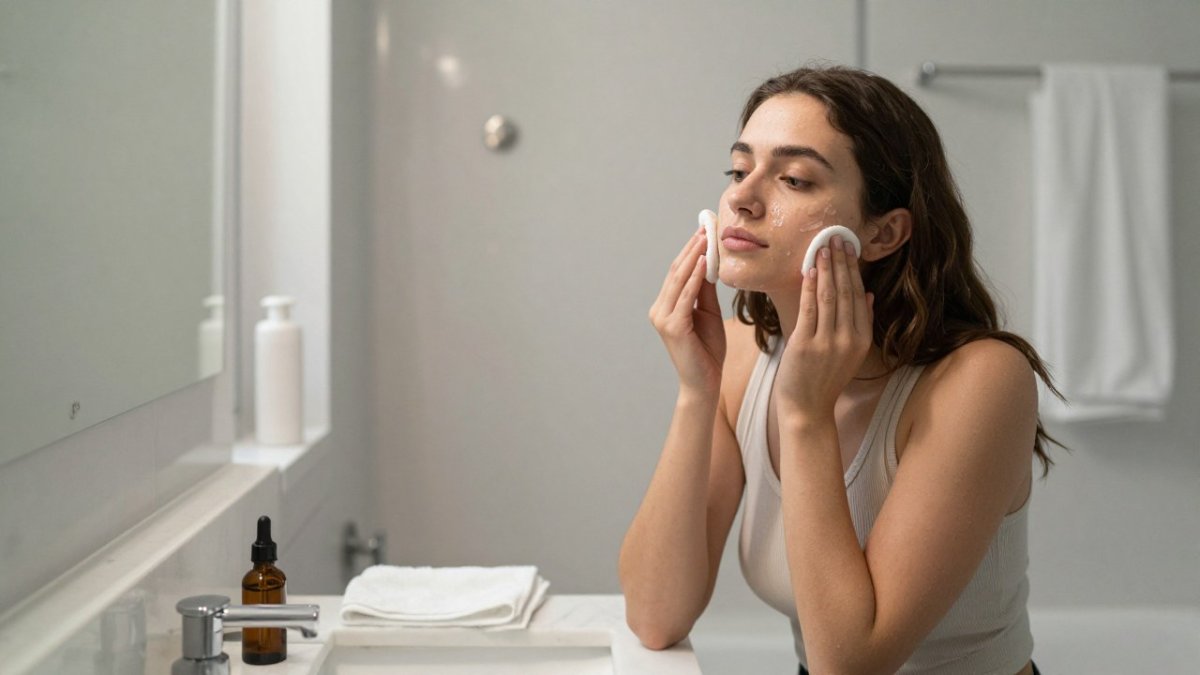
Your skin barrier is the outer layer that holds moisture in and irritants out. After acne, especially after picking or harsh over-treatment, that barrier can be weak. Treating texture on a damaged barrier often leads to stinging, redness, and slower progress.
Many people find that a few weeks of basic care helps the skin settle before adding actives:
- Use a gentle, non-foaming cleanser.
- Apply a moisturizer with ceramides or glycerin twice daily.
- Skip new actives until stinging stops.
- Wear broad-spectrum sunscreen every morning.
A common mistake is adding three new products at once. If irritation appears, you will not know which one caused it.
Step-by-Step: Building a Safe At-Home Routine for Smoother Skin
Start slowly. A safe routine adds one active at a time, and it leaves room to pause if your skin reacts. To compare options before you commit, read salicylic acid vs glycolic acid for acne.
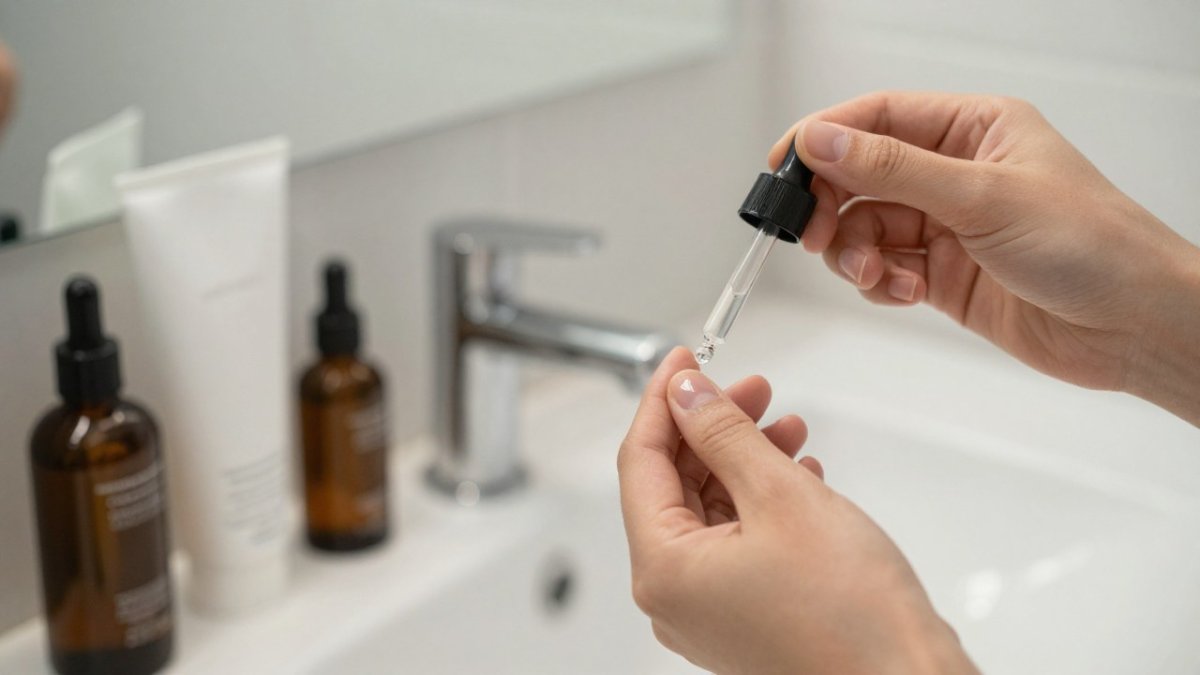
- Cleanse with a mild product in the morning and evening.
- Introduce one exfoliant two nights a week.
- Moisturize after every exfoliation.
- Add sunscreen every morning, without exception.
- Increase frequency slowly only if your skin stays calm for two to three weeks.
When the routine feels stable, you can consider a deeper chemical exfoliant. Makeup Artist’s Choice offers acid-based treatments for at-home use, and gradual use following the directions is recommended.
Chemical exfoliation with AHAs, BHAs and mandelic acid
Chemical exfoliants dissolve the bonds between dead skin cells, so smoother cells can rise to the surface. Three families are most common:
- AHAs (alpha hydroxy acids), such as glycolic and lactic acid, work on the surface and suit dryness and dullness.
- BHAs (beta hydroxy acids), such as salicylic acid, travel into pores and suit oily, congested skin.
- Mandelic acid is a gentler AHA with larger molecules, often chosen by people with sensitive skin.
Pick based on your skin type. Oily, breakout-prone skin often responds well to salicylic acid. Dry or dull skin often does better with lactic or glycolic acid. Sensitive skin may do best with mandelic acid at a low concentration.
Retinoids, sunscreen and avoiding over-exfoliation
Retinoids speed up skin-cell turnover and support collagen production.
Use retinoids at night only. For a step-by-step safe-use guide, see salicylic acid and retinol together.
Sunscreen matters more than most people expect. Sun exposure darkens post-acne marks and can make them last longer.
Over-exfoliation is the most common problem we see.
The table below summarises the at-home routine steps and the chemical exfoliant families described in this section.
| Exfoliant | Best for | Key difference |
|---|---|---|
| AHA (glycolic, lactic) | Dryness and dullness | Works on the skin surface |
| BHA (salicylic) | Oily, congested skin | Travels into pores |
| Mandelic acid | Sensitive skin | Gentler AHA with larger molecules |
| Retinoid | Long-term texture | Speeds turnover; used at night only |
How Long Skin Texture Takes to Improve After Acne
Realistic timelines help you stay consistent. Most people notice a smoother feel and brighter tone within four to eight weeks of steady, gentle care.
Many people find that visible change comes in stages. Surface roughness often softens first. Color fades more slowly, sometimes over several months.
Set a check-in date. Take a photo in the same light every four weeks so you can compare progress honestly.
Risks, Downtime and Contraindications for Professional Procedures
Some people will eventually consider in-office treatments such as deeper peels, microneedling, or laser resurfacing. These can produce stronger results than topicals, but they differ widely in recovery, number of sessions, and risk. A provider can match the option to your scar type and skin tone, but understanding the trade-offs in advance helps you ask better questions.
Chemical peels
Medium and deep peels use stronger acids to remove damaged surface layers and stimulate renewal, and they are a professional procedure rather than an at-home product. To learn what these treatments involve, see professional peel treatments for deep wrinkles. Superficial peels cause mild redness and flaking for a few days. Medium peels can cause peeling for about a week, and deep peels carry longer recovery and greater risk.
Microneedling and radiofrequency microneedling
Microneedling creates controlled micro-injuries to prompt collagen production. Radiofrequency microneedling adds heat energy at depth. Redness and mild swelling usually settle within a few days, though some people remain pink for a week or more. A series of sessions spaced several weeks apart is common, and improvement is gradual over months. Risks include temporary pigment change, bruising, and, rarely, infection.
Laser resurfacing and other energy-based treatments
Fractional lasers remove or heat columns of skin to stimulate remodeling. Non-ablative lasers have shorter downtime, often a few days of redness, while ablative lasers can involve a week or more of recovery and a period of visible peeling. Several sessions may be recommended. Risks include pigment changes, scarring in rare cases, and infection. People with deeper skin tones need a provider experienced with their skin type, because the risk of post-procedure hyperpigmentation is higher.
Contraindications and questions to ask
Common contraindications across these procedures include active skin infection, recent isotretinoin use (providers typically ask you to wait a set period), pregnancy for some treatments, uncontrolled skin conditions in the treatment area, and certain medical histories.
Before booking, ask what downtime to expect, how many sessions are typical, what aftercare is required, what the realistic outcome is for your scar type, and how the provider will manage pigment risk for your skin tone.
Booking Your Next Step: When to See a Dermatologist
A home routine can improve surface texture and fade marks, but it has limits. Even when a dermatologist is needed for deeper scars, gentle habits and natural ways to improve skin texture can support the skin’s overall appearance.
If you want to build a gentler at-home routine in the meantime, explore the professional-grade acid treatments and skincare options from Makeup Artist’s Choice.
Frequently Asked Questions
Will textured skin after acne ever go away?
Some texture improves on its own over months as skin-cell turnover slows and the skin repairs itself, particularly with post-acne redness and dark marks. Deeper atrophic or pitted scars usually do not fully disappear without treatment. Consistent barrier care, daily broad-spectrum sunscreen and a suitable exfoliant can make a visible difference, but results depend on scar depth, skin tone and how long the skin has been affected. A dermatologist can tell you what is realistic for your skin.
Can an at-home chemical peel help with post-acne texture?
A gentle at-home peel using glycolic, lactic or mandelic acid can smooth rough surface texture and help fade post-inflammatory hyperpigmentation over several sessions. Mandelic acid is often chosen for sensitive or darker skin because it penetrates more slowly. Start with a low strength, patch test first, and avoid peeling over active breakouts or broken skin. Deeper textural scars generally need professional treatment rather than an at-home product alone.
How long does it take to improve skin texture after acne?
Surface roughness and dark marks can start to look smoother within four to eight weeks of consistent care, while more noticeable changes often take three to six months. Collagen-based improvement is gradual, and deeper scars may need several months of treatment or procedures to show a change. Realistic expectations matter, so track photos every four weeks rather than judging day to day.
When should you see a dermatologist about acne scars?
See a dermatologist if scarring is deep, pitted or raised, if texture is not improving after three to six months of consistent home care, or if you have ongoing breakouts. A dermatologist can confirm scar type, rule out conditions that mimic scarring, and recommend options such as chemical peels, microneedling or laser resurfacing. Professional guidance is also important if you have sensitive skin, darker skin tone or a history of keloids.