

Last Updated: November 20, 2026
Quick Summary
You can improve skin elasticity naturally after 30 by using broad-spectrum sunscreen daily, adding retinoids and vitamin C to your routine, and keeping steady lifestyle habits like sleep, exercise, and hydration. Sun protection matters most because UV radiation is the biggest external driver of collagen and elastin breakdown. Expect months, not weeks, before you see firmer skin.
- Collagen production drops through your 30s, and the body makes little elastin after early adulthood.
- Apply broad-spectrum sunscreen every morning and reapply during long outdoor time.
- Give any skin elasticity supplement 8 to 12 weeks before judging it, and stop if you see no change.
- Losing weight gradually gives skin time to adjust, and resistance exercise supports firmness.
- Take monthly photos in the same light and angle, since daily mirror checks exaggerate small changes.
Table of Contents
- How Skin Elasticity Changes After 30
- How to Improve Skin Elasticity Naturally at Home
- Skin Elasticity Supplements: What the Evidence Supports
- How to Increase Skin Elasticity During Weight Loss
- Natural Ways to Improve Skin Elasticity After 30: A Dermatologist’s Perspective
- Lifestyle vs. Topical Approaches: A Side-by-Side Summary
- Setting a Realistic Timeline and Measuring Progress
- Building Your Daily Routine with Professional-Grade Peels
- Frequently Asked Questions
How Skin Elasticity Changes After 30
Skin elasticity is the skin’s ability to stretch and snap back into place, and it starts declining gradually after age 30. Because gradual changes in firmness are shaped by both time and daily habits, understanding how to improve skin elasticity after 30 can help you focus on the factors you can control.
Two things drive the change. The dermis, the middle layer of your skin, loses structural support. And the daily habits that speed up that loss start to compound.
Collagen, Elastin, and the Dermis: What Actually Declines
Collagen gives skin its strength. Elastin gives it bounce. Both live in the dermis, and both decline with age.
Collagen production drops steadily through your 30s and beyond. Elastin is different: the body makes little of it after early adulthood, and existing elastin fibers degrade over time.
The result is thinner, looser skin. Fine lines appear first around the eyes and mouth. Firmness fades along the jawline.
Why the Decline Is Gradual, Not Sudden
You will not wake up at 30 with different skin. The shift is slow, often invisible year to year.
That is good news. Gradual change responds to gradual habits. A daily routine started at 32 pays off at 42.
Most guides get this wrong. They frame aging as a problem to fix fast. It is closer to maintenance: small, consistent inputs beat occasional intense effort.
How to Improve Skin Elasticity Naturally at Home
The best natural approach combines daily sun protection, targeted topical ingredients, and steady lifestyle habits. No single step does the work alone.
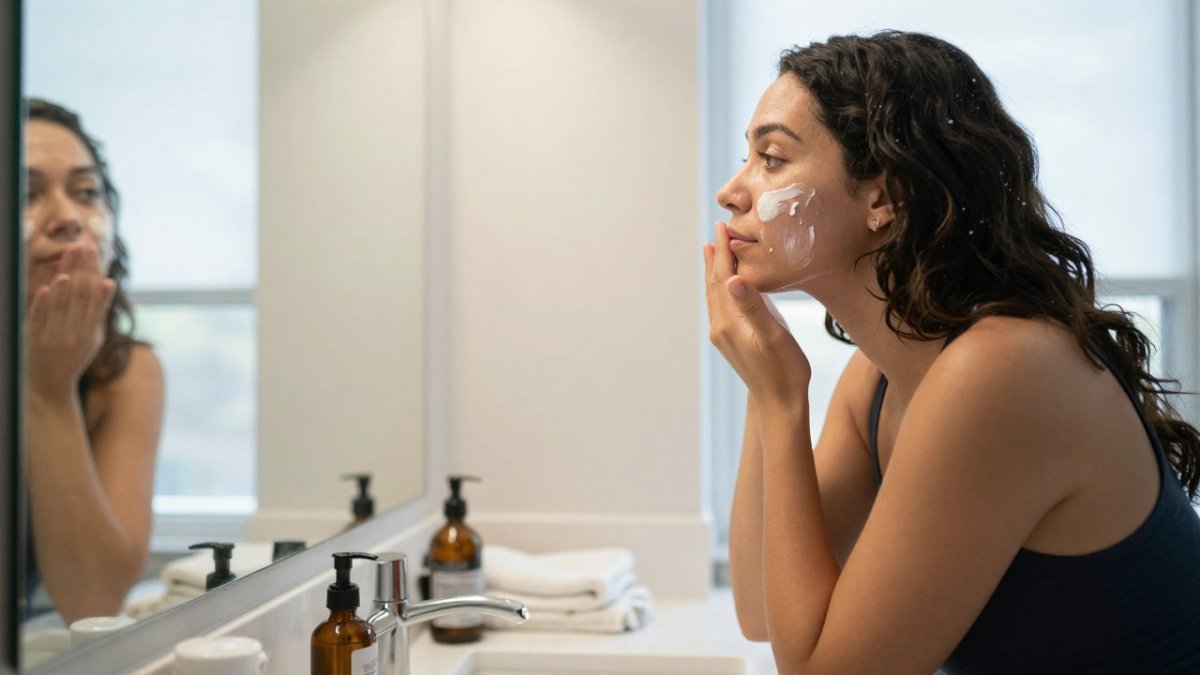
Sun Protection: The Highest-Impact Daily Habit
Ultraviolet radiation breaks down collagen and elastin. It is the single biggest external driver of premature aging.
Use a broad-spectrum sunscreen every day, not just in summer. Apply it in the morning and reapply during long outdoor time. According to the Skin Cancer Foundation’s sun protection guidance, daily broad-spectrum use slows visible skin aging.
If you want to browse options, our sun protection collection covers the factors worth knowing before you buy.
Topical Ingredients That Support Firmness
Topical skincare can support the skin barrier and improve texture. It cannot rebuild lost elastin, and honest guides should say so.
Ingredients with the most support behind them:
- Retinoids for collagen support and fine lines
- Vitamin C as an antioxidant that defends against sun damage
- Hyaluronic acid for hydration and temporary plumpness
Our Super C + E Serum for sun-damaged skin pairs vitamin C with vitamin E. You can also browse our full range of anti-aging serums if you want options.
Skin Elasticity Supplements: What the Evidence Supports
Skin elasticity supplements are oral products, most often collagen peptides, but also hyaluronic acid, vitamin C, biotin, and botanical blends, that claim to support firmness from within. The honest summary: a few ingredients have modest human evidence, most have none, and none substitute for sun protection.
Grading the Evidence, Ingredient by Ingredient
It helps to sort claims into three buckets: human clinical trials, laboratory or animal findings, and marketing assertions with no published support.
- Hydrolyzed collagen peptides (types I and III): The most studied option. Several randomized, placebo-controlled trials in adults report small improvements in skin hydration, elasticity, and wrinkle appearance after several weeks of daily use. Effects are gentle and inconsistent across studies, and many trials are small or industry-funded. This is the strongest evidence tier in the category, but “strongest” here still means modest.
- Hyaluronic acid taken orally: A handful of small trials report hydration improvements. Evidence for firmness specifically is thin.
- Vitamin C: Reasonable evidence for supporting normal collagen synthesis as a nutrient, not as a firmness booster beyond correcting a deficiency.
What Supplements Can and Cannot Do
A useful framing: supplements may support the raw materials your skin uses to build collagen, but they do not rebuild lost elastin, and they do not undo sun damage. Expect small, gradual changes in hydration and texture at best, not a visible lift.
A common pattern in the trials is that benefits fade when participants stop taking the supplement, which suggests the effect is supportive rather than structural.
Practical and Safety Notes
- Timeline: Give any supplement 8 to 12 weeks before judging it, and stop if you see no change.
- Interactions: Check with a clinician before starting any supplement, especially if you take blood thinners, have kidney disease, or are managing a chronic condition. Biotin can interfere with lab tests.
- Food first: Protein, vitamin C, and antioxidant-rich foods deliver similar raw materials with more certainty about what you are getting.
Watch out: a supplement marketed as “clinically proven” may be citing a small industry-funded study, check whether the trial was randomized, placebo-controlled, and independent before you spend money on a multi-month supply.
If you want to compare oral options with topical ones, our anti-aging serums cover the ingredient side, and the routine section below shows where supplements fit, or do not fit, in a daily plan.
How to Increase Skin Elasticity During Weight Loss
Rapid weight loss often leaves looser skin, especially on the face and neck. The fix is to slow down and support skin repair.
Losing weight gradually gives skin time to adjust. Add resistance exercise to build underlying muscle, which improves the appearance of firmness.
Moisturizer matters more than people expect here. Well-hydrated skin looks and feels tighter.
Watch out: crash diets and smoking both speed up collagen breakdown, so pair weight loss with sun protection and a steady routine rather than more restriction.
Natural Ways to Improve Skin Elasticity After 30: A Dermatologist’s Perspective
Most dermatologists would rank the levers in roughly this order: daily sun protection, then retinoids, then the rest. That ordering reflects how much each step actually moves the needle, and it is also where the honest conversation about limits begins.
What the Evidence Supports Most Strongly
Broad-spectrum sunscreen has the clearest long-term evidence for slowing visible skin aging, because ultraviolet radiation is the single biggest external driver of collagen and elastin breakdown. Retinoids have the strongest evidence among topicals for fine lines and texture, with effects that build over months.
Natural approaches like facial massage, gua sha, and botanical extracts have weaker evidence. They are generally understood to support hydration and relaxation, but they do not rebuild structural fibers.
Factors Beyond Age and Skincare
Elasticity is not only about what you put on your face. Several contributors sit outside the skincare aisle:
- Hormonal changes, including menopause: Estrogen supports collagen production, and the drop during perimenopause and menopause is associated with faster collagen loss and thinner skin (Managing Menopausal Skin Changes). This is one reason elasticity changes can feel more noticeable in the late 30s and 40s than the number alone would suggest.
- Genetics: Family patterns of skin aging are a real factor and are not modifiable, which is why comparing your skin to a stranger’s is a poor benchmark.
- Sleep and stress: Chronic poor sleep and sustained stress are associated with skin barrier disruption and slower repair. The mechanism is indirect but consistent.
Safety, Contraindications, and When to See a Clinician
Natural does not mean risk-free. A few guardrails matter:
- Retinoids in pregnancy: Topical retinoids are generally avoided during pregnancy and breastfeeding. If you are pregnant or planning to be, talk to a clinician before starting one.
- Irritation risk: Acids, retinoids, and peels can compromise the skin barrier if layered too aggressively. Introduce one new product at a time and back off if you see persistent redness, stinging, or flaking.
- Supplement interactions: Oral collagen and biotin are generally well tolerated, but biotin can skew thyroid lab results, and anyone with kidney disease or on blood thinners should check before starting.
Watch out: “natural” botanical products can still cause contact dermatitis, and essential oils are a common culprit, patch-test anything new on your inner forearm for a few days first.
The practical takeaway: use the hierarchy to decide where to spend effort, use the factors-beyond-skincare list to set realistic expectations, and use the safety list to know when to pause and ask a professional.
Lifestyle vs. Topical Approaches: A Side-by-Side Summary
Lifestyle and topical approaches do different jobs. The table below summarizes what each one realistically delivers.
| Approach | What It Helps | Realistic Timeline | Limits |
|---|---|---|---|
| Broad-spectrum sunscreen | Prevents collagen breakdown | Ongoing protection | Does not rebuild lost fibers |
| Retinoids | Collagen support, fine lines | Several months | Irritation, sun sensitivity |
| Vitamin C serum | Antioxidant defense, tone | Weeks to months | Modest firming effect |
| Collagen peptides | Hydration, texture | Months | Small, variable results |
| Exercise and protein | Underlying muscle support | Months | Indirect effect on skin |
| Hydration and moisturizer | Plumpness, barrier health | Days | Temporary effect |
If you want to turn this into a daily plan, our beginner’s guide to an anti-aging skincare routine walks through the order of steps.
Setting a Realistic Timeline and Measuring Progress
Expect months, not weeks. Skin turnover and collagen changes are slow, and most routines need consistent use before you see anything.
A realistic timeline:
- Weeks 1-4: hydration and texture improve
- Months 2-3: tone looks more even
- Months 3-6: fine lines soften, firmness improves slightly
Measure progress with photos in the same light, same angle, same time of day. Monthly photos beat daily mirror checks, which exaggerate small changes.
The thing nobody tells you about skin elasticity: progress is easiest to see in reverse.
Building Your Daily Routine with Professional-Grade Peels
A simple routine beats a complicated one. Here is the structure we recommend.
- Morning: gentle cleanser, vitamin C serum, moisturizer, broad-spectrum sunscreen
- Evening: cleanser, retinoid two to three nights per week, moisturizer
- Weekly: one alpha hydroxy acid treatment if your skin tolerates it
Professional-grade peels fit in as a periodic step, not a daily one. If you are weighing the cost against in-office treatment, our guide on whether a professional-grade peel is worth the cost breaks down pricing, recovery, and safety.
Watch out: layering a peel with retinoids on the same night is a common mistake. It irritates the skin barrier and sets progress back.
Improving skin elasticity after 30 is a long game, and the habits that matter most are unglamorous: sunscreen, sleep, steady exercise, and a routine you actually stick to.
Frequently Asked Questions
Can saggy skin become firm again naturally?
Partially, yes. Skin elasticity can improve with consistent sun protection, retinoids, and lifestyle changes, but the degree depends on how much collagen and elastin you have lost. Most people see gradual improvement in skin texture and firmness over several months, not a full reversal. Deep laxity from significant weight loss or years of sun damage usually needs professional treatments. A realistic goal is firmer, healthier-looking skin rather than the elasticity you had at 25.
Do skin elasticity supplements actually work?
The evidence is mixed. Collagen peptides have the most research behind them, with some studies showing modest improvements in skin hydration and elasticity after several weeks of daily use. Results are typically small and vary by person. Supplements are not a substitute for sun protection or topical retinoids, which have stronger evidence. Treat collagen peptides as a support to your routine, not the main event.
How can I improve skin elasticity at home without irritation?
Start with broad-spectrum sunscreen every morning and a retinoid two to three nights per week, building up slowly. Add a gentle hydrating moisturizer with hyaluronic acid and ceramides to support the skin barrier. Avoid layering multiple acids at once. If you use at-home peels like glycolic or lactic acid, avoid using them on the same night as retinoids and stop if you see persistent redness or peeling. Patch test new products on your jawline first.
When should I see a dermatologist about changes in my skin?
Book a dermatologist if you notice sudden laxity, deep wrinkles appearing quickly, a new mole or changing spot, or skin that stays red, itchy, or irritated despite a gentle routine. Also see one if over-the-counter retinoids and sun protection have not produced any change after six months. A dermatologist can assess whether prescription retinoids, in-office treatments, or other options fit your skin better than at-home care alone.