Last Updated: November 22, 2026
Quick Summary
The best anti aging ingredients for sensitive skin are retinoids, vitamin C, niacinamide, peptides, hyaluronic acid, ceramides, and daily broad-spectrum sunscreen, introduced one at a time and at low strength. These ingredients address fine lines, wrinkles, and sun damage while keeping the skin barrier intact. Gentler actives, used consistently, tend to outperform harsh ones used sporadically.
- Ceramides rank lowest in irritation risk and rebuild the lipid barrier so other actives sting less.
- Start encapsulated retinol twice a week at night and add a third night after two calm weeks.
- Use a mandelic toner two or three evenings a week, never on the same night as a retinoid.
- Patch test on your inner forearm for three to five days before applying to your jawline.
- Give each new step four weeks before adding the next active to avoid a barrier setback.
Table of Contents
- What are the best anti aging ingredients for sensitive skin?
- Best anti aging ingredients for sensitive skin dermatologist recommended
- Retinol alternatives for sensitive skin
- Mandelic acid toner for sensitive skin
- Best anti aging ingredients for sensitive skin over 60
- How to patch test and introduce actives without a reaction
- Building a sensitive-skin routine with professional-grade peels
- Frequently Asked Questions
What are the best anti aging ingredients for sensitive skin?
The best anti aging ingredients for sensitive skin are retinoids, vitamin C, niacinamide, peptides, hyaluronic acid, ceramides, and daily broad-spectrum sunscreen, introduced one at a time and at low strength.
Sensitive skin reacts to concentration and delivery, not just to the ingredient name. A buffered retinoid in a ceramide base is a different product from a bare retinoid serum, even though both say “retinol” on the label. That distinction is the whole game.
Below, we rank the best anti aging ingredients for sensitive skin by how well they work against how likely they are to sting, and we show you exactly how to introduce each one.
Best anti aging ingredients for sensitive skin dermatologist recommended
Dermatologists tend to recommend the same short list for reactive skin: retinoids, vitamin C, niacinamide, peptides, hyaluronic acid, ceramides, and sunscreen. The recommendation rarely varies.
Here is the sensitivity-first ranking, ordered from lowest to highest irritation risk when used at typical over-the-counter strengths.
| Rank | Ingredient | Irritation risk | Typical starting strength | What it does |
|---|---|---|---|---|
| 1 | Ceramides | Very low | Any leave-on moisturizer | Rebuild the lipid barrier so other actives sting less |
| 2 | Hyaluronic acid | Very low | 0.1%-1% in serum or moisturizer | Pull water into the upper skin layers and plump fine lines |
| 3 | Peptides | Very low | Formulation-dependent | Signal collagen support without acid or retinoid irritation |
| 4 | Niacinamide | Low | 2%-5% | Support the barrier, even tone, and calm redness |
| 5 | Sunscreen (SPF 30+, broad-spectrum) | Low | Daily | Prevent the UV damage that drives most visible aging |
| 6 | Vitamin C derivatives | Low to moderate | Sodium ascorbyl phosphate or magnesium ascorbyl phosphate | Antioxidant defense against photoaging |
| 7 | Encapsulated retinol | Low to moderate | 0.1%-0.3% | Support collagen and soften fine lines with slower release |
| 8 | Bakuchiol | Low to moderate | Formulation-dependent | Retinol-like benefits for very reactive skin |
| 9 | Retinal | Moderate | 0.05%-0.1% | Faster vitamin A conversion, faster results, more adjustment |
| 10 | Adapalene | Moderate | 0.1% | Acne plus aging, but drying at the start |
A few specifics behind that ranking:
- Ceramides are lipids that fill the spaces between skin cells. A ceramide moisturizer used morning and night is the single easiest way to raise your tolerance for everything else on the list.
- Hyaluronic acid holds many times its weight in water. It is not an exfoliant and does not turn over cells, so it rarely stings; it makes fine lines look shallower by hydration alone.
- Peptides are short amino acid chains. They support collagen signaling without the irritation profile of acids or retinoids, which is why they suit barrier-compromised skin.
- Niacinamide supports barrier lipids and can calm redness at 2%-5%. Higher percentages do not add anti-aging benefit for most people and raise the odds of stinging.
- Sunscreen with SPF 30 or higher and broad-spectrum protection is the most important anti-aging step because it prevents the damage the other ingredients are trying to repair.
- Vitamin C derivatives are gentler than L-ascorbic acid at high strength. Sodium ascorbyl phosphate and magnesium ascorbyl phosphate suit skin that stings easily, though they convert more slowly.
- Encapsulated retinol releases gradually, which lowers the peak irritation that bare retinol can cause. Retinal and adapalene work faster but ask more of your barrier during the first month.
The American Academy of Dermatology’s guidance on anti-aging skincare puts sunscreen at the top of the list, and we agree.
Watch out: a product can list a gentle ingredient and still sting because of fragrance, essential oils, alcohol, or a high concentration of a supporting acid.
If you are shopping the full category, our anti aging skin care collection groups these actives by concern.
Retinol alternatives for sensitive skin
Retinol alternatives for sensitive skin include retinal, adapalene, encapsulated retinol, bakuchiol, and peptides, all of which deliver vitamin A benefits with lower irritation risk. Retinoids remain the gold standard for fine lines and wrinkles, but sensitive skin often needs a gentler route to the same result.
| Alternative | Irritation risk | Best for |
|---|---|---|
| Encapsulated retinol | Low | First-time retinoid users |
| Retinal | Moderate | Experienced users wanting more |
| Adapalene | Moderate | Acne-prone sensitive skin |
| Bakuchiol | Low | Very reactive skin |
| Peptides | Very low | Barrier-compromised skin |
A common mistake is starting with the strongest retinol on the shelf and treating the resulting redness as proof it is working. It is not. Redness is irritation, and irritation sets your progress back.
Start with encapsulated retinol twice a week at night. Add a ceramide moisturizer on top. If your skin stays calm for two weeks, add a third night.
Mandelic acid toner for sensitive skin
Mandelic acid toner for sensitive skin is a gentle exfoliating step that suits reactive complexions because mandelic acid has a larger molecule than glycolic acid, so it penetrates more slowly and irritates less.
This is where sensitive skin and anti-aging goals overlap most usefully.
Our mandelic acid toners are formulated for exactly this use case. You can browse the mandelic acid anti aging range to see strengths and formats.
Use a mandelic toner two or three evenings a week, never on the same night as a retinoid. That combination is the most common cause of redness we hear about.
Best anti aging ingredients for sensitive skin over 60
The best anti aging ingredients for sensitive skin over 60 are retinoids, peptides, vitamin C, hyaluronic acid, ceramides, and sunscreen, with an emphasis on barrier repair because older skin loses moisture faster.
Thinning skin and slower cell turnover change the math. Harsh actives that worked at 40 often stop working at 65. Hydration and barrier support matter more, not less. What most guides miss is that “sensitive skin over 60” is not one skin type.
| Subtype | What to prioritize | What to limit |
|---|---|---|
| Rosacea-prone | Ceramides, niacinamide at 2%-5%, mineral sunscreen | Strong acids, high-strength retinol, fragrance |
| Eczema-prone | Ceramide moisturizer, hyaluronic acid, gentle cleanser | Exfoliating toners, essential oils, hot water |
| Fragrance-reactive | Fragrance-free formulas across every step | Anything with added fragrance or botanical oils |
| Sun-damaged, not reactive | Encapsulated retinol, vitamin C derivative, SPF 30+ | Daily acid use without recovery nights |
For mature skin, we would build the routine around a gentle cleanser, a peptide or encapsulated retinol serum, a rich ceramide moisturizer, and daily SPF 30. Our MUAC Anti-Aging Rejuvenating Oil with frankincense fits the evening step for skin that needs cushioning rather than more acid.
Routine compatibility matters more at this stage because the barrier has less reserve. A simple compatibility guide:
- Retinoid plus vitamin C: alternate rather than layer. Use vitamin C in the morning and the retinoid at night.
- Retinoid plus exfoliating acid: never on the same night. Space them by at least one recovery day.
- Niacinamide plus anything: generally compatible; it layers well with peptides and ceramides.
- Peptides plus acids: peptides can lose potency in low-pH formulas, so keep them in separate steps.
- Sunscreen plus everything: always the last morning step, and never skipped after a retinoid night.
Watch out: adding a second active before the first is fully tolerated is the most common cause of a barrier setback in mature skin. Give each new step four weeks before adding the next.
How to patch test and introduce actives without a reaction
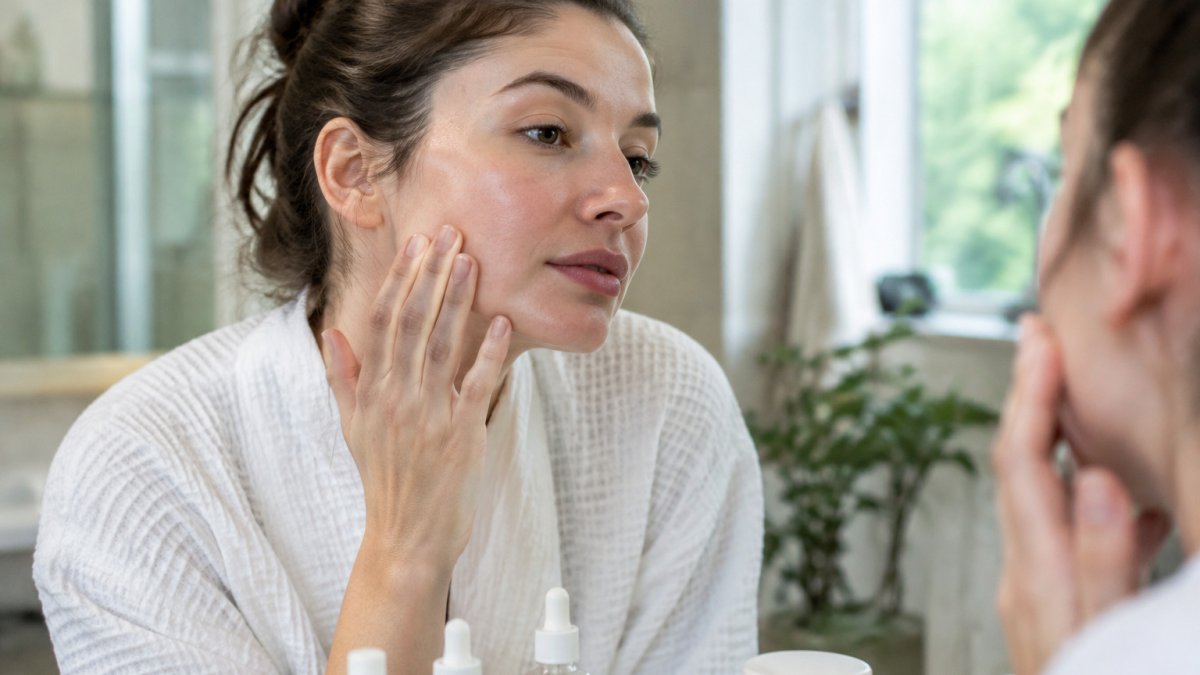
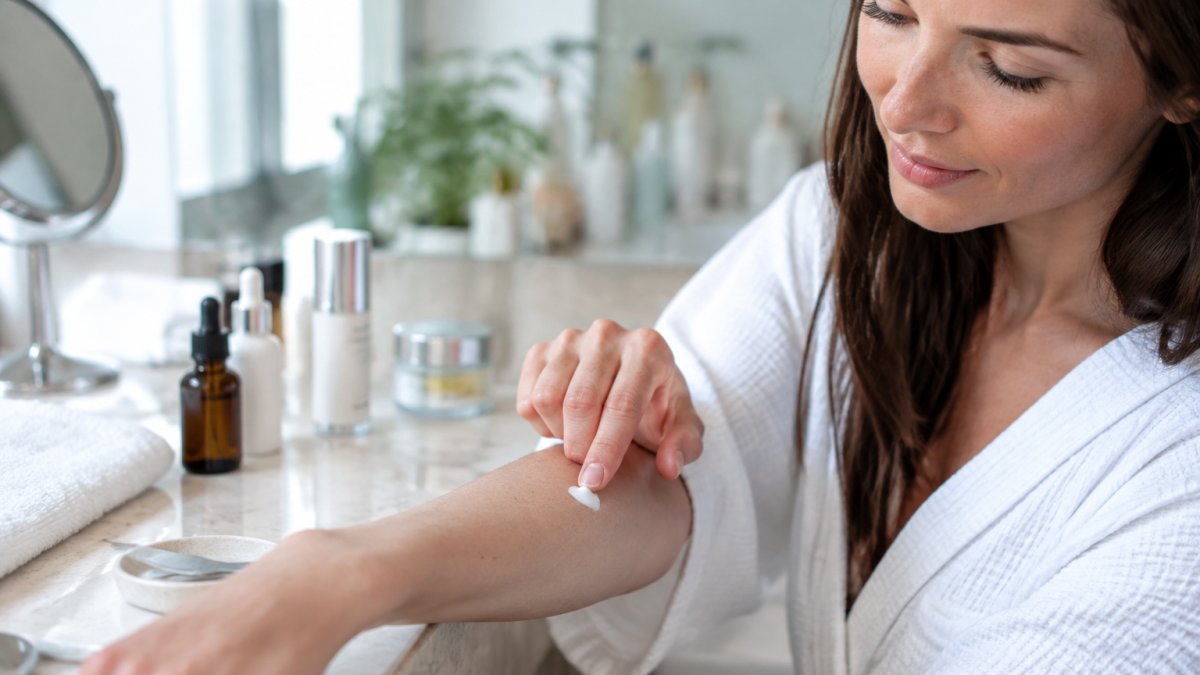
Patch testing means applying a small amount of a new active to your inner forearm or jawline for three to five days before using it on your full face. This step catches most reactions before they affect your whole face.
(/how-to-treat-hyperpigmentation-on-sensitive-skin/) walks through the sequencing.
Building a sensitive-skin routine with professional-grade peels
Professional-grade peels belong in a sensitive-skin routine, but at low strength, low frequency, and with a barrier-first schedule around them. A peel is not a substitute for daily sunscreen or a moisturizer. It is an occasional reset.
Here is the routine we would build:
- Morning: gentle cleanser, vitamin C derivative, ceramide moisturizer, SPF 30 or higher.
- Evening, most nights: gentle cleanser, peptide or encapsulated retinol serum, moisturizer.
- Peel nights, every two to three weeks: cleanse, apply the peel per instructions, neutralize, then moisturizer only. No retinoid, no acid toner, no vitamin C for 48 hours afterward.
- Recovery days: hydration and ceramides, nothing else.
If you are weighing a peel against in-office resurfacing, our breakdown of whether chemical peels or laser resurfacing are worth it covers the trade-offs.
Sensitive skin does not have to mean a stalled anti-aging routine. It means choosing tolerability first and letting results follow. Makeup Artist’s Choice has supplied professional-grade at-home peels since 1997, with glycolic, lactic, salicylic, and TCA options plus personalized routines built around your skin.
Frequently Asked Questions
Can people with sensitive skin use retinol?
Many can, but the form and strength decide whether it works. Over-the-counter retinol and encapsulated retinol release more slowly than retinal or adapalene, so they tend to cause less redness and dryness. Start with the lowest concentration twice a week, apply it over a ceramide moisturizer, and add one night per week only after two weeks without stinging. If your skin stays reactive, switch to a retinol alternative such as peptides or niacinamide and keep the rest of the routine simple.
What anti-aging ingredients are least likely to irritate sensitive skin?
Niacinamide, ceramides, hyaluronic acid, and peptides carry the lowest irritation risk and can be used daily from the start. Mandelic acid and lactic acid sit in the middle: they exfoliate with larger molecules that penetrate slowly, so they sting less than glycolic acid. Vitamin C is the wildcard, since pure L-ascorbic acid at low pH irritates many people while gentler derivatives often suit reactive skin. Patch test anything new on the inner forearm for three nights before it touches your face.
How should you introduce anti-aging ingredients to sensitive skin?
Add one active at a time and give it two to three weeks before starting the next. Apply new products to a small area near the jawline first, then build to the full face. Keep a gentle cleanser, a ceramide moisturizer, and a broad-spectrum SPF 30 or higher as your fixed base so you can tell which product caused a reaction. If redness or dryness appears, stop the new active for a week and restart at half the frequency.
Can chemical exfoliants help with wrinkles and uneven skin texture?
Yes. Acids such as glycolic, lactic, and mandelic remove dead surface cells, which smooths texture and softens the look of fine lines over time. They also support cell turnover, so results build gradually rather than overnight. For sensitive skin, start with a low-strength mandelic or lactic peel used every other week, follow the instructions exactly, and skip other exfoliants and retinoids for several days before and after. Daily broad-spectrum sunscreen is essential, because exfoliated skin burns more easily.