Table of Contents
- What to Expect After a Chemical Peel: A Beginner’s Day-by-Day Timeline
- How Long Does Peeling Last After a Chemical Peel?
- Your Chemical Peel Aftercare Routine: A Step-by-Step Guide
- Can I Wear Makeup After a Chemical Peel?
- Managing Side Effects and Knowing When to Call a Professional
- The Recovery Tips Nobody Tells You: Lifestyle, Social, and Budget Considerations
- Frequently Asked Questions
Last Updated: September 15, 2026
What to Expect After a Chemical Peel: A Beginner’s Day-by-Day Timeline
Chemical peel recovery follows a predictable arc: redness and tightness first, visible flaking second, fresh skin last. Knowing what each stage looks like removes most of the fear. This guide walks beginners through every phase of chemical peel recovery, from the first hour to the tenth day.
Here’s the part most first-timers get wrong: they judge the peel by how their skin looks on day one. The real result shows up around day seven.
The recovery timeline below reflects how a superficial to medium-depth peel typically unfolds. Your exact pace depends on peel strength, your skin’s sensitivity, and how consistently you follow aftercare.
| Stage | Days | What You’ll See | What to Do |
|---|---|---|---|
| Acute reaction | Days 1-2 | Redness, tightness, warmth | Gentle cleansing, heavy moisturizer |
| Peak flaking | Days 3-5 | Visible peeling, sensitivity | Moisturize often, do not pick |
| Settling | Days 6-10 | Flaking stops, fresh skin | SPF daily, resume gentle routine |
Days 1-2: Redness, Tightness, and the First Signs of Peeling
The first 48 hours are about inflammation, not exfoliation. Your skin will feel warm, tight, and slightly swollen, similar to a mild sunburn. This reaction is the peel working on the epidermis. Expect a stinging sensation for the first 30 to 60 minutes after the peel is applied, then a gradual shift to tightness and warmth.
Wash with lukewarm water and a gentle cleanser, then apply a plain moisturizer or petroleum jelly. Skip anything with active ingredients. Some peeling may begin at the edges of your nose and mouth by the end of day two. If you had a medium-depth peel, expect more pronounced swelling, especially around the eyes and cheeks, and possibly a few days of visible redness that reads more like a sunburn than a flush.
Sleep on your back if you can. Side-sleeping presses healing skin into the pillowcase, which can cause friction, irritation, and uneven peeling. A clean, soft pillowcase changed nightly reduces bacterial exposure during this vulnerable window.
Days 3-5: Peak Flaking and Skin Sensitivity
Flaking peaks in this window. Skin may darken slightly before it lifts, which alarms beginners but is normal. Your moisture barrier is compromised, so transepidermal water loss runs high and everything stings a little more. This is the phase where beginners are most tempted to pick, and where picking does the most damage.
Keep moisturizing. Resist every urge to pull loose skin, because picking causes post-inflammatory hyperpigmentation that outlasts the peel itself. If flaking feels uneven or patchy, that’s a sign you’re under-moisturizing, not that the peel went wrong. Apply moisturizer in a thick layer, let it absorb, then apply another layer if skin still feels tight.
Avoid hot showers, saunas, steam rooms, and intense workouts during this window. Heat and sweat increase inflammation and can trigger stinging. If you exercise, rinse with cool water immediately afterward and reapply moisturizer.
Days 6-10: Skin Settles and Fresh Skin Emerges
Flaking tapers and the skin underneath looks smoother and more even. This is the payoff: increased cellular turnover revealing fresher skin. Redness fades to a faint pink, and collagen production continues improving texture for weeks after the visible peeling stops.
Most beginners can return to a gentle routine by day seven, but full barrier recovery takes longer. Even after flaking stops, skin remains more sensitive than usual for another one to two weeks. Introduce one product at a time, spaced a few days apart, so you can identify anything that causes irritation.
How Peel Depth Changes the Timeline
Superficial peels, such as those using glycolic, lactic, or salicylic acid at lower concentrations, typically flake for three to five days and settle within a week. Medium-depth peels, such as TCA peels, can flake for seven to ten days and may leave skin pink for two to three weeks. Deeper peels require professional monitoring and a longer recovery window that your practitioner will outline.
If your peel was superficial and you’re still flaking heavily on day ten, that’s a signal to check in with a dermatologist rather than wait it out.
How Long Does Peeling Last After a Chemical Peel?
Peeling typically lasts four to seven days after a superficial peel and up to ten days after a medium-depth peel (pubmed.ncbi.nlm.nih.gov). The flaking phase usually starts on day two or three and finishes by day seven for most beginners.
Duration depends on three factors: peel depth, your skin’s natural turnover rate, and how well you moisturize. Under-moisturized skin peels in ragged, uncomfortable patches that last longer. Well-moisturized skin peels in soft, manageable flakes.
Apply moisturizer while your skin is still damp after cleansing. It traps water in the upper layers and makes flaking dramatically more comfortable, especially during peak peeling days.
Your Chemical Peel Aftercare Routine: A Step-by-Step Guide
A chemical peel aftercare routine is the set of cleansing, moisturizing, and sun protection steps that protect healing skin and determine your final result. Get these three habits right and recovery is manageable.
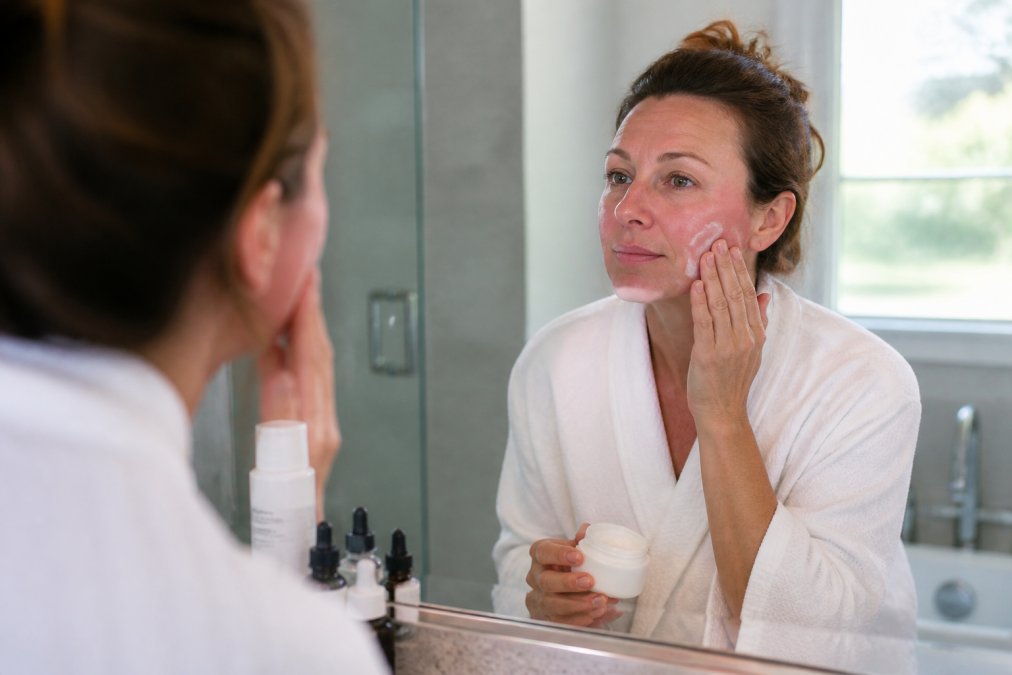
- Cleanse gently, twice daily. Use lukewarm water and a fragrance-free gentle cleanser. Pat dry, never rub.
- Moisturize immediately after. A thick, bland moisturizer or petroleum jelly supports the moisture barrier while it rebuilds.
- Apply broad-spectrum SPF every morning. Reapply every two hours if you’re outdoors.
- Skip all actives. No retinol, no exfoliating acids, no vitamin C until peeling fully stops.
- Stay hydrated and avoid heat. Hot showers, saunas, and workouts that cause heavy sweating increase skin irritation.
Cleansing and Moisturizing Without Irritation
Less is more here. Two gentle cleanses a day and frequent moisturizing is the entire routine. Adding soothing agents like aloe or ceramide creams helps calm hypersensitivity, but anything with fragrance, alcohol, or acids delays the healing process.
Sun Protection: The Non-Negotiable Step
Freshly peeled skin is dramatically more vulnerable to sun damage. According to the American Academy of Dermatology’s sun protection guidance, broad-spectrum SPF of 30 or higher should be applied daily, and reapplication matters more than the number on the bottle.
Skip this step and you risk undoing the entire peel, sometimes with worse hyperpigmentation than you started with. Sunscreen application isn’t optional during recovery. It’s the difference between a glow and a setback.
Can I Wear Makeup After a Chemical Peel?
Wait at least 24 to 48 hours before applying makeup, and longer if your skin is still actively flaking (pubmed.ncbi.nlm.nih.gov). Mineral makeup is the safer choice during recovery because it sits on top of the skin rather than sinking into compromised layers.
Heavy foundations can trap bacteria and irritate open, peeling skin. If you must wear makeup for work, apply it lightly over fully moisturized skin and remove it gently at night with a mild cleanser. During peak flaking days, most people find makeup looks worse than bare skin anyway.
Managing Side Effects and Knowing When to Call a Professional
Burning, tingling, redness, and flaking are expected. Persistent pain, blistering, spreading rash, or swelling that worsens after day three is not. Those signs warrant a call to a dermatologist.
Mild discomfort responds well to cool compresses and extra moisturizer. If you’re experiencing thermal sensitivity, meaning your skin reacts strongly to temperature changes, that’s normal for a few days. What isn’t normal is pain that intensifies rather than fades.
The Side Effects Nobody Warns You About
Most guides list burning, redness, and flaking and stop there. The side effects that actually disrupt a beginner’s week are the practical ones.
Sleep disruption. Swelling and tightness can make it uncomfortable to lie on your side, and the sensation of skin tightening overnight can wake you.
When to Call a Professional
Never apply a second peel, retinol, or exfoliating acid while your skin is still flaking. Layering actives onto a compromised skin barrier can cause chemical burns and prolonged hypersensitivity.
Reintroducing Actives Safely
A Budget-Friendly Recovery Kit
The Recovery Tips Nobody Tells You: Lifestyle, Social, and Budget Considerations
The three habits that separate a smooth recovery from a rough one: moisturize constantly, never pick, and wear sunscreen every single day.
Frequently Asked Questions
What is the worst day after a chemical peel?
For most superficial to medium-depth peels, days 3 through 5 are the most uncomfortable. This is when flaking peaks, skin feels tight, and hypersensitivity is highest. Redness may also be most visible during this window. By day 6, most people notice the skin beginning to settle. The exact timeline depends on peel strength, your skin type, and how consistently you follow post-procedure care.
How can I speed up the healing process after a chemical peel?
Keep your routine simple: use a gentle cleanser with lukewarm water, apply a bland moisturizer or petroleum jelly to support the moisture barrier, and wear broad-spectrum SPF every day. Avoid picking or pulling flaking skin, skip exfoliation and active ingredients until healing is complete, and stay hydrated. These steps reduce skin irritation and support the natural healing process without interfering with cellular turnover.
Can I wear makeup after a chemical peel?
Wait at least 24 to 48 hours before applying makeup, and longer if your skin is still actively flaking or irritated. When you do resume, choose fragrance-free, non-comedogenic formulas and apply gently with clean hands or a clean brush. Avoid heavy coverage that requires rubbing. If you notice stinging or redness after application, remove it and wait another day or two.
When is it safe to resume using active skincare ingredients after a peel?
Most dermatologist-approved guidance suggests waiting 7 to 10 days before reintroducing retinoids, AHAs, BHAs, or vitamin C. Start with one product at a time and patch-test first. If your skin tolerates it without burning or redness, gradually return to your normal routine. Rushing this step can compromise the skin barrier and undo the rejuvenation benefits of the peel.
Chemical peel recovery rewards patience more than products. The beginners who struggle are usually the ones who rush back to their full routine or skip sunscreen for “just one day.” Makeup Artist’s Choice has supplied professional-grade at-home peels since 1997, with a range of acid treatments and personalized routines built for exactly this kind of careful, informed approach. Shop Makeup Artist’s Choice to find the peel strength and aftercare products that match your skin.