Table of Contents
- What a Lactic Acid Peel Does for Your Skin
- Lactic Acid Peel Benefits for Hyperpigmentation, Acne, and Aging
- Lactic Acid Peel Recovery Time: What to Expect Day by Day
- How to Use a Lactic Acid Peel at Home Safely
- Lactic Acid vs Glycolic Acid Peel: Which One Fits Your Skin
- Side Effects, Risks, and Who Should Avoid Lactic Acid Peels
- Frequently Asked Questions
Last Updated: September 14, 2026
What a Lactic Acid Peel Does for Your Skin
A lactic acid peel is a chemical exfoliation treatment that uses an alpha hydroxy acid to dissolve the bonds holding dead skin cells together, revealing fresher skin underneath (pubmed.ncbi.nlm.nih.gov). At Makeup Artist’s Choice, we’ve formulated professional-grade peels since 1997, and lactic acid remains one of the most approachable options for anyone new to at-home treatments.
The acid works on the stratum corneum, the outermost layer of the epidermis. Rather than scrubbing away dead skin cells, it loosens them so they shed naturally. This process, called desquamation, encourages cellular turnover and supports collagen production over time (pubmed.ncbi.nlm.nih.gov).
How Lactic Acid Exfoliates Without Stripping
Lactic acid molecules are larger than glycolic acid molecules, which means they penetrate more slowly and sit closer to the skin’s surface (pubmed.ncbi.nlm.nih.gov). That slower absorption translates to less irritation for most people.
The result is gentler exfoliation that still improves skin texture and dullness. Because lactic acid also attracts water to the skin, it provides moisturization alongside exfoliation, a combination that makes it a strong fit for dehydrated or sensitive skin types.
Lactic acid’s larger molecule size means gentler, surface-level exfoliation with built-in hydration. It’s the better starting point if your skin reacts easily to stronger acids.
Lactic Acid Peel Benefits for Hyperpigmentation, Acne, and Aging
The most documented lactic acid peel benefits for skin center on three concerns: uneven pigmentation, congestion, and early signs of aging. Each one responds to the same underlying mechanism, faster cellular turnover, but the visible results differ.
For hyperpigmentation and melasma, regular peels help fade dark spots by accelerating the shedding of pigment-heavy cells. Post-inflammatory hyperpigmentation from old acne marks often softens with consistent use. For acne-prone skin, exfoliation clears congested pores and reduces the buildup that feeds breakouts. For photoaging, the increased turnover stimulates collagen production, which gradually smooths fine lines and wrinkles.
Results build over weeks, not days. A single peel brightens skin temporarily; a series of treatments produces the changes people actually want.
| Concern | How Lactic Acid Helps | Typical Timeline |
|---|---|---|
| Hyperpigmentation | Speeds shedding of pigment-heavy cells | 4-8 weeks |
| Acne and congestion | Clears pores, reduces buildup | 2-6 weeks |
| Fine lines and wrinkles | Supports collagen production | 8-12 weeks |
| Dullness and texture | Removes dead skin cells | 1-2 weeks |
Lactic Acid Peel Recovery Time: What to Expect Day by Day
Lactic acid peel recovery time is shorter than most people expect, especially at lower concentrations. Mild redness and tightness typically fade within hours, and any flaking usually resolves within three to five days. But recovery is not just about waiting for flakes to stop. It is about rebuilding the skin barrier so the next peel does not cause damage.
Here is what a typical recovery looks like, plus the barrier-repair protocol that most guides skip.
The Day-by-Day Timeline
- Day 1: Mild erythema and warmth immediately after application. Skin feels tight. Apply a gentle moisturizer and broad-spectrum sunscreen. Avoid makeup if possible.
- Day 2-3: Light flaking begins, often around the nose and mouth. Do not pick or scrub. Continue moisturizing and sun protection.
- Day 4-5: Flaking subsides. Skin looks brighter and smoother. Barrier is still rebuilding.
- Day 6-7: Full recovery for a mild peel. You can repeat a mild peel if your skin tolerates it, but spacing treatments 2-4 weeks apart is safer.
Deeper peels extend this timeline. A medium-depth treatment may involve visible peeling for a full week. Your skin barrier needs time to rebuild between sessions, so spacing treatments properly matters more than pushing for faster results.
The Barrier-Repair Protocol Most Guides Skip
The skin barrier is a lipid matrix of ceramides, cholesterol, and fatty acids. Chemical exfoliation temporarily disrupts it. If you do not actively support repair, you risk chronic sensitivity, increased breakouts, and paradoxical dryness.
Days 1-3: Simplify and protect.
- Cleanse with a non-foaming, fragrance-free cleanser. Skip morning cleansing if your skin is dry.
- Apply a ceramide-rich moisturizer while skin is still damp.
- Use a mineral sunscreen (zinc oxide or titanium dioxide) if skin is sensitive; chemical sunscreens can sting post-peel.
- No actives. No exfoliants. No retinoids. No vitamin C.
Days 4-7: Reintroduce hydration.
- Add a hyaluronic acid serum under moisturizer if skin feels tight.
- Consider a niacinamide serum (2-5%) to support barrier lipids and reduce redness.
- Continue avoiding all exfoliating acids and retinoids.
Days 7-14: Gradual return to actives.
- Reintroduce one active at a time, starting with the gentlest (niacinamide, then vitamin C, then retinoids).
- Wait 3-5 days between reintroductions to catch any adverse reactions.
- If irritation returns, back off and return to the simplified routine for another week.
Signs Your Barrier Is Compromised
- Persistent redness or stinging when applying products that normally feel fine
- Increased breakouts or tiny bumps
- Dryness that moisturizer does not fix
- Sensitivity to products you have used for years
If any of these appear, stop all actives and follow the Days 1-3 protocol until skin normalizes. This can take one to two weeks.
Product Categories That Help
| Category | Examples | When to Use |
|---|---|---|
| Ceramide creams | CeraVe Moisturizing Cream, La Roche-Posay Toleriane | Days 1-14 |
| Hyaluronic acid serums | The Ordinary Hyaluronic Acid 2% + B5 | Days 4-14 |
| Niacinamide serums | Paula’s Choice 10% Niacinamide | Days 4-14 |
| Mineral sunscreen | EltaMD UV Physical, CeraVe Hydrating Mineral Sunscreen | Daily, always |
| Gentle cleansers | Vanicream, Cetaphil | Days 1-14 |
Recovery is not passive. The days after a peel are when you build the barrier that determines how well your skin handles the next treatment. Simplify, hydrate, protect, and reintroduce actives slowly.
Skipping sunscreen after a peel is the most common mistake. Freshly exfoliated skin burns easily, and unprotected sun exposure can undo weeks of progress by triggering new hyperpigmentation.
How to Use a Lactic Acid Peel at Home Safely
Using a lactic acid peel at home is safe when you follow a structured process and respect your skin’s limits. Start with a lower concentration, patch test first, and never skip the neutralization step if your peel requires one.
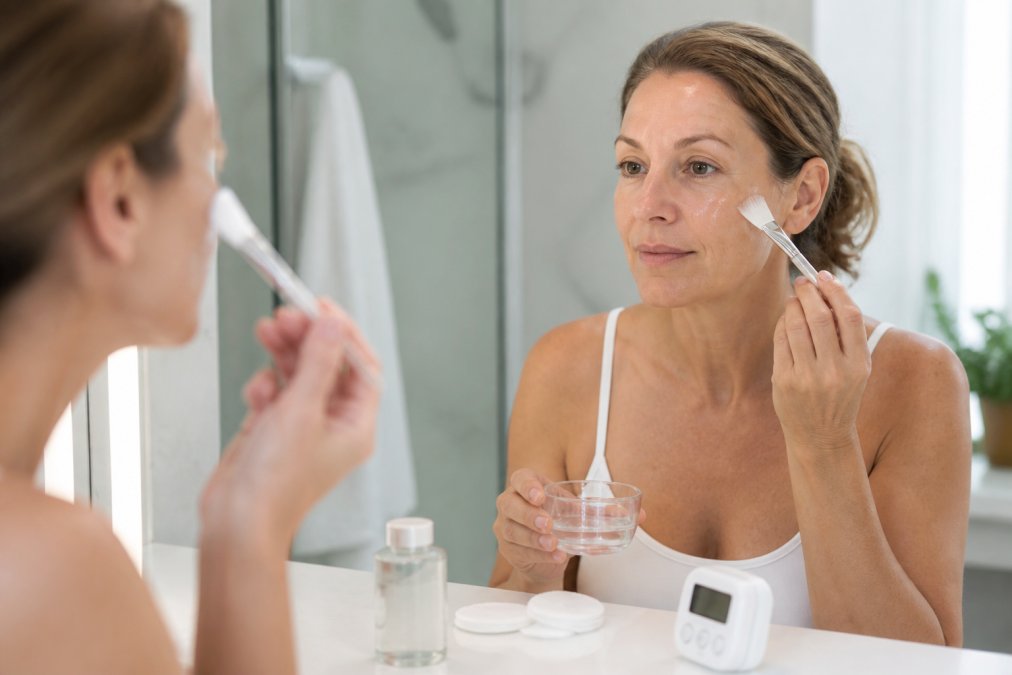
Total time: 20-30 minutes
Difficulty: Beginner to intermediate
What you’ll need:
- Lactic acid peel solution at your chosen concentration
- Cleanser and gauze pads
- Neutralizer or cool water rinse
- Broad-spectrum sunscreen
- Gentle moisturizer
Step 1: Patch test 24-48 hours before. Apply a small amount behind your ear or on your inner forearm. If you see no reaction, proceed.
Step 2: Cleanse and degrease. Remove all makeup and oil. Dry your face completely.
Step 3: Apply the peel evenly. Use a fan brush or gauze. Avoid the eyes, lips, and nostrils.
Step 4: Time the application. Beginners should start with 1-3 minutes. Set a timer and do not exceed it.
Step 5: Neutralize or rinse. Follow the product instructions exactly. Cool water rinses work for mild peels.
Step 6: Moisturize and protect. Apply a gentle moisturizer, then broad-spectrum sunscreen. Sun sensitivity lasts for days after a peel.
Skipping sunscreen after a peel is the most common mistake. Freshly exfoliated skin burns easily, and unprotected sun exposure can undo weeks of progress by triggering new hyperpigmentation.
Lactic Acid vs Glycolic Acid Peel: Which One Fits Your Skin
The lactic acid vs glycolic acid peel decision comes down to your skin type and tolerance. Lactic acid suits dry, sensitive, or reactive skin. Glycolic acid works better for oily, resilient skin that tolerates stronger exfoliation.
Glycolic acid has the smallest molecule of the alpha hydroxy acids, so it penetrates deepest and delivers more aggressive results. That power comes with a higher risk of irritation, especially for people with a compromised skin barrier. Lactic acid trades some intensity for comfort, which is why many practitioners recommend it as a first peel.
| Factor | Lactic Acid | Glycolic Acid |
|---|---|---|
| Molecule size | Larger, slower penetration | Smaller, deeper penetration |
| Best for | Dry, sensitive, reactive skin | Oily, resilient skin |
| Irritation risk | Lower | Higher |
| Hydration | Adds moisture | Can dry skin |
| Starting strength | 5-10% | 5-10% |
If you’re unsure, start with lactic acid and graduate to glycolic once your skin adapts.
Side Effects, Risks, and Who Should Avoid Lactic Acid Peels
Most lactic acid peel reactions are predictable and temporary. The problems that send people to a dermatologist almost always trace back to one of three mistakes: leaving the peel on too long, applying it to compromised skin, or layering it with other actives too soon.
Expected Side Effects
- Immediate (minutes to hours): Warmth, tingling, and mild redness. A stinging sensation that fades within a few minutes is normal; pain that intensifies is not.
- Days 1-3: Tightness, light flaking, and increased sensitivity to touch.
- Days 3-7: Flaking resolves, sometimes with temporary dryness or a rough texture before skin smooths out.
When to Stop and Call a Professional
Seek medical care if you experience blistering, oozing, severe swelling, or redness that worsens after 48 hours. These signal a chemical burn rather than a normal peel reaction. Persistent hyperpigmentation or hypopigmentation that appears after flaking resolves should also be evaluated.
Who Should Avoid Lactic Acid Peels
Skip peels entirely if you have:
- Active cold sores, open wounds, or sunburned skin
- A history of keloid scarring
- Recent isotretinoin use (most practitioners advise waiting 6-12 months)
- An active skin infection or dermatitis flare
- Known allergy to alpha hydroxy acids
Consult a dermatologist first if you are pregnant or nursing, using prescription retinoids, or have a history of cold sores (peels can trigger outbreaks).
Fitzpatrick Skin Type Considerations
This is where most at-home peel guides fall short. People with Fitzpatrick types IV, V, and VI face a higher risk of post-inflammatory hyperpigmentation (PIH) after any chemical exfoliation, including lactic acid. The melanocytes in deeper skin tones are more reactive, and inflammation from a peel, even a mild one, can trigger dark patches that take months to fade.
That does not mean deeper skin tones should avoid lactic acid peels. It means the margin for error is smaller. Lower concentrations (5-10%), shorter contact times, and longer intervals between sessions (3-4 weeks minimum) reduce risk. Patch testing on a small area and watching for any darkening over the following two weeks is essential. If PIH develops, stop peels and focus on barrier repair and gentle brightening ingredients like niacinamide and azelaic acid until the pigment fades.
Ingredient Compatibility: What to Layer and What to Avoid
Layering the wrong actives with a peel is one of the most common causes of irritation. Use this as a guide:
| Ingredient | Same Day as Peel? | Notes |
|---|---|---|
| Retinol / Retinoids | No | Wait 3-5 days after a peel before resuming |
| Vitamin C (L-ascorbic acid) | No | Can be used on non-peel days once skin settles |
| Niacinamide | Yes | Gentle, supports barrier; safe to layer |
| Hyaluronic acid | Yes | Hydrating, no conflict |
| Ceramides | Yes | Ideal for post-peel recovery |
| Glycolic / Salicylic acid | No | Wait at least 48-72 hours |
| Benzoyl peroxide | No | Too drying and irritating post-peel |
| Physical scrubs | No | Wait until flaking fully resolves |
If you are unsure whether an ingredient is safe to layer, wait. The cost of skipping a product for a few days is far lower than the cost of a compromised barrier or a PIH flare that takes months to resolve.
If your skin feels raw rather than just tight after a peel, stop all actives for a week. Barrier repair takes priority over results. Ceramide creams and simplified routines get you back on track faster than pushing through.
Frequently Asked Questions
Are lactic acid peels safe for sensitive skin?
Lactic acid is one of the gentler alpha hydroxy acids because its larger molecule size slows absorption, which reduces irritation compared to stronger acids. That said, sensitive skin still needs a patch test 24 hours before full application and a lower concentration to start. If you have active eczema, rosacea flares, or a compromised skin barrier, wait until your barrier is stable. A professional-grade lactic acid peel at 30-50% is not the same as a daily lactic acid serum, so dose and frequency matter more than the ingredient name.
How long does lactic acid peel recovery time usually last?
Most people see mild redness (erythema) for 24 to 48 hours, followed by light flaking or desquamation between days three and five. Deeper professional-strength peels can push recovery to seven days. During that window, skip retinoids, exfoliants, and vitamin C, and use a gentle moisturizer plus broad-spectrum sunscreen daily. If you have a big event, plan your peel at least a week ahead so your skin has fully finished shedding before you need to look camera-ready.
How long do lactic peel results last?
A single lactic acid peel can improve skin texture and brightness for four to six weeks as cellular turnover continues. Hyperpigmentation and fine lines need a series of peels, usually four to six sessions spaced two to four weeks apart, to see lasting change. Maintenance peels every four to eight weeks help hold results. Without daily broad-spectrum sunscreen, sun exposure will undo much of the pigment correction, so sun protection is what makes results last.
Can I use lactic acid every day on my face?
Daily use applies to low-concentration lactic acid serums and toners, not to professional-grade peels. A peel at 30% or higher should be done every two to four weeks at most, depending on how your skin barrier responds. If you are using a daily lactic acid product, start two to three times a week and build up. Stop if you notice stinging, persistent redness, or tightness, because those are signs your stratum corneum needs a break.
Lactic acid peels deliver real results for texture, tone, and early aging, but only when you respect recovery time and your skin’s limits. Makeup Artist’s Choice has offered professional-grade at-home peels since 1997, including lactic, glycolic, salicylic, and TCA options made in the USA. If you want customizable treatments without a salon visit, explore our full range of acid peels and personalized routines. Get started with Makeup Artist’s Choice and build a peel schedule that fits your skin.