There are many ingredients that can be beneficial in a good skin-care regimen. But there are a handful that, in my opinion, earn a place among the essentials.
Vitamin C is one of them—particularly as our skin matures.
As a mature woman myself, I’ve become even more appreciative of what a properly formulated vitamin C serum can do for the appearance of my skin.
Younger skin naturally tends to have a clarity and brightness that we often take for granted. As the years pass, we begin to see changes. Fine lines appear. Skin may lose some of its firmness and luminosity. And then there are those pesky, persistent sun spots, dark spots and freckles that seem to become increasingly noticeable.
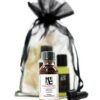
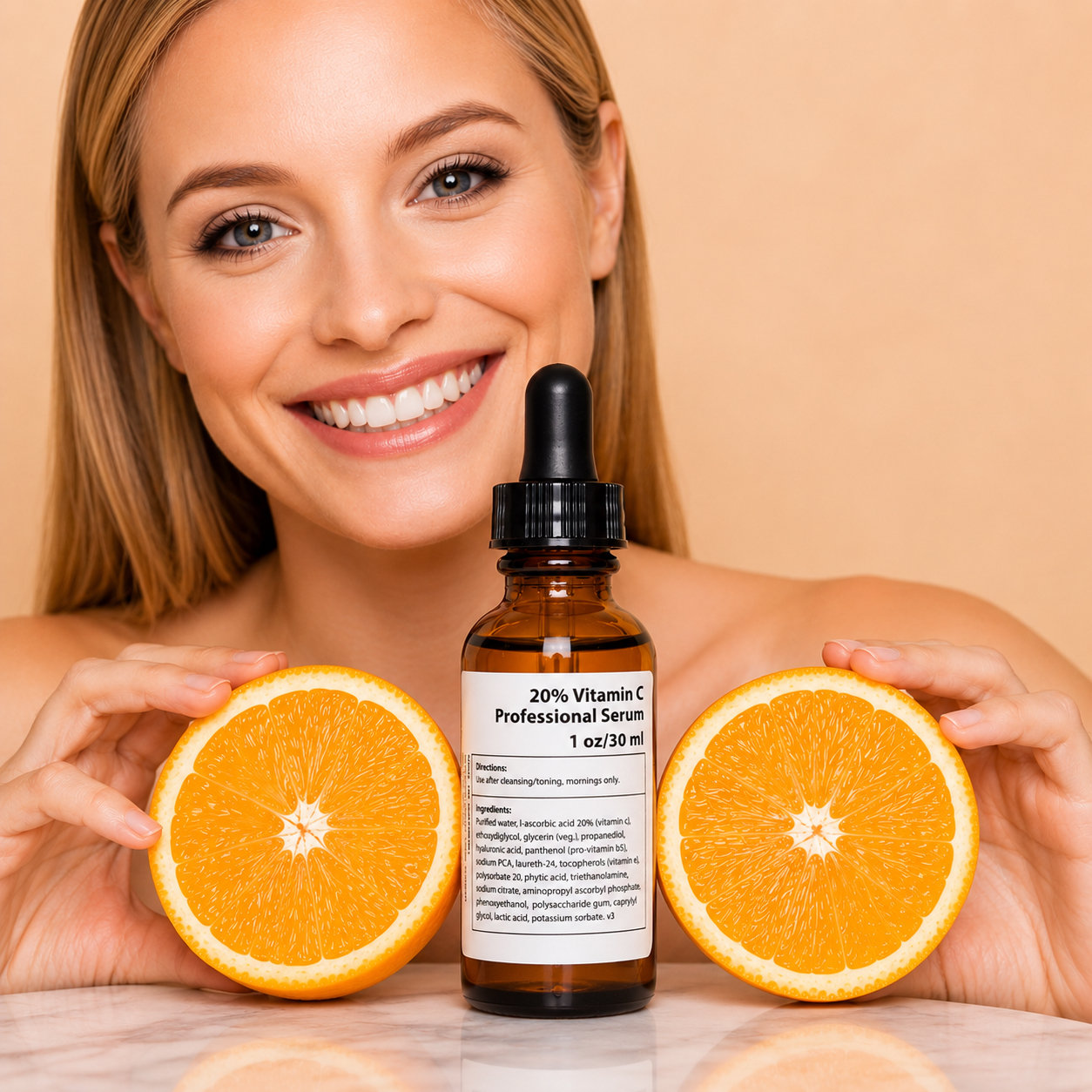
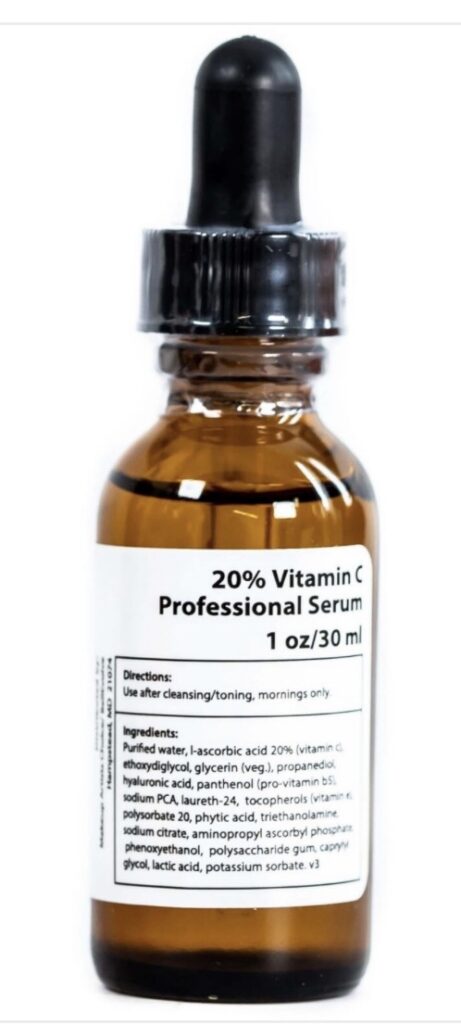
That’s part of the reason I consider our MUAC 20% Vitamin C Serum with Phytic Acid such an important product.
It isn’t simply about looking younger.
It’s about helping mature skin look clear, bright, even-toned, healthy and beautifully cared for.
Our Skin Carries the History of Our Lives
Our skin is our body’s largest organ, and in many ways, it carries the history of our lives.
It reflects years of environmental exposure, hormonal changes, stress, illness, laughter, age—and, for many of us, summers spent in the sun long before we understood cumulative UV exposure the way we do today.
We baked in the sun.
We worked on our tans.
Daily sunscreen? Many of us barely thought about it.
Decades later, our skin remembers.
Some of that history can become visible as sun spots, age spots, freckles, uneven pigmentation, dullness, fine lines and other visible signs associated with years of sun exposure and aging.
I don’t believe we need to erase the history written on our skin.
But I do believe we can take exceptionally good care of the skin we have today.
Why Vitamin C Is So Important for Mature Skin
Vitamin C is a powerful antioxidant, helping protect skin against oxidative stress caused by free radicals and environmental exposure.
But that’s only part of its story.
Vitamin C also helps improve the appearance of uneven pigmentation and promotes a brighter, more luminous-looking complexion.
And for mature skin, there is another particularly important benefit:
Vitamin C is essential to normal collagen production.
Collagen is one of the primary structural proteins responsible for the skin’s strength and support. Our natural collagen production declines as we age, contributing to changes in firmness, texture and the appearance of fine lines.
Vitamin C serves as a required cofactor for enzymes involved in collagen synthesis. In other words, vitamin C isn’t simply an ingredient that temporarily makes skin look better. It has an important biological role in the body’s normal process of producing collagen.
That’s a significant reason I consider vitamin C an essential part of a mature skin-care regimen.
Why 20% L-Ascorbic Acid?
There are many forms of vitamin C used in skin care today.
Some vitamin C derivatives are more stable and may be gentler, and those products absolutely have a place. Someone with particularly sensitive skin, for example, may be better suited to a lower concentration or a gentler vitamin C derivative.
But that’s not what we set out to create with this serum.
MUAC’s formula contains a full 20% L-ascorbic acid, the active form of vitamin C with an extensive history of research in topical skin care.
Research examining topical L-ascorbic acid has found increasing skin concentrations as the concentration of L-ascorbic acid increases, with 20% representing an important upper level for effective skin delivery. Increasing the concentration beyond 20% has not been shown to provide additional absorption benefit.
That’s an important distinction.
Twenty percent isn’t about making the strongest serum we possibly can. It’s about using an ideal concentration supported by research.
This is why we consider our 20% L-ascorbic acid serum a professional-strength formulation designed for knowledgeable at-home use.
Stronger isn’t automatically better.
Effective formulation is better.
Vitamin C for Sun Spots, Dark Spots and Uneven Skin Tone
For me personally, this is one of the things I particularly love about vitamin C.
As we mature, those little areas of pigmentation can become increasingly noticeable. Sun spots can be pesky and persistent.
Years of accumulated sun exposure can leave the complexion looking less even and less luminous than it once did.
Vitamin C can help improve the appearance of existing sun spots, dark spots and uneven pigmentation, contributing to a complexion that looks clearer, brighter and more even in tone.
We’re not talking about bleaching the skin or changing its natural color.
We’re talking about restoring the appearance of clarity and luminosity.
Those are qualities we naturally associate with younger-looking skin—not because younger skin is wrinkle-free, but because it often looks clear, fresh, bright and even.
That’s the kind of “youthful” appearance I’m interested in maintaining.
Why We Combine 20% Vitamin C With Phytic Acid
The name of this product matters:
MUAC 20% Vitamin C Serum with Phytic Acid.
We didn’t add phytic acid simply to make the ingredient list longer.
Phytic acid is itself an antioxidant and can also influence tyrosinase activity, an enzyme involved in melanin production. This makes it an especially interesting companion ingredient when uneven pigmentation and sun spots are among our concerns.
Think about what we’re trying to accomplish with mature, sun-exposed skin.
We want to improve the appearance of the pigmentation we can already see while supporting a skin-care regimen that addresses the processes involved in the formation of excess pigmentation.
Vitamin C + phytic acid is a very purposeful combination.
For those of us who spent a few too many years baking in the sun before we knew better, that’s one of the reasons I particularly value this formula.
No serum can erase a lifetime of UV exposure, and vitamin C cannot replace sunscreen. But it can be an excellent part of a regimen designed to improve the visible signs of accumulated sun exposure, including sun spots and uneven-looking pigmentation.
More Than Vitamin C and Phytic Acid
Although 20% L-ascorbic acid is the star of this formulation, we didn’t stop there.
The formula also contains ingredients selected to complement a comprehensive skin-care regimen, including:
Vitamin E (tocopherols) provides additional antioxidant support.
Hyaluronic acid helps attract and retain moisture, something I consider particularly important as skin matures and often becomes drier.
Panthenol (Pro-Vitamin B5) helps support hydration and skin conditioning.
Sodium PCA is a humectant associated with the skin’s natural moisturizing factor and helps attract moisture.
Glycerin and propanediol provide additional humectant support.
For mature skin, I particularly appreciate having a potent active formula accompanied by ingredients that support hydration and the overall feel and appearance of the skin.
What Our Clients Have Told Us Over the Years
After offering this serum for many years, we tend to hear certain comments repeatedly.
Clients tell us their skin looks brighter and more luminous. They talk about smoother, softer-feeling skin and a more even-looking complexion. Some specifically mention their sun spots and dark marks.
One recent client summed up her experience beautifully:
“It keeps my sunspots away, and leaves my face glowing!”
Another longtime user told us that although she occasionally tries other vitamin C serums, she keeps coming back to ours. She also mentioned something that’s quite normal with a professional-strength acidic vitamin C serum: a slight sting when she applies it, but no irritation in her experience.
These are individual customer experiences, of course, and everyone’s skin is different. But when we hear similar comments repeatedly over many years, we pay attention.
Can 20% Vitamin C Tingle? Yes. Patch Test First.
Our Vitamin C Serum contains 20% L-ascorbic acid in an acidic formulation, so you may experience some tingling when you apply it.
For many people, mild temporary tingling is simply part of using an acidic vitamin C formula.
But there is an important difference between mild tingling and significant irritation.
Skin care doesn’t have to hurt to work.
As with the acidic products throughout the MUAC line, we strongly recommend patch testing before applying this serum to your entire face.
If you experience persistent burning, significant redness, swelling or other concerning irritation, rinse the product from your skin and discontinue use.
And if your skin doesn’t comfortably tolerate 20% L-ascorbic acid, don’t force it.
A lower-strength formula or a gentler vitamin C derivative may simply be a better choice for your skin.
Professional-strength skin care isn’t about using the strongest product you can tolerate.
It’s about choosing effective products and using them intelligently.
Vitamin C Is an A.M. Product
I consider vitamin C primarily an A.M. skin-care product.
After cleansing in the morning, apply several drops of your MUAC 20% Vitamin C Serum and give it time to absorb appropriately before layering other products over it.
Once absorbed, continue with the rest of your morning regimen and finish with a broad-spectrum sunscreen.
This is especially important if you’re working on the appearance of sun spots and accumulated sun damage.
Vitamin C provides valuable antioxidant support, but vitamin C is not sunscreen.
There’s little sense in working diligently to improve the appearance of existing sun spots while continuing to expose unprotected skin to the UV radiation that contributes to additional pigmentation.
My basic approach is simple:
Cleanse → Vitamin C → allow it to absorb → additional skin care → sunscreen.
Consistency matters.
Freshness Matters With 20% L-Ascorbic Acid
Now I want to be very straightforward about something that isn’t always emphasized when vitamin C serums are sold.
This is not a product to buy, put on a shelf and expect to use a year or two later.
L-ascorbic acid is highly active and naturally susceptible to oxidation. Air, heat and light can affect it over time.
So when your MUAC Vitamin C Serum arrives:
Use it.
Don’t save it for some future skin-care routine.
Keep the bottle tightly closed and expose the serum to air for as little time as reasonably possible. Store it in a cool, dry place away from direct sunlight and heat.
And although keeping all your skin care in the bathroom may be convenient, don’t store this serum where it will repeatedly be exposed to the warmth and humidity produced by a shower or bath.
Freshness matters with active skin care.
I’d rather be completely candid with our clients about that than pretend an active 20% L-ascorbic acid serum is something you should leave sitting around indefinitely.
Why Does Our Vitamin C Come in a Glass Dropper Bottle?
Clients may wonder why a professional-strength product like this isn’t packaged in an airless pump.
There’s a reason.
Our 20% L-ascorbic acid formula is highly active and acidic, and packaging compatibility matters. Airless dispensers rely on internal components and mechanisms that must remain compatible with the formula throughout the product’s useful life.
For this particular MUAC formulation, the highly active serum is not appropriately compatible with the necessary internal components of the airless dispensing systems we’ve evaluated.
So we use a glass bottle and dropper.
Sometimes the simpler packaging system is the appropriate one for the formulation inside.
The tradeoff is that we ask you to handle it properly.
Dispense what you need, replace the dropper promptly and close the bottle securely. Don’t leave it sitting open while you finish the rest of your skin-care routine.
Open it. Use it. Close it. Store it properly.
That’s the best way to treat a highly active vitamin C formula.
Professional-Strength Skin Care Doesn’t Mean Everyone Needs Professional Strength
This is something I feel strongly about.
I believe our 20% L-ascorbic acid serum is an exceptional product.
I also don’t believe it’s the right product for every person.
Someone just beginning vitamin C, someone with highly reactive skin or someone who simply doesn’t tolerate acidic L-ascorbic acid comfortably may be happier with a gentler formula or vitamin C derivative.
That’s good skin care.
We don’t believe in selling people the strongest product simply because it’s the strongest.
We are a problem/solution skin-care company.
The first question should always be: What problem are we trying to address?
For mature skin with concerns such as sun spots, uneven-looking pigmentation, dullness, loss of brightness and the visible effects of accumulated environmental exposure, professional-strength vitamin C may be an excellent part of the solution.
Why Vitamin C Has Earned a Permanent Place in My Skin-Care Routine
I’ve spent nearly three decades in the skin-care business, and I’ve watched countless ingredients become the ingredient everyone suddenly has to have.
Trends come and go.
Vitamin C has endured.
There’s a reason.
It provides antioxidant support. It plays an essential role in normal collagen synthesis. It can help improve the appearance of sun spots and uneven pigmentation. It can help mature skin look brighter, clearer and more luminous.
And when 20% L-ascorbic acid is thoughtfully combined with ingredients such as phytic acid, vitamin E and hyaluronic acid, we have something much more interesting than another trendy serum.
We have a serious skin-care product.
As a mature woman, I’m not interested in pretending my skin is 25 years old.
My skin has lived through the same years I have.
It carries some of my history.
What I want is for it to look healthy. Clear. Bright. Even. Fresh. Hydrated. Beautifully cared for.
That’s what good mature skin care means to me.
After a lifetime of taking care of everyone and everything else, I think there’s something rather lovely about taking a few minutes each day to take exceptional care of the skin that has accompanied us through all of it.
Our skin tells our story. Good skin care simply helps us care for the next chapter.