Table of Contents
- What Is a Salicylic Acid Peel?
- Salicylic Acid Peel Recovery Time: What to Expect
- How Long to Leave Salicylic Acid Peel On
- Chemical Peel Peeling Stages and Timeline
- Salicylic Acid Peel Aftercare Routine
- Factors That Influence Your Recovery Time
- Common Side Effects and When to Contact a Professional
- Lifestyle Modifications During Recovery
- Frequently Asked Questions
Last Updated: September 20, 2026
What Is a Salicylic Acid Peel?
A salicylic acid peel is a chemical exfoliation treatment that uses beta hydroxy acid to penetrate the skin’s surface and dissolve the bonds between dead skin cells. Unlike physical scrubs that work on the epidermis alone, salicylic acid reaches deeper into the stratum corneum and pores, making it particularly effective for acne-prone and oily skin types. This is why dermatologists and aestheticians frequently recommend it for addressing congestion, uneven texture, and post-inflammatory hyperpigmentation.
The treatment works by triggering cell turnover through chemical exfoliation, which accelerates the natural desquamation process. When applied at home with professional-grade formulations, the peel dissolves sebum and dead skin buildup that cleansers alone cannot remove. The intensity varies based on concentration levels and application time, which determines how aggressive the peel will be and what your recovery timeline will look like.
Most people choose salicylic acid peels for one of three reasons: clearing stubborn acne, smoothing sun-damaged skin, or improving texture and tone, but understanding salicylic acid peel recovery is critical before you start. The appeal is straightforward, you get professional-grade results without the salon price tag or scheduling hassle. But understanding what happens to your skin during recovery is critical before you start.
Salicylic Acid Peel Recovery Time: What to Expect
The recovery timeline for a salicylic acid peel typically spans 7-10 days, though this varies based on peel strength, skin sensitivity, and how well you follow aftercare. Most people experience the most visible changes between days 3-5, when flaking peaks. By day 7, the majority of peeling has subsided, though some light desquamation may continue.
Hours 0-6: Immediate Post-Peel Phase
Right after neutralization, your skin will feel tight and look flushed. This erythema (redness) is normal and indicates the peel is working. Your skin barrier has been temporarily compromised, so it’s extremely sensitive during this window.
During the first few hours, avoid water, sweat, and touching your face. The neutralization step stops the chemical reaction, but your skin is still in an active state. Many people experience mild discomfort or a slight burning sensation, which typically subsides within 2-4 hours. If you applied the peel in the evening, this phase often resolves while you sleep.
Apply a gentle, fragrance-free moisturizer to support your skin barrier. Hydration is critical immediately after the peel because the acid has disrupted the protective layer. Some practitioners recommend a soothing serum with calming ingredients, though keep it simple, your skin doesn’t need complexity right now, just protection.
Days 1-2: Initial Redness and Mild Discomfort
You’ll wake up on day 1 with visible redness that may be more pronounced than the immediate post-peel phase. This is because inflammation continues as your skin begins its healing response. The redness typically peaks on day 1 or 2, then gradually fades.
Mild discomfort, tightness, and itchiness are common during this phase. Your skin may feel dry despite moisturizing, because the barrier is still recovering. Avoid hot water, harsh cleansers, and any active ingredients, this includes vitamin C, retinol, and other exfoliants. Stick to a gentle cleanser and hydrating moisturizer.
Sun sensitivity increases dramatically after a peel. Even if you don’t see visible peeling yet, UV exposure can trigger post-inflammatory hyperpigmentation, especially in darker skin tones. Apply broad-spectrum sunscreen with at least SPF 30, even if you’re staying indoors. Reapply every two hours if you go outside.
Days 3-5: Peak Flaking and Desquamation
This is when the visible peeling begins. Your skin will start shedding dead cells in visible flakes and sheets. This looks dramatic, but it’s exactly what should happen, the peel is doing its job. The flaking is most intense on days 3-4, then begins to taper by day 5.
Resist the urge to pick or pull at flaking skin. This can cause irritation, extend healing time, and increase the risk of post-inflammatory hyperpigmentation or scarring. Instead, gently apply moisturizer to soften the flakes and let them shed naturally. Some people find that applying a hydrating mask during this phase helps soften the skin and makes flaking less visible.
Continue broad-spectrum sunscreen religiously. Newly exposed skin is extremely vulnerable to sun damage and pigmentation issues. If you’re going outside, consider wearing a hat or staying in shade when possible.
Days 6-7: Final Peeling and Skin Smoothing
By day 6, most visible flaking has resolved, though some light desquamation may continue. Your skin will look noticeably smoother and brighter. The erythema has faded significantly, and you may notice improved texture and a more even tone.
This is not the time to resume aggressive skincare. Your skin barrier is still recovering, even though it looks better. Continue with gentle cleansing, hydration, and sun protection. You can gradually reintroduce other products, but wait at least 7-10 days before using any active ingredients like acids, retinoids, or vitamin C.
How Long to Leave Salicylic Acid Peel On
The application time for a salicylic acid peel depends on the concentration level and your skin’s tolerance. Professional-grade peels typically recommend 3-10 minutes, with lower concentrations requiring longer application and higher concentrations requiring shorter application. Always follow the specific instructions for the product you’re using.
Start with the minimum recommended time if this is your first peel or if you have sensitive skin. You can work up to longer application times on subsequent peels as your skin builds tolerance. The strength of the peel is determined by concentration and time, both matter equally.
Watch your skin carefully during application. You should feel mild warmth and tingling, but not severe burning or pain. If you experience intense discomfort, neutralize the peel early. There’s no benefit to pushing through pain, and doing so increases the risk of irritation and prolonged recovery. Prioritizing skin barrier integrity remains essential for any professional treatment, much like the protocols outlined in these microneedling recovery tips.
Chemical Peel Peeling Stages and Timeline
Chemical peels progress through predictable stages once applied. Understanding these stages helps you know what to expect and when to adjust your skincare routine.
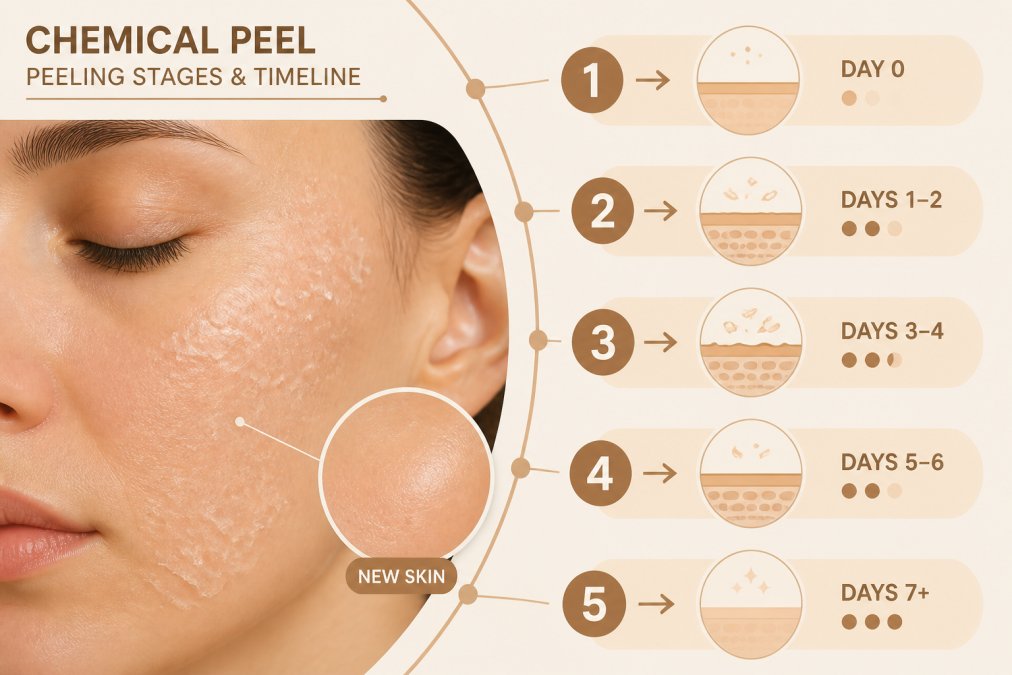
The first stage is penetration, which happens during application. The acid dissolves the bonds between dead skin cells and begins breaking down sebum in pores. This is why you feel tingling and warmth, the chemical reaction is active.
The second stage is inflammation and redness, which begins immediately after neutralization and peaks within 24 hours. Your immune system is responding to the controlled injury, which triggers healing. This stage typically lasts 2-3 days.
The third stage is desquamation, or visible peeling, which usually begins on day 2-3 and peaks on days 3-5. This is when you see the flaking and shedding. The duration and intensity depend on peel strength and your skin type.
The final stage is remodeling, which continues for weeks after visible peeling stops. Your skin is rebuilding collagen and repairing the barrier, even though you can’t see it happening. This is why sun protection and hydration remain critical throughout the first month.
Salicylic Acid Peel Aftercare Routine
Your aftercare routine determines whether you get smooth, glowing results or prolonged irritation and potential complications. The routine is simple but non-negotiable.
Cleansing: Use a gentle, fragrance-free cleanser morning and night. Avoid hot water, which strips the skin further. Lukewarm water is better. Pat dry gently, don’t rub.
Hydration: Apply a hydrating moisturizer immediately after cleansing while your skin is slightly damp. This helps lock in moisture. Look for ingredients like glycerin or hyaluronic acid, which support the skin barrier.
Sun protection: Apply broad-spectrum sunscreen with at least SPF 30 every morning and reapply every two hours if you’re outside. This is non-negotiable. Sun exposure after a peel can cause permanent pigmentation issues.
Avoid irritants: Skip all active ingredients for at least 7-10 days. This includes acids, retinoids, vitamin C, and niacinamide. Your skin is healing and doesn’t need additional stress.
Hydrating masks: If flaking is intense, use a gentle hydrating mask 2-3 times during the recovery week. This softens the skin and makes flaking less noticeable.
No picking: Do not pick, pull, or manually remove flaking skin. Let it shed naturally. Picking can cause scarring and extend recovery time.
Factors That Influence Your Recovery Time
Recovery speed varies based on several factors. Understanding these helps you set realistic expectations for your specific situation.
Peel concentration and time: Stronger peels require longer recovery. A 20% salicylic acid peel applied for 5 minutes will have a shorter recovery than a 30% peel applied for 10 minutes. Always start with lower concentrations if you’re new to peels.
Skin sensitivity: Sensitive skin types experience more pronounced redness and may have longer recovery times.
Common Side Effects and When to Contact a Professional
Most side effects from a salicylic acid peel are temporary and expected. However, some warrant professional attention.
Lifestyle Modifications During Recovery
Your daily habits significantly impact recovery speed and results. Small adjustments during the recovery week make a real difference.
Frequently Asked Questions
What’s the worst day after a salicylic acid peel?
Days 3-5 typically bring the most visible peeling and flaking as the stratum corneum sheds and cell turnover accelerates. Skin may feel tight, itchy, and uncomfortable during this phase. This is actually a sign the peel is working, the desquamation process removes damaged outer layers. Using a gentle cleanser and hydrating moisturizer helps manage discomfort during peak peeling.
How soon can I wear makeup after a salicylic acid peel?
Wait until day 3-4 when initial redness and erythema have subsided. Even then, use only mineral makeup or products labeled for sensitive skin to avoid irritating the healing epidermis. Avoid heavy foundations that trap heat and moisture. If your skin is still actively flaking, skip makeup entirely to let the skin barrier recover fully.
How long do salicylic acid peel results last?
Results typically last 4-6 weeks with proper sun protection and maintenance. Since salicylic acid is a beta hydroxy acid that targets oily, acne-prone skin, you’ll see continued improvement in skin texture and breakouts during this window. Scheduling peels every 4-6 weeks creates a maintenance schedule that keeps results consistent without over-treating your skin.
What are the signs of a normal recovery versus a reaction?
Normal recovery includes mild redness, itchiness, tightness, and flaking lasting 3-7 days. Abnormal reactions include severe blistering, persistent burning beyond 24 hours, spreading rash, or signs of infection. If you experience these symptoms, stop all skincare products except a gentle cleanser and broad-spectrum sunscreen, and contact a dermatologist or aesthetician immediately.