Table of Contents
- Why Skincare Anti-Aging Products Matter After 30
- Key Ingredients That Drive Real Results
- Professional-Grade Chemical Peels for Accelerated Results
- Mandelic Acid Toner: Gentle Yet Effective Exfoliation
- Best Skincare Routine for Hyperpigmentation and Uneven Tone
- Building Your Daily Anti-Aging Routine
- Addressing Sensitivity and Skin Barrier Protection
- Frequently Asked Questions
Last Updated: September 24, 2026
Why Skincare Anti-Aging Products Matter After 30
Your skin changes after 30. Collagen production slows. Fine lines deepen. Sun damage accumulates from years of exposure. These aren’t inevitable, they’re addressable with the right approach.
At Makeup Artist’s Choice, we understand that skincare anti-aging products work best when they target the actual mechanisms of aging, not just surface symptoms. The goal isn’t to chase youth. It’s to maintain skin elasticity, support cellular turnover, and protect against further photoaging while addressing existing damage.
Most people wait until wrinkles are deep before taking action. By then, prevention would have been far easier than correction. The research is clear: starting anti-aging skincare in your 30s delivers better long-term results than waiting until your 50s. Professional-grade chemical peels and targeted serums accelerate what your skin can naturally repair, making visible improvements possible.
The best time to start anti-aging skincare is now, not when damage becomes obvious. Prevention is always easier than correction, and early intervention compounds over time.
Key Ingredients That Drive Real Results
Not all skincare anti-aging products are created equal. Some ingredients have decades of clinical use behind them. Others are marketing hype with minimal evidence. Understanding what actually works separates effective routines from expensive placebo.
The most proven anti-aging ingredients fall into a few categories: those that increase cellular turnover, those that support collagen production, and those that protect existing skin structure. When you combine these strategically, results accelerate.
Retinoids and Retinal for Cellular Turnover
Retinoids are the gold standard for addressing fine lines, wrinkles, and uneven skin tone. They work by increasing cellular turnover, which means your body sheds damaged skin cells faster and replaces them with fresh ones. This process also stimulates collagen production over time.
Tretinoin is the prescription-strength option, it’s powerful but requires a dermatologist and careful introduction to avoid irritation. Retinal (also called retinaldehyde) sits between over-the-counter retinol and tretinoin in strength. It converts to retinoic acid more efficiently than retinol, meaning faster results with less irritation for many users.
Start with lower concentrations if your skin is sensitive. Many people make the mistake of applying retinoids every night immediately. Your skin barrier needs time to adapt. Begin with 2-3 times per week, gradually increasing frequency as tolerance builds. The redness and peeling that happens initially is normal, it’s your skin accelerating its natural repair cycle.
Retinoids increase sun sensitivity significantly. Daily SPF protection becomes non-negotiable when using these ingredients. Skipping sunscreen while using retinoids essentially undoes the anti-aging benefits and accelerates photoaging.
Hyaluronic Acid and Hydration
Hyaluronic acid is a humectant, meaning it draws moisture from the air into your skin. A single molecule can hold up to 1,000 times its weight in water. This ingredient doesn’t add collagen or stimulate cellular turnover, but it does plump skin, temporarily reduce the appearance of fine lines, and support your skin barrier.
The common mistake is applying hyaluronic acid to completely dry skin. It needs moisture to work. Apply it to damp skin immediately after cleansing, then seal it with a moisturizer. Without that seal, it actually pulls moisture from deeper skin layers, leaving you drier than before.
Hydration levels directly impact skin elasticity. Well-hydrated skin looks plumper, feels smoother, and shows fewer fine lines. It’s not a permanent fix for wrinkles, but it’s a foundational step that makes every other ingredient work better.
Peptides and Collagen Production
Peptides are short chains of amino acids that signal your skin to produce more collagen. Unlike collagen itself (which is too large to penetrate skin), peptides can cross the skin barrier and trigger repair mechanisms.
Pro-xylane and bifida ferment lysate are two peptide-based ingredients with research supporting their collagen-boosting effects. They work slowly, results typically appear over 4-8 weeks of consistent use, but they address one of the core causes of aging skin rather than just masking it.
Peptides work best when combined with retinoids and sun protection. The trio creates a comprehensive approach: retinoids accelerate cellular turnover, peptides stimulate collagen production, and sunscreen prevents new damage from forming.
Professional-Grade Chemical Peels for Accelerated Results
Chemical peels are among the most effective anti-aging treatments available, and professional-grade chemical peels deliver results comparable to in-office treatments when applied correctly at home. They work by removing damaged outer layers of skin, triggering your body’s natural healing response and accelerating cellular turnover far beyond what topical products alone can achieve.
The strength of a peel determines how deep it penetrates and how dramatic the results. Glycolic acid peels are gentler, working on the superficial layers. Salicylic acid peels target oil-prone skin and can reach into pores. Stronger peels like TCA penetrate deeper, addressing more significant wrinkles and pigmentation but requiring more recovery time.
Fine lines appear softer. Skin tone evens out. Texture improves. The key is consistency and proper aftercare, your skin barrier will be compromised post-peel, so hydration and sun protection become critical.
Makeup Artist’s Choice offers a range of professional-grade chemical peels formulated for at-home use, with detailed guidance for application strength and frequency based on your skin type and concerns. Starting with lower concentrations and building tolerance prevents the barrier damage and irritation that turn people away from chemical peels.
Mandelic Acid Toner: Gentle Yet Effective Exfoliation
Mandelic acid is an alpha-hydroxy acid (AHA) derived from almonds. It has a larger molecular structure than glycolic acid, which means it penetrates skin more slowly and causes less irritation while still delivering exfoliation benefits.
A mandelic acid toner fits between gentle daily exfoliants and intensive chemical peels. Use it 3-5 times per week as part of your evening routine. It removes dead skin cells, improves skin texture, and enhances the penetration of serums and moisturizers applied afterward. Over time, consistent use reduces fine lines and improves uneven skin tone.
The mandelic acid toner approach works particularly well for people with sensitive skin or those new to chemical exfoliation. It delivers real results without the downtime or irritation of stronger peels. Many practitioners use mandelic acid toner as a maintenance step between professional-grade peel sessions.
Mandelic acid toner bridges the gap between gentle daily skincare and intensive treatments, effective enough to drive visible anti-aging results, gentle enough for sensitive skin types.
Best Skincare Routine for Hyperpigmentation and Uneven Tone
Post-inflammatory hyperpigmentation from acne scars and sun damage are among the most stubborn skin concerns to address. They don’t respond to moisturizers alone. You need ingredients that accelerate cellular turnover and inhibit melanin production simultaneously.
Retinoids are your foundation. They increase cellular turnover, which means pigmented cells shed faster. Add a mandelic acid toner 3-4 times per week to accelerate this process further. The combination of retinoid + chemical exfoliation addresses hyperpigmentation from two angles at once.
Niacinamide is an underrated addition to hyperpigmentation routines. It regulates sebum production, strengthens your skin barrier, and has research suggesting it can reduce melanin transfer to skin cells. Use it as a serum or in your moisturizer.
Sun protection is non-negotiable. UV exposure darkens existing pigmentation and creates new spots. Daily SPF 30+ prevents the damage that undoes your treatment progress. Many people treat hyperpigmentation aggressively but then expose their skin to sun, essentially restarting the problem.
Professional-grade chemical peels accelerate results dramatically. Glycolic acid and mandelic acid peels target pigmentation directly. Most people see noticeable improvement in post-inflammatory hyperpigmentation within 4-6 weeks of consistent peeling combined with retinoid use.
Building Your Daily Anti-Aging Routine
A skincare anti-aging routine only works if you actually use it consistently. Complicated routines fail. Simple, effective routines compound over time.
Morning Routine with Sun Protection
Your morning routine should be quick. Complexity leads to skipping steps.
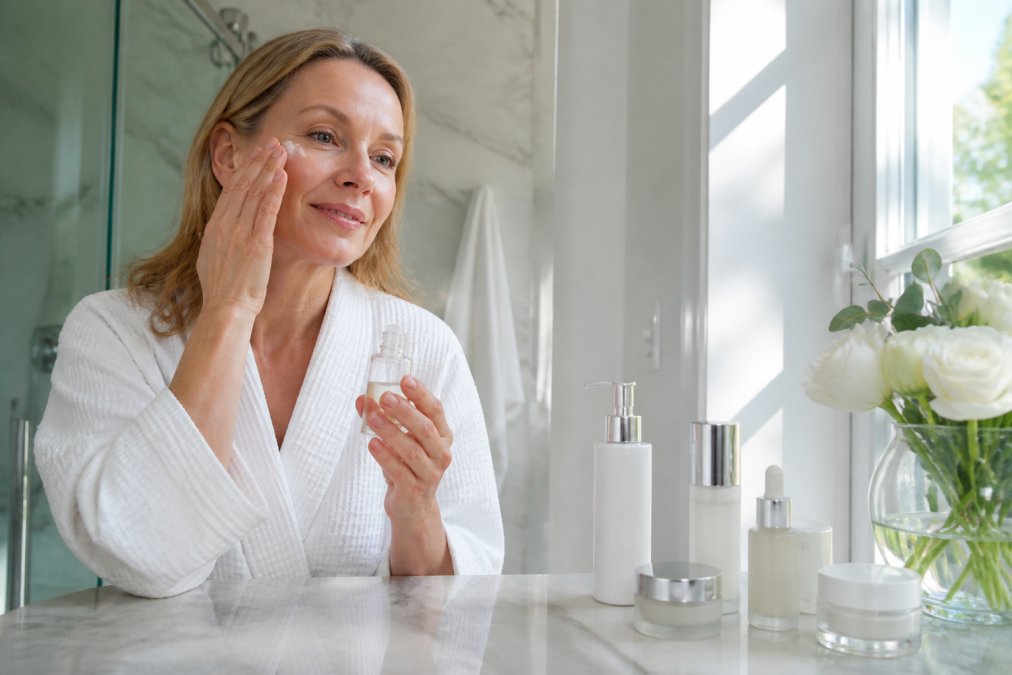
Start with a gentle cleanser appropriate for your skin type. Pat skin dry, don’t rub. Apply hyaluronic acid to damp skin, then follow with a lightweight moisturizer. The hyaluronic acid draws moisture in. The moisturizer seals it.
Finish with broad-spectrum SPF 30 or higher. This is the most important anti-aging step you can take. Sun damage accounts for 80% of visible aging. No serum or peel will outpace the damage from unprotected sun exposure.
The entire routine should take 5 minutes.
Evening Routine for Cellular Repair
Your evening routine is where anti-aging work happens. This is when you use active ingredients, retinoids, chemical exfoliants, peptides, that need time to work without sun interference.
Evening routines are where results happen, but morning sun protection determines whether those results persist. Protect your investment with daily SPF, it’s the cheapest, most effective anti-aging step available.
Addressing Sensitivity and Skin Barrier Protection
Many people approach skincare anti-aging products aggressively, then wonder why their skin becomes irritated, red, and reactive. The problem isn’t the products, it’s barrier damage from overuse.
Frequently Asked Questions
Do skincare anti-aging products actually work?
Yes, when formulated with clinically studied ingredients like retinoids, hyaluronic acid, and peptides. Results depend on consistency and realistic expectations. Ingredients like tretinoin and retinal show the strongest clinical evidence for reducing visible signs of aging.
What is the best skincare routine for hyperpigmentation?
A complete routine combines exfoliation, brightening actives, and sun protection. Start with a mandelic acid toner or glycolic acid to increase cellular turnover. Layer with niacinamide and vitamin C serums to address uneven skin tone. Follow with a moisturizer to maintain skin barrier health. Apply broad-spectrum SPF 30+ daily to prevent further pigmentation. For stubborn post-inflammatory hyperpigmentation, professional-grade chemical peels can be a beneficial treatment.
How do professional-grade chemical peels differ from at-home skincare products?
Professional-grade chemical peels contain higher concentrations of active acids (glycolic, lactic, salicylic, or TCA). They remove damaged outer skin layers to reveal fresh skin beneath, addressing fine lines, wrinkles, and pigmentation. At-home peels offer salon-quality results with proper usage. Standard serums and moisturizers work gradually through daily application. Peels are ideal for targeting specific concerns like texture and tone; daily products maintain results and provide preventative care.
At what age should you start using anti-aging skincare products?
Preventative skincare starts in your 20s with daily sun protection and basic moisturizing. Targeted anti-aging products become relevant in your 30s and beyond, when fine lines and early photoaging appear. Starting early with retinoids and sunscreen slows visible aging. However, it’s never too late to begin. Adults in their 50s and beyond see significant improvement in skin elasticity, dullness, and wrinkles by using dermatologist-recommended ingredients consistently. The best time to start is when you notice the first signs of aging or want to prevent them.