Table of Contents
- What Is Mandelic Acid and How Does It Work?
- Mandelic Acid Peel Benefits for Your Skin
- How to Use Mandelic Acid Peel Safely at Home
- Post-Peel Skincare Routine and Aftercare
- Safety, Side Effects, and Who Should Avoid Mandelic Acid
- Frequency and Long-Term Maintenance Protocols
- Frequently Asked Questions
Last Updated: September 21, 2026
What Is Mandelic Acid and How Does It Work?
Mandelic acid peel is a type of chemical exfoliant that belongs to the alpha hydroxy acid family. Unlike stronger AHAs, mandelic acid has a larger molecular weight, which means it penetrates the skin more slowly and gently. This makes it an excellent choice for those new to chemical exfoliation or with sensitive skin.
The science is straightforward. Mandelic acid works by breaking down the bonds that hold dead skin cells together on the surface. This process, called desquamation, reveals fresher skin underneath. The acid also stimulates keratinocytes, the cells that make up most of your skin, to turn over faster, which can improve texture and tone over time.
What makes mandelic acid different from glycolic or lactic acid is its molecular structure. The larger molecule means slower penetration but also gentler action on the skin barrier. For this reason, many practitioners recommend starting with mandelic acid before moving to stronger acids.
The Science Behind Chemical Exfoliation
Chemical exfoliation works differently than physical scrubbing. Instead of mechanical friction, the acid dissolves the intercellular cement holding dead cells in place. This triggers epidermal turnover without the trauma of manual exfoliation.
The pH level matters significantly. Most professional-grade mandelic acid peels are formulated at a pH between 2 and 3, which is low enough to be effective but not so harsh that it damages the skin barrier. At Makeup Artist’s Choice, we formulate our mandelic acid peels to balance efficacy with safety, ensuring you get results without unnecessary irritation.
The antimicrobial properties of mandelic acid also make it useful for acne-prone skin. It can help reduce sebaceous gland activity and has mild comedolytic properties, meaning it can help unclog pores.
Why Mandelic Acid Is Different From Other AHAs
Glycolic acid and lactic acid are faster-acting than mandelic acid. They penetrate more quickly, which means quicker results but also a higher risk of irritation, especially for sensitive skin. Mandelic acid’s slower penetration gives your skin more time to adjust, making it ideal for beginners or those with reactive skin.
The concentration percentage also varies. While glycolic acid peels often start at 20-30%, mandelic acid peels can deliver results at lower concentrations because of how the molecule interacts with the skin. This means you can get professional-grade results without the intensity of stronger acids.
Post-inflammatory hyperpigmentation is less common with mandelic acid than with stronger exfoliants. This matters if you have darker skin tones or are prone to irritation-triggered discoloration.
Mandelic Acid Peel Benefits for Your Skin
Treating Acne and Cystic Breakouts
Mandelic acid addresses acne through multiple mechanisms. It unclogs pores by dissolving the buildup inside them. It also reduces sebaceous gland secretion, which means less oil production. For cystic acne, the anti-inflammatory properties can help reduce the size and redness of active breakouts over time.
The key is consistency, occasional use won’t deliver the same results as a planned protocol.
One common mistake is using mandelic acid alongside other active treatments too aggressively. If you’re already using retinol or benzoyl peroxide, introduce mandelic acid slowly. Your skin barrier needs time to adapt.
Fading Hyperpigmentation and Post-Inflammatory Marks
Post-inflammatory hyperpigmentation, those dark marks left behind after acne heals, responds well to mandelic acid. The acid increases cell turnover, which gradually brings newer, evenly-toned skin to the surface. Melasma and sun-induced dark spots also tend to improve with consistent use.
The brightening effect comes from two sources: increased turnover brings fresh skin to the surface, and mandelic acid has mild skin-brightening properties on its own.
Hyperpigmentation in darker skin tones requires careful approach. Mandelic acid is gentler than glycolic acid, which makes it a better choice for those prone to post-inflammatory hyperpigmentation from irritation. Start with lower concentrations and extend the contact time gradually rather than jumping to higher strengths.
Anti-Aging: Fine Lines, Wrinkles, and Texture
Mandelic acid stimulates collagen remodeling by triggering a mild inflammatory response that prompts your skin to repair itself. This process, called neocollagenesis, gradually improves skin texture and can soften the appearance of fine lines and wrinkles.
The results aren’t immediate. The trade-off is that mandelic acid is gentler on the skin barrier than stronger acids, so the results come with less downtime and irritation.
Skin texture improvements, smoothing roughness and refining pore appearance, often show up faster than anti-aging benefits.
How to Use Mandelic Acid Peel Safely at Home
Pre-Peel Preparation and Patch Testing
Start with a patch test. Apply a small amount to your inner arm or behind your ear and wait 24 hours. This tells you whether you’ll have a reaction before applying it to your face. Even if you’ve used other acids before, test mandelic acid separately, everyone’s skin is different.
For the 3-5 days before your first peel, avoid other active ingredients. Stop using retinol, vitamin C serums, and other exfoliants. Your skin needs to be in a calm, neutral state before introducing a new acid. This reduces the chance of irritation and helps you gauge how your skin truly responds.
Cleanse your face with a gentle, pH-balanced cleanser and pat dry completely. Water on the skin dilutes the peel and reduces its effectiveness. Wait at least 15 minutes after cleansing before applying the mandelic acid peel to ensure your skin is fully dry.
Step-by-Step Application Process
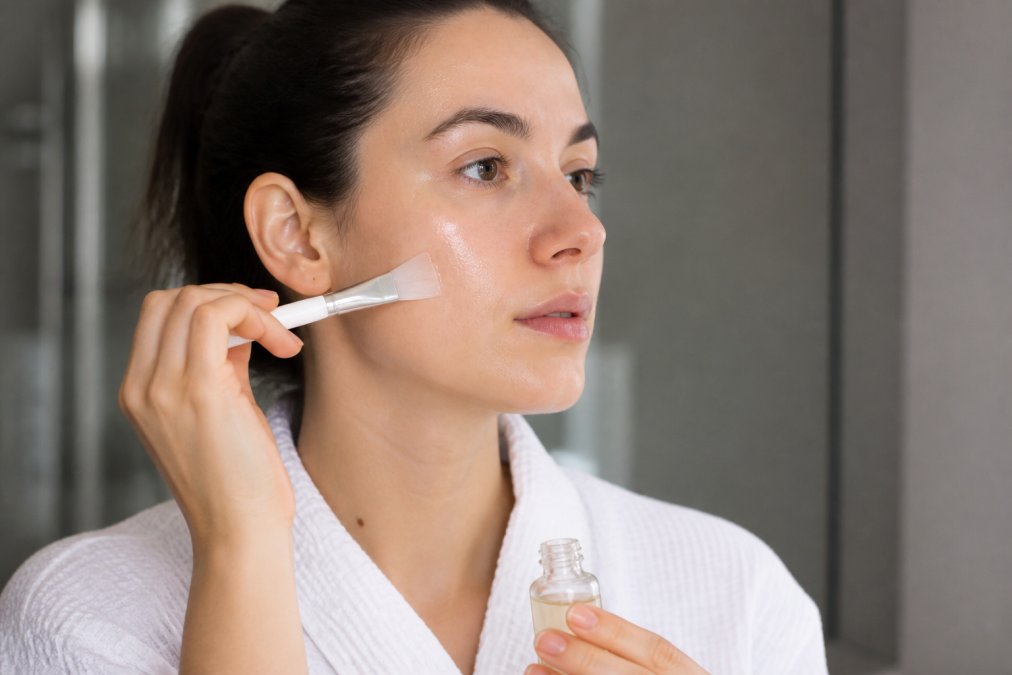
Step 1: Apply evenly. Using a brush or applicator provided with your peel, apply a thin, even layer across your face, avoiding the eye area, lips, and any broken skin. Work in sections, forehead, cheeks, nose, chin, to ensure consistent coverage.
Step 2: Set a timer. Start at the lower end if this is your first time. You can increase duration gradually as your skin adapts. Do not exceed the recommended time on your product.
Step 3: Watch for signs. Light tingling is normal. Intense burning is not. If you experience significant discomfort, move to neutralization immediately.
Neutralization and Timing
Neutralization stops the acid from working. This is critical, leaving the peel on too long increases irritation and erythema without improving results. Most mandelic acid peels are neutralized with a pH-balancing solution or water, depending on the formulation.
Apply the neutralizer evenly across your face and rinse thoroughly with cool water. Some formulations require a specific neutralizing agent, while others use water. Check your product instructions, this step varies by brand.
After neutralization, pat your skin dry gently. Do not rub. Your skin is temporarily more permeable, and aggressive rubbing can cause irritation.
Post-Peel Skincare Routine and Aftercare
Managing Redness, Peeling, and Downtime
Expect some redness for 2-4 hours after your peel. This is normal and indicates the peel worked. Peeling usually begins 24-48 hours after treatment and can last 3-5 days. Resist the urge to pick at peeling skin, let it shed naturally.
Downtime is minimal with mandelic acid compared to stronger peels. Most people can return to normal activities immediately, though you should avoid sweating, saunas, and intense exercise for the first 24 hours. These activities can irritate freshly treated skin.
Hydration is your priority now. Use a gentle, fragrance-free moisturizer immediately after the peel and twice daily for the next week. Your skin barrier is temporarily compromised and needs support.
Sun Protection and Photosensitivity
Photosensitivity is real after a mandelic acid peel. Your newly exposed skin is more vulnerable to UV damage. Use a broad-spectrum sunscreen with SPF 30 or higher every single day for at least one week post-peel. Reapply every two hours if you’re outdoors.
This isn’t optional. UV exposure after a peel can cause post-inflammatory hyperpigmentation, essentially undoing the benefits of treatment. Wear protective clothing if possible, hats, long sleeves, sunglasses.
Avoid direct sun exposure for 48 hours if possible. If you must be outside, cover up completely. The sun’s rays are strongest between 10 AM and 4 PM.
Safety, Side Effects, and Who Should Avoid Mandelic Acid
Contraindications and Skin Conditions to Watch
Mandelic acid peel is not appropriate for everyone. If you have active herpes simplex lesions, eczema flare-ups, or open wounds, wait until your skin has healed. Active infections or severe inflammation can worsen with chemical exfoliation.
Pregnancy is not an absolute contraindication for mandelic acid, but many practitioners recommend waiting until after the first trimester. Consult your healthcare provider before using any new skincare treatment during pregnancy.
Those with severe rosacea or extremely reactive skin should approach mandelic acid cautiously. Start with the lowest available concentration and longest intervals between treatments. Some people’s skin simply doesn’t tolerate chemical exfoliation well, and that’s okay, other treatment options exist.
Drug Interactions and Ingredient Conflicts
Mandelic acid can interact with certain medications and skincare ingredients. If you’re taking isotretinoin (Accutane), avoid mandelic acid entirely, the combination increases photosensitivity and irritation risk significantly.
Avoid combining mandelic acid with benzoyl peroxide on the same day.
Frequency and Long-Term Maintenance Protocols
Your skin will tell you what it needs, if you’re experiencing excessive peeling or irritation, extend the interval between treatments.
Frequently Asked Questions
What is a mandelic acid peel good for?
Mandelic acid peels address acne, post-inflammatory hyperpigmentation, melasma, fine lines, and uneven skin texture. The larger molecular weight of mandelic acid compared to glycolic acid allows slower, gentler penetration, making it effective for sensitive skin and deeper concerns like cystic acne and stubborn discoloration without excessive downtime.
How often should I perform an at-home mandelic acid peel?
Always allow full recovery between applications and monitor for signs of barrier damage.
What ingredients should not be mixed with mandelic acid?
Avoid combining mandelic acid with retinoids, vitamin C serums, niacinamide in high concentrations, or other chemical exfoliants on the same day. These can cause excessive irritation and erythema. Do not use mandelic acid within 48 hours of professional treatments. If using other actives, apply mandelic acid on alternate days or space applications by at least 24 hours to protect your skin barrier.
How long does it take to see results from a mandelic acid peel?
Initial improvements in skin texture and brightness can be observed with consistent use. Acne can show improvement as mandelic acid’s comedolytic and antimicrobial properties reduce sebaceous gland activity. Hyperpigmentation and post-inflammatory marks can fade with regular peels. Fine lines and wrinkles may improve gradually as epidermal turnover and collagen production increase.