Table of Contents
- What Is Mandelic Acid and How It Works
- Mandelic Acid Benefits for Acne and Breakouts
- How to Use Mandelic Acid Toner Safely
- Mandelic Acid vs. Salicylic Acid: Which Works Better
- Which Skin Types Benefit Most from Mandelic Acid Toner
- Fading Hyperpigmentation and Dark Spots
- Supporting Your Skin Barrier During Treatment
- Frequently Asked Questions
Last Updated: September 23, 2026
What Is Mandelic Acid and How It Works
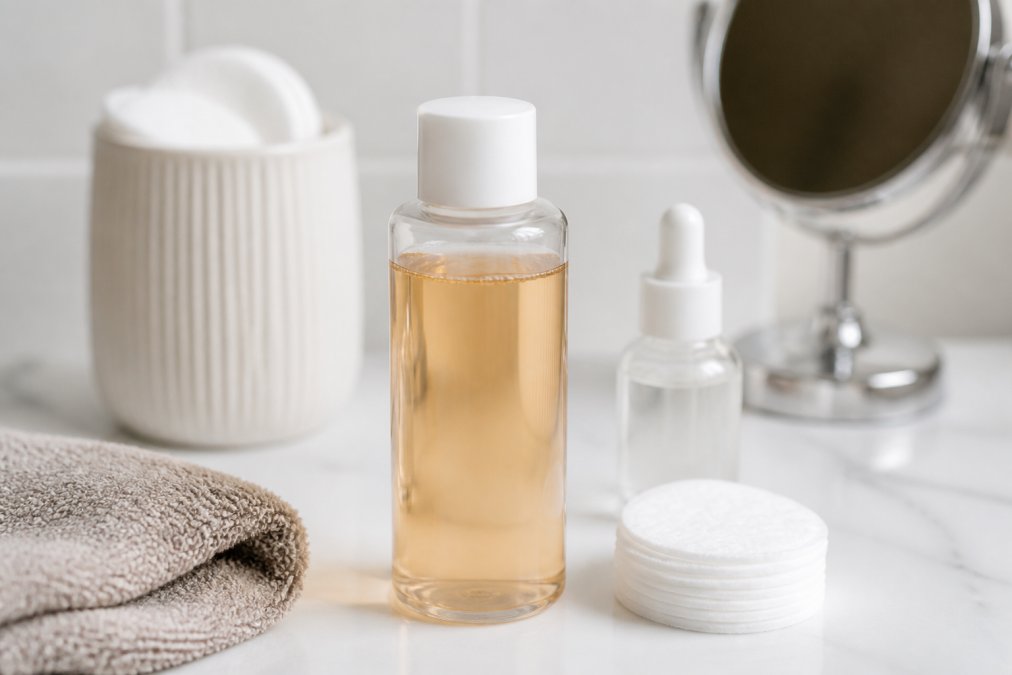
Mandelic acid toner is a chemical exfoliant derived from bitter almonds that gently dissolves dead skin cells and promotes cell turnover without the harshness of stronger acids. Unlike glycolic or salicylic acid, mandelic acid has a significantly larger molecular weight, approximately 152 g/mol compared to glycolic acid’s 76 g/mol, which directly explains why it penetrates skin more slowly and is less likely to irritate sensitive complexions.
The science behind mandelic acid centers on its alpha hydroxy acid (AHA) structure. It breaks down the bonds holding dead skin cells to your skin’s surface (specifically, the desmosomes that connect corneocytes) by lowering skin pH and hydrating the stratum corneum. This allows dead cells to shed naturally while stimulating collagen production over time. The slower penetration rate, driven by its larger molecular size, means mandelic acid spends more time in the upper epidermis before reaching deeper layers, reducing the risk of irritation that occurs when exfoliants penetrate too quickly into sensitive or compromised skin.
Mandelic acid is also lipid-soluble, meaning it can penetrate into pores to address congestion from within, a dual action that sets it apart from water-soluble alternatives like glycolic acid. This combination of gentleness and pore-level efficacy makes it particularly valuable for those new to chemical exfoliation or managing reactive skin conditions.
The larger molecular weight of mandelic acid (nearly double that of glycolic acid) is why dermatologists often recommend it as the entry point for sensitive skin users. It delivers exfoliation benefits with a significantly lower irritation profile, making it ideal for barrier-compromised or reactive skin types.
Mandelic acid toner is formulated to work within a balanced pH range (typically 3.0-4.0) that supports your skin barrier while delivering real results. The key difference between mandelic acid and other exfoliants lies in this gentleness paired with effectiveness, making it a versatile choice for multiple skin types.
Mandelic Acid Benefits for Acne and Breakouts
For acne-prone skin, mandelic acid toner offers anti-bacterial properties that help reduce active breakouts while preventing future congestion. The gentle exfoliation removes dead skin cells that would otherwise clog pores, addressing one of the root causes of acne formation.
The benefit extends beyond clearing existing blemishes. Regular use of mandelic acid toner helps regulate sebum production and keeps pores clear, reducing the likelihood of new breakouts. Consistent application over four to eight weeks can produce noticeably clearer skin without the dryness or irritation associated with harsher treatments.
What makes mandelic acid particularly effective for acne is its ability to work without stripping your skin barrier. Harsh exfoliants often damage the protective lipid layer, triggering increased oil production and paradoxically worsening breakouts. Mandelic acid toner maintains barrier integrity while still delivering the exfoliation your skin needs.
The anti-bacterial action of mandelic acid combined with gentle cell turnover makes it one of the most effective options for acne-prone skin that can’t tolerate stronger acids.
How to Use Mandelic Acid Toner Safely
Using mandelic acid toner correctly determines whether you’ll see results or experience irritation. Start with a low concentration (typically 5-10%) and use it just two to three times per week initially. Apply the toner to clean, completely dry skin using a cotton pad or your fingertips, pressing gently across your entire face and neck.

Patch Testing Before Full Application
Before introducing any new exfoliant, patch test on a small area of skin, typically behind your ear or on your inner arm, for 24 to 48 hours. This reveals whether your skin will react negatively before you apply it to your entire face. Even if you’ve used mandelic acid toner before, test a new product formulation to account for different concentrations or additional ingredients.
Watch for redness, burning, itching, or swelling during the patch test window. A mild tingling sensation is normal during exfoliation, but actual pain signals you should stop and rinse immediately. If the patch test goes well, you can proceed to full-face application.
Frequency and Layering Guidelines
Begin with twice-weekly applications and gradually increase to three times per week if your skin tolerates it well. Never exceed four applications per week, as over-exfoliation damages your skin barrier and leads to sensitivity, redness, and compromised skin renewal.
Allow the mandelic acid toner to dry completely before applying other products. This ensures optimal penetration and reduces the chance of pilling or uneven coverage. Follow with a hydrating essence or serum, then moisturizer, and always use SPF during the day, exfoliants increase sun sensitivity.
Critical Ingredient Contraindications
Combining mandelic acid with certain actives on the same night or within short timeframes can overwhelm your skin barrier and trigger irritation, sensitivity, or compromised skin renewal. Follow these spacing guidelines strictly:
Retinoids (retinol, retinaldehyde, tretinoin, adapalene): Do not apply on the same evening. If you use both in your routine, alternate nights, mandelic acid on Monday, Wednesday, Friday; retinoid on Tuesday, Thursday, Saturday. Allow at least 12 hours between applications. Both exfoliate and increase cell turnover, so combining them accelerates barrier damage and can trigger redness, peeling, and heightened photosensitivity.
Vitamin C serums (L-ascorbic acid, stabilized forms): High-strength vitamin C (10% or higher) is acidic and exfoliating on its own. Do not layer with mandelic acid the same night. If using both, apply vitamin C in the morning and mandelic acid in the evening, or separate by at least 24 hours. Lower-strength vitamin C (under 5%) can sometimes be layered after mandelic acid has fully dried, but test on a small area first.
Other AHAs (glycolic acid, lactic acid): Never combine multiple AHAs on the same night. Each AHA lowers skin pH and exfoliates; stacking them causes excessive cell turnover and barrier compromise. If rotating AHAs in your routine, use mandelic acid on one night and glycolic or lactic acid on a different night, with at least one non-exfoliation night between them.
BHAs (salicylic acid): While mandelic acid and salicylic acid target different skin depths, combining them on the same night increases irritation risk, especially for sensitive skin. Alternate nights if using both, or space by at least 12 hours.
Niacinamide (high concentration, 5% or higher): High-dose niacinamide can be slightly irritating on its own. Layering it with mandelic acid may amplify redness or sensitivity. Use niacinamide on non-exfoliation nights, or apply it the morning after mandelic acid use when your skin has recovered.
Benzoyl peroxide: This acne-fighting ingredient is oxidizing and can destabilize mandelic acid formulations while increasing irritation risk. Apply benzoyl peroxide in the morning and mandelic acid in the evening, or use on alternate nights.
Azelaic acid: Both mandelic acid and azelaic acid address acne and hyperpigmentation, but combining them increases the risk of irritation and over-exfoliation.
If you’re currently using prescription retinoids (like tretinoin or adapalene) without spacing them properly from mandelic acid, you risk severe barrier compromise, redness, peeling, and heightened sensitivity. Always maintain at least 12 hours between these actives, and consider alternating nights entirely if your skin is reactive or barrier-compromised.
Building a Safe Rotation Schedule
If you use multiple actives, a simple weekly rotation prevents barrier damage. Example for combination skin with acne and hyperpigmentation:
- Monday: Mandelic acid toner (evening)
- Tuesday: Hydrating and barrier-support night (no actives)
- Wednesday: Retinol or retinoid (evening)
- Thursday: Hydrating and barrier-support night
- Friday: Mandelic acid toner (evening)
- Saturday & Sunday: Gentle cleanse, hydrate, moisturize, SPF (no actives)
Mandelic Acid vs. Salicylic Acid: Which Works Better
Mandelic acid and salicylic acid serve different purposes, and the better choice depends on your skin type and primary concern. Salicylic acid is a beta hydroxy acid (BHA) that is oil-soluble, making it excellent for deeply congested, oily skin. It penetrates pores to dissolve sebum buildup and works quickly, often showing results within one to two weeks.
Which Skin Types Benefit Most from Mandelic Acid Toner
Sensitive skin stands to gain the most from mandelic acid toner. The gentle molecular structure and slower penetration rate make it the preferred exfoliant for those prone to reactivity. People with conditions like rosacea or reactive dermatitis can often tolerate mandelic acid when other exfoliants trigger flare-ups.
Avoid mandelic acid toner if you’re currently using prescription retinoids (like tretinoin) without spacing them properly. Combining too many actives on the same night can severely compromise your skin barrier, leading to redness, peeling, and heightened sensitivity.
Fading Hyperpigmentation and Dark Spots
Mandelic acid toner excels at addressing post-inflammatory hyperpigmentation and sun-induced dark spots by accelerating cell turnover. The exfoliation removes the top layers of skin where pigmentation concentrates, gradually revealing clearer skin underneath. This process works best on surface-level discoloration; deeper melasma or stubborn spots may require additional treatments.
Supporting Your Skin Barrier During Treatment
Your skin barrier is the protective layer that maintains hydration and prevents irritants from penetrating. Exfoliation, including mandelic acid toner use, temporarily compromises this barrier as it removes dead cells. Supporting barrier recovery ensures you see benefits without experiencing sensitivity or damage.
Frequently Asked Questions
How long does it take to see results from mandelic acid toner?
Most users notice improvements in skin clarity and surface texture within 2-4 weeks of consistent use. Hyperpigmentation and dark spots typically fade over 6-8 weeks with regular application. Results depend on concentration, frequency of use, and individual skin response. Patience and consistent sun protection with SPF are essential, as mandelic acid increases sun sensitivity during the treatment period.
Can I use mandelic acid toner every day?
Daily use depends on concentration and your skin’s tolerance. Lower concentrations (5-10%) may be suitable for daily use, while higher strengths (15%+) are typically recommended 2-3 times weekly. Begin with 2-3 applications per week and gradually increase frequency if your skin barrier remains intact. Stop immediately if you experience persistent redness, irritation, or sensitivity. Always prioritize skin barrier recovery over aggressive exfoliation schedules.
What should you not mix with mandelic acid?
Avoid combining mandelic acid with other exfoliating acids (glycolic, salicylic, lactic) on the same day, as this risks over-exfoliation and barrier damage. Do not layer with retinoids, vitamin C serums, or benzoyl peroxide without spacing applications by 12-24 hours. Avoid niacinamide immediately after application, as it can increase irritation. Always allow mandelic acid to fully absorb and your skin to recover before introducing other active ingredients into your routine.
Is mandelic acid better than glycolic acid for sensitive skin?
Mandelic acid is gentler than glycolic acid for sensitive skin due to its larger molecular weight, which allows slower, more controlled penetration. This means less irritation, redness, and barrier disruption. Glycolic acid works faster but can trigger sensitivity in reactive skin types. For sensitive, acne-prone, or compromised skin barriers, mandelic acid provides effective exfoliation with lower risk of inflammation and post-inflammatory hyperpigmentation.