Last Updated: October 25, 2026
Quick Summary
Dermatologist recommended treatments for dark spots include topical ingredients like vitamin C, niacinamide, retinol, and kojic acid that block melanin production or speed cell turnover, as well as professional procedures like chemical peels and laser therapy for stubborn discoloration. Most people see visible fading within 6-8 weeks of consistent at-home treatment combined with daily broad-spectrum SPF 30+ sunscreen.
- Vitamin C, retinol, and kojic acid are proven topical ingredients that work by blocking melanin or accelerating cell turnover.
- Chemical peels with glycolic, lactic, or mandelic acid accelerate results within 4-6 weeks when used consistently at home.
- Professional procedures like laser therapy and in-office chemical peels deliver faster results for stubborn spots in 2-4 weeks per session.
- Darker skin tones require gentler ingredients like niacinamide and mandelic acid to avoid post-inflammatory hyperpigmentation.
- Daily broad-spectrum SPF 30+ sunscreen is essential during and after treatment to prevent melanin production from worsening dark spots.
Table of Contents
- Understanding Dark Spots and Hyperpigmentation
- Topical Ingredients Dermatologists Recommend for Dark Spots
- Chemical Peel for Hyperpigmentation: How Acids Target Discoloration
- Mandelic Acid Toner for Dark Spots: A Gentler Exfoliating Option
- How to Fade Dark Spots on Darker Skin Tones
- Finding the Best Dark Spot Corrector for Your Skin Type
- Professional Procedures and When to Consider Them
- Starting Your Dark Spot Treatment Routine at Home
- Frequently Asked Questions
Understanding Dark Spots and Hyperpigmentation
Dark spots are areas of skin discoloration caused by an overproduction of melanin. This happens when cells called melanocytes create too much pigment in one spot, leaving behind patches that are darker than your surrounding skin tone. Dark spots can appear as age spots, sun spots, or post-inflammatory hyperpigmentation, each with different causes but similar treatment approaches.
The root cause matters because it changes which treatment works best. Sun damage triggers melanin production as a defense mechanism. Aging slows cell turnover, letting old pigmented cells stick around longer. Post-inflammatory hyperpigmentation happens after acne, eczema, or injury inflames the skin and leaves behind dark marks.
Many people assume dark spots are permanent. They’re not. The skin naturally sheds dead cells and regenerates new ones roughly every 28 days. The problem is that pigmented cells shed slowly without help. That’s where topical treatments and professional procedures come in, they speed up cell turnover so fresh, unpigmented skin surfaces faster.
Topical Ingredients Dermatologists Recommend for Dark Spots
Dermatologist recommended treatments for dark spots start with the right active ingredients. The most effective ones work by either blocking melanin production, speeding up cell turnover, or both.
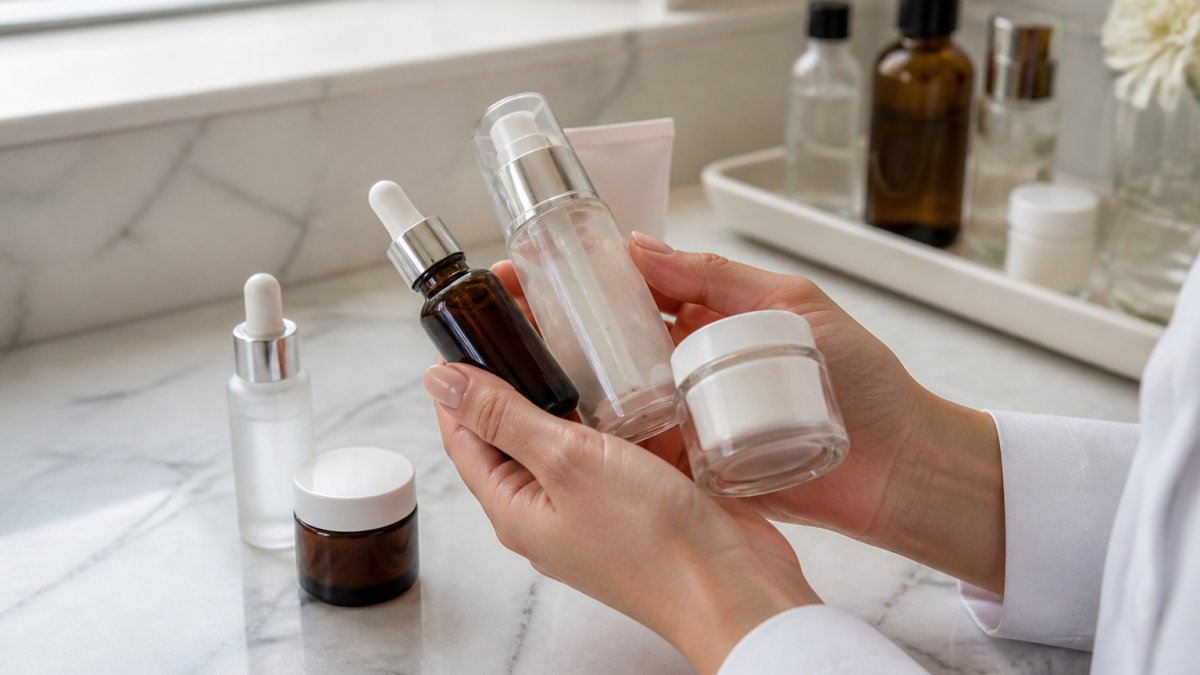
Vitamin C is a proven antioxidant that inhibits tyrosinase, the enzyme responsible for melanin production.
Niacinamide reduces melanin transfer to skin cells and strengthens your skin barrier.
Retinol and retinoids accelerate cell turnover dramatically. They increase exfoliation at the cellular level, pushing out old pigmented cells and revealing fresh skin underneath.
Kojic acid blocks tyrosinase directly, preventing new melanin formation. It’s especially useful for preventing dark spots from returning after treatment.
Tranexamic acid is newer but effective, particularly for post-inflammatory hyperpigmentation. It reduces inflammation and melanin production simultaneously.
| Ingredient | How It Works | Best For | Irritation Level |
|---|---|---|---|
| Vitamin C | Blocks melanin production | All skin types | Low to moderate |
| Niacinamide | Reduces melanin transfer | Sensitive skin | Very low |
| Retinol | Speeds cell turnover | Resilient skin | Moderate to high |
| Kojic acid | Inhibits tyrosinase | Prevention | Low |
| Tranexamic acid | Reduces inflammation | Post-inflammatory marks | Very low |
The most effective approach combines multiple ingredients. Vitamin C in the morning with niacinamide, then retinol at night with a barrier-supporting moisturizer, addresses dark spots from multiple angles.
Chemical Peel for Hyperpigmentation: How Acids Target Discoloration
A chemical peel for hyperpigmentation uses exfoliating acids to dissolve the bonds holding dead skin cells in place.
Glycolic acid is the most popular choice for at-home peels. It’s an alpha hydroxy acid that penetrates the outer skin layer and accelerates cell turnover.
Lactic acid works similarly but more gently. It’s derived from milk and hydrates while exfoliating, making it better for dry or sensitive skin.
Salicylic acid is a beta hydroxy acid that works inside pores and on the skin surface. It’s best for oily skin and acne-prone skin alongside dark spot correction.
The strength of a chemical peel for hyperpigmentation matters. Professional-grade peels at 20-30% concentration work faster but require careful application. Lower concentrations (5-10%) are safer for home use and still effective with consistent application.
Watch out: chemical peels increase sun sensitivity. You must use broad-spectrum sunscreen daily during treatment and for weeks after. Skipping sun protection can actually worsen dark spots by triggering more melanin production.
Mandelic Acid Toner for Dark Spots: A Gentler Exfoliating Option
Mandelic acid is an alpha hydroxy acid derived from bitter almonds. It has a larger molecular size than glycolic acid, meaning it penetrates more slowly and gently. This makes a mandelic acid toner for dark spots ideal if you have sensitive skin, reactive skin, or are new to chemical exfoliation.
The gentler pace doesn’t mean slower results. Mandelic acid still accelerates cell turnover and reduces melanin production. Many people tolerate it better than stronger acids, allowing for more consistent use without irritation or downtime.
Use a mandelic acid toner for dark spots 3-4 times per week to start. If your skin tolerates it well, you can increase to daily use. Apply to clean, dry skin before moisturizer. The toner format makes application easy and allows you to layer other active ingredients without overwhelming your skin barrier.
You can explore deeper guidance on mandelic acid toners, their benefits, and which skin types suit them best. For those ready to purchase, the 25% Mandelic Acid peel is available for at-home use, offering professional-grade strength in an easy-to-apply format.
How to Fade Dark Spots on Darker Skin Tones
Dark spots on darker skin tones require specific consideration. Melanin production is higher, and certain treatments can trigger post-inflammatory hyperpigmentation (PIH) if not used carefully.
Know when to stop self-treating. Most dark spots are harmless discoloration, but a spot deserves medical evaluation if it is new, changing in size, shape, or color, has irregular or blurred borders, bleeds or crusts, itches or hurts, or sits on a site with a history of sun exposure. The ABCDE rule, Asymmetry, Border irregularity, Color variation, Diameter larger than a pencil eraser, and Evolving, is a widely used screening guide, not a diagnosis (Melanoma Treatment (PDQ®)).
Avoid hydroquinone and harsh depigmenting agents without supervision. They can cause irritation and actually worsen discoloration in darker skin tones.
Chemical peels work well but require caution. Lower concentrations (5-10%) and shorter application times prevent over-irritation. Start with mandelic acid or lactic acid rather than glycolic acid, which penetrates faster.
Retinoids are effective but demand patience. Begin with low concentrations and increase slowly. Your skin barrier is more prone to irritation, but retinoids do work for fading discoloration when introduced gradually.
Sun protection is non-negotiable. UV exposure triggers melanin production more intensely in darker skin. Broad-spectrum SPF 30+ daily is essential during and after treatment.
Understanding post-inflammatory hyperpigmentation is crucial for darker skin. Learn more about treating post-inflammatory hyperpigmentation and why it requires different approaches.
Finding the Best Dark Spot Corrector for Your Skin Type
The best dark spot corrector depends on your skin type, the cause of your discoloration, and your tolerance for irritation.
Oily or acne-prone skin: Look for salicylic acid or glycolic acid-based correctors. These exfoliate and unclog pores simultaneously. Niacinamide is also helpful because it regulates sebum production.
Dry or sensitive skin: Mandelic acid, lactic acid, or niacinamide-based products are safer choices. They exfoliate without stripping moisture. Add a hydrating moisturizer to your routine.
Normal skin: You have flexibility. Vitamin C serums, retinol, or glycolic acid all work well. Combine multiple ingredients for faster results.
Combination skin: Layer a gentle acid (mandelic or lactic) with targeted vitamin C on dark spots. Use retinol on the rest of your face.
Browse dark spot corrector products tagged by skin type to find options matching your needs.
Start with one active ingredient and use it consistently for 6-8 weeks before adding another. Layering too many actives too fast causes irritation and slows results.
Professional Procedures and When to Consider Them
At-home treatments work for mild to moderate dark spots.
Chemical peels at a dermatologist’s office use higher concentrations than at-home versions, commonly in the 20-70% range depending on the acid and the practitioner’s protocol, and longer application times.
Laser and light-based therapy targets melanin directly. Different wavelengths suit different skin tones and pigment depths. In darker skin, non-ablative and picosecond lasers are generally favored over ablative resurfacing because the risk of PIH and hypopigmentation is lower.
Intense pulsed light (IPL) uses broad-spectrum light rather than a single wavelength.
Microdermabrasion physically removes the outer skin layer. It is reasonable for sun spots and age spots but not ideal for PIH or very dark skin, where friction can worsen discoloration.
Topical prescription treatments, including hydroquinone, tretinoin, and triple-combination creams, are often used alongside or between procedures.
| Option | Best suited for | Typical downtime | Main risks | Realistic timeline |
|---|---|---|---|---|
| In-office chemical peel | Sun spots, mild PIH, melasma (with care) | 2-7 days of flaking/redness | PIH, irritation, sun sensitivity | 2-4 weeks per session; series often needed |
| Laser / light therapy | Stubborn sun spots, some PIH | 1-7 days depending on device | PIH, hypopigmentation, blistering | Multiple sessions over 2-4 months |
| IPL | Sun damage, diffuse discoloration | Minimal to 2 days | Rebound pigmentation, especially in melasma | 3-5 sessions |
| Microdermabrasion | Age spots, sun damage | None to 1 day | Irritation, limited depth | Several sessions |
| Prescription topicals | Most pigment types, maintenance | None | Irritation, rebound with hydroquinone | 8-12 weeks for visible fading |
Procedures increase sun sensitivity. Broad-spectrum SPF 30+ daily is required during treatment and for weeks after. Skipping sun protection can worsen dark spots by triggering more melanin production, and in melasma, UV exposure is a leading cause of recurrence.
Consider professional treatment if at-home options have not produced visible change after 3-4 months of consistent use, if the discoloration is deep or widespread, or if you have melasma, which often needs a combined approach. A board-certified dermatologist can assess your skin, confirm the pigment type, and recommend the procedure least likely to cause rebound pigmentation for your skin tone.
Starting Your Dark Spot Treatment Routine at Home
Begin your routine by identifying your dark spot type and choosing one active ingredient. This prevents irritation and lets you track what actually works.
Week 1-2: Introduce your chosen ingredient at the lowest concentration or frequency. Use it 2-3 times per week. Pair it with a gentle cleanser and moisturizer.
Week 3-4: If your skin tolerates the ingredient well, increase frequency to 4-5 times per week. Add broad-spectrum SPF 30+ daily. Sun protection is non-negotiable during treatment.
Week 5-8: Increase to daily use if tolerated. Results should begin appearing around week 6.
Week 9+: Maintain results with consistent use. Many people continue their treatment ingredient indefinitely because results fade if you stop.
Layer your routine strategically. Apply water-based actives first (toners, serums), then oil-based treatments (retinol, moisturizers). This order ensures each ingredient penetrates properly.
At Makeup Artist’s Choice, we specialize in professional-grade at-home chemical peels and skincare routines tailored to your needs.
Frequently Asked Questions
What do dermatologists recommend for dark spots?
Dermatologists typically recommend a multi-step approach: daily broad-spectrum sunscreen to prevent worsening, topical treatments containing vitamin C, niacinamide, retinol, or exfoliating acids like glycolic acid or mandelic acid to accelerate cell turnover, and professional procedures like chemical peels or laser therapy for stubborn hyperpigmentation. The best choice depends on the cause of the dark spots, your skin tone, and how quickly you want results.
How long does it take for dark spot treatments to work?
Topical treatments typically show visible fading within 4-12 weeks of consistent use, though results vary by ingredient strength and individual skin response. Retinoids and prescription treatments may take 8-16 weeks. Professional procedures like chemical peels can show improvement in 1-2 weeks, with continued fading over several months. Sun protection is essential throughout treatment to prevent new spots from forming.
Are chemical peels effective for hyperpigmentation?
Yes, chemical peels are highly effective for hyperpigmentation. They work by accelerating cell turnover and exfoliating the outer skin layers where melanin accumulates. Glycolic acid peels are commonly recommended for mild to moderate discoloration, while stronger peels like TCA are used for deeper pigmentation. At-home peels offer professional-grade treatments with proper application, though patch testing is important for sensitive skin.
When should I see a dermatologist about a dark spot?
Consult a dermatologist if a dark spot changes color, size, or shape; has irregular borders; causes itching or bleeding; or appears suddenly on sun-exposed areas. These can indicate melanoma or other skin conditions requiring medical evaluation. A board-certified dermatologist can distinguish between benign age spots, post-inflammatory hyperpigmentation, and concerning lesions before recommending treatment.
Dark spots fade with the right treatment, consistency, and patience. Most people see meaningful improvement within 6-12 weeks when using effective ingredients daily and protecting their skin from sun damage. Start with one ingredient, track your results, and adjust based on how your skin responds. If at-home treatment stalls after several months, a dermatologist can recommend professional procedures to finish the job.