Last Updated: November 1, 2026
Quick Summary
A professional aesthetician holds a current state license you can verify through an online license lookup, and that license should be active rather than expired or suspended. Beyond the license, look for advanced certifications, strict hygiene and safety screening, and a real consultation before any product touches your skin.
- Ask for the esthetician’s license number before your appointment and confirm it is active.
- A license confirms basic training and an exam, not advanced certifications like chemical peels.
- Estheticians work on the surface of the skin and should refer medical issues to a dermatologist.
- A safe provider asks about medications, allergies, pregnancy, and recent sun exposure before treatment.
- Try one session before buying a multi-session package so you can see how your skin responds.
Table of Contents
- Start With Esthetician Qualifications and License Verification
- Training, Education, and Scope of Practice Boundaries
- Esthetician Hygiene Practices and Safety Screening
- Evaluate the Consultation and Personalized Treatment Plan
- Questions to Ask an Esthetician Before You Book
- Signs of a Bad Esthetician and When to Walk Away
- Pricing, Packages, and Product-Sales Pressure
- Setting Realistic Expectations and Measuring Results
- Frequently Asked Questions
Start With Esthetician Qualifications and License Verification
Knowing what to look for in a professional aesthetician starts with one document: a current state license. Estheticians are licensed skincare professionals, and that license is the first thing you should check before you book.
A professional aesthetician is a licensed skincare specialist trained in skin analysis, cleansing, exfoliation, and non-medical treatments like facials and chemical peels. This guide from Makeup Artist’s Choice walks you through the checks that separate a skilled practitioner from a risky one.
Here is the part most guides skip: a license proves minimum training, not skill. You still need to verify it, then look at everything else.
How to Check a License and Disciplinary History
Verification takes about five minutes. Many licensing boards publish an online license lookup. Search the esthetician’s name or license number, confirm the license is active (not expired or suspended), and check the expiration date. If the board publishes disciplinary actions, search that list too.
Ask the esthetician for their license number before your appointment. A professional will share it without hesitation. If they deflect or say “the spa handles that,” treat it as a warning sign.
Watch out: some spas let an unlicensed assistant perform extractions or peels. Ask directly who will touch your skin during the appointment, and confirm that person’s license separately.
What a License Actually Tells You, and What It Doesn’t
A license generally confirms that the esthetician has completed required training and passed a licensing exam. It does not confirm advanced training in chemical peels, microneedling, or other specialized services. Those often require separate certifications.
Ask where they trained and whether they hold advanced certifications. Chemical peel training, for example, is often separate from basic esthetics school. If you are booking a peel, ask which peel types they are certified to perform and how many they do in a typical week. Consistent volume in these specialized procedures serves as a primary indicator that you have found a reputable aesthetics provider.
Scope of Practice: When an Esthetician Is the Wrong Professional
Scope of practice is the bigger issue. Estheticians work on the surface of the skin. They do not diagnose conditions, prescribe medication, or perform medical procedures. A good esthetician knows exactly where that line sits.
If someone promises to “cure” rosacea or “remove” a mole, that is a red flag. Those are medical matters. A licensed dermatologist handles them (the American Academy of Dermatology). The same applies to suspicious moles, persistent rashes, and anything that looks infected. A professional aesthetician will refer you out rather than treat outside their scope.
Never let an esthetician treat a mole, a changing spot, or an undiagnosed rash. Those need a medical evaluation first. A reputable provider will tell you the same.
Training, Education, and Scope of Practice Boundaries
Training requirements can differ from state to state, so an esthetician’s background may vary depending on where they were licensed.
Ask where they trained and whether they hold advanced certifications. Chemical peel training, for example, is often separate from basic esthetics school.
Scope of practice is the bigger issue. Estheticians work on the surface of the skin. They do not diagnose conditions, prescribe medication, or perform medical procedures. A good esthetician knows exactly where that line sits.
If someone promises to “cure” rosacea or “remove” a mole, that is a red flag. Those are medical matters. A licensed dermatologist handles them.
Esthetician Hygiene Practices and Safety Screening
Sanitation is non-negotiable, and you can spot problems before the treatment starts.
Look for these basics:
- Clean hands and fresh gloves for every client
- Single-use applicators, spatulas, and cotton pads
- Tools pulled from a sanitized or sealed container
- A clean towel and fresh linens on the bed
- No double-dipping into product jars
A common mistake is assuming a tidy front desk means a clean treatment room. Ask to see the room. A professional will happily show you.
The Safety-Screening Checklist a Professional Should Run
Safety screening matters just as much as sanitation. Before any peel, exfoliating treatment, or extraction, a thorough esthetician asks about:
- Medications, including isotretinoin (Accutane), retinoids, blood thinners, and antibiotics that increase sun sensitivity
- Allergies, to ingredients, fragrances, latex, or adhesives
- Pregnancy and breastfeeding, some ingredients and treatments are avoided during this time
- Recent sun exposure, waxing, or laser treatments
- Active skin conditions, cold sores, eczema flare-ups, open wounds, or infections
- Your home routine, retinol, acids, and exfoliants affect treatment timing
If you use retinol or have had recent peels, timing rules apply.
Patch Testing and Informed Consent
Ask whether your esthetician offers a patch test for new peel solutions or strong active ingredients, especially if you have sensitive skin or a history of reactions. They also explain the risks, the expected downtime, and aftercare before you consent to treatment. If you are handed a form without any explanation, ask questions. Informed consent means you understand what is being applied to your skin and why.
A safe provider asks more questions than you do. If the screening feels rushed or skipped, that is your cue to reconsider the appointment.
Evaluate the Consultation and Personalized Treatment Plan
A real consultation is a conversation, not a sales pitch. It should happen before any product touches your skin.
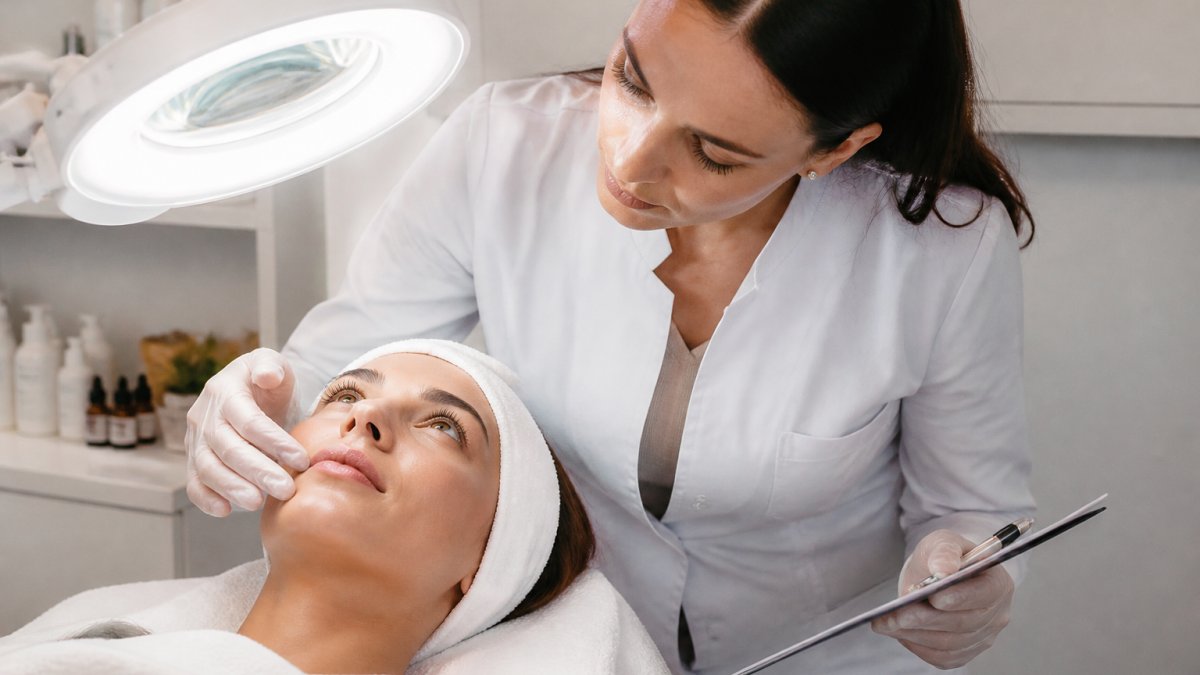
During a strong consultation, the esthetician will:
- Ask about your skin concerns, routine, and history
- Perform a skin analysis under proper lighting
- Explain what they see and what it means
- Propose a treatment plan with clear steps
- Tell you what results to expect and when
The plan should be specific to your skin type. Dry skin, sensitive skin, and oily, acne-prone skin all need different approaches. If the recommendation is identical to what everyone else gets, that is a warning sign.
Questions to Ask an Esthetician Before You Book
The right questions reveal experience fast. Ask these before you commit:
- Are you licensed in this state, and what is your license number?
- How long have you been practicing, and what treatments do you do most?
- What is your approach for my specific skin concerns?
- What should I do before and after my appointment?
- What are the total costs, including any required products?
- What happens if my skin reacts badly?
Pay attention to how they answer. Clear, direct answers signal professionalism. Vague or defensive answers tell you something too.
It also helps to plan aftercare before you book. You can browse post-peel products to prepare for what your skin will need afterward. Planning aftercare before you book can help you ask informed questions about what your skin will need afterward.
Signs of a Bad Esthetician and When to Walk Away
Trust your instincts, but know the concrete signs too. A bad esthetician shows clear patterns you can spot early.
Walk away if you see:
- No license displayed or a refusal to share it
- Dirty tools, reused gloves, or open product jars
- Pressure to buy a package before you have tried anything
- Promises of dramatic results after one session
- Dismissal of your questions about safety
- No consultation before treatment begins
The biggest tell is a rushed consultation. Skilled estheticians take time to understand your skin. If you feel like a number in a chair, you probably are.
Pricing, Packages, and Product-Sales Pressure
Transparent pricing is a mark of a trustworthy provider. Ask for a full breakdown before you book: the treatment, any add-ons, and required aftercare products.
Packages can save money, but only if you will actually use them. A common mistake is buying a multi-session package on the first visit. Try one session first. See how your skin responds. Then decide.
Product-sales pressure is where good consultations go bad. Before committing, you can read a guide to whether a professional-grade peel is worth the cost. A professional recommends products that fit your routine rather than pushing items you did not ask about.
Setting Realistic Expectations and Measuring Results
No single facial fixes years of sun damage. To plan ahead, learn how long chemical peel results last. Real results typically build over several sessions, with consistent home care in between.
Here is what a realistic timeline looks like:
| Timeframe | What to Expect |
|---|---|
| Immediately after | Mild redness, possible light flaking |
| 3-7 days | Skin settles, texture feels smoother |
| 2-4 weeks | Tone and clarity begin to improve |
| 4-8 weeks | Visible change with a consistent routine |
Track your results with photos taken in the same lighting. Judge progress at four weeks, not four days.
Sun protection is the other half of the equation. Daily sunscreen preserves what your treatments achieve.
At Makeup Artist’s Choice, we have offered professional-grade at-home chemical peels since 1997, including glycolic, lactic, salicylic, and TCA peels. Shop our range to find options for your routine.
Frequently Asked Questions
What qualifications should a professional aesthetician have?
A professional aesthetician should hold a current state license, which requires completing an approved training program and passing a written and practical exam. Beyond the license, look for continuing education in the treatments you want, such as chemical peels or acne care. Ask how long they have been practicing and whether they have specific training in your skin concern. A licensed esthetician can perform facials, peels, and extractions, but should refer you to a dermatologist for medical issues like suspicious moles or severe cystic acne.
How can I tell if an esthetician follows proper hygiene practices?
Watch for clean hands and fresh gloves, single-use applicators, and tools that come out of a sealed sterile pouch or an approved disinfectant. Linens and towels should be fresh for each client, and the treatment room should look and smell clean. Ask how they disinfect tools between clients and whether they use single-use items for extractions. Esthetician hygiene practices also include asking about your medications, allergies, and recent sun exposure before any treatment, since these affect how your skin will respond.
Should I see an aesthetician or a dermatologist for my skin concern?
Choose an esthetician for routine facials, exfoliation, acne maintenance, and texture or tone concerns. See a dermatologist for anything medical: changing moles, persistent rashes, severe or cystic acne, or skin conditions that need prescription treatment. A good esthetician knows their scope of practice and will refer you out when a concern falls outside it. If an esthetician diagnoses a medical condition or promises to cure one, that is a red flag and a reason to look elsewhere.
What should I expect at my first appointment with an aesthetician?
Expect a consultation first: questions about your skin history, products you use, medications, allergies, and goals. The esthetician should examine your skin, explain what they recommend and why, and confirm the plan with you before starting. Ask about pricing up front, including whether packages or product purchases are required. After treatment, you should leave with aftercare instructions and realistic expectations about results and any downtime. If any of this feels rushed or unclear, ask questions before you commit.
Finding a skilled esthetician takes a little homework, but the payoff is skin you can trust in trained hands. Once you have a provider you like, the right home care keeps your results going between appointments. Makeup Artist’s Choice has supplied professional-grade at-home peels and personalized skincare routines since 1997, with a range of acid treatments made in the USA. Get started with Makeup Artist’s Choice and build a routine that supports your skin between professional visits.