Last Updated: October 31, 2026
Quick Summary
Using retinol and a chemical peel in the same week is risky for most people, since combining chemical peel retinol treatments can overload the skin. Keeping the two on separate schedules is the safer approach. Stop retinol several days before a peel and wait until your skin fully heals before restarting it.
- Retinoids and exfoliating acids both speed up cell turnover, so their effects stack when used together.
- Superficial peels usually call for a retinol pause of about 3 to 7 days.
- Medium-depth peels usually call for a pause of about 7 to 14 days.
- Deep peels often require 2 weeks or longer, as directed by your provider.
- Restart retinol only once redness, flaking and stinging have fully stopped.
Table of Contents
- Can You Use Retinol and a Chemical Peel Together?
- Why Combining Retinoids and Exfoliating Acids Increases Irritation
- When to Stop Retinol Before a Chemical Peel
- When to Restart Retinol After a Chemical Peel
- Chemical Peel Aftercare Routine and Recovery Warning Signs
- At-Home Chemical Peel Safety: Sensitive Skin, Tone and Hyperpigmentation Risk
- Planning Your Next Peel Safely
- Frequently Asked Questions
Can You Use Retinol and a Chemical Peel Together?
Using retinol and a chemical peel in the same week is risky for most people, since combining a chemical peel retinol routine can overload the skin. Both products speed up skin turnover, and together they can push the skin past what it can handle. Keeping these two treatments on separate schedules is the safer approach.
The short answer is no, not at the same time. Retinol and peels can be part of one routine, but the gap between them matters.
Why Combining Retinoids and Exfoliating Acids Increases Irritation
Retinoids and exfoliating acids both work by removing dead skin cells and increasing cell turnover. When you use both at once, the effect stacks.
The result is often:
- Redness and stinging
- Dryness and flaking
- A tight, raw feeling
- Higher risk of over-sensitization
Sensitive skin feels this most. If your skin burns after a peel, retinol may be the reason.
When to Stop Retinol Before a Chemical Peel
There is no single pause period that fits every chemical peel and retinol combination, because the right timing depends on both products. The right window generally depends on how deep the peel goes, how strong the retinoid is, and what a treatment provider advises.
A practical way to think about it:
| Peel depth | Typical examples | Common retinol pause |
|---|---|---|
| Superficial | Mild glycolic, lactic, or salicylic peels | About 3 to 7 days |
| Medium | Stronger glycolic or salicylic formulas, some TCA peels | About 7 to 14 days |
| Deep | Deeper TCA peels | Often 2 weeks or longer, per provider |
Retinoid strength matters too. Over-the-counter retinol is generally gentler than prescription tretinoin, and a provider may ask for a longer pause if you use a prescription product.
Ask your provider for the pause date in writing when you book. That single instruction overrides any general timeline you read online, including this one.
Pre-peel preparation in the final days
Once you have stopped retinol, keep the rest of your routine simple. A gentle cleanser, a hydrating moisturizer, and daily broad-spectrum sunscreen are generally sufficient. Skip scrubs, exfoliating acids, and any other active that could leave skin reactive on peel day. If your skin is visibly irritated, red, or peeling when peel day arrives, reschedule rather than push through. Prioritizing the health of your complexion by restoring your skin barrier ensures that the surface remains resilient enough to tolerate professional treatments without unnecessary discomfort.
If you used retinol shortly before a peel
Mistakes happen. If you applied retinol within the pause window, use this decision guide:
- Peel is still days away: Stop retinol now, keep skin calm, and tell your provider what you used and when. They can confirm whether the appointment should move.
- Peel is today or tomorrow: Contact the provider before the appointment. Do not apply the peel at home on your own judgment.
- You already had the peel: Watch for stinging, redness, or flaking beyond what you were told to expect, keep the routine gentle, and reach out to your provider if symptoms worsen.
When in doubt, the safer choice is to delay the peel.
When to Restart Retinol After a Chemical Peel
Restarting too soon is the most common way people undo a good peel. Skin needs to finish healing before retinol goes back on, and how long that takes depends on peel depth and on the retinoid you plan to use.
A general framework, to be confirmed with your provider:
| Peel depth | Typical wait before retinol |
|---|---|
| Superficial | About 5 to 7 days after visible peeling stops |
| Medium | About 1 to 2 weeks |
| Deep | Often 2 weeks or more, per provider |
Over-the-counter retinol may restart sooner than prescription products, but only once the skin is genuinely calm.
Signs your skin is ready
- No redness or flaking remains
- Moisturizer goes on without stinging
- Skin feels normal to the touch, not tight or raw
- No new breakouts or irritation in the treated area
If any of these are missing, wait a few more days. There is no prize for restarting early.
A step-by-step reintroduction
Do not restart retinol and add a new exfoliating acid in the same week. Introduce one active at a time so you can tell what your skin is reacting to.
What to do if retinol stings on restart
Stop and wait another few days. If stinging persists or is accompanied by spreading redness, swelling, or blisters, contact a healthcare provider.
Chemical Peel Aftercare Routine and Recovery Warning Signs
Good aftercare protects your results and keeps irritation down. Keep your routine simple for the first few days.
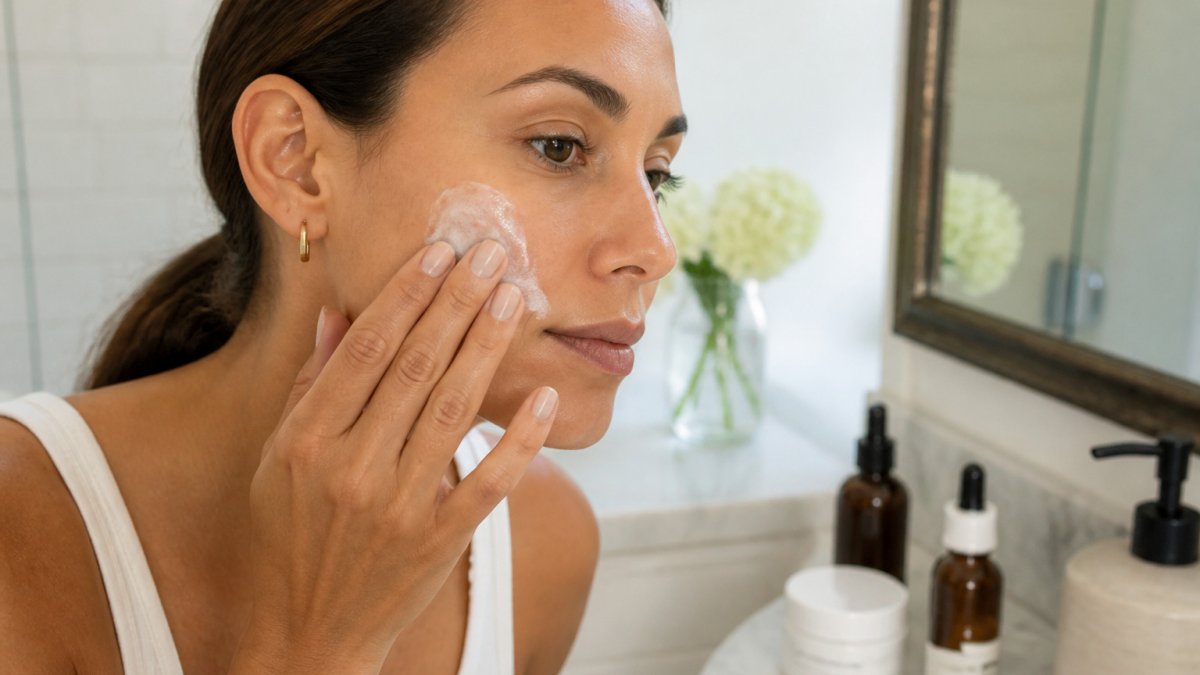
A basic post-peel routine:
- Cleanse with a mild, fragrance-free cleanser
- Apply a hydrating moisturizer twice a day
- Wear broad-spectrum sunscreen every morning
- Avoid exfoliants, scrubs, and retinol until healed
Warning signs to watch for:
- Burning that gets worse instead of better
- Blisters, swelling, or oozing
- Redness that spreads or persists
- Signs of infection, such as warmth or pus
If you see any of these, stop the products and contact a healthcare provider.
!Close-up of a person gently applying moisturizer to their cheek in a bright bathroom with a simple skincare routine on the counter
At-Home Chemical Peel Safety: Sensitive Skin, Tone and Hyperpigmentation Risk
Sensitive skin needs extra care. A peel that is too strong can cause irritation, and irritation can in some cases lead to post-inflammatory hyperpigmentation, which is darker patches left after the skin heals.
To lower your risk:
- Choose a mild acid for your first peel, and read the at-home chemical peel safety guide for sensitive skin before you start.
- Patch test on a small area 24 hours before a full application
- Avoid peeling areas that are already irritated or broken
- Follow the product instructions exactly, and never leave a peel on longer than directed
For guidance on safe at-home use, see the American Academy of Dermatology patient resources and talk to a board-certified dermatologist if you have a history of scarring.
Planning Your Next Peel Safely
Plan your next peel with your retinol schedule in mind. A simple calendar helps:
- Mark your last retinol use date
- Schedule the peel at least 5 to 7 days later
- Book recovery days with no other actives
- Restart retinol only after your skin feels normal, then browse retinol products to restart your routine.
Browse our range of peel products on our site to find one that fits your skin type.
Frequently Asked Questions
Can I use retinol the night after a chemical peel?
No. Wait until your skin has fully healed, usually at least a week, before restarting retinol.
How long should I stop retinol before a peel?
Most people stop retinol 5 to 7 days before a peel. Sensitive skin may need longer.
Will a glycolic peel fade post-inflammatory hyperpigmentation?
Peels may help fade some marks over time, but results vary. A dermatologist can recommend the right treatment for your skin.
Frequently Asked Questions
When should I stop retinol before a chemical peel?
Retinol and other retinoids are typically paused before a peel, and the window depends on the treatment. The exact window depends on the peel strength, your skin sensitivity and the instructions from your provider. Stopping early gives your skin barrier time to settle, which lowers the chance of excessive redness, stinging or peeling. If you are unsure, follow the timing printed with your peel kit and ask a dermatologist or licensed provider to confirm before you start.
How long after a chemical peel can I use retinol again?
Restart retinol only after your skin has fully healed, which usually means no more peeling, tightness or visible redness. Healing time depends on the peel and on how your skin responds, so restart only once your skin feels normal. If irritation returns, pause again and focus on barrier-supporting moisturizers until your skin calms.
Is it safe to use glycolic acid and tretinoin together?
Glycolic acid and tretinoin can be combined by some people, but layering them increases the risk of irritation, dryness and sensitivity, especially for those with reactive or sensitive skin. Starting at lower strengths and watching for stinging or flaking helps you judge tolerance. Avoid using both on the same day as a chemical peel.
Can I use retinol and a chemical peel in the same skincare routine?
Using retinol and a chemical peel in the same routine is possible but needs careful spacing. Retinol should be paused before a peel and restarted only after full recovery, so the two treatments are not active at the same time. Avoid stacking peels, retinol and other strong exfoliants in one evening. A simple schedule with clear rest days helps protect your skin barrier and reduces the risk of over-sensitization.