Last Updated: November 4, 2026
Quick Summary
To prevent acne scars from darkening, apply broad-spectrum sunscreen with SPF 30 or higher to exposed skin every morning and reapply as directed on the label. Treat breakouts gently, avoid picking, and introduce any product for uneven tone slowly, since irritation can contribute to more discoloration.
- Apply moisturizer before sunscreen if you use one.
- Use shade and a hat alongside sunscreen during outdoor exposure.
- Wash gently and follow acne product directions.
- Add only one new active ingredient at a time.
Table of Contents
- Step 1: Tell Flat Dark Marks From Acne Scars
- Step 2: Prevent Acne Scars From Darkening With Daily Sunscreen
- Step 3: Reduce New Marks by Treating Acne Gently
- Step 4: Choose a Post-Inflammatory Hyperpigmentation Treatment Carefully
- Step 5: Use a Mandelic Acid Toner Without Irritating Skin
- Step 6: Track Changes and Know When to See a Dermatologist
- Choose a Personalized Routine From Makeup Artist’s Choice
- Frequently Asked Questions
Step 1: Tell Flat Dark Marks From Acne Scars
Flat dark marks are color changes; acne scars change skin texture. Post-inflammatory hyperpigmentation is a flat brown, gray, or red mark left after inflammation. Indented scars form dips, while raised scars sit above the surrounding skin (the American Academy of Dermatology). Knowing which you have matters because skin care that fades discoloration will not fill an indented scar or flatten a raised one.
This guide explains how to prevent acne scars from darkening and how to care for flat post-acne marks. For a closer look at the differences, read how to tell acne scars from dark marks.
A common mistake is judging a mark by color alone. Check whether the skin feels level when you gently run a clean finger over it.
- Flat and smooth: more likely a color mark
- Indented or raised: a structural scar
- Unsure or changing: ask a dermatologist
Step 2: Prevent Acne Scars From Darkening With Daily Sunscreen
Daily broad-spectrum sunscreen helps limit UV exposure that can make post-acne dark marks look darker. Choose a product labeled broad-spectrum with SPF 30 or higher, and apply it to exposed skin as the final step of your morning skin-care routine. Sunscreen helps prevent additional darkening; it does not erase a mark that is already there.
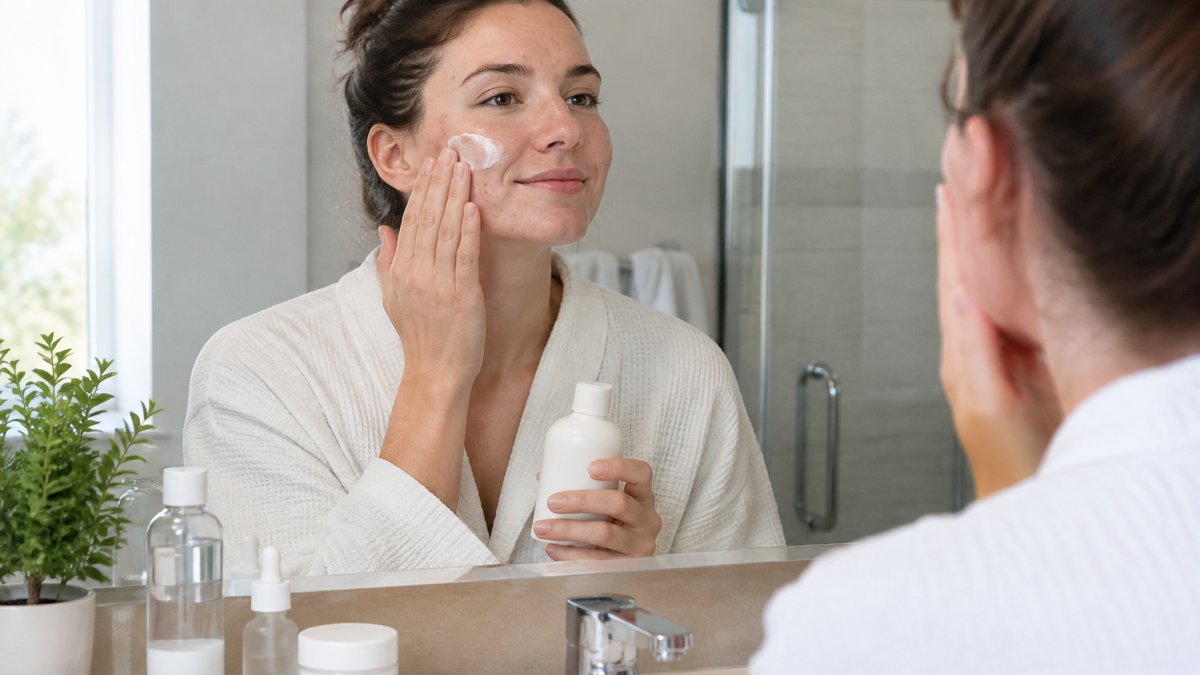
For acne-prone skin, look for a texture you will use consistently and a label such as non-comedogenic if you are concerned about clogged pores. Those labels can help guide a choice, but they cannot guarantee that a product will suit every person. If a sunscreen stings or seems to trigger breakouts, stop using it and try a different formula rather than skipping sun protection altogether.
A visible white cast can make sunscreen harder to wear, especially on deeper skin tones. Try a tinted formula or another finish that blends more comfortably. Tinted products may also be a more appealing option if you dislike the look of a cast, but check that the product still provides broad-spectrum SPF 30 or higher protection.
For a practical morning routine, apply moisturizer first if you use one, then sunscreen. Cover the face, neck, and other exposed areas, following the product label for how much to use. Reapply as directed on the label, especially during extended time outdoors; shade and a hat add protection but do not replace sunscreen on exposed skin.
Watch out: Do not rely on a small amount of sunscreen or a single morning application for prolonged outdoor exposure; follow the label’s directions for application and reapplication.
Our daily SPF 50 sunscreen is an option to explore. The [American Academy of Dermatology’s sunscreen guidance | aad.org] offers more advice on choosing and using sunscreen.
Use these sunscreen steps to help limit further darkening of post-acne marks.
| Step | What to do | Time or frequency |
|---|---|---|
| Choose sunscreen | Use broad-spectrum SPF 30 or higher | Daily |
| Apply sunscreen | Cover exposed skin as the final morning skin-care step | Morning |
| Layer products | Apply moisturizer first if you use one | Before sunscreen |
| Reapply | Follow the product label’s directions | Especially during extended time outdoors |
| Add extra protection | Use shade and a hat alongside sunscreen | During outdoor exposure |
Step 3: Reduce New Marks by Treating Acne Gently
Gentle acne care can reduce the inflammation that leaves post-acne marks. Treat active breakouts early, avoid picking or squeezing pimples, and keep your routine simple. Harsh scrubbing and stacking strong products can irritate skin, making it harder to stick with care.
This is where many routines go wrong: people try to dry out every blemish at once. A better plan is to use acne products as directed and add only one new topical ingredient at a time. If irritation starts, pause the newest product and seek medical advice if the reaction is severe or does not settle.
- Wash gently; do not scrub blemishes
- Keep hands away from pimples
- Follow product directions
- Use a mild moisturizer if your skin feels dry
Acne inflammation is the skin’s response to a blemish, and it can leave a flat mark after the spot heals. Picking adds more irritation, so hands-off care is a practical way to lower the risk of new marks (the American Academy of Dermatology).
Step 4: Choose a Post-Inflammatory Hyperpigmentation Treatment Carefully
Treating an existing flat dark mark is different from preventing it from darkening further. Daily broad-spectrum sunscreen helps limit additional sun-related darkening. Ingredients used to improve the appearance of uneven tone may help existing marks gradually, but they can also irritate skin, and irritation can leave more discoloration, particularly in skin prone to post-inflammatory hyperpigmentation.
Retinoids, including retinol, and vitamin C are among the ingredients used in routines for uneven tone (Postinflammatory Hyperpigmentation). Other products may contain exfoliating acids. These are not interchangeable, and the best choice depends on your skin, current acne treatment, and tolerance. A topical product will not fill an indented scar or flatten a raised one; those are changes in skin texture, not just color.
Keep the routine simple while testing a treatment. Choose one new active ingredient, follow its product directions, and patch-test as directed before applying it more broadly. Avoid starting several new actives at once: if burning, persistent redness, or peeling develops, it can be difficult to identify the cause. If irritation occurs, stop the newest product and let your skin settle; seek medical advice for a severe or persistent reaction.
Watch out: Do not assume that stronger or more frequent exfoliation will fade marks faster; overuse can irritate skin and undermine your prevention routine.
Home remedies are not automatically gentle or well supported. Avoid applying irritating kitchen ingredients to blemishes or dark marks, and do not use an exfoliating product on broken or highly irritated skin. If you use prescription acne treatment, ask your dermatologist or prescribing clinician before adding a new active ingredient.
For more on at-home care, see ways to fade post-inflammatory hyperpigmentation. If marks persist, worsen, or are difficult to distinguish from another skin concern, a dermatologist can help assess them and discuss suitable options.
Step 5: Use a Mandelic Acid Toner Without Irritating Skin
A mandelic acid toner is an exfoliating product, so introduce it slowly and do not layer it with several new actives. Follow the product directions, use it on a small area first, and stop if your skin becomes sore or persistently red. Gentle care beats a fast, harsh routine.
What most guides miss is that irritation can derail the plan. A toner is not a required step, and more frequent use does not guarantee faster fading. Keep the rest of your routine mild while you learn how your skin responds.
Browse toners for acne-prone skin if you want to compare options. Avoid using an exfoliating toner on broken or highly irritated skin, and ask a dermatologist before combining it with prescription acne care.
Step 6: Track Changes and Know When to See a Dermatologist
Track skin changes with consistent notes and seek a dermatologist’s advice for marks that change, persist, or concern you. Check the same areas in similar lighting and note new irritation, active acne, and products used. This helps separate a slow change in color from a reaction to a new routine.
There is no single timeline that fits every mark. Avoid switching products every few days; frequent changes make it hard to tell what helps or irritates your skin.
- Note new products and when you started them
- Track whether a mark is flat, raised, or indented
- Seek care for a changing spot or severe irritation
- Ask about persistent acne or scarring
The [American Academy of Dermatology’s acne information | aad.org] can help you learn when professional care may be useful. A dermatologist can assess skin concerns that home care cannot resolve.
Choose a Personalized Routine From Makeup Artist’s Choice
The best routine is the one matched to your skin concern and simple enough to follow. Start with gentle acne care and daily sun protection; add a treatment for flat dark marks only if your skin tolerates it. Makeup Artist’s Choice offers at-home acid treatments and curated routines.
Our view is clear: do not chase a peel or toner before you know whether the mark is flat discoloration or a structural scar. Explore serums for acne-prone skin as part of a routine suited to blemishes and uneven tone.
Frequently Asked Questions
Why do acne scars turn dark after a breakout?
Inflammation from a breakout can trigger excess pigment, leaving a flat dark mark called post-inflammatory hyperpigmentation. Picking, popping, or squeezing blemishes can increase irritation and the chance of marks. These flat spots differ from indented or raised acne scars, which change the skin’s texture. Sun exposure can make discoloration look darker, so daily broad-spectrum sunscreen is a practical prevention step.
Does sun exposure make acne scars darker?
Sun exposure can darken post-acne marks and make skin discoloration more noticeable. Use a broad-spectrum sunscreen with SPF 30 or higher each day, including on acne-prone skin, and reapply according to the product directions when outdoors. If sunscreen feels heavy or leaves a visible cast, try a different formula that suits your skin tone and texture rather than skipping sun protection.
What ingredients help prevent post-inflammatory hyperpigmentation?
The most useful approach is to prevent and calm acne inflammation, avoid picking, and protect skin from UV exposure. Introduce one product at a time and follow its directions.
Can chemical peels help prevent acne scars from darkening?
If you are considering a post-inflammatory hyperpigmentation treatment, ask a dermatologist about suitable options. Follow product directions.
Persistent acne and dark marks can be frustrating, especially when strong products cause irritation. Makeup Artist’s Choice offers acid treatments including glycolic, lactic, salicylic, and TCA, alongside customizable skin-care routines. Get started with Makeup Artist’s Choice and choose a routine that fits your skin-care needs.