
Quick Summary
The best skincare routine for hyperpigmentation is one you can follow every day, built around daily broad-spectrum sunscreen and one brightening active at night. Consistency matters more than intensity, since dark spots usually respond slowly. Add more products only after your skin has settled.
- Use a broad-spectrum sunscreen with an SPF of 30 or higher every morning, even on cloudy days.
- Introduce one brightening active at a time, such as niacinamide, tranexamic acid, or azelaic acid.
- Start retinoids two nights per week, then build to nightly over four to six weeks.
- Never layer several strong exfoliants or retinoids on the same night; pick one intensive step per evening.
- Visible fading of dark spots often takes three to six months with consistent use.
Table of Contents
- Best Skincare Routine for Hyperpigmentation at Home
- What Causes Hyperpigmentation and Why Routine Matters
- Building a Morning Skincare Routine for Hyperpigmentation
- Evening Routine: Brightening Actives and Chemical Exfoliation
- Mandelic Acid Toner for Hyperpigmentation: How to Use It Safely
- Chemical Peels for Hyperpigmentation: Strength, Skin Type, and Safety
- How Long It Takes to Fade Dark Spots and What to Expect
- Building a Dermatologist-Guided Routine for Your Skin Tone and Next Steps
- Frequently Asked Questions
Best Skincare Routine for Hyperpigmentation at Home
Last Updated: November 3, 2026
What Causes Hyperpigmentation and Why Routine Matters
Hyperpigmentation is one of the most common concerns people bring to at-home skin treatments. The best skincare routine for hyperpigmentation is the one you can follow every day, not the one with the most powerful ingredients on the shelf.
Consistency matters more than intensity. Most dark spots respond slowly, which is why a simple routine you stick with usually beats an elaborate one you abandon after three weeks.
Melanin Production, Sun Damage, and Post-Inflammatory Hyperpigmentation
Melanin is the pigment that gives skin its color, and it is produced by cells called melanocytes. When those cells are stimulated, they produce more melanin than the skin needs, and the excess shows up as dark spots.
Post-inflammatory hyperpigmentation, or PIH, is different. For a deeper look at how to treat post-inflammatory hyperpigmentation, see our treatment-focused article.
Knowing which type you have changes the plan. Sun-related spots call for daily protection above everything else, while PIH calls for calming inflammation and avoiding new irritation.
Building a Morning Skincare Routine for Hyperpigmentation
Your morning routine has one job: protect the progress you make at night. A gentle cleanser, a lightweight moisturizer, and daily sunscreen cover the essentials. Anything else is a bonus.
Choosing a Broad-Spectrum Sunscreen and Antioxidant Serum
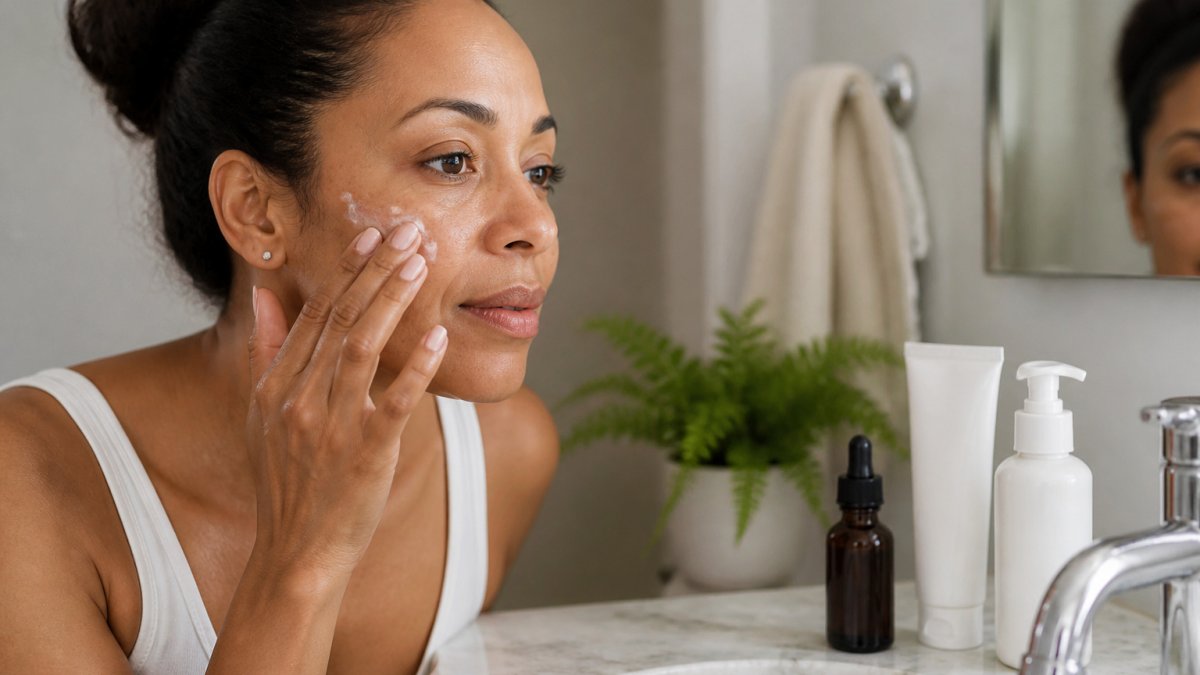
A broad-spectrum sunscreen with an SPF of 30 or higher is the single most important product in a hyperpigmentation routine. Without it, new sun exposure can undo weeks of careful work. Apply it every morning, even on cloudy days, and reapply if you spend extended time outdoors.
An antioxidant serum, often containing vitamin C (ascorbic acid) or niacinamide, can be layered under sunscreen to help protect skin from environmental stress. Start with one active product and give your skin time to adjust before adding another.
Evening Routine: Brightening Actives and Chemical Exfoliation
Evenings are for treatment. This is when skin repairs itself and when brightening actives do their work. Keep the routine short: cleanse, apply your treatment, then moisturize.
The Brightening Actives Worth Knowing
Common brightening ingredients include azelaic acid, kojic acid, niacinamide, tranexamic acid, and vitamin C. Many people also use retinoids (retinol, adapalene, tretinoin), which speed cell turnover and help move pigmented cells to the surface.
Introduce one at a time, and expect some dryness or mild irritation during the first few weeks. A common pattern is to start an active two nights per week and build to nightly over four to six weeks before adding the next product.
Ingredient Interactions That Cause Problems
Most guides list brightening ingredients but skip the combinations that cause irritation, prolonged redness, and, ironically, new post-inflammatory hyperpigmentation. The following pairings are the ones to separate:
- Retinoids plus strong acids (glycolic, lactic, mandelic, salicylic). Layering them on the same night multiplies irritation. Alternate nights, or use the acid in the morning and the retinoid at night only if your skin has already adjusted to both.
- Vitamin C (ascorbic acid) plus benzoyl peroxide. Benzoyl peroxide can oxidize vitamin C and reduce its effectiveness; use them at different times of day.
- Multiple exfoliating acids in one evening. An AHA toner plus a BHA serum plus a physical scrub is a recipe for a compromised barrier. Pick one chemical exfoliant per night.
- Retinoids plus high-strength vitamin C. Both are acidic and both increase photosensitivity; many people tolerate them when separated (vitamin C in the morning, retinoid at night), but starting both in the same week is a common trigger for a flare.
- Niacinamide plus vitamin C. The old warning about this pairing has been largely overstated in modern formulations, but if you are sensitive, apply them at different times of day rather than layering.
Watch out: if a combination stings for more than a minute, turns your skin red for hours, or causes flaking that lasts more than a few days, stop both products, return to a gentle cleanser and moisturizer for a week, and reintroduce one at a time.
Chemical Exfoliation for Cell Turnover
Chemical exfoliants, such as alpha hydroxy acids (glycolic, lactic, mandelic) and beta hydroxy acids (salicylic), help shed the surface layer of pigmented cells so that newer, more even skin can come through. Use them two to three times per week at first, and never layer several strong exfoliants on the same night. Mandelic acid has a larger molecule size than glycolic acid, which means it penetrates more slowly (Evaluating the Efficacy and Safety of Alpha-Hydroxy Acids in Dermatological Practice).
A Sample Evening Sequence
- Cleanse with a gentle, non-foaming cleanser.
- Apply your brightening active (azelaic acid, niacinamide, or tranexamic acid) to dry skin and wait one to two minutes.
- On alternate nights, apply your retinoid instead of the acid exfoliant, not in addition to it.
- Follow with a moisturizer that contains ceramides or panthenol to support the barrier.
- Use sunscreen every morning while using any acid or retinoid, because both increase photosensitivity.
The brightening ingredients below each work on a different part of the pigment pathway.
| Ingredient | How it works | Introduction |
|---|---|---|
| Niacinamide | Interrupts transfer and signaling | Start one active at a time |
| Tranexamic acid | Interrupts transfer and signaling | Start one active at a time |
| Azelaic acid | Slows excess melanin production | Expect dryness in first weeks |
| Kojic acid | Slows excess melanin production | Expect dryness in first weeks |
| Retinoids | Speed turnover of pigmented cells | Two nights per week, then nightly |
| Vitamin C | Brightening active | Start one active at a time |
Mandelic Acid Toner for Hyperpigmentation: How to Use It Safely
Mandelic acid is an alpha hydroxy acid with larger molecules than glycolic acid, which means it penetrates more slowly.
To use a mandelic acid toner safely, apply it to clean, dry skin after cleansing, and wait a minute before adding your next product. The detailed guide to mandelic acid toner benefits, use, and skin types covers this in more depth.
A common mistake is combining mandelic acid with retinoids and physical scrubs on the same night. Pick one intensive step per evening, and use sunscreen every morning while using any acid.
Chemical Peels for Hyperpigmentation: Strength, Skin Type, and Safety
Chemical peels can accelerate fading, but strength matters. You can compare salicylic acid peels offered on this site.
Patch testing is essential. Apply a small amount to an inconspicuous area, such as behind the ear or along the jawline, and wait 24 to 48 hours before using it on your full face.
If you are considering a peel, read the product instructions carefully and avoid using multiple peels in the same week. Know how to neutralize a glycolic acid peel safely before you start.
How Long It Takes to Fade Dark Spots and What to Expect
Most people notice early changes in texture and brightness within four to six weeks of consistent use. Visible fading of dark spots often takes three to six months, and deeper or older spots can take longer. Results depend on the cause, depth, and your skin type.
Set realistic expectations. A routine can significantly improve the appearance of hyperpigmentation, but it may not erase every spot completely. Take progress photos in consistent lighting once a month so you can see gradual changes that are easy to miss day to day.
Building a Dermatologist-Guided Routine for Your Skin Tone and Next Steps
Skin tone affects how hyperpigmentation looks and how it responds to treatment. Deeper skin tones are more prone to post-inflammatory hyperpigmentation, so gentler actives and strict sun protection are especially important. Lighter skin still needs daily sunscreen. Most guides mention this in passing; the adjustments below are the ones that actually change outcomes.
Fitzpatrick IV-VI: Adjustments That Matter
If your skin is in Fitzpatrick type IV, V, or VI, the range that includes many people of African, South Asian, Southeast Asian, Latin American, and Middle Eastern descent, the default brightening routine needs three changes:
- Start lower and slower. Begin with a gentler acid rather than glycolic, and use a retinoid less often than nightly.
- Skip strong at-home peels. Medium and deep peels carry a well-documented risk of post-inflammatory hyperpigmentation and, in rare cases, hypopigmentation in deeper skin. Lower-strength peels used infrequently are the safer at-home option; stronger peels belong in a clinician’s office.
- Prioritize pigment-pathway actives over exfoliation. Tranexamic acid, azelaic acid, and niacinamide tend to be better tolerated than repeated acid exfoliation in deeper skin tones, and they target the pigment signal rather than just the surface.
- Use a tinted sunscreen when possible. Tinted formulas that contain iron oxides provide additional protection against visible light, which some research links to persistent pigment in deeper skin. This is one of the few areas where the product choice genuinely differs by skin tone.
Fitzpatrick I-III: What Changes
The trade-off is that lighter skin shows redness and irritation more visibly, so the same rule applies: introduce one active at a time and back off if irritation appears.
When to See a Dermatologist
A dermatologist can confirm your diagnosis, check for conditions such as melasma, and recommend prescription options when over-the-counter products are not enough. See a clinician if your spots are spreading, changing shape or color, or not improving after three to four months of consistent routine; if you have a history of skin cancer or a spot that looks different from the others; or if you are considering a medium or deep peel.
A Realistic Timeline
Visible fading of dark spots often takes three to six months, and deeper or older spots can take longer. Take progress photos in consistent lighting once a month so you can see gradual changes that are easy to miss day to day.
Next Steps
Start with three steps: a gentle cleanser, daily broad-spectrum sunscreen, and one brightening active. Add more only after your skin has settled.
Frequently Asked Questions
What is a good skincare routine for hyperpigmentation?
A effective routine for hyperpigmentation has three parts: a gentle cleanser, a brightening active such as niacinamide, vitamin C, or azelaic acid, and a broad-spectrum sunscreen with an SPF of 30 or higher applied every morning. At night, add a chemical exfoliant like glycolic or mandelic acid a few times a week. Sunscreen matters most, because UV exposure reactivates melanin production. Introduce new actives one at a time and patch test first, since irritation can worsen dark spots.
What is the best skincare for hyperpigmentation?
No single product works for everyone. Ingredients commonly used for hyperpigmentation include niacinamide, azelaic acid, vitamin C, kojic acid, and alpha or beta hydroxy acids. These target melanin production, speed cell turnover, or both. Results depend on the cause, your skin tone, and how consistently you apply the products. A dermatologist can help match ingredients to your concern, especially if you have melasma or deep pigmentation.
Can chemical peels help with hyperpigmentation?
Chemical peels using glycolic, lactic, mandelic, or salicylic acid work by removing the outer layer of skin. Deeper peels, such as TCA, can address more stubborn pigmentation but carry higher risk of irritation and post-inflammatory hyperpigmentation, particularly in darker skin tones. Start with a milder peel, follow the instructions closely, and always use daily sunscreen afterward. Stop and consult a professional if you notice blistering or intense burning.
How long does it take for a skincare routine to fade dark spots?
Timelines for visible change vary, and more visible fading often takes several months. Deeper or older pigmentation can take longer, and melasma may take many months to respond. Timelines depend on the cause, your skin tone, and how strictly you wear sunscreen. If you see no change after about three months, or if spots darken, consult a dermatologist.
How should people with darker skin tones treat hyperpigmentation?
Darker skin is more prone to post-inflammatory hyperpigmentation, so gentle treatment matters more. Prioritize low-irritation actives such as niacinamide, azelaic acid, and mandelic acid. Avoid picking at skin and introduce exfoliants slowly. Patch test every new product, and seek a dermatologist experienced with melanated skin before using any in-office peel or prescription treatment.