Last Updated: October 30, 2026
Quick Summary
The key difference in acne scars vs hyperpigmentation is texture: hyperpigmentation is flat discoloration, while a scar is a change in the skin’s surface. Flat marks can fade with the right ingredients and patience, but indented scars cannot fade because the skin itself has been remodeled.
- Run a finger across the mark: flat skin points to PIH or PIE, while a dip or bump points to a scar.
- Scars are usually skin-colored, not dark, which is why they can look invisible in photos.
- PIE often improves over roughly one to six months, while PIH typically fades more slowly.
- For brown PIH, use vitamin C, niacinamide, azelaic acid, tranexamic acid, or retinoids plus daily sunscreen.
- Introduce one new active at a time, every two to four weeks, and back off if irritation appears.
Table of Contents
- Acne Scars vs Hyperpigmentation: The Core Difference
- Acne Scars vs Dark Spots: A Side-by-Side Comparison
- The Main Types of Acne Scars and What They Look Like
- How Skin Tone Changes the Way Marks and Scars Appear
- How to Fade Acne Marks: Realistic Timelines and Ingredients
- Chemical Peel for Acne Hyperpigmentation: What to Expect
- Preventing New Marks While Your Acne Is Still Active
- Choosing the Right Peel Strength for Your Skin Concern
- Frequently Asked Questions
Acne Scars vs Hyperpigmentation: The Core Difference
The difference between acne scars and hyperpigmentation comes down to one thing: whether the skin’s surface has changed.
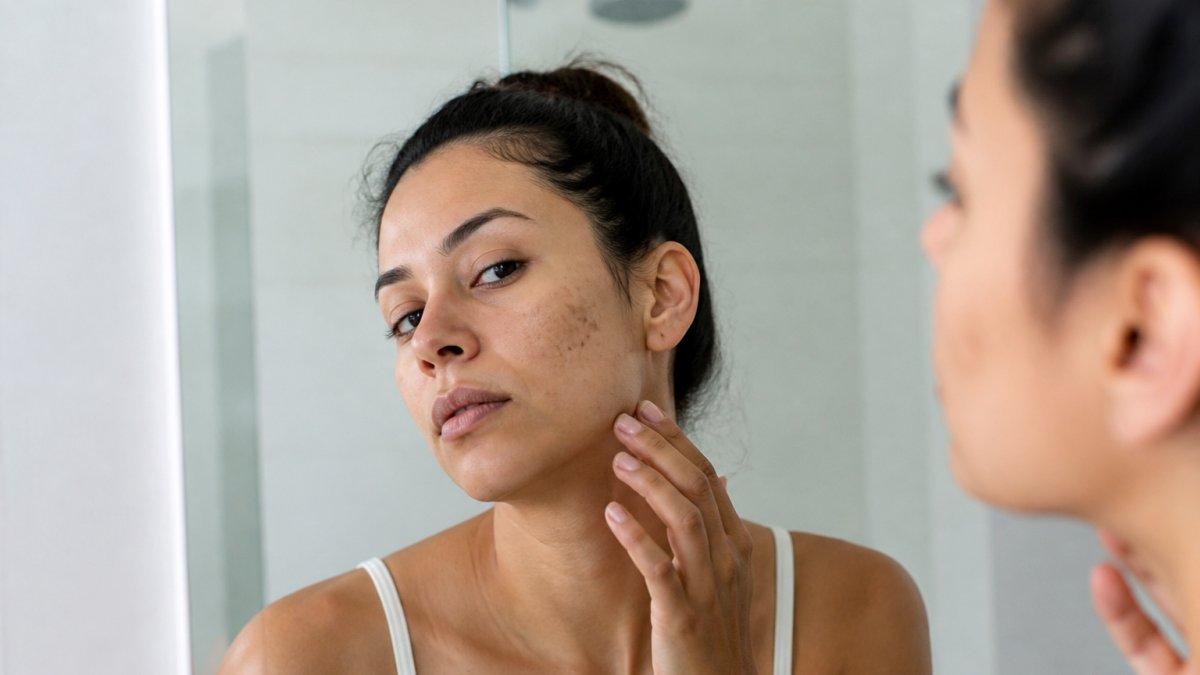
Here’s why it matters. You can fade a dark mark with the right ingredients and patience. You cannot fade an indented scar, because there is nothing to fade.
Below, we break down how to tell them apart, what each type responds to, and where professional-grade treatments fit in.
Flat Color Changes: Post-Inflammatory Hyperpigmentation (PIH) and Erythema (PIE)
Post-inflammatory hyperpigmentation (PIH) is flat darkening of the skin left after inflammation, where melanin production ramps up in response to a healed blemish. Post-inflammatory erythema (PIE) is the red or pink version, caused by dilated blood vessels rather than excess pigment.
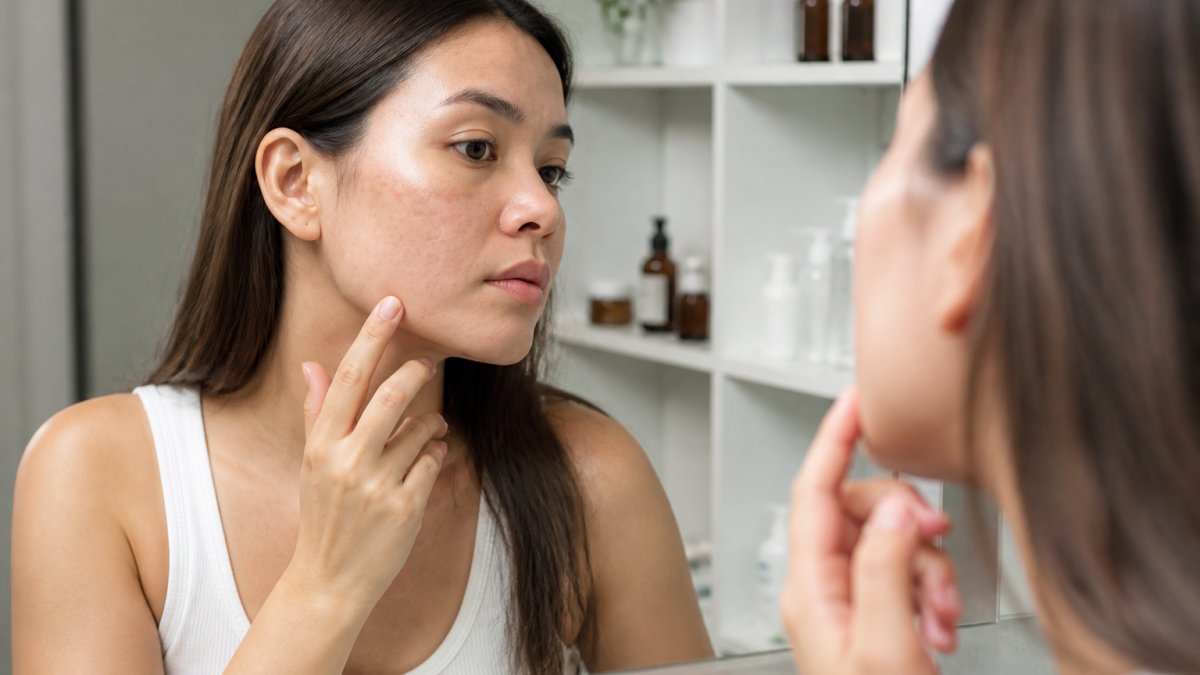
Run a finger across a PIH or PIE mark and you feel normal skin. According to the American Academy of Dermatology’s guidance on dark spots, these marks sit at the surface and respond to topical ingredients over time.
For a full routine, see our guide on how to fade dark spots from acne scars.
Texture Changes: What True Acne Scars Are
An acne scar is a permanent structural change in the skin, formed when inflammation damages collagen and the healing process leaves too little or too much behind. Because these textural alterations persist long after the initial breakout has resolved, addressing them requires a nuanced approach focused on treating acne scars safely.
This is the part most people get wrong. A scar will not lighten with vitamin C or niacinamide, because the problem is architecture, not color. Treatment means rebuilding the surface through resurfacing, which is where peels and in-office procedures come in.
Acne Scars vs Dark Spots: A Side-by-Side Comparison
The fastest way to sort out what you’re looking at is to compare the two directly. Here is how acne scars vs dark spots differ across the factors that change your treatment plan.
| Feature | Hyperpigmentation (PIH/PIE) | Acne Scar |
|---|---|---|
| Texture | Flat, smooth to touch | Indented or raised |
| Color | Brown, red, or pink | Same as surrounding skin |
| Depth | Surface level | Into dermis |
| Fades on its own | Often, over months | No |
| Responds to topicals | Yes | Limited |
| Main treatment | Fading ingredients, sun protection | Resurfacing, peels, clinical care |
The color column is the one people miss. Scars are usually skin-colored, not dark, which is why a scar can look “invisible” in photos and obvious in raking light.
A Practical Self-Assessment: Color, Texture, and Touch
Most guides stop at the table. A short, structured check gets you closer to the right answer, and tells you when to stop guessing.
- Look in raking light. Stand near a window with light coming from the side, not overhead. Flat discoloration stays flat; indented or raised scarring casts a small shadow or catches a highlight that disappears under direct front lighting.
- Stretch the skin gently. With clean hands, pull the skin taut beside the mark. A depressed scar deepens or becomes more obvious; a flat mark does not change shape.
- Close your eyes and touch. Run a fingertip lightly across the area. A dip, a firm bump, or a ridge points to a scar. Smooth, uninterrupted skin points to PIH or PIE.
- Compare color under neutral light. Red or pink that blanches slightly when pressed suggests PIE (dilated vessels). Brown that does not change with pressure suggests PIH (melanin).
- Check the timeline. Flat marks typically begin fading within weeks to a few months. A texture change that is unchanged after six months is very unlikely to be pigment alone.
Self-assessment has real limits. Overhead bathroom lighting flattens texture, phone cameras smooth skin, and makeup or sunscreen can mask both color and depth. On darker skin tones, faint indented scarring is easy to miss because shadow contrast is lower, and redness from PIE is harder to see. If a mark is changing shape, bleeding, or not behaving like either category, that is a reason to see a dermatologist rather than self-treat.
Why the Two Get Confused
Three everyday conditions blur the line:
- Mixed presentations. Many people have both at once, a flat brown mark sitting directly over a shallow boxcar scar. Treating the color will not change the texture underneath.
- Lighting and angle. Front-facing light hides depression; side light reveals it. The same cheek can look clear in one mirror and uneven in another.
- Temporary texture. Active or healing blemishes, clogged pores, and post-peel flaking can feel raised or rough without being scars. Give healing skin a few weeks before classifying it.
If your check points to flat discoloration, the fading guidance below applies. If it points to texture, jump to the scar-type section, the treatment logic is different from the start.
The Main Types of Acne Scars and What They Look Like
Dermatologists group true scars into a few recognizable shapes, and the shape tells you how deep the damage runs.
Atrophic Scars: Ice Pick, Boxcar, and Rolling
Atrophic scars are depressed, caused by too little collagen during healing. There are three common forms:
- Ice pick scars: narrow, deep, pinhole-like punctures
- Boxcar scars: wider depressions with sharp, defined edges
- Rolling scars: broad, shallow waves that give skin an uneven look
Ice pick scars are the hardest to treat topically because of their depth. Rolling scars cover more surface area and often respond better to resurfacing over a series of sessions.
Hypertrophic and Keloid Scars
Hypertrophic scars are raised and stay within the original blemish’s boundary. Keloid scars extend beyond it, driven by excess collagen (Hypertrophic scars and keloids). Both are more common on the chest, back, and jawline, and both are tougher to flatten than atrophic scars are to fill.
How Skin Tone Changes the Way Marks and Scars Appear
Skin tone changes the whole picture, and most guides skip it. On fair skin, PIE shows up as obvious pink or red, while PIH reads as light brown.
That matters for treatment. Darker skin carries a higher risk of post-inflammatory pigmentation from aggressive resurfacing, so a conservative, gradual approach beats an aggressive one. The AAD’s guidance on treating skin of color stresses careful ingredient selection for exactly this reason.
How to Fade Acne Marks: Realistic Timelines and Ingredients
Flat marks fade, but not on your schedule. For a step-by-step at-home routine, see our guide on how to fade acne hyperpigmentation at home. Most PIH and PIE marks improve gradually over weeks to months with consistent care, and the deeper the pigment, the longer it takes.
Realistic Timelines by Mark Type
Timelines vary by person, skin tone, depth of pigment, and how consistently you protect your skin from UV. As a general frame that practitioners commonly describe:
- PIE (red/pink): often the faster of the two. Many people see meaningful improvement over roughly one to six months as vessels calm, especially once active breakouts are controlled.
- PIH (brown): typically slower. Epidermal pigment may improve over several months; pigment that has settled deeper can take many months to a year or more, and darker skin tones often see longer courses.
- Mixed marks over shallow texture: the color may fade on schedule while the texture does not change at all, a useful reality check when progress feels stalled.
Photograph your skin monthly in the same light and angle. Change is slow enough that memory is unreliable, and photos are the only honest progress tracker.
Matching the Ingredient to the Mark
A broad ingredient list is less useful than a decision. Use this as a starting point:
- For brown PIH: vitamin C, niacinamide, azelaic acid, tranexamic acid, and retinoids all interrupt or slow pigment production and speed turnover. Sunscreen is not optional, UV exposure re-darkens fading marks.
- For red PIE: pigment-focused actives do less here because the issue is vascular, not melanin. Gentle calming care, consistent sun protection, and time do most of the work; niacinamide and azelaic acid are reasonable supports, and persistent redness is worth a professional opinion.
- For both: alpha hydroxy acids like glycolic and lactic acid resurface and even tone, but they also irritate, and irritation can trigger new PIH, especially on darker skin.
Safety and When to Escalate
More actives is not better. Stacking strong acids, retinoids, and lighteners in the same routine is a common route to irritation, barrier damage, and fresh pigmentation, the opposite of the goal.
Introduce one new active at a time, every two to four weeks, and back off if you see stinging, peeling, or new darkening. On darker skin tones, start at lower strengths and build slowly; aggressive resurfacing carries a higher risk of post-inflammatory pigmentation.
See a dermatologist if marks are not improving after several months of consistent care, if you have a history of keloids, if you are pregnant or breastfeeding and unsure which actives are appropriate, or if you are considering medium-depth peels or stronger resurfacing.
Chemical Peel for Acne Hyperpigmentation: What to Expect
A chemical peel for acne hyperpigmentation works by accelerating the exfoliation that your skin does slowly on its own, lifting pigmented surface cells and revealing fresher skin beneath. To plan what aftercare products you’ll need post-treatment, browse our post-peel skin care.
Preventing New Marks While Your Acne Is Still Active
Prevention beats correction every time. Every new inflamed blemish is a chance for another mark, so calming active acne is the most effective fading strategy there is.
The moves that matter:
- Treat active breakouts early instead of picking
- Never squeeze or pop, which deepens inflammation and raises scar risk
- Wear sunscreen daily, since UV exposure worsens PIH
Watch out: picking at a healing blemish is the single most common way people turn a temporary mark into a permanent scar.
Choosing the Right Peel Strength for Your Skin Concern
Makeup Artist’s Choice has offered professional-grade at-home peels since 1997, with glycolic, lactic, salicylic, and TCA options. If you’re new to peels, start conservative and let your skin tell you when to step up. To compare which peel formulas suit texture and scarring concerns, see our guide on the best chemical peels for rough skin texture.
Frequently Asked Questions
How can you tell the difference between acne scars and hyperpigmentation?
Run a finger across the mark in good light. If the skin feels flat and only the color is different, it is likely post-inflammatory hyperpigmentation or erythema, which fades over time. If you feel a dip, pit, or raised bump, that is a true acne scar caused by changes in collagen during healing. Flat marks respond to topical ingredients and peels; textural scars usually need resurfacing treatments and a dermatologist’s assessment.
Can acne hyperpigmentation go away on its own?
Yes, flat post-inflammatory hyperpigmentation often fades without treatment, but it takes time. Brown marks can take months to a year or more to clear, and red marks from post-inflammatory erythema can linger even longer because they involve tiny blood vessels. Daily sun protection is the single biggest factor in how quickly they resolve, since UV exposure darkens marks and slows fading. Peels and targeted topicals can shorten the timeline.
Can a chemical peel for acne hyperpigmentation also help with acne scars?
A chemical peel for acne hyperpigmentation works well on flat dark marks by speeding up cell turnover and shedding pigment-rich surface layers. Medium-depth peels can also soften some shallow textural scars by encouraging collagen remodeling, but deep ice pick or boxcar scars rarely resolve with peels alone. Match the peel strength to the concern, start conservative, and see a dermatologist for indented or raised scars.
When should you see a dermatologist about acne marks?
Book a dermatologist if you feel indented or raised texture, if flat marks have not faded after 12 months of consistent sun protection and topicals, or if new acne keeps producing fresh marks. A dermatologist can confirm whether you have atrophic or hypertrophic scarring and discuss options like laser resurfacing, microneedling, or prescription-strength treatments that go beyond at-home care.
Sorting out your own skin is the hard part: marks fade with patience, scars need resurfacing, and most people try to treat both the same way. Makeup Artist’s Choice makes the resurfacing side simpler with professional-grade at-home peels, a range of acid strengths including glycolic, lactic, salicylic, and TCA, and routines built around your specific concern. Get started with Makeup Artist’s Choice and match your treatment to what your skin is actually telling you.