Last Updated: November 16, 2026
Quick Summary
To stimulate collagen for acne scarring at home, use gentle exfoliation with mandelic or lactic acid, wear daily sunscreen, and stay consistent. Results build slowly over 8 to 12 weeks. Deeper scars usually need a clinician-led procedure.
- Start mandelic or lactic acid at a low concentration, two or three times a week.
- Daily broad-spectrum sunscreen with SPF 30 or higher protects new collagen as it forms.
- Expect at least 8 to 12 weeks of consistent care before judging results.
- Oral collagen supplements have inconsistent results and are not well established.
- Ice pick, boxcar, and rolling scars respond differently, so identify your type first.
Table of Contents
- How Collagen Repairs Acne Scars and Why It Matters
- How to Stimulate Collagen for Acne Scarring at Home
- How to Stimulate Collagen for Acne Scarring Naturally: What Works and What Doesn’t
- Identifying Your Scar Type: Pitted Acne Scars and Treatment Fit
- Choosing the Best Collagen for Acne Scars: Supplements, Topicals and Procedures
- Realistic Timelines, Safety Limits and When to See a Clinician
- Building Your Collagen-Stimulating Routine Starting Tonight
- Frequently Asked Questions
How Collagen Repairs Acne Scars and Why It Matters
Acne scars form when the skin loses collagen during inflammation, leaving small depressions in the dermis (the American Academy of Dermatology). Acid-based treatments are one approach people use to address these concerns, and collagen is central to how many of them are understood to work. Collagen is the structural protein that gives skin its firmness and helps it recover after injury.
Here is the basic idea. A mild, controlled injury tells the skin to rebuild. That rebuilding process produces new collagen, which can slowly fill in and smooth out indented scars. Most of the work happens beneath the surface, so visible change takes weeks to months, not days.
Not every method that claims to boost collagen does the same job. Some approaches trigger the skin’s repair response directly. Others only support the skin while it heals. Knowing the difference helps you set realistic expectations.
- Collagen loss: Acne damages the dermis and reduces structural support.
- Repair response: Gentle stimulation prompts the skin to produce new collagen.
- Slow results: Improvement builds over several weeks or months.
How to Stimulate Collagen for Acne Scarring at Home
At-home collagen stimulation works best when it is gentle and consistent. Harsh treatments can do more harm than good, especially on sensitive or already irritated skin.
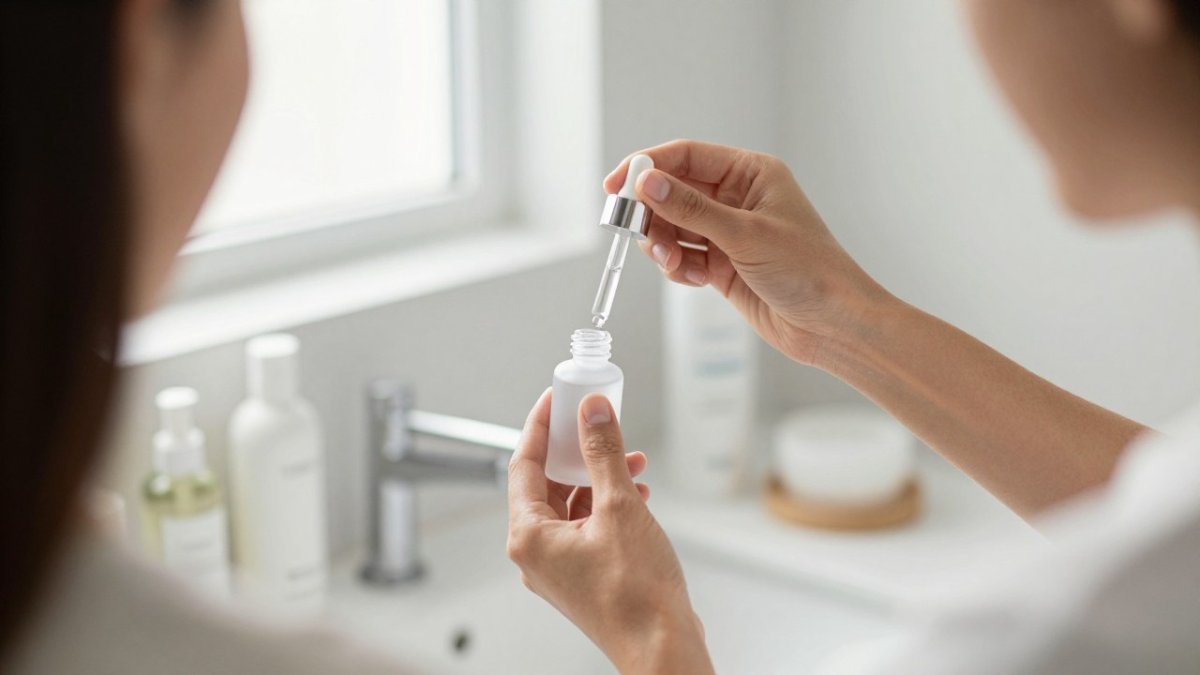
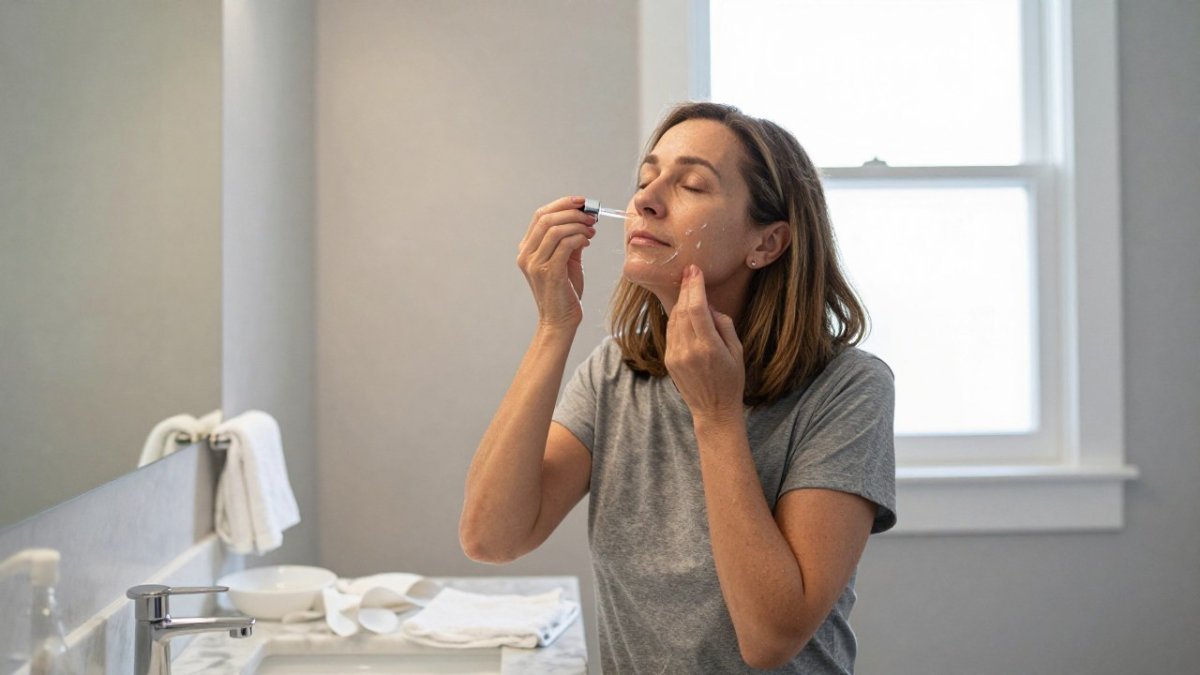
Start with a simple routine and add steps slowly. Give your skin time to adjust before adding anything new.
Gentle Exfoliation With Mandelic and Lactic Acid
Mandelic and lactic acids are often described as gentler options for at-home exfoliation. If you are unsure whether mandelic acid suits your skin, this guide to whether it is gentle enough for sensitive skin walks through who it suits and who should be cautious. They remove dead skin cells on the surface and encourage the skin to turn over.
Begin with a low concentration and use it only two or three times a week at first. Watch how your skin responds before increasing frequency. If you notice persistent stinging, redness that lasts, or peeling, scale back.
A common mistake is exfoliating too often because you want faster results. Over-exfoliation weakens the skin barrier and can make scarring look worse. If that has already happened, our guide on how to fix over-exfoliated skin step by step explains how to recover before continuing with acids.
Daily Sunscreen and Vitamin C
Sun exposure darkens post-acne marks and slows healing. Daily broad-spectrum sunscreen protects new collagen as it forms. Choose a formula with SPF 30 or higher and reapply when you spend time outdoors.
Vitamin C serums are another common addition to an at-home routine. Introduce vitamin C gradually, since some formulas sting on reactive skin.
How to Stimulate Collagen for Acne Scarring Naturally: What Works and What Doesn’t
Many people look for natural ways to stimulate collagen. Some options have a reasonable basis, while others are mostly marketing.
Niacinamide is one ingredient often discussed for acne scars. It is a form of vitamin B3 and is not a replacement for professional treatment on deep scars.
- Niacinamide: Reasonable for mild marks and uneven tone.
- Topical retinoids: Can encourage skin turnover, but may irritate sensitive skin.
- Oral collagen supplements: Results are inconsistent and not well established.
- Miracle serums: Be skeptical of any product claiming to erase deep scars alone.
Identifying Your Scar Type: Pitted Acne Scars and Treatment Fit
Not all acne scars respond the same way, and the single most useful thing you can do before spending money on any treatment is to identify which type you have.
Atrophic scars come in three general shapes, and each responds differently to collagen stimulation:
- Ice pick scars: Narrow, deep, V-shaped holes, often under 2 mm across. The tract runs deep into the dermis, so surface-only topicals rarely reach the base. Ice pick scars are generally harder to improve at home and often need a clinician-led procedure.
- Boxcar scars: Wider, box-shaped depressions with defined vertical edges, usually 1.5-4 mm across. Shallow boxcar scars often respond to microneedling, fractional laser, or medium-depth peels. Deep boxcar scars may need filler placed under the depression or a combination of resurfacing and subcision.
- Rolling scars: Shallow, wave-like dips caused by fibrous bands tethering the skin to deeper tissue. Because the problem is often the tether, not just collagen loss, rolling scars frequently need subcision (a clinician releases the bands with a needle) before or alongside collagen-stimulating treatments. Microneedling and laser alone can produce only modest improvement on tethered rolling scars.
A practical way to use this: hold your skin taut in good lighting and look at the shadow pattern. Sharp, deep dots point to ice pick. Flat-bottomed depressions with crisp edges point to boxcar.
This scar-type map is the piece most treatment lists skip. Matching the option to the shape, rather than picking the trendiest procedure, is what separates a realistic plan from an expensive experiment.
The article sorts pitted acne scars into three shapes, each with a different fit for treatment.
| Scar type | Typical size | Best-fit approach |
|---|---|---|
| Ice pick | Under 2 mm across | Often needs clinician-led procedure |
| Boxcar | 1.5-4 mm across | Microneedling, fractional laser, or peels |
| Rolling | Shallow, wave-like dips | Subcision, often with collagen treatments |
Choosing the Best Collagen for Acne Scars: Supplements, Topicals and Procedures
The phrase “best collagen” can mean three very different things: a supplement you swallow, a product you apply, or a procedure a clinician performs. They do not work the same way, they are not backed by the same level of evidence, and they do not cost the same. Sorting them by mechanism and evidence is the fastest way to stop guessing. That same evidence-first distinction matters when considering collagen’s role in skin elasticity, a related question Todo Saludable connects to the broader picture of skin health.
Oral collagen supplements
When you swallow collagen, your digestive system breaks it into amino acids and small peptides. There is no direct path from a capsule to the dermis of a scar. Some small studies suggest collagen peptides may modestly improve skin hydration and elasticity, but the evidence that they reliably rebuild collagen inside an indented acne scar is limited and inconsistent. Treat supplements as a low-risk, low-certainty add-on, not a scar treatment. They are the easiest to start and the least proven.
Topical ingredients
Topicals work on the surface and the upper layers of the skin. Their realistic job is to support the skin barrier, improve texture and tone, and reduce the appearance of post-acne marks, not to fill a deep depression.
- Retinoids (tretinoin, adapalene): The best-studied topical for encouraging skin turnover and supporting collagen over time. Expect 12 weeks or more before texture changes, and expect irritation during adjustment.
- Niacinamide: Well tolerated, useful for tone and marks, but not a structural scar treatment.
- Vitamin C: Supports antioxidant defenses and collagen synthesis as a cofactor, but cannot reach the base of a deep scar.
- AHA/BHA acids (mandelic, lactic, glycolic, salicylic): Improve surface texture and turnover. Useful for maintenance and mild marks; limited on true depressions.
Professional procedures
In-office treatments create a controlled injury or deliver energy into the dermis, which triggers a genuine wound-healing and collagen-remodeling response. This is the category with the strongest mechanism for changing scar structure.
- Microneedling (with or without radiofrequency): Creates micro-channels that prompt collagen production. Typically 3-6 sessions spaced 4-6 weeks apart for atrophic scars.
- Fractional laser (non-ablative or ablative): Removes columns of tissue and drives remodeling. Usually 1-3 sessions depending on intensity, with several days to a week of downtime for ablative options.
- Chemical reconstruction (TCA CROSS): Focal acid applied directly into ice pick scars; multiple sessions are common.
- Subcision: Releases fibrous tethers under rolling scars; often combined with microneedling or filler.
- Dermal fillers: Provide immediate volume under depressed scars; results are temporary and require maintenance.
How to sequence them
The realistic order is: control active acne first, then treat scar structure with a clinician-led procedure matched to scar type, then maintain with topicals and sun protection. Supplements, if used at all, sit alongside the routine as an optional extra. Starting procedures while acne is still active raises the risk of new scars and infection.
Watch out: layering strong acids, retinoids, and at-home microneedling at the same time is a common way to damage the skin barrier and make marks look worse, introduce one active at a time and let your skin adjust.
Makeup Artist’s Choice focuses on professional-grade at-home acid treatments. For deeper scars, a dermatologist can recommend procedures that go beyond what home routines typically achieve.
Realistic Timelines, Safety Limits and When to See a Clinician
Patience matters. Most people need at least 8 to 12 weeks of consistent care before judging results, and deeper scars can take longer.
Stop treatment and speak with a clinician if you notice blistering, severe burning, spreading redness, or signs of infection. People with active acne, eczema, rosacea, or a history of keloid scarring should talk to a doctor before starting new acid treatments.
A dermatologist can also confirm your scar type and suggest procedures that home care cannot match. Seeing one early can save time and money.
Building Your Collagen-Stimulating Routine Starting Tonight
You do not need a complicated routine to start. Begin tonight with a gentle cleanser, a moisturizer, and a low-strength mandelic or lactic acid two nights a week. Add daily sunscreen every morning without exception.
Track your progress with monthly photos in the same lighting. Small changes are easy to miss day to day but clear over several months. Once your skin tolerates the basics well, you can consider stronger options or a professional consultation.
Start slow, stay consistent, and protect your skin from the sun. To keep new marks from forming while you treat existing scars, see how to prevent post-acne marks before they form. Makeup Artist’s Choice has offered professional-grade at-home acid treatments since 1997, including glycolic, lactic, salicylic, and TCA peels.
Frequently Asked Questions
Can collagen repair acne scars?
Collagen can help improve the appearance of acne scars, particularly atrophic or indented scars where the skin lacks volume. Acne scars form when the skin loses collagen during healing, so stimulating new collagen production can gradually fill and smooth depressions. Results are usually modest and build over several months of consistent treatment. Scars that have been present for years, or deep ice-pick scars, typically respond less to home methods and may need clinician-led procedures such as microneedling, lasers or fillers. A dermatologist can assess your scar type and recommend the right approach.
Do collagen supplements help with acne scars?
The evidence for oral collagen peptides improving acne scars specifically is limited. Some small studies suggest collagen peptides may support skin elasticity and hydration, but they have not been shown to reliably reshape established scars. If you try one, choose a third-party tested product and set expectations accordingly. Topical retinoids and procedures that trigger collagen induction have stronger supporting evidence for scar improvement.
What treatment works best for pitted acne scars?
Pitted acne scars respond best to procedures that trigger collagen remodeling in the dermis. Fractional laser resurfacing and microneedling are the most commonly used options, and subcision or filler injections can help with deeper, rolling scars. Multiple sessions are usually needed, often spaced four to six weeks apart. Topical products alone rarely lift deep pits. Consult a board-certified dermatologist to match the treatment to your scar type and skin tone.
How long does collagen stimulation take to improve acne scars?
Visible improvement from collagen stimulation typically takes three to six months, because new collagen forms gradually as the skin remodels. Procedures often require three to six sessions, and results continue to develop for several months after the final treatment. Consistent home care, including daily sunscreen, is part of a typical routine. Track progress with photos taken in the same lighting every four weeks so changes are easier to judge objectively.