

Last Updated: November 14, 2026
Quick Summary
To fix uneven skin texture at home, first identify the likely cause, such as dryness, clogged pores, acne marks, sun damage, or product irritation. Then build a gentle cleansing and moisturizing base, add sunscreen every morning, and introduce one active at a time, like mandelic acid or retinol, slowly. Expect gradual improvement over two to three months rather than overnight results.
- Track where texture is worst and whether skin feels tight, bumpy, or red to identify your pattern.
- Cleanse twice daily with a gentle cleanser and moisturize even if your skin is oily.
- Start mandelic acid toner two to three times per week on clean, dry skin.
- Introduce retinol slowly, starting with a pea-sized amount two nights per week, and never combine it with a strong acid on the same night.
- Expect first changes in two to four weeks and more even tone and texture by two to three months.
Table of Contents
- What Causes Uneven Skin Texture and How to Identify Yours
- Build a Gentle Cleansing and Moisturizing Base First
- Mandelic Acid Toner: Gentle Exfoliation for Sensitive and Acne-Prone Skin
- Retinol for Textured Skin: How to Introduce It Safely
- Chemical Peel for Uneven Skin Texture: What to Use at Home and What to Avoid
- How to Fix Uneven Skin Texture at Home Overnight: What Is Realistic
- Set Your Routine, Track Progress, and Know When to See a Dermatologist
- Frequently Asked Questions
What Causes Uneven Skin Texture and How to Identify Yours
Uneven skin texture is a symptom, not a single condition.
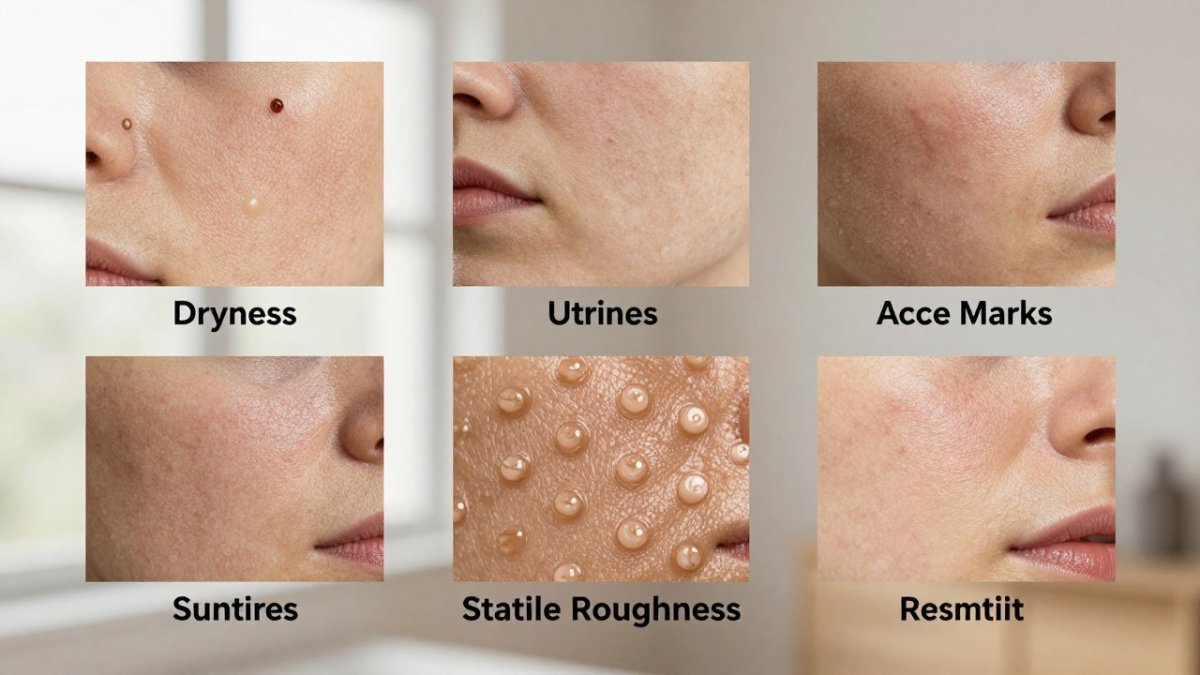
Start with a structured self-check rather than a single test.
**1.
2. Clogged pores and congestion. You see small bumps, blackheads, or a pebbled texture concentrated on the nose, chin, and forehead.
**3.
4. Sun-related roughness and uneven tone. Roughness appears on the cheeks, nose, and other exposed areas, often with freckling, uneven color, or fine lines.
5. Irritation from products or habits. Texture appeared or worsened after starting a new scrub, acid, or retinoid, or after over-washing.
A short written log makes the pattern clearer.
Build a Gentle Cleansing and Moisturizing Base First
Before you add any exfoliant, build a calm base. A healthy skin barrier handles active ingredients far better than stressed skin does.
Start with these basics:
- Cleanse twice a day with a gentle, non-stripping cleanser.
- Apply a moisturizer while skin is still slightly damp.
- Use sunscreen every morning, even on cloudy days.
Gentle cleansing removes oil and dirt without leaving skin tight. Look for creamy or gel cleansers labeled for sensitive skin. Avoid products that squeak clean, since that squeak often means the skin barrier has been stripped.
A good moisturizer locks in water and supports the barrier. Choose one with ceramides, glycerin, or hyaluronic acid if your skin feels dry. Oily skin usually does well with lightweight gel formulas.
Watch out: Many people skip moisturizer because their skin feels oily. Oily skin still needs hydration. Skipping it can push your skin to make even more oil.
Mandelic Acid Toner: Gentle Exfoliation for Sensitive and Acne-Prone Skin
Mandelic acid is an alpha hydroxy acid with larger molecules than glycolic acid (Evaluating the Efficacy and Safety of Alpha-Hydroxy Acids in Dermatological Practice). Because it penetrates more slowly, it is often considered gentler for sensitive or acne-prone skin. It helps loosen dead skin cells and can smooth rough texture over time.
Mandelic acid products are available for regular, gentle use. For current options and prices, visit the Makeup Artist’s Choice website, and always check the label and start slowly.
Here is a simple way to add a mandelic acid toner:
- Use it 2 to 3 times per week at first.
- Apply it to clean, dry skin after cleansing.
- Follow with moisturizer.
- Always wear sunscreen the next morning.
Stop using it if you notice burning, stinging, or persistent redness. Mild tingling can be normal, but pain is a sign to pause.
Retinol for Textured Skin: How to Introduce It Safely
Retinol is a vitamin A derivative that speeds up skin-cell turnover. Faster turnover helps old cells shed and can make texture look smoother. Retinoids are often used for rough skin and uneven tone, but they work best when you ease into them.
Introduce retinol slowly:
- Weeks 1 to 2: Use a pea-sized amount two nights per week.
- Weeks 3 to 4: Increase to three nights if skin feels fine.
- After one month: Move to nightly use only if you tolerate it well.
Apply retinol only at night, after cleansing and before moisturizer. Skip it on nights you also use a strong acid. Using both at once is a common mistake that leads to irritation.
Watch out: Retinol can make skin peel and feel dry, especially early on. Thick moisturizer and daily sunscreen help a lot. Retinol also raises sun sensitivity, so sunscreen is not optional.
Chemical Peel for Uneven Skin Texture: What to Use at Home and What to Avoid
Chemical peels use acids to loosen the outer layer of skin. At home, mild peels can help with rough texture, but strong peels are generally performed by a professional. Many people with sensitive skin worry about damage, and that concern is reasonable.
Some at-home peels use glycolic, lactic, or mandelic acid at low strengths. These are generally gentler than deeper peels used in clinics. Makeup Artist’s Choice offers professional-grade at-home chemical peels, and you can review current options on our site.
Follow these rules:
- Patch test first. Apply a small amount to your jaw for 24 hours.
- Follow the directions exactly. Do not leave the product on longer than instructed.
- Neutralize when required. Some glycolic peels need a neutralizer. Read the instructions before you start.
- Limit frequency. Most people use a mild peel no more than once every one to two weeks, and sometimes less.
- Protect your skin afterward. Use a gentle moisturizer and sunscreen the next day.
Avoid peels if you have open wounds, active cold sores, or broken skin. Also avoid stacking a peel with retinol on the same night. If you develop blistering, severe pain, or swelling, stop and get medical care.
How to Fix Uneven Skin Texture at Home Overnight: What Is Realistic
No product will fix uneven texture overnight. You may notice skin feeling softer or looking brighter after one use, but lasting smoothness takes weeks.
A realistic timeline looks like this:
- First few days: Skin may feel smoother or look a little brighter.
- Two to four weeks: Rough patches start to soften as cell turnover improves.
- Two to three months: Tone and texture look more even for most people.
Overnight results usually come from hydration and a flat surface, not from treatment. A good night routine can make skin look plumper and calmer by morning. Expect small gains, not a transformation.
Be wary of any product or video that promises instant results. Dramatic overnight claims often come with strong ingredients that irritate skin and make texture worse.
Set Your Routine, Track Progress, and Know When to See a Dermatologist
A routine only works if it fits your skin type and your tolerance for actives. The same mandelic toner that calms oily, congested skin can sting dry or sensitive skin if used too often. Build the base first, then add one active at a time, and let your skin’s response set the pace.
Match frequency and products to your skin type
Dry or sensitive skin. Prioritize barrier support: a creamy cleanser, a moisturizer with ceramides or glycerin, and sunscreen every morning.
Oily or acne-prone skin. Use a gel cleanser and a lightweight, non-comedogenic moisturizer. Mandelic acid two to three times a week suits many people with congestion, and a low-strength retinol can be added on alternate nights once the acid is tolerated.
Combination skin. Treat zones differently: a lighter moisturizer on the T-zone and a richer one on cheeks, and apply exfoliants mainly where congestion or roughness appears rather than across the whole face.
Mature or sun-damaged skin. Retinoids and vitamin C do more of the heavy lifting here, but introduce them slowly and keep sunscreen daily, since both increase sun sensitivity and UV exposure is the main driver of further roughness.
A week-by-week plan for introducing actives
- Weeks 1-2: Gentle cleanser, moisturizer, and morning sunscreen only. This establishes a calm baseline and shows you how your skin behaves without actives.
- Weeks 3-4: Add one exfoliant (mandelic or lactic acid) two nights a week. Apply to clean, dry skin, follow with moisturizer, and use sunscreen the next morning.
- Weeks 5-6: If skin is comfortable, keep the exfoliant at two to three nights and add a pea-sized amount of retinol on two other nights. Never apply an acid and retinol on the same night.
- Weeks 7-8: If both are tolerated, you can increase retinol toward three nights a week. Keep at least one or two rest nights with cleanser and moisturizer only.
- Week 9 onward: Adjust based on response. If irritation appears, drop back to the previous frequency for two weeks before trying again.
A sample week once you are established might look like this: mornings are cleanser, moisturizer, and sunscreen every day; Monday, Wednesday, and Friday nights are exfoliant plus moisturizer; Tuesday and Thursday nights are retinol plus moisturizer; the remaining nights are cleanser and moisturizer only.
Watch out: Combining an acid, a retinol, and a peel in the same week is a common route to irritation that makes texture look worse; if skin stings, peels, or turns red, pause all actives until it settles.
Track progress realistically
Expect the first changes in two to four weeks and more visible smoothing of tone and texture by two to three months. Take photos in the same light every two weeks and note irritation, dryness, or breakouts in a short journal. Judge progress over 8 to 12 weeks before changing products, and change only one thing at a time so you can tell what helped.
Know when to see a dermatologist
See a clinician if texture changes are sudden, painful, spreading, or worsening despite a consistent routine. Also seek care for a mole that changes shape, color, or size, a sore that does not heal, or bleeding without a clear cause. Deep scarring, significant hyperpigmentation, and severe reactions after a product or peel go beyond home care and warrant professional assessment.
American Academy of Dermatology guidance on when to see a dermatologist for skin changes
Consistency, not intensity, is what moves texture. Give the routine time, protect your skin from the sun, and let your skin’s response guide the next adjustment.
Here is a quick reference for the week-by-week plan for introducing actives.
| Week | Add | Frequency |
|---|---|---|
| 1-2 | Gentle cleanser, moisturizer, morning sunscreen | Daily |
| 3-4 | One exfoliant (mandelic or lactic acid) | Two nights a week |
| 5-6 | Keep exfoliant; add retinol on other nights | Exfoliant 2-3 nights; retinol on two other nights |
| 7-8 | Retinol toward three nights a week | Keep one or two rest nights |
| 9 onward | Adjust based on response | Drop back two weeks if irritation appears |
Frequently Asked Questions
How long does it take to improve skin texture?
Most people notice smoother skin within four to six weeks of consistent use of exfoliating acids or retinoids, though deeper texture changes such as fine lines or scarring can take three to six months. Progress depends on your skin type, the strength of the products and how consistently you apply sunscreen. Take a photo in the same lighting every two weeks so you can compare changes objectively rather than relying on day-to-day impressions. If you see no improvement after three months of a steady routine, reassess the products or talk with a dermatologist.
Can exfoliating acids smooth uneven skin texture?
Yes. Chemical exfoliants such as alpha hydroxy acids, polyhydroxy acids and mandelic acid loosen the bonds between dead skin cells, which helps the skin shed its surface layer more evenly and leaves a smoother feel. Start with a low concentration once or twice a week, and increase frequency only if your skin tolerates it without stinging, redness or peeling. Always follow with a moisturizer and daily sunscreen, because freshly exfoliated skin is more prone to sun damage.
Does retinol get rid of textured skin?
Retinol can improve the appearance of rough, bumpy or uneven texture by speeding skin-cell turnover and supporting collagen production over time. Introduce it slowly, using a pea-sized amount two or three nights a week and building up as tolerated. Expect some dryness or mild irritation during the first few weeks. Retinol makes skin more sun-sensitive, so daily broad-spectrum sunscreen is essential. Results typically take several months.
When should I see a dermatologist about rough or bumpy skin?
See a dermatologist if texture changes are sudden, spreading, painful, bleeding, or accompanied by a mole that is changing in size, shape or color, since these can signal a condition that needs medical evaluation. Also seek care if bumps are persistent, scarring, or do not improve after about three months of a consistent home routine. A dermatologist can distinguish between cosmetic texture concerns and conditions that need prescription treatment or in-office procedures.