
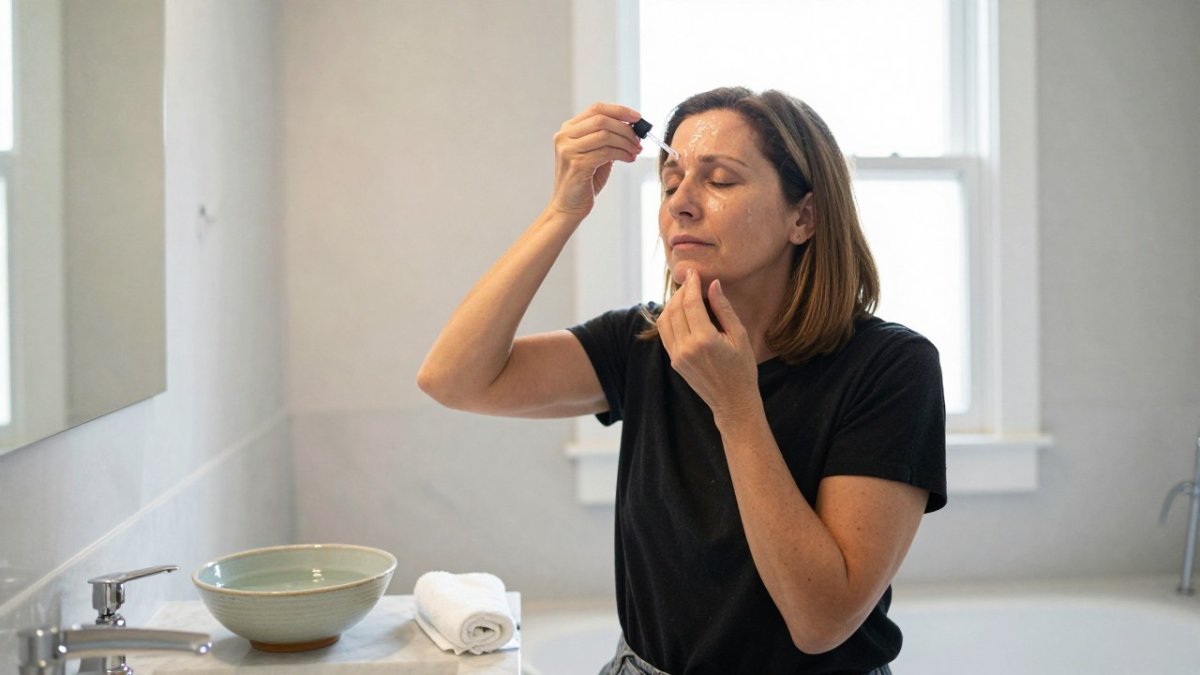
Last Updated: November 17, 2026
Quick Summary
An anti-aging skincare routine for beginners starts with four products: a gentle cleanser, a moisturizer, a broad-spectrum sunscreen, and one active ingredient such as retinol or vitamin C. Apply products thinnest to thickest, and introduce your active slowly so your skin can adjust.
- Daily broad-spectrum sunscreen is the single most reliable anti-aging habit.
- Start a beginner retinol routine at two nights per week and build slowly.
- Apply products thinnest to thickest, with sunscreen last in the morning.
- Use a pea-sized amount of retinol on fully dry skin for the entire face.
- Expect subtle texture and tone changes around weeks six to eight.
Table of Contents
- Why a Simple Anti-Aging Skincare Routine Beats a Complicated One
- The Core Four: Cleanser, Moisturizer, Sunscreen, and One Active
- Product Order: How to Layer Your Routine for Results
- Your Beginner Retinol Routine: A Week-by-Week Introduction Plan
- Ingredient Interactions: What Not to Mix in Your Anti-Aging Skincare
- Routine Variations for Sensitive, Acne-Prone, and Dry Skin
- What to Do When Irritation Happens
- Realistic Timelines and When to See a Dermatologist
- Frequently Asked Questions
Why a Simple Anti-Aging Skincare Routine Beats a Complicated One
An anti aging skincare routine for beginners works best when it stays small: a gentle cleanser, a moisturizer, a sunscreen, and one active ingredient. That is the whole foundation. Everything else is optional, and most of it can wait.
The routine that survives is the one you can repeat on a tired Tuesday.
The American Academy of Dermatology’s guidance on caring for your skin makes the same point: consistency matters more than complexity. Fewer products mean fewer interactions, fewer reactions, and a clearer picture of what actually works. Start with four products. Add a fifth only when the first four feel automatic.
The Core Four: Cleanser, Moisturizer, Sunscreen, and One Active
The core four are the four products every beginner routine needs: a gentle cleanser, a moisturizer, a broad-spectrum sunscreen, and one treatment active such as retinol or vitamin C. Everything else is a bonus.
Here is how each one earns its place:
- Cleanser: removes sunscreen, oil, and debris without stripping. A mild, fragrance-free formula is the safer default.
- Moisturizer: supports the skin barrier with humectants and ceramides, which keeps skin comfortable and reduces dryness.
- Sunscreen: protects against the UV exposure that drives fine lines and uneven tone. Daily use is the single most reliable anti-aging habit.
- One active: a retinoid or vitamin C serum that does the repair work. Pick one, not three.
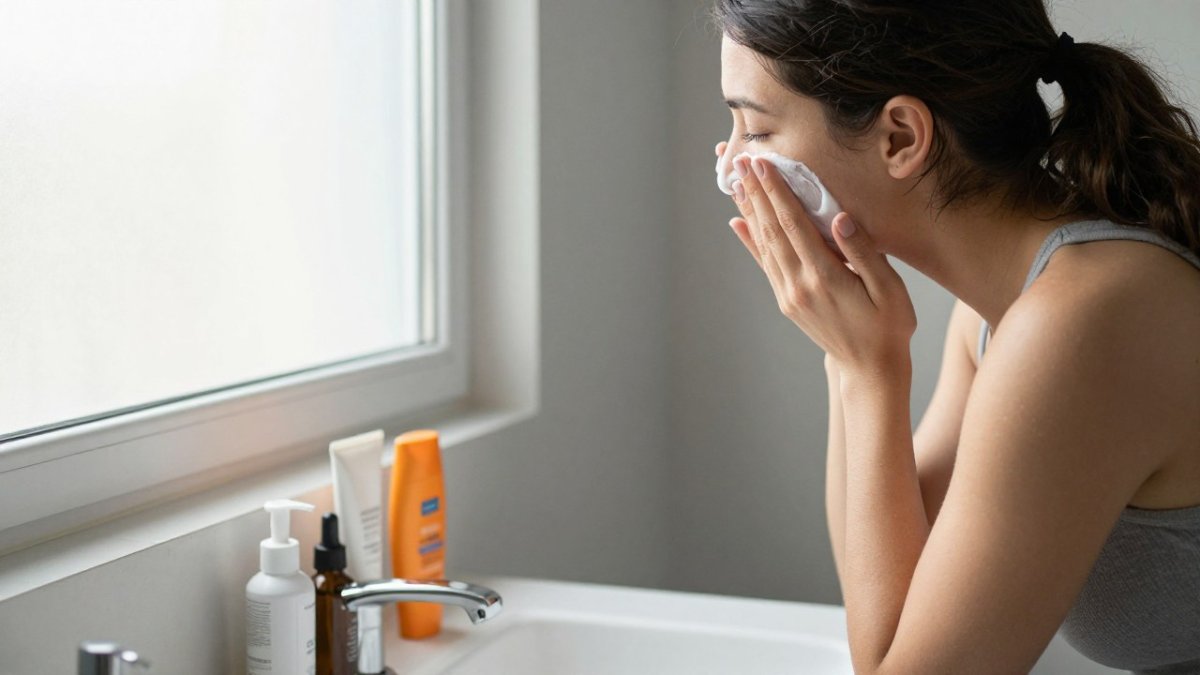
If you want a broader walkthrough of which product categories matter and why, our skincare anti-aging products guide covers the full landscape before you commit. You can also browse anti-aging moisturizers to pick the texture that suits your skin.
Morning Skincare Routine Steps
The morning routine is short and protective. Do these in order:
- Cleanse with lukewarm water and a gentle face wash. Skip a second cleanse if your skin feels tight.
- Apply a vitamin C serum, if you use one, to dry skin.
- Follow with moisturizer while skin is still slightly damp.
- Finish with broad-spectrum sunscreen, two finger-lengths for the face and neck.
Sunscreen is the step people skip, and it is the one doing the most work. According to the Skin Cancer Foundation’s sun protection guidance, daily broad-spectrum use is a core habit, not a summer extra.
Night Skincare Routine Steps
The night routine is where repair happens. The order is simple:
- Cleanse to remove sunscreen and the day’s buildup.
- Apply your active, such as retinol, to dry skin.
- Wait a few minutes, then apply moisturizer to seal it in.
On nights you skip the active, go straight from cleanser to moisturizer. That is not a failure. That is the plan.
Product Order: How to Layer Your Routine for Results
Apply products thinnest to thickest: cleanser, then water-based serums, then treatment actives, then moisturizer, then sunscreen last in the morning. Each layer needs a moment to settle before the next.
The rule exists because thin formulas cannot penetrate a thick cream sitting on top of them. Get the order right and you get more from the same bottles.
| Step | Product | When | Why It Goes Here |
|---|---|---|---|
| 1 | Cleanser | AM and PM | Clears the surface so nothing else is blocked |
| 2 | Serum or active | AM or PM | Thin texture needs direct contact with skin |
| 3 | Moisturizer | AM and PM | Seals in water and supports the barrier |
| 4 | Sunscreen | AM only | Must sit on top to protect |
One insider note: if a product pills or balls up under your moisturizer, the layers are too heavy or you are applying too fast. Pat, do not rub, and give each step thirty seconds.
Your Beginner Retinol Routine: A Week-by-Week Introduction Plan
A beginner retinol routine should start at two nights per week and build slowly. This is the part most guides rush, and it is the reason people give up on retinol before it has a chance to work. The goal is not to reach nightly use as fast as possible.
Before you start, pick the right formula.
Here is the schedule we would follow:
- Weeks 1-2: Apply a pea-sized amount two nights per week. Moisturizer after, always. On the other five nights, cleanse and moisturize only.
- Weeks 3-4: Move to three nights per week if skin feels calm. “Calm” means no persistent redness, no stinging when you apply moisturizer, and no visible flaking after the first week.
- Weeks 5-6: Add a fourth night. Keep the other nights simple, and do not add a second active during this window.
- Week 7 onward: Work toward every other night, then nightly if tolerated. If you hit irritation at any step, drop back to the previous frequency for two weeks before trying again.
A pea-sized amount is enough for the entire face. More product does not mean faster results; it means more irritation. Apply to fully dry skin, because damp skin increases absorption and the chance of redness.
Buffering is a legitimate beginner strategy. Apply moisturizer first, let it settle, then apply the retinol on top. This slows absorption and is a reasonable way to start if your skin is reactive.
Watch out: the retinization period, the first two to four weeks of flaking and mild tightness, is normal and not a reason to quit. But stinging, swelling, or a rash that spreads beyond the application area is not normal and means you should stop and reassess.
Our encapsulated 1% retinol serum is built for exactly this kind of gradual introduction, and you can browse retinol options if you want to compare strengths before you start.
Ingredient Interactions: What Not to Mix in Your Anti-Aging Skincare
Some actives fight each other, and the reason is usually pH or irritation load rather than a dramatic chemical reaction.
The practical fix is separation by time. Use your retinoid at night and your acid treatment on a different evening, or use vitamin C in the morning and retinol at night. If your skin is new to actives, do not run two at once at all.
Here is a simple compatibility guide for the actives beginners most often combine:
- Retinoid plus vitamin C: fine if separated, vitamin C in the morning and retinoid at night. Applying both in the same layer increases irritation without adding benefit.
- Retinoid plus AHA or BHA: separate by evening. Do not use an acid exfoliant and a retinoid on the same night when you are starting out.
- Vitamin C plus benzoyl peroxide: keep apart. Use vitamin C in the morning and benzoyl peroxide at night, or alternate days.
- Niacinamide plus most actives: generally well tolerated and a reasonable buffer ingredient, though high concentrations can sting on compromised skin.
- Two exfoliating acids: do not stack them. Pick one acid and use it two or three nights per week.
A common mistake is treating “more actives” as “faster results.” It is the opposite. One active used consistently for eight weeks beats three actives rotated randomly, because you can actually tell what is helping and what is hurting.
Watch out: if you are using a prescription retinoid, ask your dermatologist before adding any over-the-counter acid or vitamin C, because the prescription strength changes the tolerance calculation.
Routine Variations for Sensitive, Acne-Prone, and Dry Skin
The core four stays the same; the formulas change. That is the whole adjustment.
- Sensitive skin: fragrance-free everything, a mineral sunscreen, and a retinoid introduced at the lowest strength with buffering moisturizer underneath.
- Acne-prone skin: a salicylic cleanser or a lightweight gel moisturizer, plus non-comedogenic sunscreen. Daily sunscreen is safe for acne-prone skin, and skipping it makes dark marks worse. Our guide on whether daily sunscreen is safe for acne-prone skin answers that concern directly.
- Dry skin: a cream cleanser, a ceramide-rich moisturizer, and slower retinol pacing.
If your skin stings when you apply moisturizer, the barrier is compromised. Pull back to cleanser and moisturizer only for a week before restarting.
What to Do When Irritation Happens
Stop the active, not the whole routine. Irritation from retinol or acids usually means the frequency climbed too fast, and the fix is a reset rather than abandonment.
Do this:
- Drop the active for five to seven nights.
- Keep cleansing gentle and moisturize twice daily.
- Restart at half the previous frequency.
- Apply moisturizer before the active to buffer it.
If irritation includes swelling, hives, or blistering, stop everything and speak to a dermatologist. That is not a pacing problem.
Realistic Timelines and When to See a Dermatologist
Expect subtle texture and tone changes around weeks six to eight, with more visible softening of fine lines around three to four months. Retinoids work gradually, and the visible payoff arrives after the adjustment period, not during it.
See a dermatologist if you have persistent cystic acne, rapidly changing moles, or irritation that does not settle after two weeks of a stripped-back routine. Prescription retinoids exist for a reason, and a professional can decide whether you need one.
Building an anti aging skincare routine for beginners is not about buying more. It is about four products, a sensible order, and the patience to introduce one active slowly. Makeup Artist’s Choice has supplied professional-grade, made-in-USA skincare since 1997, including at-home chemical peels and personalized routines.
Frequently Asked Questions
What should a beginner use for an anti-aging skincare routine?
Start with four products: a gentle cleanser, a moisturizer with ceramides, a broad-spectrum sunscreen of at least SPF 30, and one active ingredient such as retinol or vitamin C. Add the active slowly, two nights per week at first, and build up as your skin adjusts. This less-is-more approach lets you see how each product affects your skin before adding more.
How do I start a beginner retinol routine without irritation?
Apply a pea-sized amount of retinol at night, two times per week, on dry skin after cleansing. Use the sandwich method if you are nervous: moisturizer, then retinol, then moisturizer again. After two to three weeks with no reaction, add a third night. Keep your other steps boring during this period, meaning no acids or vitamin C on the same night, and wear sunscreen every morning.
What is the correct order to apply anti-aging skincare products?
Apply products from thinnest to thickest: cleanser, toner if you use one, water-based serum, active treatment such as retinol, eye cream, moisturizer, and sunscreen in the morning. Sunscreen always goes last in the morning routine. If you use a chemical peel, apply it to clean, dry skin before any other product and follow the instructions that come with it.
Which anti-aging ingredients actually work?
The strongest evidence supports sunscreen for prevention, retinoids for fine lines and texture, vitamin C for brightening and antioxidant protection, and ceramides or hyaluronic acid for hydration and barrier support. AHAs such as glycolic and lactic acid help with texture and tone. No single ingredient reverses all signs of aging, so consistency over months matters more than stacking many products.
How long before I see results from an anti-aging routine?
Hydration and brightness can improve within two to four weeks. Fine lines and texture typically take 12 weeks or longer with consistent retinoid use, and pigment changes can take several months. Take a photo in the same lighting every four weeks so you can judge progress honestly. If nothing changes after three to four months of consistent use, it may be time to see a dermatologist.
Can I use a chemical peel in a beginner anti-aging skincare routine?
Yes, but treat it as an advanced step. Start with a lower-strength peel such as lactic or mandelic acid, patch test first, and pause retinol and other acids for several days before and after. Never combine a peel with a retinoid on the same night. If you have sensitive skin or a compromised barrier, get your basic routine stable for a month before adding peels.