Last Updated: October 28, 2026
Quick Summary
A daily sunscreen routine is safe and useful for acne-prone skin when you choose a non-comedogenic, broad-spectrum product with SPF 30 or higher. Apply it last in your morning routine, after your treatments and moisturizer have absorbed. Its main benefit is protecting the dark marks acne leaves behind from ultraviolet light.
- Sunscreen helps stop acne marks from darkening and lasting longer in the sun.
- Choose a broad-spectrum product, meaning it protects against both UVA and UVB rays.
- SPF 30 or higher is a practical daily level for the face.
- Apply sunscreen last, after cleanser, acne treatment and moisturizer have absorbed.
- Test one new product at a time and stop if your skin reacts.
Table of Contents
- Why Acne-Prone Skin Needs Daily Sun Protection
- Choosing the Best Sunscreen for Acne-Prone Skin
- Building Your Morning Routine: Where Sunscreen Fits
- Moisturizer and Sunscreen Order
- Sunscreen With Acne Treatments: What Works Together
- How to Reapply Sunscreen Over Makeup
- Start Your Acne-Safe Sun Routine Tomorrow Morning
- Frequently Asked Questions
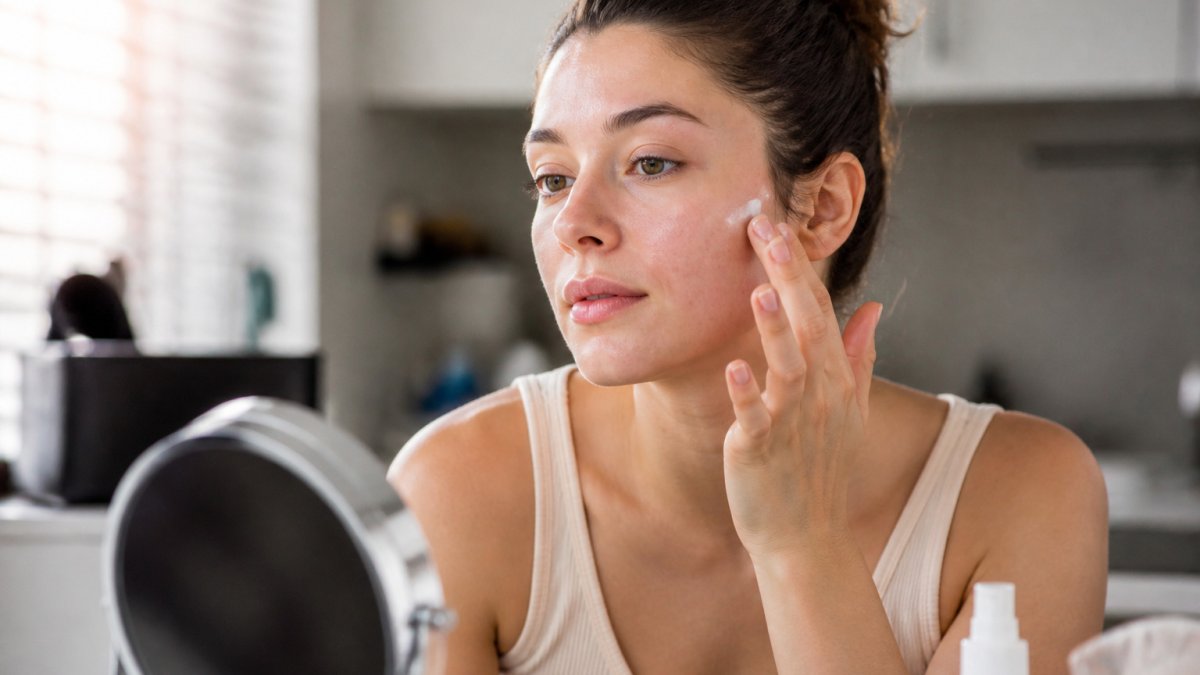
Acne-prone skin is often the skin most people hesitate to protect with sunscreen. The fear is simple: a heavy, greasy layer on top of already oily skin will clog pores and bring on more breakouts. That fear is understandable, but it leads many people to skip sun protection entirely. Sun exposure can darken post-inflammatory marks and slow their fading, so a daily sunscreen routine for acne prone skin is worth getting right.
Why Acne-Prone Skin Needs Daily Sun Protection
Sunscreen is not a luxury for people with breakouts. It is one of the most useful tools for the marks acne leaves behind. Ultraviolet light makes dark spots and red marks look worse and last longer. Skipping protection can undo the progress of a good acne or peel routine.
Two types of UV matter here. UVA rays reach deeper into the skin and contribute to aging and pigmentation (the FDA). UVB rays cause most sunburn. A good daily product should be broad-spectrum, meaning it protects against both (the FDA).
- UVA: deeper penetration, linked to aging and dark marks
- UVB: the main cause of sunburn
- Broad-spectrum: protection against both
Daily use matters more than occasional use. Sun exposure happens on cloudy days and through windows too, so the habit should not depend on the weather.
Choosing the Best Sunscreen for Acne-Prone Skin
The right product depends on your skin, your treatments, and how your skin reacts to what you apply. Start with formula type and a short list of label terms to check.
Mineral versus chemical formulas
Mineral sunscreens use zinc oxide or titanium dioxide. They sit on the skin’s surface and reflect UV rays. Many people with sensitive or reactive acne-prone skin find them gentler. The trade-off is that they can leave a white cast or feel thicker.
Chemical sunscreens use filters that absorb UV rays. They are often lighter and blend more easily. Some people find them more likely to sting or irritate, especially on active breakouts.
If your skin is irritated, a mineral formula is often the safer first try. If you dislike the white cast, look for a tinted or lightweight chemical option and patch test it first.
Reading labels: non-comedogenic, oil-free and broad-spectrum
Check the label before buying. These are the terms that matter most:
- Broad-spectrum: protects against UVA and UVB
- SPF 30 or higher: a practical daily level for the face
- Non-comedogenic: formulated to be less likely to clog pores
- Oil-free: helpful for oily skin, though it does not guarantee no breakouts
Non-comedogenic is a formulation claim, not a promise. Your skin still may react, so test a new product on a small area for a few days.
The article lays out the key differences between formula types and the label terms to check.
| Term or formula | What it means | Note |
|---|---|---|
| Mineral | Zinc oxide or titanium dioxide; reflects UV | Often gentler; can leave a white cast |
| Chemical | Filters that absorb UV | Often lighter; may sting on breakouts |
| Broad-spectrum | Protects against UVA and UVB | Look for this on the label |
| SPF 30 or higher | Practical daily level for the face | Use as a daily baseline |
| Non-comedogenic | Formulated to be less likely to clog pores | A formulation claim, not a guarantee |
| Oil-free | Helpful for oily skin | Does not guarantee no breakouts |
Building Your Morning Routine: Where Sunscreen Fits
The order of your routine matters for both results and comfort. A simple morning sequence for acne-prone skin looks like this:
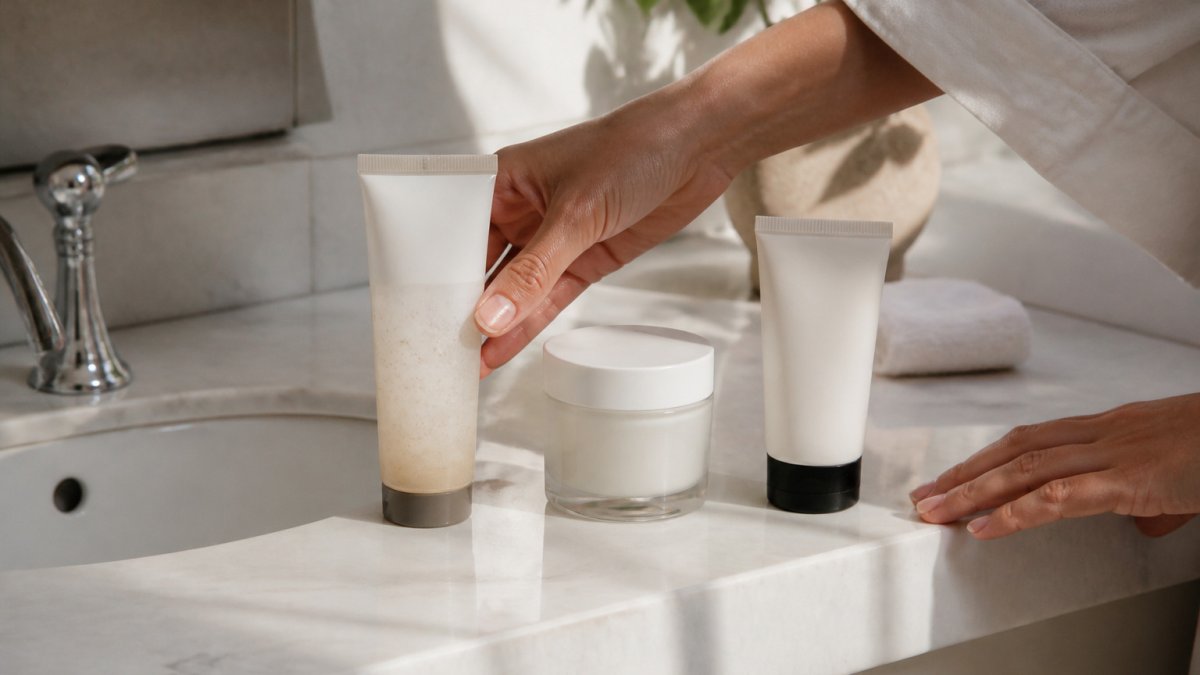
- Gentle cleanser to remove overnight oil
- Acne treatment, if you use one, applied to dry skin
- Lightweight moisturizer
- Sunscreen as the final step
Sunscreen goes last because it is the outer layer of protection. Apply it after your treatments have fully absorbed, usually a few minutes later.
Keep the routine short. Too many products can irritate acne-prone skin and make it harder to tell what is helping. A consistent, simple routine usually works better than a long one.
Moisturizer and Sunscreen Order
Apply moisturizer before sunscreen. A moisturizer helps the skin feel comfortable and creates a smoother base. Sunscreen then sits on top to protect it.
Some people skip moisturizer because they have oily skin. Even oily skin can get dry or irritated from acne treatments. If your skin feels tight, a light gel moisturizer is a good choice.
Use a thin layer of sunscreen, about a nickel-sized amount for the face, and spread it evenly. Do not rub it in aggressively, since that can irritate active breakouts.
Sunscreen With Acne Treatments: What Works Together
This is where many people get confused. Some acne treatments make skin more sensitive to sun, so daily sun protection matters even more, but the right sunscreen depends on which treatment you use. A formula that works with a gentle salicylic acid cleanser can sting on skin that is adjusting to a retinoid. Use this treatment-by-treatment guide to narrow your choice before you buy.
If you use benzoyl peroxide
Benzoyl peroxide is drying and can leave skin feeling tight or flaky, especially in the first few weeks. Pair it with a moisturizing mineral sunscreen that contains zinc oxide, or a cream-based chemical formula with added glycerin or ceramides. Avoid alcohol-heavy gels and anything labeled “matte” or “oil-absorbing”, those can amplify the dryness benzoyl peroxide already causes. Apply the treatment to dry skin, wait a few minutes, then moisturize and follow with sunscreen.
If you use a retinoid (tretinoin, adapalene, tazarotene)
Retinoids increase sun sensitivity and can make skin sting when anything active touches it. Choose a fragrance-free mineral sunscreen or a gentle chemical formula built for sensitive skin, and patch test on the jawline for three to four nights before using it on your whole face. If your skin is peeling, drop back to a mineral formula until the flaking settles. Do not layer a new exfoliating acid and a new sunscreen on the same day, introduce one variable at a time.
If you use salicylic acid or glycolic acid
These exfoliating acids thin the surface layer and can make skin more reactive in direct sun. A lightweight, non-comedogenic chemical sunscreen with SPF 30 or higher usually layers well, but skip anything with added fragrance or essential oils. If you use a leave-on acid serum in the morning, apply it, wait until it is fully absorbed, then moisturize and apply sunscreen last.
If you use a chemical peel or have recently had one
Use sunscreen after a peel, and follow the product directions or ask a dermatologist for guidance on what to use.
A simple compatibility checklist
- Match the sunscreen’s texture to your treatment: drying treatments pair with cream or lotion formulas; oily skin with gel or fluid formulas.
- Introduce one new product at a time, with at least a week between changes.
- Stop using a new sunscreen if you see stinging, redness, or new bumps within 48 hours.
- Ask a dermatologist before combining a prescription retinoid with a new chemical sunscreen.
If your skin is actively irritated, peeling, or burning, ask a dermatologist for guidance.
If you are unsure whether an acne treatment and a sunscreen will work well together, ask a dermatologist before starting both at once.
How to Reapply Sunscreen Over Makeup
Makeup makes reapplication tricky, but it is still possible. Most people skip reapplying, and that gap is where sun damage builds up. The goal is to restore an even layer of protection without smearing foundation or adding shine. Here is a practical playbook for a full day.
Start with a base that can take a second layer
Choose a tinted mineral sunscreen or a lightweight chemical sunscreen as your morning base. Let it set for five minutes before applying foundation. A primer with a soft-focus finish helps the second layer of sunscreen sit evenly instead of pilling. If you use a heavy, silicone-based foundation, expect more pilling, a cushion or stick formula reapplies more cleanly over it.
The three reapplication methods, ranked by disruption
- Sunscreen stick or balm: The least disruptive option for makeup. Swipe a broad-spectrum SPF 30+ stick over the forehead, nose, cheeks, and chin, then blend the edges with a clean sponge. Sticks can tug on foundation, so use light pressure and avoid dragging.
- Sunscreen powder: A mineral powder with SPF 30+ dusted over makeup is the easiest touch-up. It controls shine and adds protection, but the coverage is thin, use it as a supplement, not a replacement for your morning layer. Reapply every two hours.
- Spray sunscreen: Hold the can six to eight inches from your face, close your eyes and mouth, and mist in a zigzag pattern. Let it dry for 60 seconds before touching your face. Sprays are fast but easy to under-apply, so use two passes.
How much to use on a touch-up
A full face needs about a nickel-sized amount of lotion sunscreen, or roughly two finger-lengths. For a stick, apply four passes over each area, one pass is not enough. For a powder, use enough to see a light, even veil, not a heavy dusting. For a spray, two full passes across the face.
A workday reapplication schedule
- Morning: Apply your full morning layer indoors, 15 minutes before leaving.
- Midday: Reapply with a stick or powder before lunch or before any outdoor walk.
- Afternoon: Reapply again if you are near a window or outside for more than 20 minutes.
- Commute home: A final touch-up before driving or taking transit.
Set a phone reminder for midday and mid-afternoon if you tend to forget. Keep a stick or powder in your bag so reapplication is not a decision, it is a habit.
If you wear glasses or a mask, reapply sunscreen to the bridge of your nose and the tops of your ears too, those spots burn first and are easy to miss.
For a longer day, try a tinted mineral sunscreen as your base. It protects and evens tone, so you may need less makeup overall. Plan to reapply every two to three hours when you are outdoors, and sooner if you sweat heavily.
Start Your Acne-Safe Sun Routine Tomorrow Morning
A daily sunscreen routine for acne-prone skin does not need to be complicated. Pick a non-comedogenic, broad-spectrum product with SPF 30 or higher. Apply it last in your morning routine, every day, and reapply when you are outside for long periods.
Test one new product at a time, and stop using it if your skin reacts. Once you find a formula that works, stick with it.
Explore our professional-grade at-home chemical peels and advanced skincare solutions at Makeup Artist’s Choice.
Frequently Asked Questions
What type of sunscreen is best for acne-prone skin?
Look for a broad-spectrum sunscreen labeled non-comedogenic and oil-free, with an SPF of 30 or higher.
Can sunscreen cause breakouts?
A new sunscreen may not suit everyone. If you have concerns about a reaction, ask a dermatologist.
How much sunscreen should you use on your face?
Follow the sunscreen label’s directions for how much to apply and when to reapply.
Can you wear sunscreen while using acne treatments?
Follow your dermatologist’s or the product label’s directions for using acne treatments and sunscreen.