Last Updated: November 27, 2026
Quick Summary
The best cleanser for sensitive skin after a peel is a fragrance-free, non-foaming cream or gel cleanser with a low surfactant load and barrier-supporting ingredients like ceramides and glycerin. Wash with bare hands and lukewarm water, pat dry, and moisturize while skin is still damp.
- Wait at least 24 hours before your first full cleanse after most superficial peels, following your provider’s instructions.
- Use gentle pressure in slow circles for 20 to 30 seconds, then rinse until no residue remains.
- Avoid fragrance, essential oils, alcohol denat, sulfates, exfoliating acids, retinoids, and physical scrubs during recovery.
- Choose fragrance-free over unscented, since unscented can mean a masking fragrance was added.
- Stop using a cleanser immediately if it stings, burns, or leaves skin red and tight.
Table of Contents
- What is the best cleanser for sensitive skin after a peel?
- How to wash face after chemical peel without triggering irritation
- When to wash face after chemical peel: timing your first cleanse
- Chemical peel aftercare routine: where cleansing fits
- Ingredients to avoid after chemical peel (and what to look for instead)
- How cleanser choice changes by peel type and strength
- What to do if a cleanser stings or causes a reaction
- Choosing your post-peel cleanser from Makeup Artist’s Choice
- Frequently Asked Questions
What is the best cleanser for sensitive skin after a peel?
Most guides hand you a list of “gentle” cleansers without explaining that gentle is not a category but a set of specific label facts.
Your skin barrier is the outermost layer of skin, holding water in and irritants out.
Below, we break down exactly how to wash, when to wash, what to avoid, and how to pick a cleanser that matches your peel strength.
Why your skin barrier needs a different cleanser after a peel
A peel removes part of the stratum corneum, the protective outer layer, so your usual cleanser is now working on skin that has less defense than it did last week.
The American Academy of Dermatology’s guidance on gentle skin care consistently emphasizes mild, fragrance-free cleansing for compromised skin, and that principle applies double during peel recovery. Harsh surfactants lift lipids from the skin surface (pubmed.ncbi.nlm.nih.gov).
Watch out: reaching for a “deep clean” or clarifying cleanser during recovery, because skin feels rough and flaky, is a common mistake. That is the exact moment to use the mildest cleanser you own.
How to wash face after chemical peel without triggering irritation
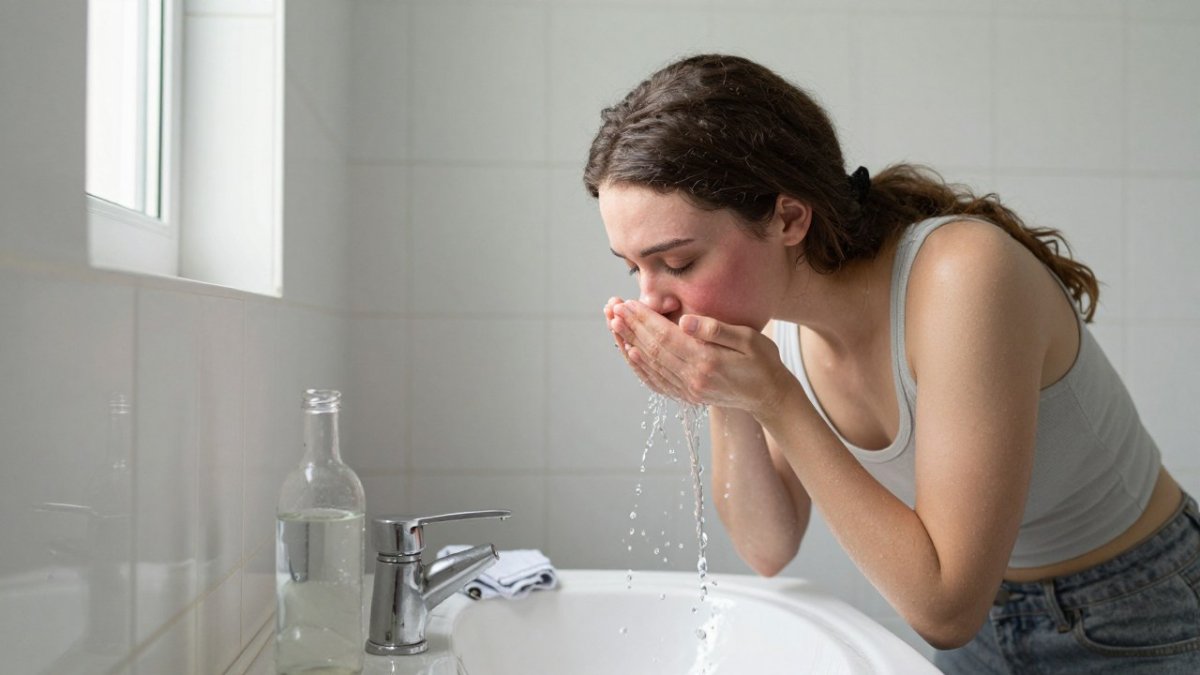
Wash with clean bare hands, lukewarm water, and a mild non-foaming cleanser, using light pressure and no cloth or tool. Rinse thoroughly, then pat dry with a soft towel instead of rubbing. Technique matters as much as the product.
Step-by-step cleansing technique for compromised skin
- Wash your hands first with plain soap and water.
- Wet your face with lukewarm water; hot water increases redness.
- Apply a small amount of gentle cleanser to your fingertips, not a washcloth, sponge, or cleansing brush.
- Use gentle pressure in slow circles for 20 to 30 seconds. No scrubbing, no tugging.
- Rinse with lukewarm water until no residue remains; leftover cleanser commonly causes irritation.
- Pat dry with a clean, soft towel. Do not rub.
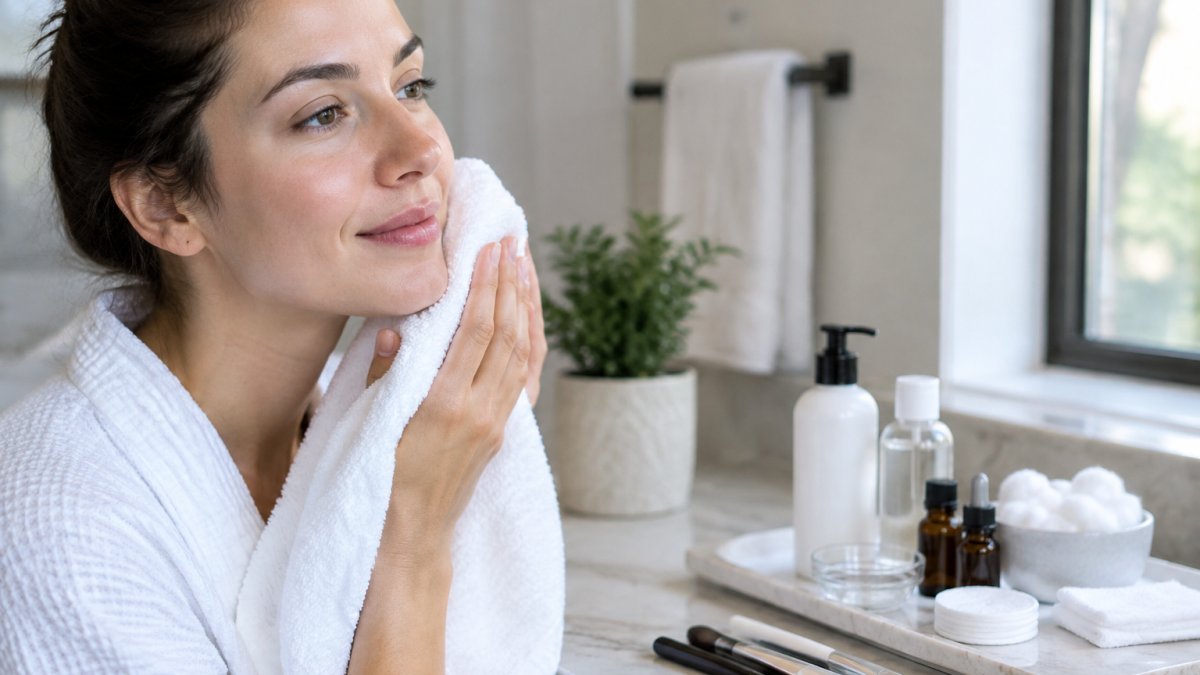
Then apply your post-peel moisturizer while skin is still slightly damp. That locks in hydration and supports barrier repair.
Over-cleansing is a common mistake. Twice a day is plenty for most people during recovery. If skin feels tight after washing, cleanse less often rather than buying a stronger moisturizer.
When to wash face after chemical peel: timing your first cleanse
Wait at least 24 hours before your first full cleanse after most superficial peels, and follow your provider’s specific aftercare instructions, which may call for a longer wait after medium or deep peels.
For lighter peels, many practitioners suggest rinsing with plain water on day one and introducing a mild cleanser on day two. For stronger peels, the wait can stretch longer.
If you want a detailed walkthrough of that first rinse, our guide on how soon you can wash your face after a peel covers the first-day steps in depth.
Chemical peel aftercare routine: where cleansing fits
Cleansing is step two in a post-peel routine, after neutralization and before moisturizer and sun protection. Get the order right and recovery tends to go smoothly.
A workable daily sequence looks like this:
- Morning: gentle cleanse, hydrating moisturizer, broad-spectrum sunscreen.
- Evening: gentle cleanse, barrier-repair moisturizer.
- Throughout recovery: no exfoliants, no retinoids, no active ingredients until skin has fully settled.
If you used a peel that requires neutralizing, that step comes before any cleansing discussion. Our Post Peel Neutralizer is formulated to complete that step safely so you can move on to gentle cleansing with confidence.
Sun protection deserves its own emphasis. Our guide on how to avoid chemical peel irritation walks through a full aftercare routine.
Ingredients to avoid after chemical peel (and what to look for instead)
Avoid fragrance, essential oils, alcohol denat, sulfates, exfoliating acids, retinoids, and physical scrubs during recovery. Look instead for ceramides, glycerin, panthenol, and other barrier-supporting ingredients.
Here is a quick comparison of what to skip and what to reach for:
| Avoid during recovery | Why it causes problems | Use instead |
|---|---|---|
| Fragrance and essential oils | Common irritants on compromised skin | Fragrance-free formulas |
| Sulfates and high-foam surfactants | Strip lipids from a weakened barrier | Non-foaming cream or gel cleansers |
| Alcohol denat | Dries and stings | Glycerin-based hydrating cleansers |
| Exfoliating acids (AHA, BHA) | Over-exfoliate skin that is already renewing | Plain mild cleanser |
| Retinoids | Increase irritation and peeling | Barrier-repair moisturizer |
| Scrubs and textured tools | Cause micro-tears on fragile skin | Bare hands only |
Label-reading checklist for sensitive skin cleansers
- The word “fragrance” does not appear in the ingredient list
- No essential oils such as lavender, citrus, or peppermint
- No sulfates listed near the top of the ingredients
That last point trips people up. Unscented can mean a masking fragrance was added to cover a smell. Fragrance-free is the claim you want.
How cleanser choice changes by peel type and strength
Cleanser choice tracks peel strength: lighter peels tolerate a wider range of mild cleansers, while stronger peels call for the plainest, most hydrating option.
The useful distinction is not just “mild versus milder”, it is how much of the stratum corneum the peel removed and how long the barrier stays open. That determines whether a gentle gel with a small amount of foaming surfactant works or whether you need a cream cleanser that barely lathers.
Superficial peels (glycolic, lactic, mandelic, low-strength salicylic)
Superficial peels typically disrupt only the outermost layers of the stratum corneum. Most practitioners find the barrier largely re-forms within a few days, though sensitivity can linger up to a week. For this group:
- A fragrance-free, non-foaming or low-foam gel cleanser is usually sufficient.
- A cream cleanser is fine if your skin already leans dry.
- You can generally return to your normal gentle cleanser once flaking stops and skin no longer stings.
Medium-depth peels (TCA at moderate strength, combination peels)
Medium-depth peels reach further into the epidermis and can produce visible sheet peeling rather than light flaking. Barrier recovery is slower, and stinging on contact is more common. For this group:
- Choose the plainest cream cleanser you can find, short ingredient list, no fragrance, no essential oils, no exfoliating acids.
- Skip foaming formulas entirely for the first week; even mild foaming surfactants can sting when the barrier is more compromised.
- Cleanse once daily in the evening if morning cleansing causes tightness; a plain water rinse is acceptable in the morning.
Deeper peels (higher-strength TCA, phenol)
Deeper peels are typically performed in a clinical setting with provider-directed aftercare, and the cleanser decision should follow those instructions rather than a general guide.
Watch out: do not judge peel strength by how your skin looks on day one.
If you are working with a gentler acid, our article on whether mandelic acid is gentle enough for sensitive skin explains how that acid compares and what it means for your routine.
What to do if a cleanser stings or causes a reaction
Stop using the cleanser immediately if it stings, burns, or leaves skin red and tight. Rinse with lukewarm water, pat dry, and apply a plain barrier moisturizer. Do not try to “push through” stinging, and do not reapply the same product to test it again.
The harder question is telling a normal post-peel sting apart from a reaction that needs a clinician’s eyes, because the two look similar in the first minute and diverge after that.
Normal post-peel stinging versus a reaction
A mild sting that fades within about a minute and leaves no lasting redness is common on compromised skin, especially in the first few days after a medium-depth peel. A reaction tends to behave differently:
- The sting builds rather than fades, or persists after rinsing.
- Redness spreads beyond the area where you applied the cleanser.
- You see swelling, hives, blistering, oozing, or a rash with distinct borders.
If any of those apply, stop all products except plain water and a bland moisturizer, and contact the provider who performed your peel. If you develop facial swelling, difficulty breathing, or widespread hives, seek urgent medical care, those are signs of a systemic reaction, not a routine post-peel sting.
Step-by-step response to a stinging cleanser
- Rinse immediately with lukewarm water for 30 to 60 seconds. Do not use a washcloth.
- Pat dry with a clean, soft towel.
- Apply a plain, fragrance-free barrier moisturizer while skin is still slightly damp.
- Skip cleansing for 24 hours; a plain water rinse is enough if skin feels dirty.
- Reintroduce cleansing with the simplest product you own, ideally a non-foaming cream cleanser with a short ingredient list.
- Patch test any new cleanser on the jawline for two to three days before using it on the full face.
When to call the treating clinician
Contact the provider who performed your peel if:
- Irritation persists beyond a day or two despite stopping the product.
- You see blistering, crusting, oozing, or spreading redness.
- Peeling extends well beyond the expected timeline for your peel strength.
People often wait too long because they assume any reaction is part of the peel. The peel causes the initial sensitivity; a product applied afterward causes a separate reaction, and the two should be treated differently. When in doubt, call, the treating clinician knows your peel strength and can advise whether to come in.
Choosing your post-peel cleanser from Makeup Artist’s Choice
Makeup Artist’s Choice has specialized in professional-grade at-home peels since 1997, and aftercare plays a major role in results. Our post-peel skin care collection is built around gentle, fragrance-free cleansing and barrier support so your recovery stays on track.
Matching your cleanser to your peel strength, keeping the routine minimal, and resisting the urge to add actives back too soon are sensible aftercare habits. Makeup Artist’s Choice offers glycolic, lactic, salicylic, and TCA peels made in the USA.
Your peel did the hard work. The next two weeks decide whether that work shows up as smoother, clearer skin or as irritation that sets you back.
Frequently Asked Questions
Can I use a foaming cleanser after a chemical peel?
Foaming cleansers often contain surfactants that strip oil and can disrupt a healing skin barrier. After a peel, choose a non-foaming, fragrance-free sensitive skin cleanser instead. If you only have a foaming product, use a small amount, dilute it with water, and rinse thoroughly with cool water. Watch for tightness or stinging; if either occurs, switch to a mild, hydrating formula until peeling and redness fully resolve.
How long should I use a gentle cleanser after a chemical peel?
Most superficial peels need 7 to 10 days of gentle cleansing before you reintroduce exfoliants or active ingredients. Medium peels may require 10 to 14 days. Follow your provider’s aftercare instructions and extend the gentle phase if redness, flaking, or sensitivity persists. A fragrance-free, non-abrasive cleanser supports barrier repair during this window. Resume your normal routine only when skin feels calm and no longer stings when you apply moisturizer.
What should I do if my skin itches after a chemical peel?
Itching is common during the healing phase, but scratching can cause scarring or post-inflammatory hyperpigmentation. Apply a cool compress for 5 to 10 minutes, keep skin moisturized with a ceramide-rich cream, and avoid hot water and abrasive tools. If itching is intense or comes with spreading redness, swelling, or hives, contact the clinician who performed your peel. Do not apply hydrocortisone unless your provider instructs you to, because it can slow healing.
Is a hydrating cleanser better than a mild cleanser after a peel?
Both can work, but a hydrating cleanser with glycerin or ceramides is often the safer pick when skin is actively peeling or feels tight. Mild cleansers focus on low-surfactant cleansing, while hydrating formulas add moisture-binding ingredients that support barrier repair. Check the label for fragrance-free and non-comedogenic claims. Avoid anything with exfoliating acids, scrubs, or strong foaming agents until your skin has fully recovered.