Table of Contents
- How Often to Use a Glycolic Acid Peel: The Short Answer
- At-Home Glycolic Acid Peel Frequency vs. Professional Peels
- Glycolic Acid Peel Strength for Beginners: Where to Start
- How Long to Wait Between Chemical Peels
- Step-by-Step: How to Apply a Glycolic Acid Peel Safely
- Glycolic Acid Peel Aftercare: The 7-Day Recovery Schedule
- Normal Peeling vs. a Reaction You Should Stop For
- Adjusting Frequency by Skin Type, Sensitivity, and Other Treatments
- Frequently Asked Questions
Last Updated: October 17, 2026
How Often to Use a Glycolic Acid Peel: The Short Answer
How often to use a glycolic acid peel depends on strength and setting. For most people, a gentle at-home glycolic acid peel once every 7 to 10 days is a safe starting rhythm, while professional peels usually run every 3 to 4 weeks.
At Makeup Artist’s Choice, we have supplied professional-grade at-home peels since 1997, so we have watched a lot of people get this wrong. The pattern is predictable: too much, too soon.
Frequency by Peel Strength and Setting
Stronger peels need longer waits. A mild at-home glycolic acid peel at low concentration can be repeated weekly. A medium professional peel needs a few weeks between sessions. Deep peels are a different category entirely and belong in a clinician’s hands.
| Peel Strength | Typical Setting | Safe Interval |
|---|---|---|
| Mild (low concentration) | At home | Every 7-10 days |
| Medium | At home or spa | Every 2-3 weeks |
| Medium-deep | Professional | Every 3-4 weeks |
| Deep | Clinical only | Months apart |
Use this as a starting frame, not a fixed rule. Your skin’s response decides the real pace.
At-Home Glycolic Acid Peel Frequency vs. Professional Peels
At-home peels should be done less aggressively but more often than professional ones. A light at-home glycolic acid peel can fit a weekly or biweekly routine.
The trade-off is control versus intensity. At home, you manage the strength and stop when your skin says stop. In a clinic, the concentration is higher and the downtime is longer.
Glycolic Acid Peel Strength for Beginners: Where to Start
Beginners should start with the lowest concentration available and the shortest application time. A low-strength glycolic acid peel lets you learn how your skin reacts before you push higher.
Here is a sensible beginner path:
- Choose the lowest strength option first
- Apply for the shortest recommended time
- Wait a full 10-14 days before the next one
Most first-timers want to jump straight to a strong peel for faster results. That is the mistake we see most often.
Skipping the lowest strength and starting strong is the top cause of over-exfoliation. The result is raw, stinging skin and a barrier that takes days to recover.
How Long to Wait Between Chemical Peels
Wait at least 7 to 10 days between light at-home peels and 3 to 4 weeks between professional ones. The wait is not wasted time.
Signs you are ready for the next peel:
- Redness from the last session has fully faded
- Flaking has stopped
- Skin feels calm, not tight or stinging
If any of those are missing, wait longer. Pushing the interval shorter than your skin can handle causes over-exfoliation, which undoes the progress you just made.
Step-by-Step: How to Apply a Glycolic Acid Peel Safely
Applying a glycolic acid peel safely comes down to prep, timing, and stopping at the right moment. Rushing the application is where most problems start.
Patch Test and Prep Your Skin
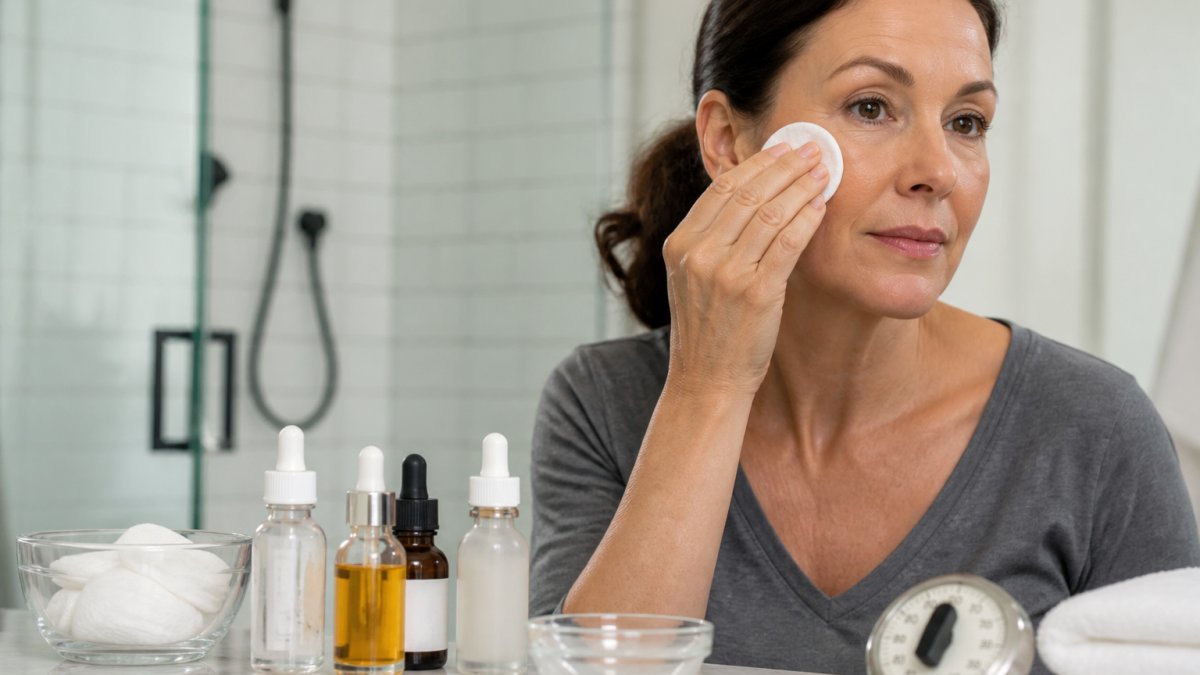
Always patch test first. Apply a small amount behind your ear or on your inner forearm, wait 24 hours, and check for a reaction. On treatment day, start with clean, dry skin. Skip other acids, retinoids, and scrubs for at least 48 hours before.
Application Time and Neutralizing
Apply a thin, even layer, avoiding the eye area and any broken skin. Watch a timer. Leave it on only for the recommended application time for your strength. If the peel requires neutralizing, do it exactly as directed, then rinse with cool water. Stop and rinse early if burning becomes sharp rather than a mild tingle.
Set a timer before you start applying. Most over-peels happen because people lose track of time, not because the product was too strong.
Glycolic Acid Peel Aftercare: The 7-Day Recovery Schedule
Most guides give you a vague list of aftercare tips. What actually helps is a day-by-day plan that tells you what to do, what to avoid, and what to watch for from the moment you rinse off the peel through the end of the first week. The schedule below assumes a light to medium at-home glycolic acid peel; professional peels may stretch each phase by a few days.
Before the Peel: The 48-Hour Prep Window
The 48 hours before treatment matter as much as the week after. Stop all other exfoliating acids (salicylic, lactic, mandelic), retinoids, and physical scrubs at least two days out. Skip waxing, threading, and depilatory creams for at least five days before a peel, freshly exfoliated skin is more likely to tear or react.
Day 0: Treatment Day
Apply the peel exactly as directed and neutralize or rinse at the recommended time. Immediately after rinsing, skip anything with fragrance, alcohol, or essential oils. A plain, bland moisturizer, ceramide-based or petrolatum-based, is enough. Do not apply makeup for the rest of the day if you can avoid it. Expect mild tightness and a faint pink flush; that is normal.
Days 1-2: Calm and Protect
Skin is at its most vulnerable here. Cleanse with lukewarm water and a gentle cleanser, pat dry, and moisturize. No actives of any kind, no vitamin C, no niacinamide at high percentages, no retinoids, no other acids. Avoid hot showers, saunas, and strenuous sweating where possible. Sunscreen every morning even if you are indoors near windows; freshly peeled skin is more photosensitive.
Days 3-4: Flaking Begins
Light flaking typically starts around day three. Do not pick, rub, or use a washcloth to speed it along. Continue gentle cleansing and moisturizing. You can reintroduce a bland hydrating serum (hyaluronic acid, glycerin) if skin feels dry, but hold off on anything active. If flaking is heavy or skin looks raw rather than flaky, extend this phase by two to three days before moving on.
Days 5-7: Reintroduce Carefully
By day five to seven, most light-peel flaking has settled. This is when you can begin reintroducing one active at a time, start with a low-strength retinoid or a gentle vitamin C every other night, not both at once. Sunscreen remains non-negotiable. Avoid scrubs, cleansing brushes, and clarifying masks until at least day seven.
What to Avoid All Week
- Other exfoliating acids and retinoids until skin is fully calm
- Waxing, threading, and depilatory creams for at least seven days
- Hot yoga, saunas, and steam rooms for the first 48 hours
Treat the first week as a recovery window, not a race back to your full routine. Reintroducing actives one at a time lets you tell which product, if any, is causing irritation.
If you are stacking a professional peel with at-home maintenance, map the professional peel as day zero and follow the same phases, stretching each by two to three days. Never schedule an at-home peel inside the professional recovery window.
Normal Peeling vs. a Reaction You Should Stop For
Normal peeling is light flaking that starts a few days after treatment and clears within about a week.
Stop and get advice if you notice:
- Blisters or weeping skin
- Redness spreading beyond the treated area
- Sharp pain during or after application
Mild tightness and a little flaking are expected. Anything that feels like a burn is your signal to stop and let skin heal fully before your next peel. When in doubt, wait.
Adjusting Frequency by Skin Type, Sensitivity, and Other Treatments
Generic frequency advice breaks down the moment your routine includes more than one active. The table below gives a starting interval by skin type, but the real variable is what else is touching your skin.
| Skin Profile | Starting Interval (light at-home peel) | Notes |
|---|---|---|
| Sensitive or reactive | Every 2-3 weeks | Patch test every new bottle; stop at first sign of stinging |
| Dry | Every 2 weeks | Layer moisturizer before and after; avoid in winter if skin is cracked |
| Oily, resilient | Every 7-10 days | Still cap at weekly; more frequent use raises irritation risk |
| Acne-prone | Every 7-14 days | Coordinate with acne treatment, see below |
| Darker skin tones (Fitzpatrick IV-VI) | Every 2-3 weeks, lower strength | Higher risk of post-inflammatory hyperpigmentation if over-exfoliated |
Glycolic Acid and Retinoids
This is the combination most likely to cause trouble. Retinoids thin the stratum corneum and increase cell turnover, so layering a glycolic peel on top compounds the exfoliation. A common pattern is to alternate nights, retinoid one night, no acid the next, and to skip the retinoid for 48 hours before and after a peel.
Glycolic Acid and Other Exfoliating Acids
Do not stack glycolic with salicylic, lactic, mandelic, or azelaic acid on the same day. Alternating days is workable for resilient skin; sensitive skin should space them further apart. The same rule applies to physical exfoliants, a scrub the day after a peel is a recipe for a damaged barrier.
Glycolic Acid and Benzoyl Peroxide
Benzoyl peroxide is drying and can leave skin more permeable. If you use it for acne, pause it for 48 hours before and after a peel, and do not apply both on the same day. For some people, a gentle glycolic peel every two weeks alongside a benzoyl peroxide routine is tolerable; for others it is too much.
Glycolic Acid and Professional Treatments
Recent professional treatments change the math. After a professional peel, laser session, microneedling, or dermabrasion, wait until the clinician clears you, often two to four weeks, before resuming at-home peels. Injectable treatments like neuromodulators or fillers generally do not conflict with a light peel, but avoid scheduling a peel within a few days of either to keep irritation separate from injection-site swelling.
Glycolic Acid and Vitamin C
Vitamin C serums, especially L-ascorbic acid formulas, are acidic and can sting on freshly peeled skin. Wait until day five to seven of recovery before reintroducing one, and consider a gentler derivative if skin is sensitive.
If you are unsure how a new product interacts with your peel schedule, introduce it on a non-peel week and monitor for two weeks before combining. Stacking unknowns is how most irritation happens.
When in doubt, stretch the interval. A peel done two weeks later than planned costs you nothing; a peel done too soon can cost you weeks of recovery.
Frequently Asked Questions
Can you use a glycolic acid peel every week?
Weekly use suits lower-strength at-home peels, typically in the 10% to 30% range, once your skin has shown it tolerates the treatment. Start every two weeks for the first month or two, then move to weekly if you see no persistent redness, stinging, or flaking beyond light shedding. Higher-strength peels need longer gaps, often three to four weeks, because skin cell turnover and barrier repair take time. Never stack a weekly peel with daily glycolic acid toners or retinoids without cutting back on one of them.
How long should you wait between glycolic acid peels?
Wait at least 14 days between at-home peels at beginner strengths, and three to four weeks after a stronger peel or any professional treatment. The wait matters because glycolic acid is an alpha hydroxy acid that speeds skin cell turnover, and the barrier needs time to rebuild before the next round of exfoliation. If your skin still feels tight, stings when you apply moisturizer, or is visibly flaking, wait another week. Rushing the interval is the most common cause of over-exfoliation and prolonged redness.
How do you know if peeling after a glycolic acid peel is normal or a bad reaction?
Normal peeling looks like light flaking or sheet-like shedding around days two through five, with mild tightness and no pain. A harmful reaction brings swelling, spreading redness beyond the treated area, blistering, oozing, or burning that gets worse instead of better. Stop all acids, cleanse with water only, apply a plain barrier moisturizer, and contact a dermatologist if symptoms escalate. Patch testing on your jawline 48 hours before a full-face peel is the simplest way to catch a bad response early.
Will a glycolic acid peel fade acne scars and hyperpigmentation?
Glycolic acid peels can soften post-inflammatory hyperpigmentation and improve skin texture over a course of treatments, usually four to six sessions spaced two to four weeks apart. Dark marks from acne often fade with consistent exfoliation plus daily sunscreen, since UV exposure darkens them again. Ice pick and boxcar scars sit deeper and respond better to professional resurfacing. Expect gradual change across a treatment course rather than a single peel, and photograph your skin monthly to track real progress.
Getting peel frequency right is the difference between steady, visible improvement and a setback that takes weeks to undo. At Makeup Artist’s Choice, we make professional-grade at-home peels, including glycolic options, with clear strength guidance so you can build a schedule that fits your skin. Our peels are made in the USA and backed by decades of skincare expertise. Start low, space sessions out, and let your results build. Shop our glycolic peels and find your strength today.