Table of Contents
- The Science Behind Post-Peel Skin Peeling
- Types of Chemical Peels and Their Peeling Patterns
- Chemical Peel Recovery Timeline: What to Expect
- How to Care for Skin After Chemical Peel
- Managing the Psychological Impact of Visible Peeling
- Signs of Chemical Peel Complications vs. Normal Peeling
- Is It Normal Not to Peel After a Chemical Peel?
- Frequently Asked Questions
Last Updated: September 27, 2026
The Science Behind Post-Peel Skin Peeling
Your skin peels after chemical treatment because the acid-based solution deliberately damages the outer layers, triggering your body’s natural healing response. The acid dissolves the bonds holding dead skin cells together, causing them to separate and flake away, a process called cellular turnover that’s the whole point of the treatment.
How Chemical Peels Trigger Cellular Turnover
Chemical peels accelerate your skin’s natural 28-day replacement cycle into 7-14 days. The acid creates controlled trauma to the epidermis and sometimes the dermis. Your body activates healing: new skin cells move up from deeper layers while old, damaged cells lose their connection and separate from the surface.
The Role of Inflammation and Healing
Inflammation is your body’s first response to chemical injury. Within hours, your skin becomes red and tight as blood vessels dilate to bring healing nutrients. This erythema lasts 24-72 hours, during which your skin barrier is compromised, moisture escapes, and your skin feels sensitive and may burn or sting.
The itching during peeling is usually worse than the appearance. Resist the urge to pick or scratch. Picking removes healthy new skin and can cause scarring or post-inflammatory hyperpigmentation.
Types of Chemical Peels and Their Peeling Patterns
Different peel strengths produce different peeling timelines and intensities. Understanding which type you received helps you know what to expect.
Superficial Peels: Mild Exfoliation and Light Peeling
Superficial peels use mild acids like glycolic or lactic acid at low concentrations, affecting only the outermost dead skin layer. Peeling is often minimal, light flaking for 3-5 days or almost none at all. This doesn’t mean the peel failed; superficial peels work cumulatively, requiring 4-6 treatments spaced 2 weeks apart for significant improvement.
Medium-Depth Peels: Pronounced Shedding and Recovery
Medium peels penetrate the papillary dermis using stronger acids like TCA at higher concentrations. Peeling is obvious, starting around day 3-4 and peaking around days 8-10, lasting 10-14 days total. This “ugly phase” delivers real results in a single treatment: improvement in fine lines, acne scars, and hyperpigmentation that would require four superficial peel sessions.
Deep Peels: Intensive Healing and Extended Peeling
Deep peels use phenol or very high-concentration TCA, penetrating the deepest layer of living skin. They cause the most dramatic peeling, heavy shedding for 7-10 days, continuing for up to 3 weeks. Deep peels are rarely done anymore due to intensity and complication risks; most results can now be achieved with medium peels or multiple sessions.
The deeper the peel, the more dramatic the peeling. Superficial peels may show almost no shedding. Medium peels cause obvious, uncomfortable flaking. Deep peels cause extensive peeling lasting weeks.
Chemical Peel Recovery Timeline: What to Expect
Knowing what happens each day helps you prepare mentally and physically. Recovery isn’t linear, and different people progress at slightly different rates.
Days 1-3: Initial Erythema and Tightness
Your skin is intensely red immediately after the peel, feeling tight and hot. Swelling peaks around day 2-3, particularly around eyes and lips. Your damaged skin barrier causes extreme dryness and any existing products may sting. Ice packs and cool compresses reduce swelling and soothe burning; stay out of the sun completely.
Days 4-7: The Peeling Phase Begins
Around day 4, skin peels after chemical exposure typically starts with light flaking that increases over time. Redness begins fading slightly while itching often starts around day 5-6. Resist picking, which removes healthy new skin and causes damage. Keep skin moisturized constantly with gentle, fragrance-free products; avoid all active ingredients, exfoliants, and acids.
Days 8-14: Peak Shedding and the ‘Ugly Phase’
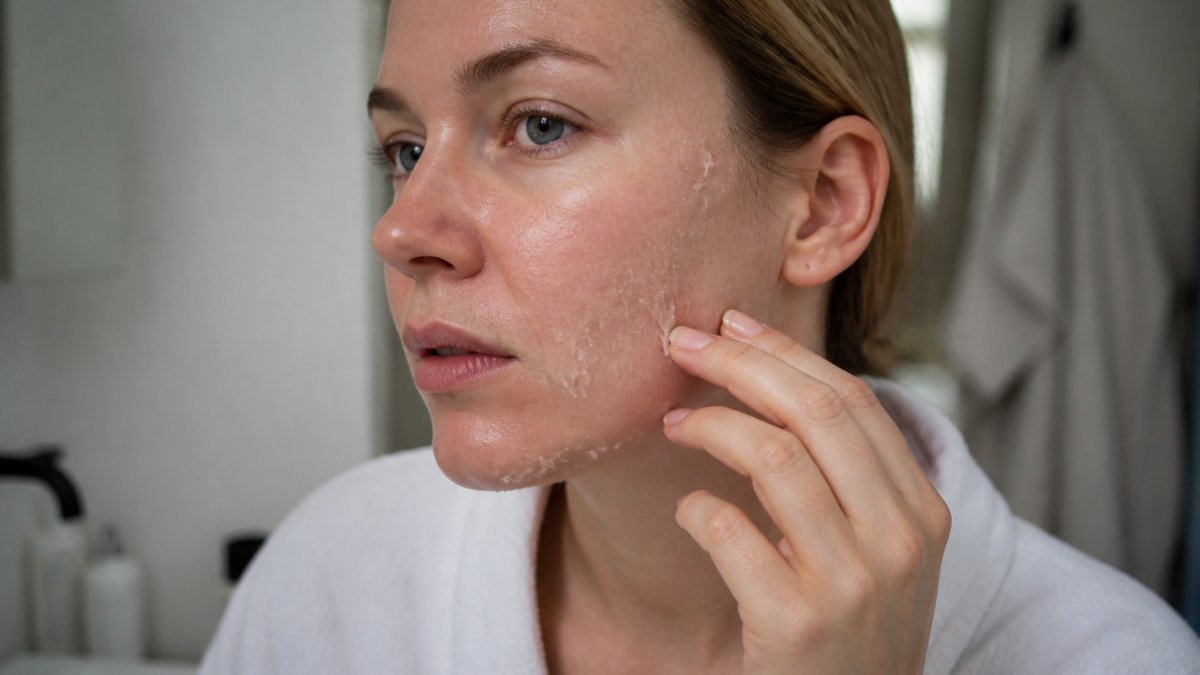
Days 8-10 are typically the worst, with peak peeling and large flakes or sheets of skin coming off. Your face looks raw and uncomfortable, and you may feel self-conscious. This is completely normal and temporary. The psychological impact can be significant, many feel depressed or anxious watching their skin come off.
Weeks 3-4: Healing Completion and Skin Renewal
By week 3, most visible peeling is complete and the surface looks smooth and new. Redness persists but continues fading; any pinkness or uneven tone normalizes over following weeks. New collagen continues forming for months, so full results appear over 8-12 weeks. Your skin remains sensitive; sun protection and gentle skincare remain essential.
If peeling hasn’t started by day 5-6 after a medium peel, or if you see no peeling at all, contact the provider or manufacturer. This may indicate the peel was too weak or applied incorrectly.
How to Care for Skin After Chemical Peel
Aftercare determines whether you get good results or complications. Proper care supports healing and minimizes risk.
Immediate Aftercare: First 48 Hours
The first two days are critical as your skin barrier is severely compromised. Use only cool water or cool compresses, pat skin dry gently, and apply heavy moisturizer while damp. Use ice packs for 15 minutes to reduce swelling, take pain relievers if needed, sleep elevated, and drink extra water.
Daily Skincare Routine During Peeling
Once peeling begins, rinse with cool water or gentle cleanser, pat dry, apply moisturizer while damp, and wait 15 minutes before mineral-based sunscreen (SPF 30+). Evening: cleanse gently, pat dry, apply heavier moisturizer or healing balm. During peak peeling, moisturize multiple times daily, keep a hydrating spray handy, avoid all acids and active ingredients, and use only sensitive-skin products.
What to Avoid While Your Skin Heals
Your skin is vulnerable during recovery. Avoid exercise and sweating for 1 week, swimming, saunas, direct sun for 2 weeks, picking at skin, and sleeping face-down. Avoid all acids, retinoids, vitamin C, benzoyl peroxide, niacinamide, fragrance, alcohol-based products, and active ingredients. Don’t wear makeup the first week, test new products beforehand, change your routine, wash more than twice daily, or use hot water.
Managing the Psychological Impact of Visible Peeling
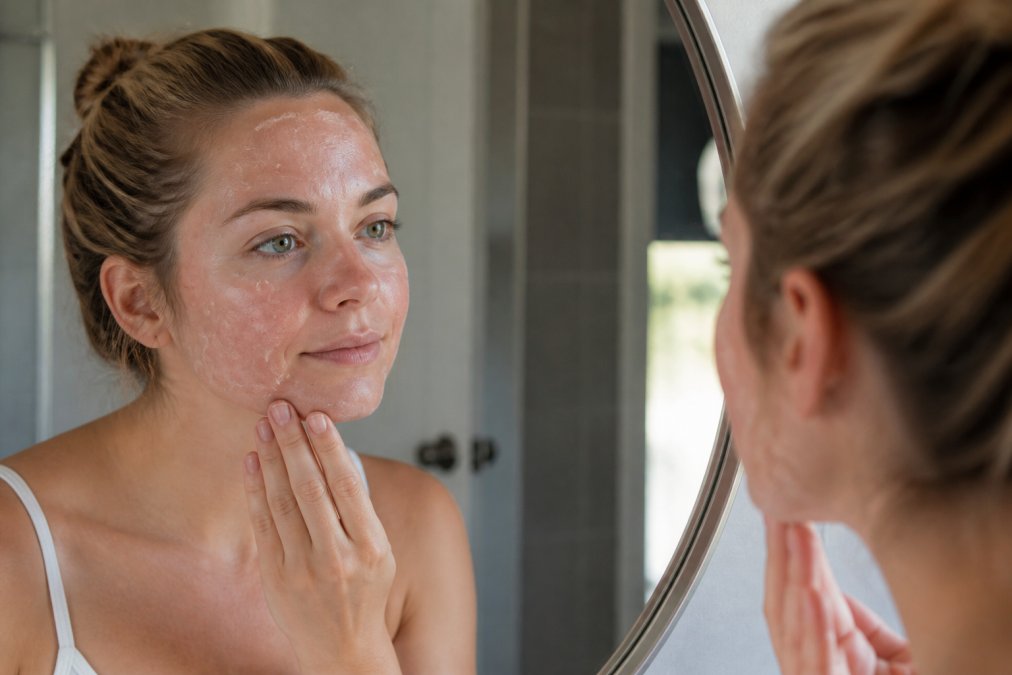
Watching your skin peel off is psychologically difficult. You’re seeing what looks like damage, and your face looks worse than before. You may feel anxious, depressed, or regretful. This is a normal psychological response to a visible change in appearance, it doesn’t mean something went wrong.
Signs of Chemical Peel Complications vs. Normal Peeling
Most peeling is normal and expected. But some signs indicate a complication requiring professional attention.
Normal Peeling: What’s Expected
Normal peeling involves:
- Visible flaking and shedding of dead skin cells
- Redness that gradually fades over 2-3 weeks
- Tightness and dryness
- Mild itching
- Temporary sensitivity to products and sun
- Swelling that peaks around day 2-3 then decreases
- Possible scabbing in areas with deeper penetration
Normal peeling is uncomfortable but not painful. If you experience severe pain beyond the first 24 hours, something may be wrong.
Warning Signs: When to Seek Help
Contact your provider or dermatologist if you experience:
- Severe pain that doesn’t improve after day 1
- Excessive swelling that worsens after day 3
- Signs of infection: warmth, pus, increasing redness, fever
- Blistering beyond small, isolated areas
- Peeling that doesn’t begin by day 5-6 (may indicate insufficient peel strength)
- Peeling that lasts longer than 3 weeks
- Permanent changes in skin color or texture
- Allergic reaction: hives, difficulty breathing, severe itching
Distinguishing Peeling from Chemical Burn or Irritation
Chemical burn is different from normal peeling. A burn involves tissue damage beyond what the peel intended.
Signs of chemical burn:
- Severe pain during and immediately after application
- Blistering and open wounds
- Dark scabbing or charring of skin
- Oozing or weeping wounds
- Infection signs: pus, increasing warmth, fever
- Permanent scarring or skin damage
Signs of irritation (not burn, but problematic):
- Intense itching that doesn’t improve with moisturizer
- Hives or rash beyond the treatment area
- Swelling that worsens after day 3
- Redness that intensifies instead of fading
Do not treat a suspected chemical burn at home. Seek professional medical attention immediately. Burns require professional assessment and treatment to prevent permanent scarring.
Is It Normal Not to Peel After a Chemical Peel?
Some people don’t peel visibly after a chemical peel. This doesn’t always mean the peel failed.
If you received a medium or deep peel and see no peeling by day 5-6, the peel may not have been strong enough. This could mean:
- The solution was too diluted
- The application time was too short
- Your skin type resisted the peel (very thick or sun-damaged skin sometimes does)
- The provider made an error in application
Frequently Asked Questions
How long will my skin peel after a chemical peel?
Most people experience visible peeling for 3-7 days after a superficial chemical peel, with peak shedding around days 4-6. Medium-depth peels can cause peeling for 7-14 days, while deep peels may continue for 2-3 weeks. The timeline depends on peel strength, skin type, and aftercare. Lighter peeling can persist for several days after the main shedding phase ends. Everyone’s healing is different, so follow your specific product instructions and adjust based on your skin’s response.
What should I do if my skin is peeling excessively after a chemical peel treatment?
Excessive peeling is usually normal, especially with medium or deep peels. Keep your skin barrier protected by using a gentle moisturizer and avoiding hot water, harsh products, and sun exposure. If peeling is accompanied by severe pain, blistering, prolonged erythema, or signs of infection, contact a dermatologist. Resist the urge to pick or force peeling skin, let it shed naturally. Use a hydrating serum and SPF 30+ daily to support the healing process and prevent post-inflammatory hyperpigmentation.
Is it normal not to peel after a chemical peel?
Yes, some people experience minimal visible peeling even with a chemical peel. This can happen if you have thick, resilient skin, used a very light peel, or your skin responds with internal cellular turnover rather than surface shedding. Lack of visible peeling doesn’t mean the peel didn’t work, collagen production and skin renewal happen at the dermal level regardless of visible sloughing. If you’re concerned about effectiveness, consult the product instructions or reach out to the provider for guidance.
How can I tell the difference between normal peeling and a chemical burn or allergic reaction?
Normal peeling involves gradual, dry flaking that feels tight but not painful, with mild erythema that fades over days. A chemical burn or allergic reaction causes severe pain, blistering, prolonged intense redness, swelling, or hives. Burns may develop dark scabs or leave permanent marks, while allergies trigger itching and welts. If you experience these warning signs, stop using any new products, rinse your skin thoroughly, and seek dermatological care immediately. Always patch-test on a small area first and follow application instructions carefully to minimize risk.