Last Updated: November 4, 2026
Quick Summary
Melasma usually appears as broader, roughly symmetrical patches, while post-inflammatory hyperpigmentation more often marks places where acne, a rash, irritation, or injury healed. These patterns are clues, not rules: either condition can look different, and both can occur in the same area, so a dermatologist may consider your skin’s history and timing.
- Record when discoloration began and what was happening on your skin beforehand.
- Photos taken in consistent lighting can help show changes over time.
- A Wood lamp is not definitive and cannot establish the diagnosis by itself.
- A changing or unusual spot should be assessed before using an at-home peel.
Table of Contents
- How to Tell Melasma From Post-Inflammatory Hyperpigmentation
- Causes of Post-Inflammatory Hyperpigmentation and Melasma Triggers
- How Skin Tone, UV Exposure, and Heat Affect Pigment
- Mandelic Acid for Hyperpigmentation: What to Know
- Chemical Peels for Pigmentation: Choosing a Cautious Approach
- Long-Term Pigment Care, Ingredient Safety, and Skin Confidence
- When to Seek a Dermatology Evaluation or Choose a Peel
- Frequently Asked Questions
How to Tell Melasma From Post-Inflammatory Hyperpigmentation
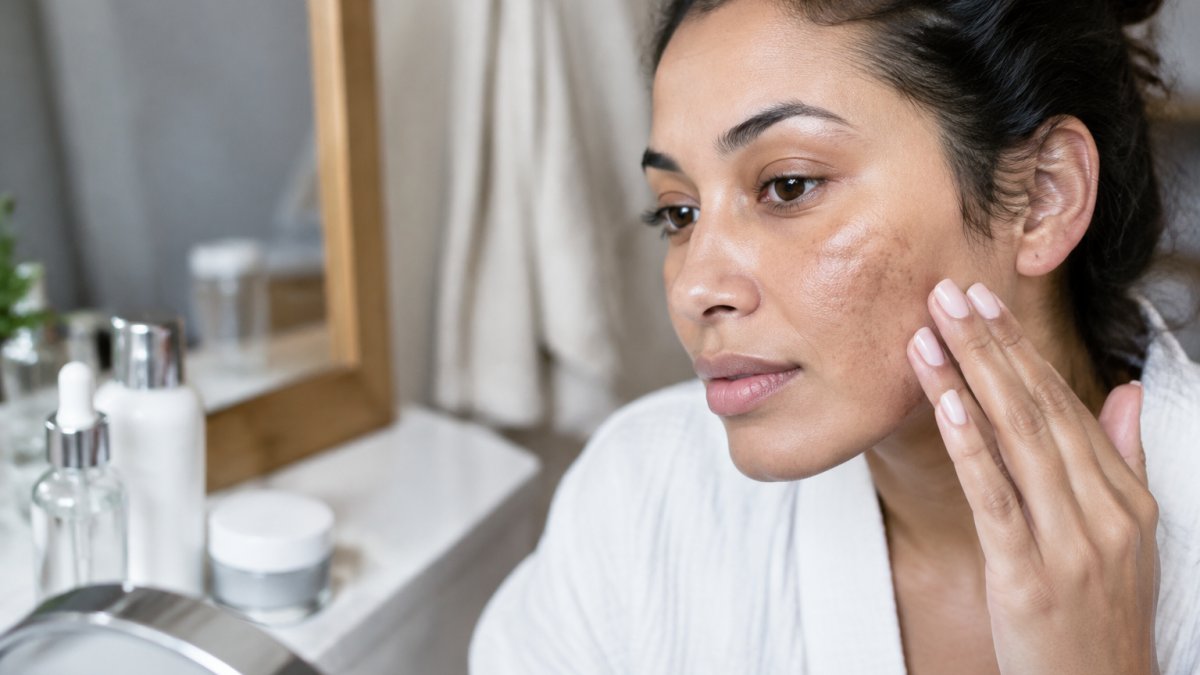
The difference between melasma and post-inflammatory hyperpigmentation (PIH) is often clearest when you consider both the pattern of discoloration and the skin’s history. Melasma commonly forms broader, fairly symmetrical patches on the cheeks, forehead, bridge of the nose, or upper lip. PIH more often appears as individual spots or patches where acne, eczema, a burn, a rash, or another irritation healed. These are clues, not rules: melasma can be uneven, and PIH can cover a broad area if the original inflammation did.
| Clue | Melasma | Post-inflammatory hyperpigmentation (PIH) |
|---|---|---|
| Typical pattern | Often paired or roughly symmetrical patches | Marks that correspond to sites of earlier inflammation or injury |
| Common locations | Cheeks, forehead, nose, upper lip, and sometimes other sun-exposed areas | Any area affected by acne, dermatitis, a wound, or another inflammatory event |
| Helpful history | May begin or worsen with pregnancy, hormonal medication, sunlight, or heat | Often follows a breakout, rash, irritation, picking, or skin procedure |
| Course | Can persist or recur, particularly with ongoing triggers | May fade gradually after the inflammation is controlled, though fading can take time |
A practical way to prepare for an appointment is to record when the discoloration began, what was happening on the skin beforehand, whether it changes with sun or heat exposure, and whether similar patches appear on both sides of the face. Photos taken in consistent lighting can help show changes over time. Also note new skin-care products, acne treatments, hair-removal methods, and medications; irritation from a product or procedure can itself leave PIH.
A clinician typically considers the distribution, color, texture, medical history, and timing of the pigment. A Wood lamp may help assess some epidermal pigment, but it is not definitive, particularly in darker skin tones, and it cannot by itself establish the diagnosis. A dermatologist may use a dermatoscope or, when the appearance is atypical and another diagnosis needs to be ruled out, consider whether further evaluation is appropriate. Melasma and PIH can coexist, so a history of acne does not rule out melasma in the same area.
Watch out: A brown mark is not automatically PIH, and a changing or unusual spot should not be treated with an at-home peel before it has been assessed.
One distinction that can prevent confusion: PIH changes skin color, while an atrophic or raised acne scar changes texture. A person can have both a scar and pigment in the same spot, but treatments for discoloration do not necessarily improve a textural scar. When the cause is uncertain, diagnosis should come before choosing a pigment-fading treatment.
Causes of Post-Inflammatory Hyperpigmentation and Melasma Triggers
The causes of post-inflammatory hyperpigmentation begin with inflammation or cutaneous injury, while melasma has a different mix of triggers. Acne, eczema, picking, and irritating products can start an inflammatory cascade that prompts melanocytes to increase melanin production. Melasma is commonly associated with hormonal fluctuations, including changes involving estrogen and progesterone, alongside light and heat exposure.
This distinction matters because removing pigment without addressing its trigger can lead to recurrence. If marks appear where acne lesions heal, focus first on controlling the inflammation and avoiding picking. If patches are symmetrical and persist without a clear injury, ask a dermatologist about melasma and other pigmentary disorders.
The American Academy of Dermatology’s melasma guidance describes common features and care options. For a clinical overview of PIH, see the DermNet overview of post-inflammatory hyperpigmentation. These references can help you prepare questions, but they cannot assess your skin directly.
How Skin Tone, UV Exposure, and Heat Affect Pigment
Skin tone affects how pigmentary conditions appear and how cautiously they should be treated. In Fitzpatrick skin types IV-VI, melasma and PIH may look brown, dark brown, gray-brown, or slate-colored rather than pink or red. Inflammation can be subtle or difficult to see, so a product that seems to cause only mild stinging may still be too irritating if discoloration follows. Fitzpatrick type is a rough description of how skin responds to sun exposure, not a complete measure of skin color or an individual diagnosis.
PIH is especially relevant after inflammation: acne, eczema, friction, picking, and irritating products can all leave persistent marks. The original rash or breakout may have settled while the pigment remains, making the connection easy to miss. Melasma can also occur across skin tones and may be more noticeable after light exposure. In either condition, pigment depth and individual response vary; appearance alone cannot reliably tell you how deep pigment sits or which treatment will work.
Ultraviolet radiation can darken existing discoloration and contribute to recurrence. Visible light can also worsen melasma in some people, which is why a dermatologist may discuss a tinted sunscreen containing iron oxides in addition to broad-spectrum UV protection. Choose a sunscreen you can apply consistently, follow its label for use and reapplication, and use shade or a hat when practical. Sunscreen helps limit a trigger; it does not erase pigment on its own.
Heat is a reported aggravating factor for some people with melasma, although responses differ. If patches seem to darken or flare after hot environments or activities, keep a simple record rather than assuming heat is the cause. Sun protection remains important even when heat is not an obvious trigger.
The skin-of-color trade-off is that aggressive exfoliation or an overly strong treatment can cause irritation, and irritation can produce more PIH (the American Academy of Dermatology). A cautious plan generally prioritizes controlling acne or dermatitis, protecting against light, and introducing one treatment at a time under appropriate guidance. Dermatologists may consider options such as azelaic acid or prescription treatments depending on the diagnosis, skin sensitivity, and other health factors; no single ingredient is suitable for everyone.
Watch out: Do not use burning, peeling, or redness as evidence that a pigment treatment is working; persistent irritation can prolong discoloration, especially in skin prone to PIH.
If discoloration is spreading, recurring, or not responding to a gentle routine, a dermatologist can assess whether melasma, PIH, or both are present and tailor treatment to your skin. This individualized approach matters because the same visible brown patch can have different triggers, and a treatment that irritates one person may be tolerated by another.
Mandelic Acid for Hyperpigmentation: What to Know
Mandelic acid for hyperpigmentation may be an option for some routines, but it cannot identify or cure the cause of discoloration. It is an exfoliating acid; the practical question is whether your skin can tolerate it without irritation.
For product details, see our 25% Mandelic Acid At Home Peel and read about mandelic acid peel benefits and use.
The limitation is clear: an at-home peel cannot distinguish melasma from PIH. If you are unsure what caused the pigment, get a dermatological diagnosis before increasing treatment strength.
Chemical Peels for Pigmentation: Choosing a Cautious Approach
Chemical peels for pigmentation should follow a clear diagnosis and a conservative plan, especially when skin is sensitive or prone to PIH. A peel can exfoliate surface cells, but irritation may worsen discoloration.
Before using an at-home peel:
- Read the full directions and follow the stated contact time.
- Avoid applying it to irritated, broken, or freshly picked skin.
- Do not combine it with other strong actives unless a clinician advises you.
- Protect skin from sunlight and follow the product’s aftercare directions.
- Stop use if you develop severe or persistent irritation.
The American Academy of Dermatology’s chemical peel guidance explains why peel choice and aftercare matter. If you are comparing peel depth, our guide to medium vs. deep chemical peels outlines the distinction. At Makeup Artist’s Choice, our range includes glycolic, lactic, salicylic, and TCA peels.
Long-Term Pigment Care, Ingredient Safety, and Skin Confidence
Long-term pigment care works best when it prevents new inflammation and limits repeat light exposure. Keep the routine simple: gentle cleansing, moisturizer, daily broad-spectrum sunscreen, and one targeted active at a time. Add products gradually so you can spot irritation and avoid stacking exfoliating acids with topical retinoids without professional guidance.
A useful maintenance rule is to change one variable at a time. If redness, stinging, or peeling begins, pause the new active rather than adding another product to compensate. Pigment often fades slowly, and results vary with the cause, depth, and ongoing triggers.
Discoloration can affect confidence and daily choices, but it does not define skin health or personal worth. If you want a broader plan, explore our at-home hyperpigmentation routine and guidance on choosing a vitamin C serum. Makeup Artist’s Choice offers customizable skincare routines alongside its peel range.
When to Seek a Dermatology Evaluation or Choose a Peel
A dermatology evaluation is the better first step when pigment is new, changing, spreading, painful, or difficult to explain. Seek advice before a peel if you have persistent irritation, a history of strong reactions, or uncertainty about whether the marks are melasma, PIH, or another condition. A clinical assessment can also help identify pigment depth and reduce the risk of treating the wrong concern.
Use this quick checklist before deciding:
- Do the marks follow acne, a rash, or another injury?
- Are patches symmetrical or limited to prior inflamed areas?
- Is the skin calm and intact?
- Can you follow the peel directions and sun-protection plan?
- Has a clinician advised against exfoliation for your skin?
The difference between melasma and post inflammatory hyperpigmentation is not always obvious, and a peel is not a diagnostic test. If diagnosis is unclear, choose evaluation over experimentation. If a peel is appropriate, select it only after reviewing its instructions and your skin’s tolerance.
Frequently Asked Questions
What is the main difference between melasma and post-inflammatory hyperpigmentation?
Melasma often appears as symmetrical patches on areas such as the cheeks or forehead and can be associated with hormonal fluctuations and light exposure. Post-inflammatory hyperpigmentation (PIH) develops where inflammation or injury occurred, such as after acne lesions or skin trauma. Appearance alone cannot confirm the cause, and pigment depth varies. A dermatologist can assess the pattern, history, and skin to distinguish these pigmentary disorders.
Can chemical peels treat both melasma and PIH?
Ask a dermatologist or qualified skin-care professional about your concerns, especially if pigmentation is persistent or worsening.
What causes post-inflammatory hyperpigmentation?
PIH follows inflammation or injury to the skin. Common triggers include acne lesions, irritation, and other forms of skin trauma. The affected area can produce excess melanin as it responds to inflammation, leaving a dark mark after the original problem settles. Persistent marks, pain, or an uncertain diagnosis warrant a dermatology evaluation.
Is mandelic acid for hyperpigmentation suitable for sensitive or darker skin?
Mandelic acid is an exfoliating ingredient used in some routines for uneven tone, but suitability depends on your skin barrier, sensitivity, and the cause of the pigmentation. Darker skin tones can develop PIH after irritation, so introducing an acid without guidance can backfire. Ask a dermatologist about a cautious plan, avoid combining new exfoliants or retinoids at once, and use broad-spectrum sun protection as directed.
Persistent pigment can be frustrating, especially when treatment itself risks irritation. Makeup Artist’s Choice offers at-home peels in several acid types and customizable skincare routines, but the safest choice starts with matching treatment to the concern. Get started with Makeup Artist’s Choice by reviewing the product directions and choosing a routine suited to your skin.