Last Updated: November 22, 2026
Quick Summary
Ingredients that help acne scars at home mainly fade dark marks and improve surface texture rather than filling indented scars. Retinoids, vitamin C, niacinamide, azelaic acid and gentle acids are the main families, with results usually taking 8 to 24 weeks. Deep indented scars need a clinician.
- Retinoids take 12 to 24 weeks to show pigment and texture changes.
- Vitamin C is typically used at 10 to 20% concentration, ideally in the morning under sunscreen.
- Niacinamide is typically used at 2 to 10% and is well tolerated for sensitive skin.
- Irritation from too many actives can deepen dark marks, especially in deeper skin tones.
- Topicals cannot restore volume, so deep indented scars are generally treated by a clinician.
Table of Contents
- Skincare Ingredients That Help Fill Acne Scars at Home
- Dark Marks, Red Marks, and Indented Scars: Why the Difference Matters
- Best Ingredients for Acne Scars and Dark Spots
- Acids for Texture and Tone: AHAs, BHA, and Mandelic Acid
- Chemical Peels for Acne Scars: What Works and What Carries Risk
- Mandelic Acid Peel for Acne-Prone Skin: Who It Suits
- Building a Safe Routine, Setting Realistic Timelines, and Knowing When to See a Dermatologist
- Frequently Asked Questions
Skincare Ingredients That Help Fill Acne Scars at Home
Acne scars are common, and the ingredients that help them are often misunderstood. A common confusion is expecting a single ingredient to smooth a deep indented scar in weeks. It rarely works that way. Ingredients that help acne scars at home mostly improve skin texture, fade pigment, and boost turnover over time, rather than physically filling a scar.
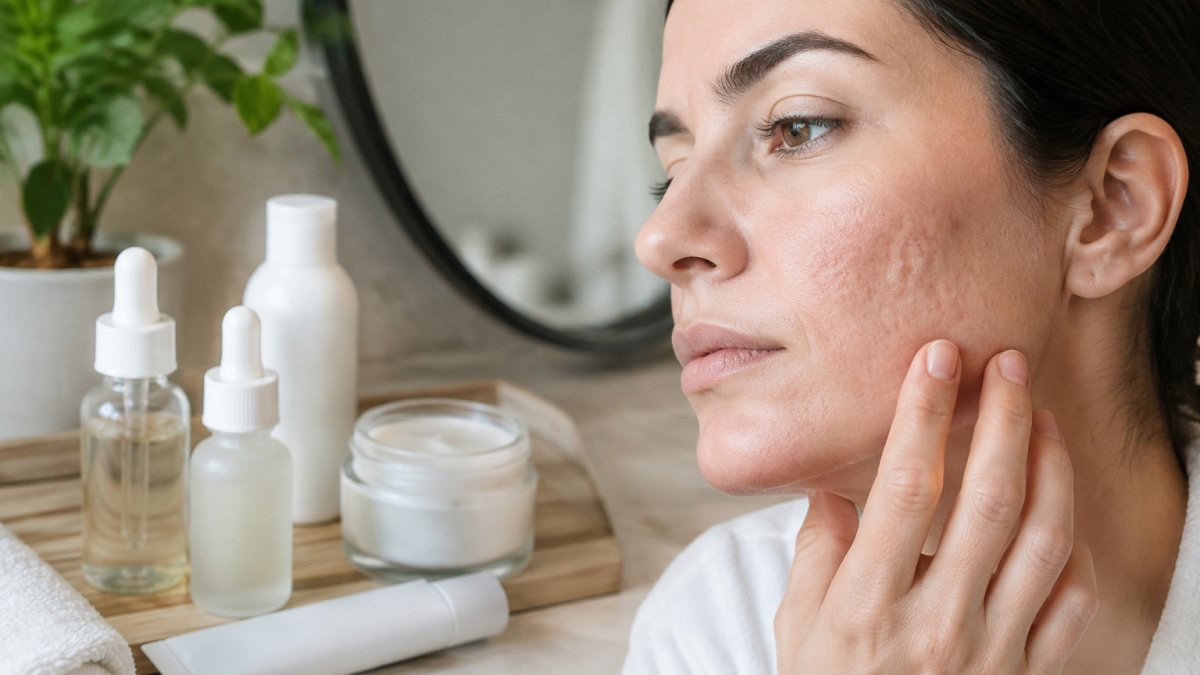
Acne scars are not all the same. Some are flat dark marks, some are red, and some are depressions in the skin. Each responds differently to topical care. The sections below explain which ingredients suit each type, how they work, and where the risks are.
Watch out: Expecting a cream to lift a deep indented scar in a few weeks leads most people to quit too early or switch products too often.
Dark Marks, Red Marks, and Indented Scars: Why the Difference Matters
Before choosing an ingredient, identify what you are treating. Post-inflammatory hyperpigmentation, the flat brown or dark marks left after a breakout, is pigment and fades with brightening and exfoliating care. Red marks reflect blood vessel changes and often fade more slowly. Atrophic scars, the rolling, boxcar, or ice-pick indentations, involve lost tissue, and topical products can only soften their edges and improve the surface.
Mixing these up is the most common reason people feel their products failed. A brightening serum will fade a dark mark, but it will not lift an indented scar. Treating the right concern with the right ingredient sets realistic expectations from the start.
Best Ingredients for Acne Scars and Dark Spots
No single ingredient fills an indented scar, but several families reliably improve the two things topical care can change: excess pigment (dark marks) and surface texture (roughness and mild unevenness). The table below summarizes what each family generally does, typical over-the-counter concentrations, and typical timelines. Details follow.
| Ingredient family | Primary target | Common OTC strength | Typical time to visible change |
|---|---|---|---|
| Retinoids (retinol, adapalene) | Turnover, pigment, texture | Retinol 0.1-1%; adapalene 0.1% | 12-24 weeks |
| Vitamin C (L-ascorbic acid) | Pigment, collagen support | 10-20% | 8-12 weeks |
| Niacinamide | Pigment transfer, barrier | 2-10% | 8-12 weeks |
| Azelaic acid | Pigment, redness, acne | 10-20% | 8-12 weeks |
| AHAs (glycolic, lactic, mandelic) | Surface texture, tone | 5-10% leave-on | 4-12 weeks |
| BHA (salicylic acid) | Pores, oil, surface | 0.5-2% | 4-8 weeks |
Typical time to visible change
Retinoids and Skin-Cell Turnover
Retinoids bind retinoic acid receptors in the skin and accelerate keratinocyte turnover, which generally helps pigmented cells in the upper layers shed faster. Over-the-counter retinol converts to retinoic acid in the skin and is the gentler entry point; adapalene 0.1% is a synthetic retinoid available without a prescription and is often better tolerated than older formulations. Prescription tretinoin works faster but carries more early dryness, peeling, and redness.
Apply to dry skin, use a pea-sized amount for the whole face, and follow with moisturizer. Expect 12 to 24 weeks before pigment and texture changes are clearly visible.
Watch out: Layering a retinoid with a strong AHA or BHA in the same routine multiplies irritation, and irritation itself can deepen dark marks, especially in deeper skin tones.
Vitamin C, Niacinamide, and Azelaic Acid
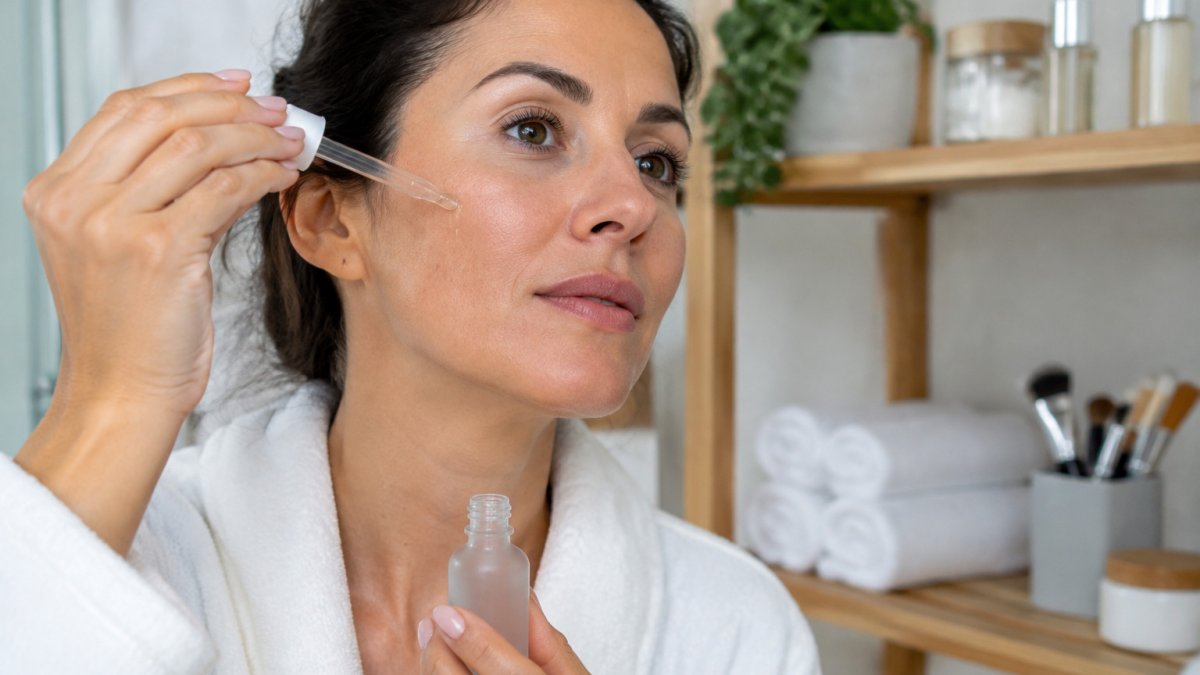
Vitamin C in its L-ascorbic acid form is an antioxidant that interferes with melanin production and supports collagen synthesis. It is unstable in water and oxidizes when exposed to light and air, so opaque, air-restricted packaging matters. Concentrations of 10-20% are typical; higher is not automatically better and can sting. Use it in the morning under sunscreen, since it complements UV protection.
Niacinamide (vitamin B3) reduces the transfer of melanin from melanocytes to surface skin cells and supports the skin barrier by boosting ceramide production. It is unusually well tolerated at 2-10% and pairs with almost everything, which makes it a useful anchor for sensitive skin.
Azelaic acid is a dicarboxylic acid that both slows abnormal pigmentation and has antibacterial and anti-inflammatory action against acne, which makes it a two-for-one for people still breaking out. It is often recommended in pregnancy, but confirm with a clinician.
These three generally need eight to twelve weeks of consistent use before change is visible, and they fade marks rather than alter scar depth.
What Topicals Can and Cannot Do for Indented Scars
Atrophic scars, ice-pick, boxcar, and rolling, involve lost collagen and tissue. To learn how to tell these apart from flat marks, read how many microneedling sessions for acne scars. No cream restores that volume. What retinoids and acids can do is soften the visual edge of a shallow scar and improve surrounding texture so the depression looks less pronounced. Established indented scars are generally addressed with procedures such as microneedling, laser resurfacing, subcision, or fillers, performed by a clinician. Setting this expectation up front prevents the most common disappointment: expecting a serum to lift a deep scar.
Acids for Texture and Tone: AHAs, BHA, and Mandelic Acid
Acids remove the outer layer of dead skin and help even tone. Glycolic and lactic acid, both alpha hydroxy acids (AHAs), work on the surface. Salicylic acid, a beta hydroxy acid (BHA), penetrates oil-filled pores and suits acne-prone skin. Mandelic acid is a larger molecule that absorbs more slowly, which makes it a common choice for people with sensitive or darker skin.
Start with a low concentration and use it two or three times a week. Sun protection is essential, since fresh exfoliation can make skin more sensitive to UV light and darken marks that are already present.
Chemical Peels for Acne Scars: What Works and What Carries Risk
Professional and at-home chemical peels can smooth texture and fade pigment, but they carry real risk, particularly for darker skin, where they can trigger further discoloration. Results depend on peel depth, skin type, and aftercare. Superficial peels are the safest starting point, and deeper peels should only be considered with guidance from a qualified professional.
Peels are not a substitute for treating deep indented scars. They work best on pigment and surface roughness. Once you have a peel scheduled, learn how to protect your skin from the sun during healing.
Mandelic Acid Peel for Acne-Prone Skin: Who It Suits
Mandelic acid is often recommended for acne-prone skin because it is gentle and works more slowly than glycolic acid.
It is less suited to people with active, inflamed breakouts or a damaged skin barrier. Patch test first, and give your skin time to recover between treatments.
Building a Safe Routine, Setting Realistic Timelines, and Knowing When to See a Dermatologist
Most people fail with acne-scar ingredients not because they chose the wrong product but because they stacked too many actives at once, quit before the timeline, or skipped sunscreen. The routine below sequences the ingredients from the previous sections so they reinforce rather than irritate each other.
A Simple Morning and Evening Plan
Morning: gentle cleanser, vitamin C serum (if using), moisturizer, broad-spectrum sunscreen SPF 30 or higher. Sunscreen is not optional, UV exposure darkens existing post-inflammatory marks and undermines every brightening ingredient in the routine.
Evening: cleanser, then one active (retinoid, AHA/BHA, or azelaic acid, not all three), then moisturizer. Niacinamide can be used morning or evening and layers with most actives.
Introduction Schedule
Introduce one new active every two to four weeks so you can attribute irritation or progress to a specific product. A workable sequence:
- Weeks 1-4: cleanser, moisturizer, sunscreen, and niacinamide only. This establishes baseline tolerance.
- Weeks 5-8: add a retinoid two nights a week, building toward nightly as tolerated.
- Weeks 9-12: add vitamin C in the morning, or azelaic acid if redness and active breakouts are the main concern.
- Week 13 onward: add an AHA or BHA two or three times a week, on nights you are not using the retinoid. If you have recently had a peel, check when you can safely restart retinol before adding it back.
Ingredient Compatibility Rules
- Do not use a retinoid and a strong AHA/BHA on the same night; alternate nights instead.
- Vitamin C and niacinamide can be used together; the old concern about them canceling out is not supported by current evidence.
- Benzoyl peroxide can oxidize some retinoids, so use them at different times of day if you use both.
- Avoid combining multiple exfoliating acids; pick one AHA or one BHA.
Watch out: Irritation, stinging, redness, flaking, can itself trigger post-inflammatory hyperpigmentation, so a “more actives” approach can make dark marks worse, particularly in deeper skin tones. Patch test new products on the inner forearm for 48 hours first.
Realistic Timelines and How to Track Progress
Pigment changes typically take 8 to 12 weeks; texture and retinoid-driven turnover take 12 to 24 weeks; indented scars do not change with topicals at all. Photograph your face in consistent lighting, same window, same time of day, no makeup, every two weeks. Comparing photos is far more reliable than judging in the mirror, where daily change is invisible.
When to See a Dermatologist
Book a visit if a scar is deep or clearly indented, if pigment is spreading or not fading after three to four months of consistent care, if you develop new nodules or cysts, or if irritation persists despite simplifying the routine. A dermatologist can confirm whether you are treating pigment, redness, or a true atrophic scar, and can discuss procedures for indentation that topicals cannot address.
Preventing New Marks While Treating Old Ones
Treating existing marks while allowing new breakouts is a treadmill. Keep acne controlled with a consistent regimen, resist picking or squeezing (which is a leading cause of both post-inflammatory marks and scarring), and wear sunscreen daily. Preventing new marks is faster than fading them.
Frequently Asked Questions
What is the best skincare ingredient for acne scars?
No single ingredient works for every scar. Retinoids help skin turnover and can soften shallow textural marks over several months, while vitamin C and niacinamide mainly address dark spots and uneven tone. Indented scars usually need professional procedures for significant change. Topical ingredients improve the look of surface marks, and results depend on scar depth, skin type and consistent use with daily sunscreen. Expect gradual progress over 8 to 12 weeks rather than rapid filling.
Can skincare ingredients fill in indented acne scars?
Topical skincare ingredients cannot truly fill deep indented scars. Retinoids and some peptide-based products may modestly improve the appearance of shallow depressions by encouraging collagen-supporting activity over time. Deeper atrophic scars generally need in-office options such as dermal fillers, subcision or fractional laser. Check current product information on the Makeup Artist’s Choice website and consult a dermatologist about scar depth before starting a routine.
What ingredients help fade dark spots left by acne?
Vitamin C, niacinamide, azelaic acid, and gentle exfoliating acids such as lactic or mandelic acid are commonly used to address post-inflammatory hyperpigmentation. These work by regulating melanin production or speeding removal of pigmented cells. Sunscreen with SPF 30 or higher is essential, because sun exposure can darken marks that are fading. Introduce one new active at a time to reduce irritation risk.
Is a mandelic acid peel safe for acne-prone skin?
Mandelic acid has a larger molecule than glycolic acid, so it penetrates more slowly and is often better tolerated by sensitive or acne-prone skin. It can help with breakouts, mild texture and dark marks. Active acne, broken skin or recent retinoid use can increase irritation, so pause strong actives before a peel. Patch test first and follow label instructions. Pricing depends on product size and bundle options; visit the Makeup Artist’s Choice website for current prices.