Lactic acid and glycolic acid are two of the best-known alpha hydroxy acids in professional skincare. Both exfoliate accumulated surface cells, refine the appearance of skin texture and help restore a fresher, brighter-looking complexion.
However, they do not feel or perform exactly the same way—and one is not automatically better than the other.
After nearly three decades of helping clients use professional-grade skincare at home, I have learned that choosing an acid is not about finding the strongest product available. It is about choosing the acid that is best suited to your skin, your concerns and your level of experience.
I like both lactic acid and glycolic acid very much. However, my personal preference has long been lactic acid.
My skin responds beautifully to it. I appreciate the way it exfoliates while still leaving my mature skin feeling soft, hydrated and comfortable. MUAC’s lactic acid formulations also contain carefully selected ingredients, including natural botanical extracts, that help my skin appear brighter and keep the appearance of my skin tone more even.
That is my personal preference—but it does not mean lactic acid is the right choice for everyone.
Some people want and tolerate the more intensive exfoliation glycolic acid can provide. We are pleased to offer both options, along with mandelic acid, so our clients can choose among three excellent alpha hydroxy acids rather than being told that one acid is right for every complexion.
Table of Contents
- What Are Alpha Hydroxy Acids?
- What Is Lactic Acid?
- Why Lactic Acid Is My Personal Preference
- What Is Glycolic Acid?
- Lactic Acid vs. Glycolic Acid: The Principal Differences
- Does Glycolic Acid Work Better Because It Is More Intense?
- Where Does Mandelic Acid Fit?
- A Chemical Peel Is Not Always Necessary
- How I Use Lac-Luronic Serum
- Using Lac-Luronic Means I Peel Less Frequently
- MUAC Lactic Acid Skincare Options
- MUAC Glycolic Acid Skincare Options
- Can Lactic Acid and Glycolic Acid Be Used Together?
- What If You Do Not See Visible Peeling?
- How to Choose the Right AHA
- Essential Safety When Using Alpha Hydroxy Acids
- A Final Word About Choosing an AHA
What Are Alpha Hydroxy Acids?
Alpha hydroxy acids, commonly called AHAs, are water-soluble acids used to loosen the bonds holding dull, accumulated cells to the skin’s surface.
As those surface cells are released, skin can appear:
- Smoother
- Brighter
- Softer
- More refined
- More evenly toned
- Better prepared for the rest of a skincare regimen
Lactic acid, glycolic acid and mandelic acid all belong to the AHA family. They share certain benefits, but differences in their molecular size and formulation affect how they interact with the skin.
That is why two products displaying the same percentage of acid can feel and perform very differently.
The percentage shown on the label is only part of the story. A product’s pH, free acid value, supporting ingredients and the condition of the person’s skin all influence how an acid performs.
What Is Lactic Acid?
Lactic acid is an alpha hydroxy acid valued for its ability to exfoliate while helping the skin maintain a softer, more hydrated appearance.
Compared with glycolic acid, lactic acid has a larger molecular structure. It generally penetrates less rapidly, which is one reason many people find it gentler and easier to tolerate.
Lactic acid may be especially appealing to people with:
- Dry or dehydrated skin
- Mature skin
- Sensitive skin that tolerates acids
- Dull or rough-looking skin
- Uneven-looking skin tone
- Superficial discoloration
- A preference for effective exfoliation with less intensity
Lactic acid should not be mistaken for an ineffective acid simply because it is generally considered gentler than glycolic acid. A properly formulated lactic acid product can provide substantial exfoliation.
Gentle and weak are not the same thing.
Why Lactic Acid Is My Personal Preference
As my own skin has matured, I have become increasingly mindful of balancing exfoliation with hydration and skin comfort.
I do not believe mature skin should be treated as if it must be aggressively stripped or forced to peel to improve its appearance. Mature skin can benefit tremendously from exfoliation, but it also deserves thoughtful care.
That is where lactic acid shines for me.
MUAC’s lactic acid formulas provide the level of exfoliation I want while leaving my skin feeling soft and looking refreshed. Our lactic acid products also include licorice root extract, a botanical ingredient selected to complement the formulas and support the appearance of brighter, more evenly toned skin.
The botanical ingredients have been particularly important to me personally. With consistent use, I have found that Lac-Luronic has helped diminish the appearance of the dark spots and freckles that became more noticeable as I aged.
My skin looks brighter, fresher and more evenly toned, without requiring aggressive exfoliation.
What Is Glycolic Acid?
Glycolic acid is also an AHA, but it has a smaller molecular structure than lactic or mandelic acid. Its smaller size allows it to penetrate more readily, which can produce a faster or more intensive exfoliating experience.
This makes glycolic acid an excellent choice for people who want more assertive resurfacing and whose skin already tolerates alpha hydroxy acids well.
Glycolic acid may be particularly appealing for:
- More resistant or less sensitive skin
- Rough or uneven-looking texture
- Dull surface buildup
- The appearance of enlarged or congested pores
- Sun-damaged-looking skin
- Superficial marks and discoloration
- Experienced acid users who want more intensive exfoliation
Many longtime MUAC clients love glycolic acid precisely because of that intensity. When properly selected and used according to directions, it can be a tremendously effective part of a skincare regimen.
However, more intensive does not necessarily mean more appropriate.
Someone with dry, reactive or compromised skin may have a better experience with lactic or mandelic acid than from repeatedly pushing the skin with a more aggressive product.
Lactic Acid vs. Glycolic Acid: The Principal Differences
|
Consideration |
Lactic acid |
Glycolic acid |
|
Molecular size |
Larger than glycolic acid |
The smallest commonly used AHA molecule |
|
Exfoliating character |
Effective but generally more gradual |
Faster and frequently more intensive |
|
Skin feel |
Often preferred by dry, mature or more sensitive skin |
Often preferred by tolerant or more resistant skin |
|
Hydration |
Particularly valued for supporting a hydrated, supple appearance |
Can be hydrating when paired with ingredients such as hyaluronic acid |
|
Uneven-looking tone |
An excellent choice, especially in a botanically supported formula |
Also helps improve the appearance of surface discoloration |
|
Visible flaking |
May produce little or no obvious flaking |
More likely to produce dryness or flaking at higher strengths |
|
Best starting point |
Frequently a comfortable introduction to AHAs |
Lower strengths may suit beginners; higher strengths require experience |
|
My personal preference |
Yes, especially as my skin has matured |
An excellent option for people who prefer greater intensity |
These are general distinctions, not promises about how every person’s skin will respond. Individual tolerance, product strength, pH, application time and frequency all matter.
Does Glycolic Acid Work Better Because It Is More Intense?
Not necessarily.
Intensity and results are not the same thing.
If a product repeatedly leaves the skin irritated, excessively dry or uncomfortable, it may interfere with consistent use. A gentler acid that can be used responsibly and consistently may produce a much better overall experience.
The best acid is the one that provides effective exfoliation without overwhelming your skin.
For some people, that will be glycolic acid. For others, it will be lactic acid. People with particularly sensitive skin or those completely new to acids may prefer mandelic acid, which has the largest molecular structure of the three and generally penetrates more slowly.
Where Does Mandelic Acid Fit?
Although this article focuses primarily on lactic acid and glycolic acid, mandelic acid deserves an important place in the conversation—particularly for people with darker skin tones.
Mandelic acid has the largest molecular size of these three alpha hydroxy acids. Because it penetrates the skin more slowly, it generally provides a gentler, more gradual exfoliating experience.
For this reason, we frequently suggest considering mandelic acid as a first peel for darker skin tones, sensitive skin and anyone completely new to chemical peeling.
Darker skin contains more active melanin and can be particularly susceptible to post-inflammatory hyperpigmentation. If the skin becomes irritated or inflamed by an overly aggressive peel, existing patchy pigmentation may become darker, or new areas of discoloration may develop.
Mandelic acid’s slower, more controlled penetration may help reduce the likelihood of the excessive irritation that can contribute to unwanted darkening. It can also help improve the appearance of existing patchy discoloration and uneven skin tone gradually, without approaching the skin too aggressively.
However, no chemical peel can guarantee that post-inflammatory darkening will not occur. The selected strength, application time, frequency, condition of the skin and use of daily sun protection all matter. Patch testing is especially important for anyone prone to hyperpigmentation.
We have already explored mandelic acid in much greater depth in our complete MUAC mandelic acid guide. In simple terms, these three acids create a useful spectrum:
Mandelic acid has the largest molecular size of the three. It offers slower, generally gentler penetration and is often the most cautious first-peel choice for darker skin tones, sensitive skin and beginning peel users.
Lactic acid provides meaningful exfoliation with qualities that make it especially attractive for dry, mature or uneven-looking skin.
Glycolic acid has the smallest molecular size of the three and provides faster, more intensive exfoliation for skin that wants—and can comfortably tolerate—a stronger experience.
None of these acids is universally superior. They are different tools for different skin, and the safest choice is not always the strongest one.
A Chemical Peel Is Not Always Necessary
It is also important to understand that you do not necessarily need to perform a chemical peel to enjoy beautifully exfoliated skin.
MUAC has offered our Gly-Luronic and Lac-Luronic serums for more than 20 years, and I have personally used both for many years.
For a long time, Gly-Luronic was my regular choice. Its glycolic acid provided the more intensive exfoliation my skin wanted at that point in my life. As I grew older and my skin became somewhat more sensitive, I transitioned to Lac-Luronic—and it has remained one of my favorite products ever since.
That transition taught me something worth sharing: our skin changes as we age, and our skincare should be allowed to change with it.
Moving from glycolic acid to lactic acid did not mean that I no longer wanted effective exfoliation. It simply meant that my skin responded better to a gentler form of it.
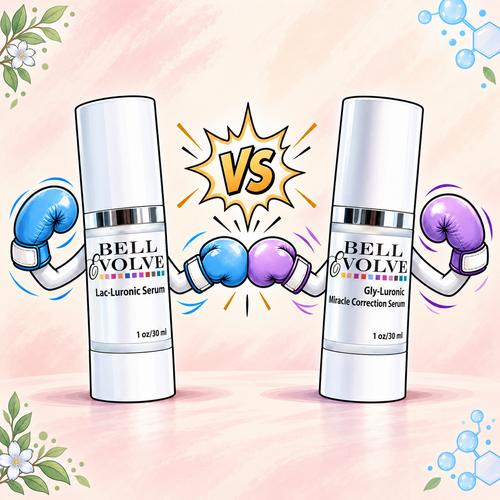
Our Lac-Luronic Serum combines 15% lactic acid with hyaluronic acid, giving me beautifully exfoliated skin while helping it feel deeply hydrated, soft and supple. The formula also contains aloe, licorice root extract and a stable form of vitamin C.
In my own experience, the licorice root extract has been especially helpful in improving the appearance of dark spots and freckles. With consistent use, my complexion looks brighter, fresher and more evenly toned.
How I Use Lac-Luronic Serum
I normally use Lac-Luronic at night after cleansing. I dispense the serum onto a cotton pad and gently wipe it over my entire face.
But I do not stop at my face.
I also apply it to my neck, chest and the backs of my hands. These areas are frequently neglected even though they can display some of the most recognizable signs of aging and accumulated sun exposure.
When I wake the following morning, my skin looks remarkably fresh—smoother, plumper and beautifully dewy. I do not need to see visible peeling or flaking to know that the product is doing its work. I can see and feel the difference in the condition of my skin.
Of course, any area treated with an exfoliating acid must be protected from unnecessary sun exposure. That includes the face, neck, chest and hands. Broad-spectrum sunscreen should be an essential part of an acid-based skincare routine.
Using Lac-Luronic Means I Peel Less Frequently
Because Lac-Luronic provides ongoing exfoliation, I find that I do not need to perform a chemical peel as often.
I generally reach for one of our lactic acid peels only once every three to four weeks.
That is my personal routine, developed through many years of using these products and observing how my skin responds. It should not be interpreted as a universal schedule for everyone. Each person should follow the directions for the particular product being used and adjust cautiously according to individual tolerance.
This illustrates something I have tried to teach our clients for many years:
Visible peeling is not the measure of successful exfoliation.
Chemical peels certainly have an important place in skincare, and MUAC offers several excellent options. But not everyone needs a peel, and a peel does not have to be the starting point.
For some people, consistent use of a thoughtfully formulated exfoliating serum will provide exactly what their skin needs. Others may use a serum regularly and perform an occasional peel, as I do.
Sometimes the best skincare choice is not the most intensive treatment. It is the product that suits your skin as it exists today—and that may not be the same product your skin preferred 10 or 20 years ago.
MUAC Lactic Acid Skincare Options
MUAC offers lactic acid in both periodic peel treatments and a regular-use serum.
Our 40% Lactic Acid Peel is an excellent introduction to lactic peeling and is often selected by clients with mature or sensitive skin.
Our 55% Lactic Acid Peel provides a more intensive lactic acid treatment for experienced users who already understand how their skin responds.
Our Lac-Luronic Serum combines 15% lactic acid with hyaluronic acid, aloe, licorice root extract and a stable form of vitamin C. It provides ongoing exfoliation and hydration without requiring visible peeling.
Product selection should always be based on your experience and tolerance—not simply on choosing the highest available percentage.
MUAC Glycolic Acid Skincare Options
For people who prefer glycolic acid, MUAC offers several glycolic acid peel strengths, allowing clients to progress conservatively rather than beginning with an unnecessarily aggressive treatment.
Our glycolic family includes 30%, 40% and 50% peels, along with an adjustable 70% glycolic option designed to create lower strengths through careful dilution.
We also offer Gly-Luronic Serum, which combines 15% glycolic acid with hyaluronic acid and aloe. This provides regular glycolic exfoliation in a hydrating serum format without the expectation of visible peeling.
A person who enjoys Gly-Luronic Serum will not necessarily need a high-strength glycolic peel. Regular-use exfoliants and periodic peels serve different purposes and should not be layered indiscriminately.
Can Lactic Acid and Glycolic Acid Be Used Together?
Some professionally formulated products contain more than one alpha hydroxy acid. In those formulas, the acids have been selected and balanced as part of one complete product.
That is very different from independently layering several acid products at home.
Using a lactic acid serum, a glycolic peel and other exfoliating products within the same period can easily become too much. More acids do not automatically produce better or faster results.
If you use a chemical peel, allow your skin appropriate recovery time. Do not combine it casually with retinoids, scrubs, additional acids or other potentially irritating active ingredients. Always follow the directions provided for the specific MUAC product.
What If You Do Not See Visible Peeling?
Visible sheets of peeling skin are not required for an AHA to be effective.
Lactic acid products, in particular, may produce gentle cellular sloughing without dramatic flaking. Regular-use products such as Lac-Luronic and Gly-Luronic are also designed to refine the skin without producing a conspicuous peel.
Judge the product by the gradual condition of your skin:
- Does the surface feel smoother?
- Does dullness appear diminished?
- Does the skin look fresher and more refined?
- Is your skin maintaining a healthy, hydrated appearance?
- Is the product comfortable enough to use as directed?
Trying to force visible peeling by increasing the strength, frequency or application time can cause unnecessary irritation and may leave the skin looking worse rather than better.
How to Choose Between Lactic, Glycolic and Mandelic Acid
Consider lactic acid if:
- Your skin is dry, mature or somewhat sensitive
- Hydration and skin comfort are priorities
- Your primary concern is dull or uneven-looking tone
- You want effective exfoliation without pursuing maximum intensity
- You have not previously used stronger AHAs
Consider glycolic acid if:
- Your skin is already accustomed to AHAs
- You have resistant, rough or heavily congested-looking skin
- You prefer a more intensive exfoliating experience
- You can use glycolic acid without persistent irritation
- You are prepared to begin conservatively and follow directions exactly
Consider mandelic acid if:
- You have a darker skin tone and are selecting your first peel
- You are prone to post-inflammatory hyperpigmentation
- You already have patchy areas of uneven pigmentation
- You are completely new to chemical exfoliation
- Your skin is sensitive or easily congested
- You want slower, more gradual exfoliation
- You have previously found other AHAs difficult to tolerate
When in doubt, begin with the gentler option. You can always progress thoughtfully. It is much harder to undo the consequences of beginning too aggressively.
Essential Safety When Using Alpha Hydroxy Acids
Never apply lactic acid, glycolic acid, mandelic acid or another exfoliating acid to skin that has recently been manually exfoliated with a facial scrub, cleansing brush, microdermabrasion product or another abrasive treatment.
Manual exfoliation can temporarily weaken and sensitize the skin’s surface. Applying an acid immediately afterward may cause excessive stinging, redness, inflammation or irritation.
More exfoliation is not necessarily better. Allow the skin adequate time to recover between manual and chemical exfoliation, and never apply an acid to skin that is irritated, inflamed, injured or otherwise compromised.
Acids can also make the skin more photosensitive. Always use a broad-spectrum sunscreen with an SPF of 30 or higher when using alpha hydroxy acid products. Apply sunscreen not only to your face, but also to every treated area—including your neck, chest and the backs of your hands.
Remember that sunscreen is not merely an afterthought. It is an essential part of any responsible acid-based skincare routine. Without consistent sun protection, UV exposure can undermine the brighter, more even-looking complexion you are working to achieve and may contribute to additional discoloration.
A Final Word About Choosing an AHA
MUAC is pleased to offer glycolic, lactic and mandelic acid because our clients do not all have the same skin.
Some people adore the intensity of glycolic acid. Others, including me, prefer the balance offered by lactic acid. Still others find mandelic acid to be their ideal long-term choice or their most appropriate introduction to chemical peeling.
The goal is not to prove that one acid is the winner.
The goal is to understand your skin well enough to choose the product that helps it look its healthiest—and to use that product with patience, consistency and respect.
Whichever acid you select, always patch test first and follow the directions for that specific formulation. Never apply an acid immediately after using a facial scrub or another form of manual exfoliation, as irritation is likely to occur. Do not use acids on irritated, injured or otherwise compromised skin.
Because acids can make your skin more photosensitive, protect every treated area with a broad-spectrum sunscreen offering SPF 30 or higher. If you are under a dermatologist’s care or have questions about whether an acid is appropriate for you, consult your qualified healthcare professional before use.