
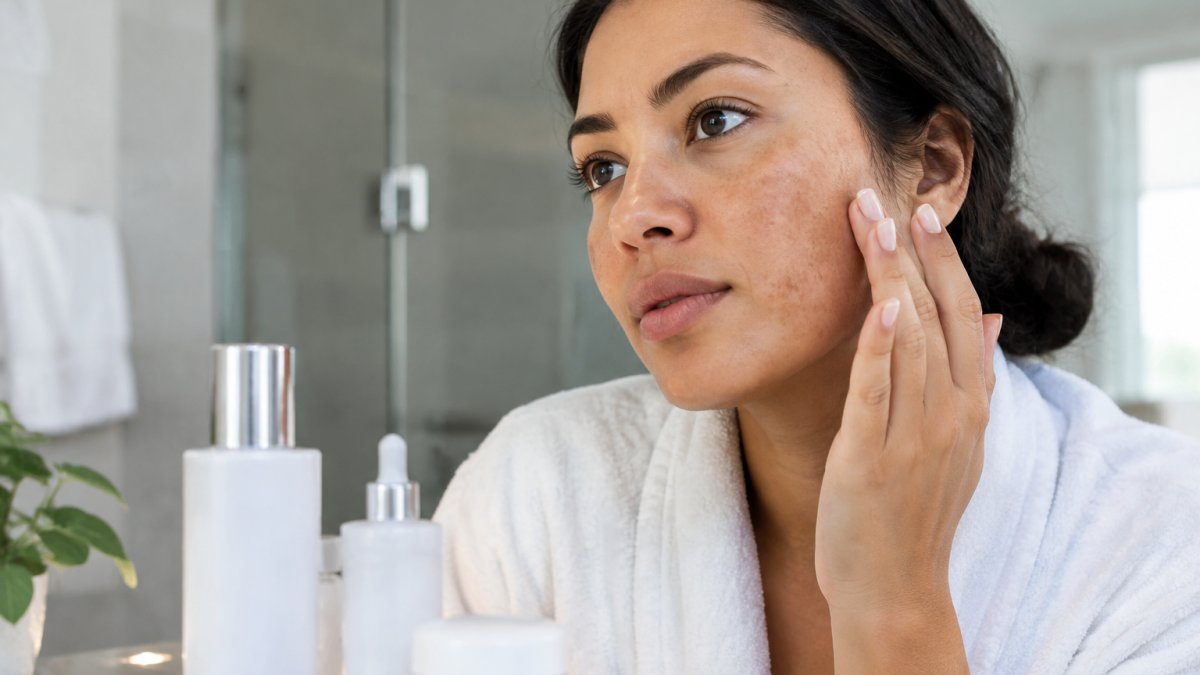
Last Updated: November 5, 2026
Quick Summary
To treat hyperpigmentation on sensitive skin, calm inflammation first and fade second: use a mild fragrance-free cleanser, a bland moisturizer, and broad-spectrum SPF 30 or higher every morning. In the evening, apply one fading ingredient such as vitamin C, azelaic acid, niacinamide, or gentle retinol, starting two or three nights a week and building up slowly over four to six weeks.
- Run a fingertip across the spot: smooth means a flat mark, a dip or bump means a scar.
- Apply about a nickel-sized amount of broad-spectrum SPF 30 or higher to face and neck daily.
- Start one active two nights a week, build to every other night by weeks five to six.
- For sensitive skin, begin with a mild lactic or mandelic acid peel rather than glycolic or TCA.
- Avoid retinoids and acids for at least five to seven days after any chemical peel.
Table of Contents
- Start With the Right Diagnosis: Dark Marks vs. Scars
- Why Sensitive Skin Reacts and How Inflammation Drives Hyperpigmentation on Sensitive Skin
- Step-by-Step: A Gentle Daily Routine to Fade Dark Marks
- Choosing a Chemical Peel for Hyperpigmentation When Your Skin Is Sensitive
- Chemical Peel Aftercare: Protecting Results and Preventing Rebound Darkening
- The Best Moisturizer After Chemical Peel: What to Look For
- What to Avoid After Chemical Peel and Every Day
- When a Dark Mark Needs a Dermatologist
- Frequently Asked Questions
Start With the Right Diagnosis: Dark Marks vs. Scars
How to treat hyperpigmentation on sensitive skin starts with one question: is that spot a mark or a scar? It matters more than any product choice.
Post-inflammatory hyperpigmentation (PIH) is a flat, darkened patch left behind after inflammation.
So run a simple test:
- Run a fingertip across the spot. Smooth means a mark. A dip or bump means a scar.
- Check the color. Brown or dark red suggests PIH. Scar tissue often looks like your normal skin tone with a shadow.
- Look at the timeline. Marks fade slowly on their own. Scars stay put.
If you are unsure which one you have, our guide on telling melasma from post-inflammatory hyperpigmentation walks through the differences in more detail.
Why Sensitive Skin Reacts and How Inflammation Drives Hyperpigmentation on Sensitive Skin
Sensitive skin produces more inflammation from the same trigger. That is the whole problem in one sentence.
Here is the part most guides get wrong: aggressive treatment makes it worse. Scrubbing, strong acids used too fast, and picking can restart the inflammation cycle.
So the rule for hyperpigmentation on sensitive skin is simple. Calm first, fade second. Every step below follows that order.
Step-by-Step: A Gentle Daily Routine to Fade Dark Marks
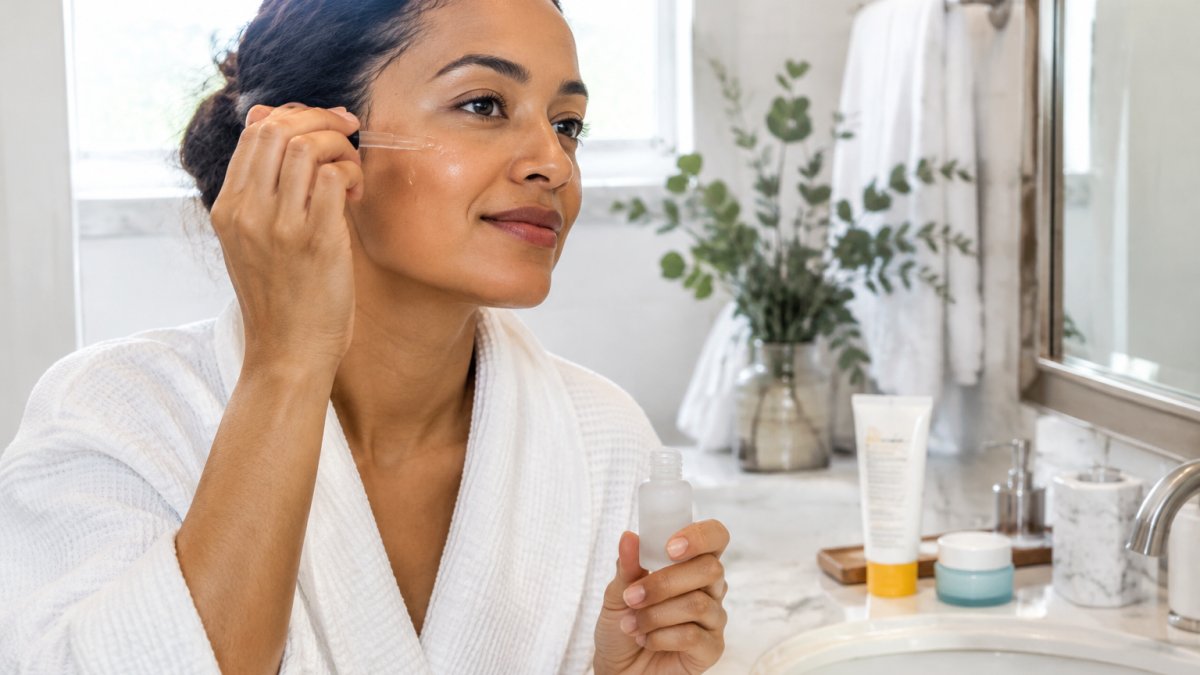
A gentle routine beats an aggressive one every time. The goal is steady progress without a single week of redness.
Morning: Protect First
- Cleanse. Use a mild, fragrance-free cleanser and lukewarm water. Skip scrubs, cleansing brushes, and anything that leaves your skin tight. Tight skin means a damaged barrier, and a damaged barrier holds onto dark marks longer.
- Moisturize. Apply a bland, fragrance-free moisturizer while skin is still slightly damp. This supports the barrier before you add anything active.
- Sunscreen. Apply a broad-spectrum sunscreen with SPF 30 or higher as the last step. Use about a nickel-sized amount for the face and neck. This is the single most important step in the whole routine, because UV exposure darkens existing marks and slows fading.
- Reapply. Reapply every two hours when you are outside or near a window for long stretches. A tinted sunscreen or a powder SPF makes reapplication over makeup practical.
Evening: Fade Second
- Cleanse. Same gentle cleanser. If you wore sunscreen and makeup, a single cleanse with a mild cleanser is usually enough for sensitive skin; a second cleanse with a harsh product is a common irritation trigger.
- Fading ingredient (one only). Apply one fading ingredient to the marks. Good options include vitamin C, azelaic acid, niacinamide, and gentle retinol. Start with two or three nights a week and build up slowly over four to six weeks.
- Moisturize. Follow with the same bland moisturizer to buffer any dryness from the active.
How to Introduce Actives Without Triggering Irritation
A common mistake is stacking three actives in week one. That triggers irritation, and irritation means more pigment. Use this schedule instead:
- Weeks 1-2: One active, two nights a week. Moisturizer on top.
- Weeks 3-4: Same active, three nights a week if there is no stinging, redness, or flaking.
- Weeks 5-6: Same active, every other night.
- Week 7 onward: Add a second active only if the first is fully tolerated, and alternate nights rather than layering.
If you are choosing a gentle acid, our article on whether mandelic acid suits sensitive skin explains why the larger molecule tends to irritate less.
Watch out: if your skin stings, turns red, or flakes during the build-up, drop back to the previous frequency for two weeks rather than pushing through. Irritation restarts the inflammation cycle that created the mark in the first place.
Prevention Versus Treatment: Know Which Step Does What
- Prevention steps (sunscreen, gentle cleansing, not picking, treating active acne early) stop new marks from forming and stop existing marks from darkening. They work every day and never stop being necessary.
- Treatment steps (fading ingredients, gentle peels) may gradually fade existing flat marks. They work slowly, over months, and only if the prevention steps are already in place.
Worried sunscreen will cause breakouts? Read whether daily sunscreen is safe for acne-prone skin before you skip it. Skipping sunscreen to avoid a breakout is a bad trade: the mark will darken faster than any fading ingredient can work.
Here is the build-up schedule for introducing a fading active without triggering irritation.
| Phase | Frequency | Note |
|---|---|---|
| Weeks 1-2 | One active, two nights a week | Moisturizer on top |
| Weeks 3-4 | Same active, three nights a week | Only if no stinging, redness, or flaking |
| Weeks 5-6 | Same active, every other night | Continue building tolerance |
| Week 7 onward | Add a second active | Alternate nights rather than layering |
| If irritation appears | Drop back to previous frequency | Hold for two weeks rather than pushing through |
Choosing a Chemical Peel for Hyperpigmentation When Your Skin Is Sensitive
A chemical peel for hyperpigmentation can speed up fading, but only at the right strength. For sensitive skin, start with a mild peel such as lactic or mandelic acid.
Save glycolic and TCA peels for later, once your skin has shown it tolerates regular acid use.
Makeup Artist’s Choice offers professional-grade chemical peels in a range of acid types, including glycolic, lactic, salicylic, and TCA, so you can compare options for your skin. If you are ready to browse, you can shop peel options and compare formulas.
Watch out: applying a peel to skin that is already irritated can cause rebound darkening, which is darker pigment than you started with.
Chemical Peel Aftercare: Protecting Results and Preventing Rebound Darkening
Chemical peel aftercare decides whether your results hold. In the first week, keep it simple: gentle cleanser, a plain moisturizer, and sunscreen. Skip actives, exfoliants, and hot yoga.
Follow these rules after any peel:
- No picking or peeling skin, even when it starts to flake
- No retinoids or acids for at least five to seven days
- Sunscreen every morning, no exceptions
- Extra moisturizer to support the barrier
If your skin feels raw or stings, stop everything except cleanser and moisturizer. Post-peel skin is more vulnerable to UV exposure, so this is when sun protection matters most. You can find related skincare options on our site.
The Best Moisturizer After Chemical Peel: What to Look For
The best moisturizer after a chemical peel is bland, fragrance-free, and rich in barrier support. Look for ceramides, glycerin, hyaluronic acid, and squalane. Skip anything with fragrance, essential oils, alcohol, or added exfoliants.
A short checklist for label reading:
- Fragrance-free and dye-free
- Ceramides or fatty acids listed
- No alcohol denat
- No acids or retinoids
Apply it while skin is still slightly damp. That locks in water and speeds barrier repair.
What to Avoid After Chemical Peel and Every Day
What you skip matters as much as what you use. After a peel, and in daily life with sensitive skin, avoid these:
- Picking, popping, and squeezing. This is the fastest way to turn a small blemish into a lasting dark mark. The pressure deepens inflammation, and inflammation is what drives pigment cells to overproduce melanin.
- Harsh scrubs and exfoliating tools. They create micro-tears and inflammation. Over-exfoliation is a common and underrecognized cause of worsening pigmentation: the barrier breaks down, redness sets in, and the skin responds with more pigment.
- Strong actives layered together. One at a time, always. Stacking acids, retinoids, and vitamin C in the same routine multiplies irritation without multiplying results.
- Sun exposure without protection. UV light darkens marks and undoes progress. This applies on cloudy days and through windows.
Patch Test Before You Commit
Before applying any new active, acid, or peel to your face, patch test it. Apply a small amount to the inner forearm or behind the ear for two to three nights in a row. If there is no redness, stinging, or swelling, introduce it to the face at a low frequency. This is especially important for sensitive skin, where a reaction can take a day or two to appear.
Separate Evidence-Supported Ingredients From Anecdotal Remedies
Some ingredients have a reasonable body of evidence behind them for fading flat dark marks: azelaic acid, niacinamide, vitamin C, retinoids, and gentle alpha-hydroxy acids such as lactic and mandelic acid.
Watch out: DIY lightening mixtures that combine strong acids, essential oils, or household ingredients can cause chemical burns or rebound darkening, which is darker pigment than you started with.
After a Peel, the Rules Tighten
For five to seven days after a peel, add these to the list above: no retinoids or acids, no hot yoga or saunas, no picking at flaking skin, and sunscreen every morning without exception. Post-peel skin is more vulnerable to UV exposure, so this is when sun protection matters most.
When a Dark Mark Needs a Dermatologist
Some marks need professional help. See a dermatologist if a spot keeps darkening, changes shape or color unevenly, or has not faded after several months of consistent care.
The American Academy of Dermatology is a good starting point for finding a board-certified specialist. Raised or indented scars also fall into this group, since peels and creams will not change their structure.
Frequently Asked Questions
Can sensitive skin use chemical peels for hyperpigmentation?
Yes, but the peel has to match your skin’s tolerance. Gentle acids such as mandelic and lactic acid work more slowly and cause less stinging than glycolic or TCA, which makes them a better starting point for reactive skin. Begin at the lowest strength, patch test on your jawline, and space treatments at least two weeks apart. Stop immediately if you see redness lasting more than a day or any blistering, and ask a dermatologist before going stronger.
What is the gentlest acid for hyperpigmentation on sensitive skin?
Mandelic acid is usually the mildest option because its larger molecule penetrates slowly, which lowers the chance of stinging. Lactic acid is the next step up and also hydrates. Azelaic acid is another gentle choice and is often recommended for acne-prone and deeper skin tones. Introduce one at a time, twice a week, and add a daily broad-spectrum sunscreen so the fading you gain is not undone by UV exposure.
How do you prevent dark spots from getting worse after a peel?
Sunscreen is the single most important step. Apply a broad-spectrum SPF 30 or higher every morning, reapply every two hours outdoors, and wear a hat during the week your skin is healing. Skip picking or scrubbing flaking skin, pause retinol and strong acids until redness clears, and keep the area moisturized. Post-inflammatory hyperpigmentation darkens when healing skin is exposed to sunlight or irritated further.
When should you stop using a chemical exfoliant and contact a dermatologist?
Stop if you develop blistering, oozing, spreading redness, or pain that gets worse instead of better. Also stop if a dark mark keeps darkening after eight to twelve weeks of consistent gentle care, or if a spot has irregular borders or changes color. Those signs need a professional assessment, since some pigmentation concerns are not post-acne marks and require a different treatment plan.
Treating hyperpigmentation on sensitive skin is a patience game, not a strength contest. Gentle cleansing, one active at a time, daily sunscreen, and careful peel aftercare will do more than any aggressive shortcut. Makeup Artist’s Choice has supplied professional-grade, made-in-the-USA peels since 1997, with glycolic, lactic, salicylic, and TCA options plus curated routines built around your skin. Get started with Makeup Artist’s Choice and fade your marks without setting your barrier back.